
Driving value with Eptura
Embedding the Moore Kingston Smith DNA in every office
Rapid growth could have strained connection and culture, but careful planning, thoughtful design, and smart use of technology created a workplace that brings teams together, supports employees, and keep the firm’s culture thriving.
Rapid growth brings opportunity and complexity
 Industry
Accounting
Offices21
LocationLondon, UK
In a remarkably short period, accounting and advisory firm Moore Kingston Smith grew from around 750 employees to nearly 1,800. Over the same time, the firm expanded its office footprint from six locations to 21 across London, the South East, Northern Ireland and the Republic of Ireland.
Much of this growth came from a deliberate strategy to become an active buyer in a competitive M&A market, supported by private equity investment. Acquisitions ranged from substantial firms to small specialist offices, creating opportunity but also adding complexity. For Phil Healey, Head of Facilities, the journey was defined by one word: acceleration.
Rethinking the purpose of the office
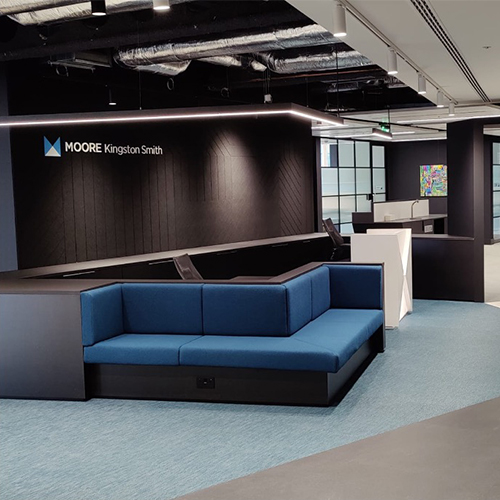
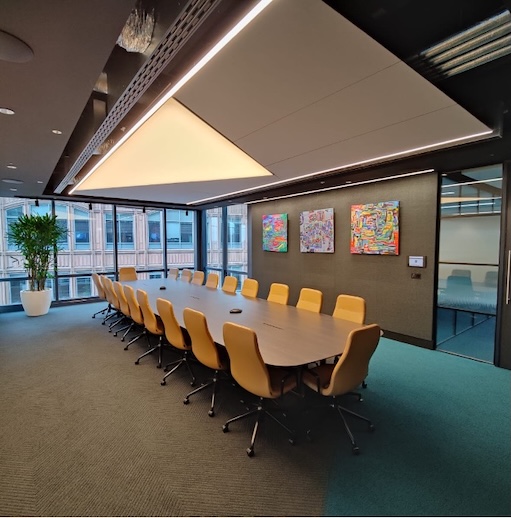
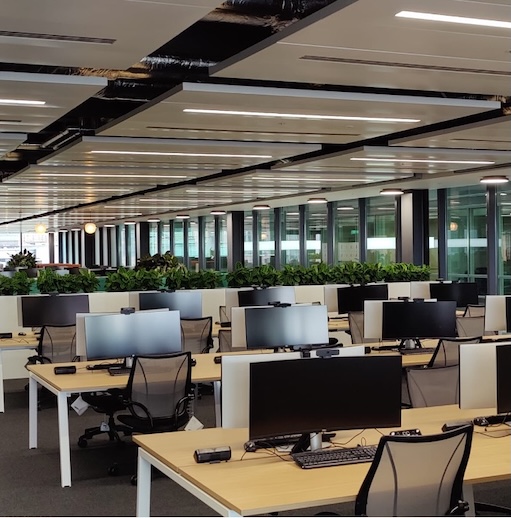
Coming out of the pandemic, Moore Kingston Smith began rethinking the role of its offices. The firm relocated its head office and redesigned the workplace to support hybrid working, reducing the number of fixed desks and creating a more flexible, collaborative environment.
But the shift wasn’t simply about reducing desks. It was about redefining the purpose of the office.
We’ve had to make coming into work an experience. Everyone can sit at home and do their work. The challenge is creating a space people want to come into.
"Creating workspaces built for people
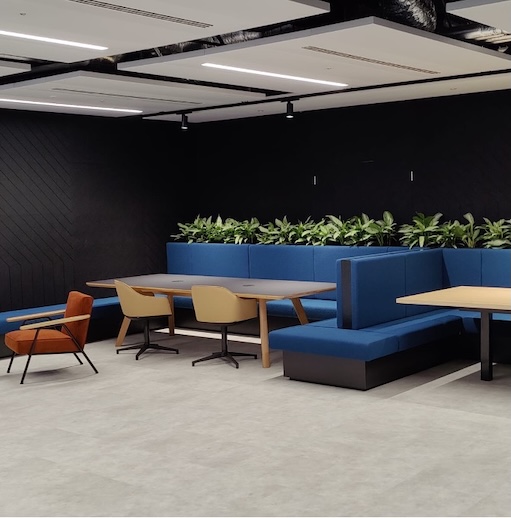
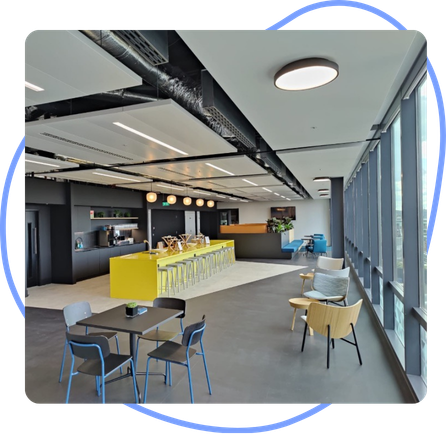
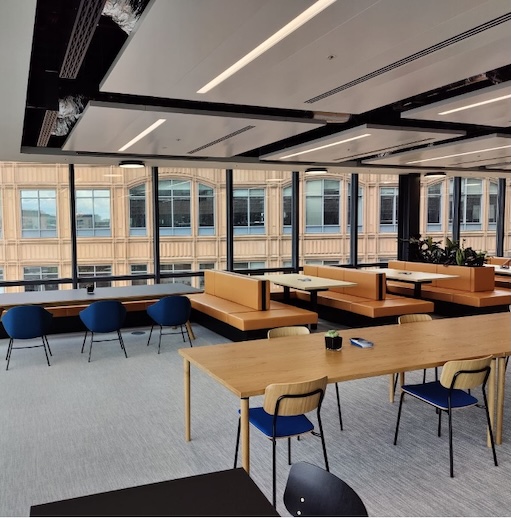
To attract employees to return to the office, the firm focused on making spaces welcoming, social, and productive. Collaboration areas, breakout zones, and vibrant social spaces encouraged connection and knowledge sharing, while an internal social committee brought the workplace to life with quizzes, team days, and other events. High-quality amenities, from coffee and catering to thoughtfully designed spaces, made the environment comfortable and appealing.
With large cohorts of trainees and early-career professionals joining the firm, offices became more than just places to work. They became spaces to learn, connect and build relationships. Importantly, the same core standards were applied across all locations, so employees could walk into any office, plug in their laptop and start working immediately. While each office retained its own character, they all reflected the Moore Kingston Smith DNA, so the experience felt familiar wherever employees worked.
Bringing teams together to build a shared culture
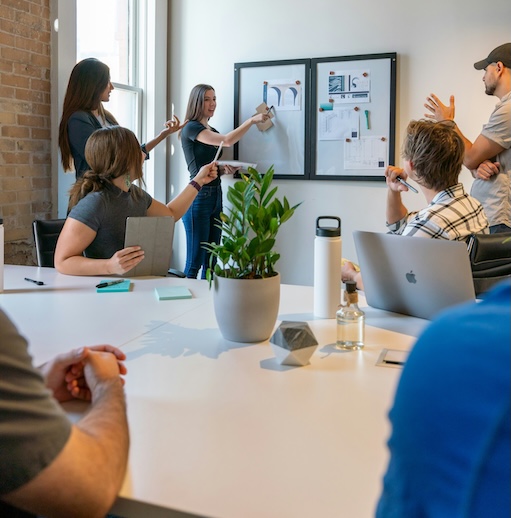
While workplaces were evolving, the business itself continued to expand. Each new acquisition brought its own culture and ways of working, from firms with 250-300 employees to specialist teams with just a few people. Integrating these teams into a larger organization wasn’t always easy — some adapted quickly, while others found the transition from a smaller, tight-knit organization more challenging. Balancing what made each team unique with building a shared identity required care.
Listening to employee feedback was essential. Sometimes the smallest things mattered most, from free food and social events to a popular pool table that employees loved. Open communication was also key, with the managing partner hosting regular updates on performance, strategy, and achievements, helping all colleagues feel connected and part of the same journey.
Optimizing growth, space, and employee experience
While workplaces were evolving, the business itself continued to expand. Each new acquisition brought its own culture and ways of working, from firms with 250-300 employees to specialist teams with just a few people. Integrating these teams into a larger organization wasn’t always easy — some adapted quickly, while others found the transition from a smaller, tight-knit organization more challenging. Balancing what made each team unique with building a shared identity required care.
Listening to employee feedback was essential. Sometimes the smallest things mattered most, from free food and social events to a popular pool table that employees loved. Open communication was also key, with the managing partner hosting regular updates on performance, strategy, and achievements, helping all colleagues feel connected and part of the same journey.
We wouldn’t be able to manage this scale without the system. It’s helped us travel that journey as we’ve grown.
"