
How LSE drives value with Eptura
LSE optimizes campus with 25% desk utilization improvement and 55% increase in employee engagement
LSE launched a strategic return-to-campus initiative, partnering with Eptura to rapidly implement and optimize their limited real estate. This has resulted in a 25% improvement in desk utilization and a 55% increase in employee engagement, boosting operational efficiency, enabling data-driven decisions, and enhancing staff satisfaction, creating a more dynamic and productive work environment.
Customer profile
London School of Economics & Political Science: Top-ranked university for social science
Education
3500+15,000+
LocationLondon
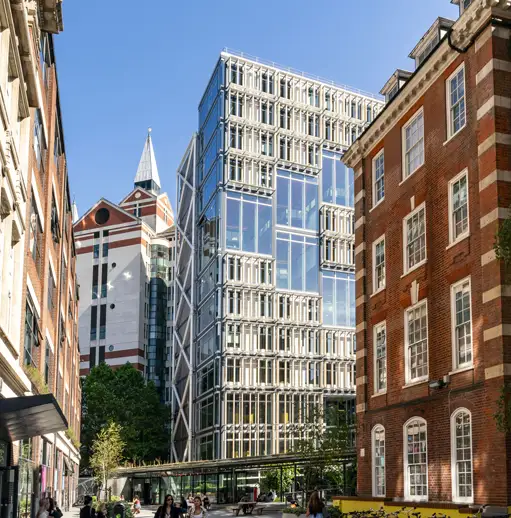
The London School of Economics and Political Science (LSE), founded in 1895, is a prestigious university in central London, where space is limited and highly sought after. The campus spans 31 buildings in a compact area and is complemented by 10 nearby student residences. The school is renowned for its expertise in social sciences and management, ranking top in London and sixth globally in these fields. With over 3,500 staff members, LSE has been actively working to optimize its facilities and reduce its reliance on leased and hired spaces.
The challenge
Inefficient booking and campus return coordination impact LSE operations
1
Inefficient space utilization & limited space
Lack of data led to inefficient space planning in limited, high-value real estate.
2
Manual processes
Difficulty analyzing usage and planning future capacity.
3
Staff and stufen return
Managing returns while reducing office footprint post-lockdown.
The school faced several significant challenges in its growth due to a lack of data, inefficiency in space management, and the high cost of full-occupancy office space. Departments operated in silos, using a variety of tools and processes to manage their spaces without a centralized overview, which made it impossible to gauge the true efficiency of space utilization. This forced them to rent additional space for support divisions, further straining resources. Manual processes for analyzing space usage and planning were ineffective, hindering optimization. In response to these challenges, LSE began adopting a blended-work model, a strategy that was accelerated post-lockdown. Managing the return of staff while reducing the office footprint has been a complex task, requiring careful, strategic planning to balance space needs with financial constraints.
The solution
Rapid rollout of efficient space and resource strategies
LSE took proactive steps to address their space and resource management challenges by partnering with Eptura to implement Eptura Engage. Recognizing the need for a more efficient and streamlined system, the school quickly rolled out desk and meeting space booking and the integration with Microsoft. They also installed meeting room screens and began leveraging business intelligence through utilization reports to gain deeper insights into space usage. This rapid and strategic implementation was a major project for the university. As Daniel Print, the Estates Systems Manager, noted, “It was implemented very quickly. From the moment we made the decision to go blended and start booking desks, it only took a matter of months. The rollout was swift, and we had a lot of support throughout the process.”
Eptura solution
The desk booking system is very efficient and reliable. Users can book using the Eptura app and check into their desks by scanning the QR code. This allows us to capture real data on how many people are working in office spaces.
"The Results
LSE achieves data-driven space optimization and enhanced staff experience
Operational improvements
- Enhanced staff experience
- Reduced bumps and no shows
- Optimized space utilization
- Data-driven planning and insights
Strategic Gains
- 8 Buildings managed efficiently
- 13-25% desk utilization improvement
- 9,000+ desk bookings annually
- 55% Increase in desk bookings over 2 years
LSE notably improved staff experience by introducing a blended work model and streamlined booking through Eptura. This approach, used across three main support buildings, reduced scheduling conflicts and no-shows while boosting desk utilization by 13–25% in just 12 months. Backed by data-driven planning, these changes optimize space and provide valuable insights for informed decision-making in a centralized system.
Strategically, LSE has seen a substantial increase in the number of desk bookings, with approximately 9,000 bookings in the last 12 months. The average number of staff booking desks has increased around 55%. The ability to track real-time occupancy data has been a key benefit, enabling the school to understand seasonal and weekly attendance patterns by location. This has allowed LSE to evaluate departmental requests for space based on actual usage, ensuring that resources are allocated more effectively and aligning with the priorities of the school. The operational agility and better alignment of campus resources have not only improved efficiency but also fostered a more productive and engaged workplace.