




Summary
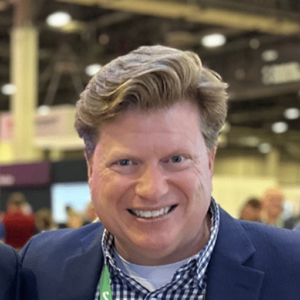
This is part 2 of our conversation with Paul Daoust, Founder & Managing Director at Scio Asset Management. Mike Petrusky asks Paul about his philosophy and how he helps courageous leaders have the agency to direct their organization’s activities to deliver full value in their operations. They discuss the origins of ScioAM and why it is important to empower operational leaders to SEE. THINK. DECIDE. ACT. Mike and Paul explore the trends and challenges in the world of asset management and they discuss how both leaders and practitioners can work together to solve problems and make the right decisions.
Full Podcast Transcript
Disclaimer: Asset Champion is produced to be listened to. If you can, we encourage you to tune in on your favorite podcast platform. Transcriptions are generally a mixture of human transcribers and speech to text software, and can contain errors.
Mike Petrusky: This is the Asset Champion Podcast, where we talk with facilities maintenance and asset management leaders about the industry trends and technologies impacting your organization. This show is powered by the iOFFICE Asset Division, delivering easy- to- use maintenance management software tools to help you drive powerful asset performance. Hey folks, and welcome to the show. It’s me, your host, Mike Petrusky. And I am glad you’re back for part two of my conversation with Paul Daoust of Scio Asset Management. If you missed part one, please stop the recording now. Head back over to episode 50 of the podcast, and there you’ll be introduced to Paul and get a foundation for what comes next. We have a lot more to discuss. It is really good stuff. So, let’s get right to it. Here we go. A little bit more about you and your background and career. Do you have a favorite business leader or book that has influenced you?
Paul Daoust: Yeah, I do a lot of reading, business books, and I also love social psychology.
Mike Petrusky: Oh, me too.
Paul Daoust: Right now, I’m reading “Noise” by Daniel Kahneman, and I just love that stuff because I think a lot of that kind of psychology drives our behaviors, and to understand it means that you can kind of figure out what’s going on and how people behave. And like always, the key to asset management is all about the people.
Mike Petrusky: Mm-hmm(affirmative).
Paul Daoust: We can talk a good game about business processes and technology, and solutions. But at the end of the day, it’s all about people. But the one thing that, I guess it was a bit of a shift for me. I shouldn’t say a bit. It was a huge shift for me. Many years ago, I attended a maintenance and reliability conference, and there’s a fellow speaking there named Douglas Hubbard from Hubbard Decision Research. And it’s not an exact quote, but I kind of adapted it from what he said. And the statement is,” The most important decision you will make is how you will make your decisions.”
Mike Petrusky: Oh, okay.
Paul Daoust: And at first, when he said that, I thought,” Well, what kind of platitude is this?” But of course, he went on to explain what he meant. And I was just blown away because I was thinking,” Eureka, that’s it. It’s all about decision- making.” And that’s kind of guided me in my journey a lot because I believe now that the key, other than the people and its behaviors, and it’s not separate. The key to good asset management or operational excellence is more better decisions. And I’ve just found that we don’t spend enough, the requisite time, thinking about the decisions to be made and how to best make them. But when you do start to do that, you see things in an entirely different light. And it’s surprised me how much my own perspective has changed just by kind of switching over to instead of focusing on business processes and the data and analysis focus on the decisions themselves, and then everything kind of falls into place. Suddenly your decision or your business processes can become very simplified, right.
Mike Petrusky: Mm- hmm(affirmative). Mm-hmm(affirmative).
Paul Daoust: And also, the data and information that you need becomes more apparent because not all data that we have is of equal importance. Some of the data that supports important decisions is highly valuable. Whereas, I would say, most of the data kind of Pareto’s rule of 80-20. Most of the data is next to useless. And in today’s environment, I think it’s important to understand which data is important and which isn’t. But you can’t always see that if you’re focused on the data. But you can see it if you’re focused on the decisions. So, Douglas Hubbard, I’ve taken a lot of his training. He’s got this program called Applied Information Economics.
A lot of what he promotes is simple modeling, using highly quantitative and probabilistic approaches. And I’ve found that probabilistic thinking doesn’t come naturally to people. We’re not wired that way. It’s something that needs to be acquired. And it’s a competency that people need to gain. I’ve actually been calibrated through a workshop that he offers, and I’ve learned there’s other organizations out there that do that. But in the risk management and whatnot, whenever we’re assessing probability, I wouldn’t trust anybody these days who hasn’t actually been properly calibrated. I’ve just seen results. So, it’s just such a mixed bag in a box of chocolates that I think any organization that really wants to be good at risk management, for example, you need to understand probabilistic thinking and you need to be good at it. So, one of the other things Hubbard promotes is,” Well, how good are you at decision- making? Or what’s your track record?” And unfortunately, most of us as individuals or organizations, we don’t do a good job tracking our decisions or the associated actions to results. And I think that’s part of the problem.
Mike Petrusky: Wow. So much great stuff there to unpack, Paul. And it’s really great. The recent trend here on the show is towards this conversation around the human side of asset management and the decision- making and the leadership. So, with that as the foundation, what do you see as some of the significant trends in the world of asset management today?
Paul Daoust: I think the first major trend has been going on a little while now, and that, of course, is digital transformations. And I’ve learned to look at what’s been going on a little bit skeptically lately with industry 4.0 and the accessibility of data and putting in place analytics platforms. Look, I’m all for it. But the truth is that statistics from McKinsey& Company and others are saying that up to 70% of those initiatives are failing to deliver their stated value. And there’s vast sums of money being spent on putting this technology into place. And in my opinion, we’re not arming the people to use that technology well. Sure, we’re talking a great line about machine learning and artificial intelligence.
But the truth is that there’s actually a progression that’s required in order for machines to make our decisions for us. And we don’t necessarily trust them to do that yet. And we’re not necessarily arming our people to actually utilize that new technology. We’ve got all this data in the cloud now, which is great, and we’ve got all the analytics tools.
But I’m finding the bottleneck is, well, where are the practitioners with the deep subject domain expertise asking and answering the right questions to make more better decisions? And what I’ve realized is despite all these massive investments and all these enabling technologies, we just haven’t gotten to the place where organizations are consistently able to make more better decisions. And so, I kind of joke that I’m here for industry 4.1, where we take all those great investments in infrastructure, in technology infrastructure, and now we put them to work, right.
Mike Petrusky: Right. Sure.
Paul Daoust: Because if you can focus on the decisions, then you can utilize all that infrastructure to help you. I’m not against the digital transformations. I just think we’ve been looking at things from the wrong end of the stick. I think the focus has been on the technology itself, on the data, on the analytics in kind of an anything as possible perspective. Whereas I think we should be a lot more deliberate in how we manage and say, “Well, here’s the important decisions to be made. Here’s the best way to make each decision in terms of a decision framework. Here’s the knowledge that’s required and that backs you up to the information and analytics and finally the data.”
So, if you look at it backwards, as I suggested earlier, I think things become a lot clearer. The other important trend that I see is a bit more forward- looking, and that’s that growing interest in ESG, Environmental and Social Governance. And I think crosstalk that’s important because particularly in the energy and electric industries where we’re most of my customer base is the investment community is forcing a lot of different behaviors and the social license is changing very quickly. And of course, a lot of these organizations are declaring their goals to be net- zero carbon emissions by 2030 to 2050. And I think that’s awesome, but that also doesn’t come for free. I was just looking at the International Energy Association, the IEA, and they’re saying investment in these sectors needs to triple by 2030 to the-
Mike Petrusky: Wow.
Paul Daoust: …sum of $4 trillion a year.
Mike Petrusky: Amazing.
Paul Daoust: And that’s massive. And part of my question or one of my questions is where’s all this new money, this new investment money coming from? And I think asset management has a very important role to play in that. In terms of, well, these existing asset owning organizations, they need to create new value from their existing operations, which means that the status quo won’t work anymore. These transformations are going to cause a lot of different behaviors in how these organizations evolve. And I think those organizations that embrace asset management as a part of that solution are going to be the ones that come out on top. So those are the two trends that I see happening now and coming in the next decades.
Mike Petrusky: Hey, and wrong with a little contrarian view. And thanks for challenging us, Paul, with those thoughts and pointing out some of those trends. With the idea of challenge in mind. I know that the industry faces a lot of unique challenges. We’ve been through certainly a unique period of this past year and a half. And as we’re now in the middle of 2021, looking ahead, what other challenges do you see for asset management professionals on the horizon?
Paul Daoust: Yeah, I think asset management professionals, the practitioners really need to rethink their approach on how they offer and deliver asset management to their asset- owning organizations. I mean, whether you’re a practitioner in the organization or whether you’re a consultant, I think we need to think differently.
I know there’s a lot of very capable and high- profile asset management professionals who, over the last five years or so, have become pretty disappointed in the lack of uptake of formal asset management. We’ve got the ISO 55000 standard and the 39 subjects within. And the uptake of that, particularly in North America, hasn’t been as strong as a lot of the early asset management professionals would’ve liked. I’ve noticed that uptake is much better in other jurisdictions like Australia. And one of the big differences is in Australia, and I would say the UK as well, where the formal asset management kind of started.
I think the difference is it’s the stakeholders who are realizing the value of having an asset management system. And so, they’re setting the expectation, but there’s resistance in North America for some reason to do that. And also, as I mentioned earlier, I think for those heavy industrials with strong operations, I think we need to think more carefully about how to integrate formal asset management into the existing operations. Because if… you can’t just set up your own standalone asset management system, and that’s what I see a lot of practitioners doing. And they have this bias towards documentation, right.
So, the asset management system becomes just a series of documents, whether it’s your policy, your strategic asset management plan, your asset management plans. And that’s fine, but it takes a lot more than that to actually integrate with operations and offer it in a way that is actually helping our leaders, right.
Mike Petrusky: . Mm- hmm(affirmative).
Paul Daoust: I’ve seen lots of documented asset management programs that… they’re really just documents that sit on a shelf, right. Or, at best, sit in an internet somewhere, and nobody reads them. It’s too long. So, our standards, our business processes, our procedures, there’s a time and place for that.
But I’ve learned that you need to take a minimalist approach to that. And I think we go way overboard sometimes. And as asset management professionals, sometimes we’re our own worst enemy. So, and that kind of leads into kind of the broader definition of asset management, which is the coordinated activities of the organization to deliver value from its assets for its stakeholders.
And I like to key in on the word activities there. And look, this is a bit of an oversimplification, but I think it works. There’s only two types of activities. Most of the focus, time, and effort of both our leaders and practitioners today is on the first type, and that’s transactions. That’s the tasks to be done. As I said, we’re all geared towards action, right. Or most-
Mike Petrusky: Right.
Paul Daoust: …of us are.
Mike Petrusky: Sure.
Paul Daoust: And look, it pays for the organization to be very efficient in getting these tasks done, whether that’s done from competent people or machines or a combination of the both. It could be automated, and that’s great. But it’s that second activity that I believe has far more value at stake for the organization. That’s the decisions, the decision-making.
And yet, our decisions are very often obfuscated by our business processes. They’re in there, but we don’t kind of hold them out. And we’re not very deliberate, and we don’t apply a suitable structure or the appropriate rigor that’s required. Some of our operational leaders are making very important decisions worth millions, and they’re shooting from the hip.
And our practitioners don’t always follow basic problem- solving and decision-making processes, right. And I feel for our leaders because they struggle using their experience and their kind of intuitive decision-making models and have trouble integrating that with incorporating data and evidence. We like to talk a good game of evidence- based decisions, but in practice, it’s really, really hard.
And look, if you can’t get that right, it’s kind of a recipe for mediocrity. So what I’m trying to do is offer support for asset management pros and leadership to focus more on the important decisions, how they should be made at every opportunity.
Mike Petrusky: Wow. Really great perspective and interesting stuff. Paul, the time is escaping us quickly as it always does. I have one more question for you. I like to give some practical advice to my audience of asset management leaders. So as we head into the future together, what advice do you have for us?
Paul Daoust: Well, I think there’s two things that are top of mind for me. One is embracing ambitious business challenge, right. So a lot of organizations they want to incrementally improve. And when you ask them what the business challenge is, there’s really no clear answer. But if you look at the difference between those top- performing organizations and those stuck in the middle or average, there’s a huge amount of value loss. So my advice is don’t be afraid to look at the value that’s being lost because that is the opportunity to go after, right.
Mike Petrusky: Mm- hmm(affirmative).
Paul Daoust: It’s kind of like the glass half full situation. And of course, that’s usually presented in the context of whether you’re an optimist or a pessimist, but I don’t use that here. I like to use the joke that the engineer says,” The glass is bigger than it needs to be.” And in that spirit, in today’s industrial sectors, I think that’s important because a lot of our leaders using a management by objectives leadership culture, their incentive to just fill the glass half full, or two- thirds full or three-quarters full or whatever.
The point is, they’re asked to hit their numbers, right. And it’s that satisficing mindset. But what that does is it doesn’t encourage us to look at the value that we could have but should. And if our stakeholders, particularly our owners, our shareholders, if they knew how much value leakage existed, I think they would be much more vocal in creating that large business challenge to be met. So that’s my advice, is don’t be afraid of that business challenge to take on something ambitious and to go after it.
Mike Petrusky: Well said. Great stuff. Paul, this has been fantastic. I really do appreciate you taking time to join us here on the Asset Champion Podcast.
Paul Daoust: Thanks, Mike. It’s been a pleasure.
Mike Petrusky: And there you have it, folks. Paul Daoust of Scio Asset Management, with some great insight and perspective on the state of the marketplace today. To learn more about Paul and the work he does, please check the show notes for this episode. I have left for you some links to get in touch with him. Please, if you do reach out, tell him that you heard him here on the Asset Champion Podcast. And thank you for joining us again this week. We look forward to continuing these conversations as we work together to encourage and inspire each other to be an asset champion. Peace out. You’ve been listening to the Asset Champion Podcast. We hope you found this discussion beneficial as we work together to elevate asset management success by improving efficiency, reducing costs, and building best practices. For more information about how the iOFFICE Asset Division can boost the performance of your physical assets by providing comprehensive enterprise asset management software solutions, please visit assetchampion.com.
[blog_cta id=’c1ea29c9-8118-4e20-9332-0e5d3934d21f’] Connect with Paul on LinkedIn: https://www.linkedin.com/in/paul-daoust-12554b11/ Learn more about Scio Asset Management: https://www.scioam.com/ Connect with Mike on LinkedIn: https://www.linkedin.com/in/mikepetrusky/
Learn more about the iOFFICE Asset Division and explore more interviews at: https://www.assetchampion.com/
Share your thoughts with Mike via email: [email protected]