


The corporate real estate (CRE) industry is at an inflection point. As the 2025 CoreNet Global Summit | North America, themed around leading with purpose, optimizing portfolios, and reimagining workspaces, makes clear, innovation in CRE isn’t simply about adopting new tools. It’s about harnessing data and metrics to drive meaningful change.
For CRE leaders aiming to drive value, agility, and purpose, tracking the right corporate real estate metrics has become essential to strategic decision-making. Tracking the right CRE performance KPIs enables portfolio optimization through the analytics, insights, and workplace intelligence needed to translate data into actionable strategy.
Key takeaways
- Data drives purpose. Tracking the right CRE metrics enables leaders to align space, cost, and efficiency goals with a broader organizational purpose
- Utilization is the new ROI. Space optimization that is measured through real0time occupancy, cost-per-seat, and forecasting, created tangible financial and cultural value
- Metrics power agility. Predictive analytics and integrated data can help CRE teams make proactive, confident decisions in dynamic environments
1. Cost per seat
One of the most actionable metrics for CRE leaders is cost per seat—the total occupancy cost (rent, utilities, maintenance, services) divided by the number of workstations or active employees.
Analyzing cost-per-seat across buildings, business units, or geographies helps identify underperforming assets and opportunities for optimization or consolidation.
Integrated portfolio dashboards and real-time occupancy data make it easier to correlate space utilization with cost metrics, turning seat count into a strategic lever for portfolio efficiency.
2. Space utilization
In line with CoreNet Global’s focus on portfolio optimization and purpose-driven design, space utilization remains foundational: how effectively is each square foot being used?
If a building has capacity for 300 people but consistently hosts 200, the utilization rate is roughly 67%, leaving valuable space underused.
Occupancy analytics, heat-map reporting, and flexible seating insights reveal which zones are over- or under-utilized, helping leaders reconfigure layouts or introduce more collaborative areas.
Data from the 2025 Workplace Index shows that 34% of organizations plan to increase in-office days, underscoring the importance of aligning utilization with evolving work patterns.

3. Total occupancy cost
Real estate is often the second-largest expense after labor, yet many organizations underestimate their total occupancy cost—rent, utilities, insurance, taxes, amenities, and maintenance combined.
Aggregating and visualizing this data across your portfolio clarifies how each location impacts overall spending and profitability.
With consolidated cost tracking and reporting, leaders can compare cost per square foot or per employee and identify high-value and high-cost assets to guide future decisions.
4. Lease analytics
Leases are strategic assets that shape flexibility, cost, and long-term growth potential.
Through lease analytics, organizations can monitor expiration dates, renewal options, escalation clauses, and costs in context with space utilization and occupancy data.
Scenario modelling helps leaders forecast demand, renegotiate earlier, and avoid renewing or retaining under-used spaces—keeping portfolios aligned with business needs.
5. Occupancy and headcount ratios by building
Understanding occupancy and headcount ratios across each building or department is critical in a hybrid-work era.
Tracking actual in-office presence versus assigned headcount provides visibility into which sites are over- or under-utilized.
These insights inform renewal decisions, sub-lease strategies, or redistribution of teams—ensuring space supply matches demand and supporting data-backed workforce planning.
6. Benchmark metrics: rent, utilities and employee cost per square foot
Benchmarking brings context to raw numbers. The 3-30-300 rule suggests that for every square foot, an organization typically spends:
- $3 on utilities
- $30 on rent
- $300 on employees
While the numbers vary by industry and region, the ratios help pinpoint imbalances. If utilities are disproportionately high compared to rent, investing in smart lighting, energy-efficient systems or sensor-based monitoring can yield significant savings.
Comparing these benchmarks across your portfolio helps set realistic performance targets and identify opportunities for improvement.

7. Service request response time
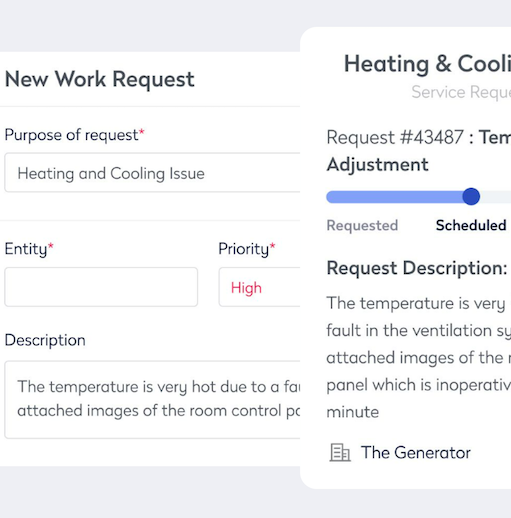
Average service-request response time is a powerful measure of workplace experience. It reflects how quickly facilities teams resolve maintenance issues, IT requests, or comfort adjustments.
Tracking requests, technician workload, and resolution times uncovers inefficiencies and ensures timely support for occupants.
Faster responses improve the employee experience, increase satisfaction, and can even raise overall space utilization rates.
8. Efficiency metrics
Efficiency is a cornerstone of modern CRE strategy. Analytics now capture energy intensity per square foot, carbon emissions, and waste-diversion rates to quantify environmental performance.
By integrating IoT and sensor data with energy dashboards, leaders can understand how space utilization impacts energy use and emissions.
Reducing unused space not only cuts costs but also strengthens environmental outcomes, creating measurable value across financial and operational goals.
9. Utilization forecasting and scenario modelling
The frontier of portfolio optimization lies in predictive analytics. Reporting historical data isn’t enough—leaders must model what-if scenarios.
For example: What if utilization rises from 60% to 80%? What if one floor is reduced or reassigned to another department?
Forecasting tools combine headcount projections, lease timelines and utilization data to simulate outcomes, helping CRE teams make confident, proactive decisions and align portfolios with business strategy.
From metrics to meaningful change
At the 2025 CoreNet Global Summit, the message is clear: CRE leadership is evolving from reactive management to strategic influence.
Optimizing a real-estate portfolio requires vision supported by the right metrics, analytics, and operational insight.
By tracking these corporate real-estate metrics, leaders gain the visibility to reduce waste, improve space efficiency, enhance employee experience and advance efficiency goals—turning data into meaningful, measurable change.
Ready to transform your CRE portfolio with performance metrics that matter? Explore how Eptura Workplace enables CRE leaders to turn data into strategic advantage.
Frequently asked questions

By Erin Sevitz
As Vice President of Content and Customer Marketing at Eptura, Erin Sevitz oversees teams responsible for providing worktech insights and engaging 25 million Eptura users worldwide. With over 10 years in thought leadership on workplace management and the built environment, Erin brings deep industry knowledge to her role. Previously, she led communications for the International Facility Management Association, a global nonprofit dedicated to professional development for workplace strategists and building managers, and served as editor in chief for IFMA’s FMJ magazine.