


Workplace and facility leaders are navigating unprecedented complexity. Hybrid schedules shift demand daily. Space needs change rapidly. Asset lifecycles grow more unpredictable. And maintenance teams face tighter budgets while managing aging equipment. To keep operations running smoothly, leaders increasingly turn to technology ecosystems that connect people, spaces, and assets.
Industry research reflects this shift. IFMA’s Operations & Maintenance Benchmarking Report shows that organizations thrive when they consolidate workplace and maintenance data into a single ecosystem.
Key takeaways
- Choosing between EAM, CMMS, IWMS, and CAFM depends on the specific operational challenges you need to solve. Each system supports workplace and facility leaders in different ways—from asset lifecycle planning to space optimization and daily maintenance execution. The right fit starts with identifying your primary pain point
- Organizations gain greater efficiency and visibility when they adopt integrated systems rather than disconnected point solutions. Research from IFMA, Verdantix, and BOMA consistently shows that unified platforms improve decision-making, reduce redundant tools, and create a single source of truth across assets, space, and maintenance
- Long-term scalability matters as much as current needs. Systems like IWMS or integrated workplace platforms provide the flexibility needed to support hybrid work, portfolio changes, growth, and evolving asset strategies—helping organizations avoid costly replacements later
Verdantix reports that integrated systems reduce redundancies and strengthen decision-making. And BOMA’s annual occupancy and portfolio analysis highlights the need for unified data in changing workplace environments.
These trends make it essential to understand the differences between EAM, CMMS, IWMS, and CAFM. While each platform supports facility operations, they solve different problems. This guide offers a clear comparison, practical decision-making advice, and direction on how to choose a system that grows with your organization.
Introduction to EAM, CMMS, IWMS, CAFM
Organizations adopt workplace and facility systems for three reasons. They want:
- Better visibility
- Better control
- Better decisions
Yet many teams still manage operations using point solutions that work independently. Maintenance systems operate separately from space planning tools. Real estate platforms sit apart from asset data. And workplace experience tools often stand alone.
This fragmentation limits visibility and creates operational blind spots. For example, real estate teams may understand how many workspaces they have but lack insight into which assets keep those spaces operational. Maintenance teams may track asset uptime but have no visibility into how space usage impacts wear, energy consumption, or service demand.
Understanding the differences between EAM, CMMS, IWMS, and CAFM gives leaders the clarity they need to choose technologies that work together rather than apart.
Core differences between the systems
Even though these systems share similar technologies, cloud-based databases, mobile apps, and real-time updates, their priorities differ. Each system focuses on a different layer of workplace or facility operations.
Enterprise asset management (EAM)
An EAM system supports the full lifecycle of assets from acquisition to retirement. It centralizes asset data so leaders can monitor performance, forecast future costs, and predict when equipment should be repaired or replaced. EAM also organizes inventory, vendor contracts, and financial data. This level of insight helps operations leaders evaluate the true total cost of ownership.
Manufacturers, utilities, transportation fleets, and organizations with high-value, mission-critical equipment rely on EAM to plan capital investments and maintain reliability. Verdantix research highlights that EAM helps asset-heavy industries control spending and reduce the risk of unexpected failures.
Computerized maintenance management system (CMMS)
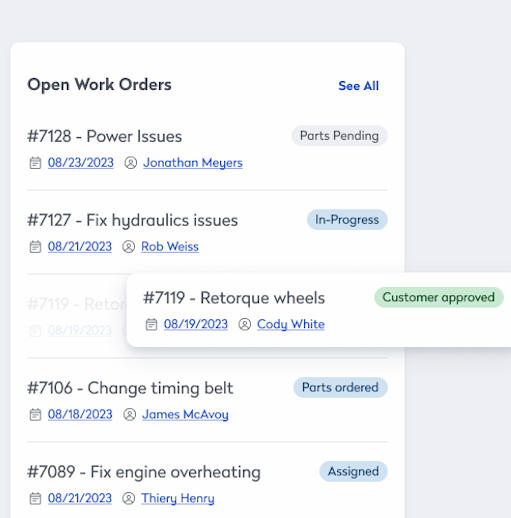
A CMMS focuses on the daily execution of maintenance work. It centralizes work requests, supports preventive maintenance scheduling, and gives technicians the information required to make repairs efficiently. CMMS platforms also track asset histories and maintenance KPIs, helping teams reduce downtime and optimize workflows.
IFMA’s benchmarking data shows that organizations using structured preventive maintenance programs experience higher reliability and fewer emergency repairs—two core strengths of CMMS systems.
Integrated workplace management system (IWMS)
An IWMS unifies real estate, workplace experience, maintenance requests, and space management. It gives organizations a connected view of people, places, and processes. Leaders use IWMS platforms to analyze occupancy trends, plan future space needs, coordinate moves, and track the performance of their workplace portfolio.
Modern workplace research from Work Design Magazine and BOMA emphasizes that multi-site organizations benefit from centralized systems that connect real estate, HR, IT, and maintenance operations.
Computer-aided facilities management (CAFM)
A CAFM system concentrates on spatial intelligence. It helps facility teams map floor plans, visualize seating assignments, track space utilization, and manage hybrid workplace models. CAFM systems give leaders the clarity they need to optimize layouts, monitor occupancy, and adapt to evolving work patterns.
CAFM plays a central role in environments where frequent seating changes, hoteling strategies, or space consolidations occur.

When to use each software
Choosing between these systems becomes easier when leaders align their selection with specific operational needs and organizational goals. Each system fits a particular type of team and business environment.
When EAM fits best
EAM systems support organizations with complex, high-value assets. They are the right choice when long-term forecasting, lifecycle planning, and cost optimization influence operational or financial decision-making.
Large campuses, hospitals, transportation companies, manufacturing plants, and utilities often select EAM because it provides the financial clarity necessary to support asset longevity and safety.
When CMMS fits best
A CMMS becomes the right choice when maintenance execution is the priority. Organizations dealing with frequent equipment failures, slow response times, or limited visibility into asset history benefit immediately from CMMS workflows.
Small to mid-sized organizations often adopt CMMS platforms first because they deliver fast operational improvements without the complexity of an EAM.
When IWMS fits best
IWMS systems serve organizations that manage multiple buildings, large campuses, or hybrid workplaces. They support workplace experience strategies, resource scheduling, and portfolio planning. When space optimization or workplace services become a strategic priority, an IWMS provides the cross-functional visibility leadership needs.
When CAFM fits best
CAFM systems fit organizations focused on understanding and optimizing their physical workspace. Facility teams use CAFM systems to generate accurate digital floor plans, obtain occupancy insights, and manage hybrid desk assignments. CAFM gives leaders the spatial intelligence required to right-size the workplace.
How to assess what fits your organization
Leaders make better decisions when they evaluate software through the lens of organizational maturity, operational needs, and long-term goals. The following considerations help guide a confident and strategic choice.
Assess Organizational Size and Complexity
Small teams focused primarily on maintenance gain the most value from CMMS platforms. Medium organizations balancing space, maintenance, and employee experience often choose IWMS or combine CMMS with space tools. Large enterprises with diverse or mission-critical assets tend to adopt EAM because they need deeper lifecycle and cost analytics. Workplace teams focused on reshaping the office environment benefit from CAFM.
Verdantix consistently highlights that aligning system complexity with organizational maturity reduces cost and improves adoption.
Identify primary operational pain points
Leaders achieve clarity when they start with the problems they need to solve. High equipment downtime or emergency repairs points toward CMMS or EAM. Underused or overcrowded space suggests CAFM or IWMS. Fragmented real estate data requires IWMS. Unpredictable asset costs or lifecycle uncertainty makes EAM the natural choice.
Evaluate integration requirements
Facilities, maintenance, HR, IT, security, and workplace teams operate most effectively when their systems communicate. IFMA emphasizes the value of integrated ecosystems that reduce duplicate data entry and improve cross-functional decision-making. Leaders should evaluate whether they need a single system that connects requests, bookings, maintenance activity, space data, and asset information.
Review data maturity and reporting needs
Organizations relying on dashboards for forecasting, budgeting, and optimization require systems that offer higher-level analytics. IWMS and EAM platforms provide deeper portfolio insights, financial visibility, and long-term modeling. CMMS and CAFM platforms support focused, operational-level reporting with simplicity and speed.
Plan for long-term scalability
Organizations evolve as headcount shifts, assets grow older, and workplace models change. Choosing a system that supports growth without requiring a complete replacement becomes essential. Integrated platforms offer long-term flexibility, especially for organizations anticipating expansion, mergers, renovations, or changes to workplace strategy.
Summary Decision Guide
Leaders can evaluate the four system types by focusing on their most important strengths.
- EAM supports enterprise-scale asset lifecycle management
- CMMS strengthens maintenance execution and reliability
- IWMS unifies workplace experience, space planning, and portfolio management
- CAFM delivers spatial intelligence and space optimization
These distinctions help leaders decide which system solves the problems they face today and supports the strategy they plan to implement tomorrow.
Why integrated systems often become the best choice
Many organizations ultimately adopt integrated systems because modern workplaces function as interconnected ecosystems. Space decisions affect maintenance demand. Asset performance impacts employee experience. Workplace services rely on real-time occupancy and asset data. Leadership expects unified reporting and strategic insights.
Integrated platforms support this interconnectedness. They provide one source of truth, reduce technology redundancy, improve accuracy, and strengthen long-term planning. Research from Verdantix, BOMA, and IFMA consistently shows that organizations using integrated solutions gain operational efficiency and better alignment across workplace, maintenance, and real estate teams.
Point solutions can solve isolated challenges. But integrated systems solve organizational challenges—supporting workplace experience, asset performance, and long-term planning in one environment.
As organizations face new pressures and workplace expectations, the advantages of integrated systems continue to grow. Leaders seeking scalability, cost efficiency, and unified insights increasingly rely on these platforms to future-proof operations.
Frequently asked questions

By Erin Sevitz
As Vice President of Content and Customer Marketing at Eptura, Erin Sevitz oversees teams responsible for providing worktech insights and engaging 25 million Eptura users worldwide. With over 10 years in thought leadership on workplace management and the built environment, Erin brings deep industry knowledge to her role. Previously, she led communications for the International Facility Management Association, a global nonprofit dedicated to professional development for workplace strategists and building managers, and served as editor in chief for IFMA’s FMJ magazine.