What is workplace AI and smart technology?
AI in the workplace are the systems that can perform tasks that typically require human intelligence, including learning, problem-solving, decision-making, and understanding language. Smart technology is a broader term that encompasses AI, along with other advanced technologies like IoT (Internet of Things) devices, automation, and sophisticated data analytics, all designed to make processes more efficient, intuitive, and data driven.
Examples of applications include:
- Enhanced decision-making through data insights: AI can process and analyze vast amounts of data much faster and more accurately than humans. It can identify patterns, predict trends, and offer recommendations, providing leaders and employees with actionable insights to make better, more informed decisions
- Personalization and improved user experience: Smart technology can learn individual preferences and behaviors to offer personalized experiences, making tools and systems more intuitive and user-friendly, reducing friction and improving productivity
- Streamlined communication and collaboration: AI can act as an intelligent layer within communication platforms, helping to organize information, summarize discussions, and facilitate smoother interactions
All these examples highlight how the goal isn’t to replace human workers, but to augment human capabilities, automate repetitive tasks, and provide insights that were previously difficult or impossible to obtain. Employees across the enterprise, from office workers to maintenance technicians, can deliver more value to the overall organization. Instead of wasting time with distracting administrative tasks, they can focus on strategic planning that helps them best leverage their expertise.
Why today’s FMs need to know about workplace and AI and smart technologies and how this guide can help
Successfully implementing and leveraging this technology, however, starts with understanding the associated challenges and how to overcome them.
According to the 2025 Eptura Workplace Index, over 50% of organizations cite insufficient AI skill sets and lack of cross-platform integration as major barriers to adoption. Recognizing these limitations is the first step toward building smarter, more connected environments.
When leaders understand both the potential and the obstacles, they’re better equipped to make informed decisions, align stakeholders, and unlock the full value of intelligent worktech.
A concise history of the evolution of workplace AI and smart systems
Smart technologies in the built environment evolved from isolated automation tools into intelligent ecosystems that support both asset performance and workplace experience. In the early 2000s, facility managers used programmable systems for lighting, HVAC, and access control, tools that improved efficiency but operated independently.
On the asset side, maintenance was reactive, relying on manual inspections and scheduled servicing, while for workplaces, space planning was static, based on fixed layouts and assumptions about occupancy. These systems helped manage buildings, but they didn’t adapt or learn.
That all changed with the rise of IoT and AI. As sensors became more affordable and cloud platforms more powerful, facility leaders gained access to real-time data across systems.
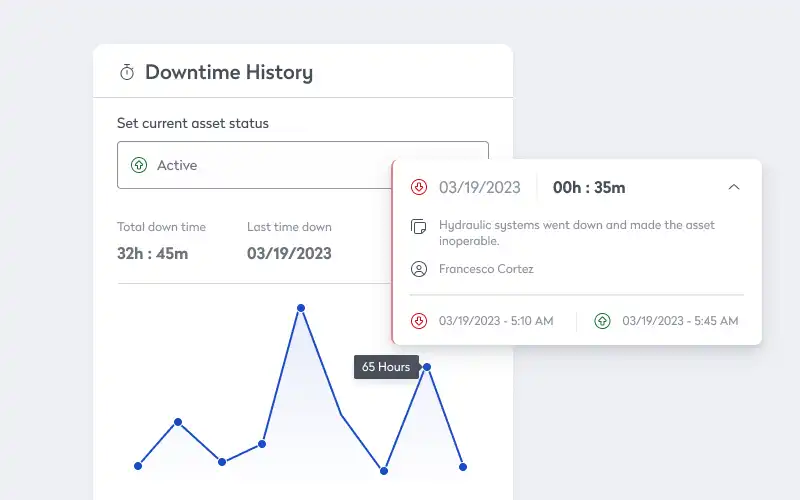
Predictive maintenance replaced guesswork, with smart sensors flagging issues before they caused downtime. Occupancy data and environmental feedback now inform dynamic space planning, climate control, and even employee engagement strategies.
For example, smart lighting systems adjust based on natural light and usage patterns, while integrated platforms help FMs align asset performance with broader workplace goals. The result is a shift from managing buildings to orchestrating environments that evolve alongside their occupants.
How AI and smart technology create the foundation of intelligent facility and workplace management across industries
Facility managers and workplace leaders across industries are facing new challenges, including pressure to optimize complex spaces and manage escalating operational costs to calls to foster seamless employee experiences and collaboration in dynamic environments.
Eptura’s AI-backed features help you address these critical needs by automating administrative burdens, thereby empowering facilities management professionals to enhance efficiency, boost employee productivity, and focus their expertise on strategic initiatives that add real value.
Intelligent Booking: Streamlining workspace access and optimizing utilization
In today’s hybrid environment, employees often waste time searching for suitable workspaces, while facilities teams grapple with inefficient manual booking and poor data.
Eptura Intelligent Booking helps you solve this by leveraging AI to understand individual requirements like team proximity or equipment needs and automatically matches and reserves the most appropriate desk or room. The AI-driven automation removes the administrative burden of finding and assigning space, boosting employee productivity, and optimizing space utilization through smarter, data-backed allocations.
Team Days: Simplifying group collaboration and space allocation
Coordinating in-office days for hybrid teams can be a logistical challenge, leading to inefficient space use and missed collaboration.
Eptura Team Days offers a structured solution: managers can reserve blocks of desks for their team on specific dates. The system then manages invitations, confirmations, and crucially, automatically releases any unbooked desks back into general inventory after a deadline.

The AI-powered coordination ensures teams have dedicated areas for collaboration, while facilities management gains clear insights into team-based space demand, reducing administrative overhead and maximizing space efficiency.
CoPilot for Technicians: Empowering maintenance teams with AI-driven efficiency
For maintenance and field service teams, administrative tasks often detract from critical hands-on work.
Eptura’s CoPilot for Technicians leverages AI to automate these burdens. Technicians can use voice commands to update work orders, log activities, and access information, eliminating manual data entry and paperwork, freeing up valuable time, allowing them to focus on repairs and preventive maintenance.
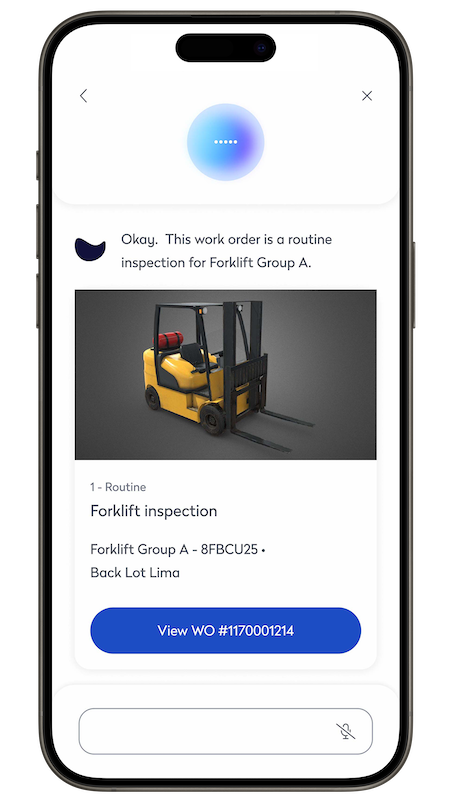
Teams see increased productivity, faster response times, and more accurate data capture, directly contributing to improved asset uptime and operational efficiency.
Eptura Envision and the power of dashboards: Unifying data for comprehensive workplace intelligence
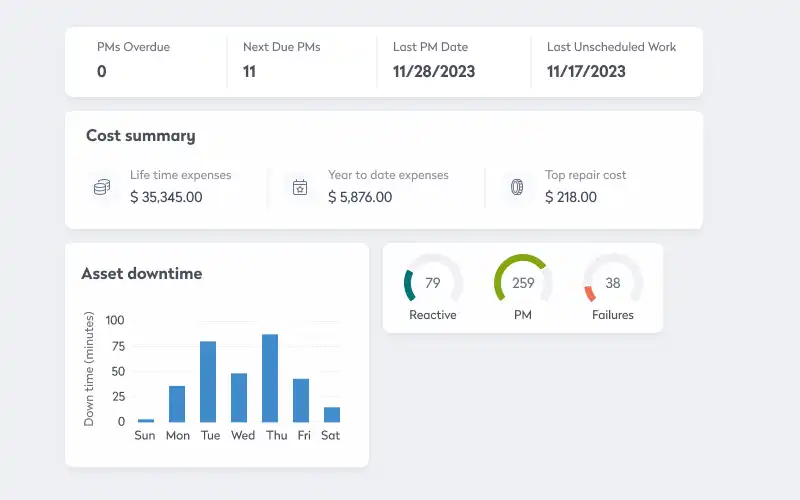
Eptura Envision is a powerful data analytics platform designed to provide comprehensive insights for facilities management and workplace leaders. It consolidates critical data points from various sources, including occupancy, real estate, and asset management, into a unified view, with:
- Centralized data view: Pulls data from all related products into one central platform, allowing users to review and understand all people, workplace, and asset operations in a single location
- Strategic decision-making: Supports strategic decision-making by providing real-time, data-driven insights, helping organizations make informed choices about their real estate strategy and track results across their entire portfolio
- Key data consolidation: Integrates occupancy data, real estate information (such as lease data), and asset performance data
- Analytics and reporting: Delivers advanced business intelligence through pre-built dashboards and simplified reporting, enabling leaders to identify trends, potential risks, and opportunities within their built environment
- Integration capabilities: It allows for direct data connection, enabling IT and data teams to feed workplace data into their existing internal analytics platforms, such as Power BI, Tableau, and Looker, for more tailored reports and deeper analysis
Eptura Envision becomes your intelligence hub, transforming operational data into actionable insights to help facilities management optimize performance, enhance experiences, and make more informed long-term strategic decisions.
Success stories from across industries: AI for hybrid work models and intelligent space and resource optimization
AI and smart technologies play an important role in hybrid work models by balancing digital and physical collaboration. AI analyzes attendance and activity patterns to recommend optimal in-office days, while smart systems manage bookings, adjust ventilation, and maintain comfort levels automatically. Together, they create a seamless experience for employees, whether remote or on-site.
At the same time, these technologies are helping revolutionize asset management by enabling predictive maintenance, optimizing asset performance, and empowering technicians with real-time data and streamlined workflows. Together, AI and smart tech create seamless experiences for employees and ensure critical assets operate at peak efficiency, whether in a dynamic office environment or a complex industrial facility.
Financial regulation leader boosts hybrid collaboration and resource utilization by eliminating blind spots
A financial regulation organization, with over 5,500 employees across more than 14 North American locations, aimed to build a flexible, purpose-driven hybrid work model. Requiring staff on-site at least three days a week, they needed a collaborative office experience to ensure in-person time was productive.
The organization faced significant challenges: limited seating in popular locations, inaccurate check-ins, and unreliable occupancy data creating space planning blind spots. A difficult user experience with limited visibility and booking friction wasted time, making it hard for employees to find colleagues and book spaces. Poorly integrated access control systems increased the risk of overcrowding and frustration on peak days.
They implemented Eptura Engage, placing collaboration and data at the core of their hybrid workplace. The solution enabled employees to create Teams, view colleagues’ schedules, and plan in-office days together with real-time status and seating maps. Integration with their Access Control System (ACS) across all 14 locations automated check-ins, while Eptura’s desk bumping feature freed unused spaces. Desk and meeting space booking were seamlessly integrated with Microsoft Outlook.
After a successful implementation, they realized:
- 365% increase in visibility into who is in the office
- 50% improvement in occupancy data
- 100% improvement for doubled resource utilization
They also reduced booking friction, enhancing employee satisfaction and fostering a more connected, productive environment.
Global manufacturer transforms maintenance from reactive to proactive with data-based insights
MDL, a leading global manufacturer of high-performance, precision-engineered products for the aerospace, defense, and industrial markets, recognized the critical need to evolve its maintenance operations. Their goal was to shift from a costly, reactive approach to a strategic, proactive model that would enhance asset performance and operational efficiency.
The organization faced significant challenges with its existing reactive maintenance strategy. Relying heavily on manual processes, paper records, and spreadsheets, MDL lacked real-time data and comprehensive visibility into asset health, maintenance history, and associated costs. This led to inefficient scheduling for technicians, increased equipment downtime, reduced asset lifespan, and higher operational expenditures, treating maintenance as a necessary evil rather than a strategic advantage.
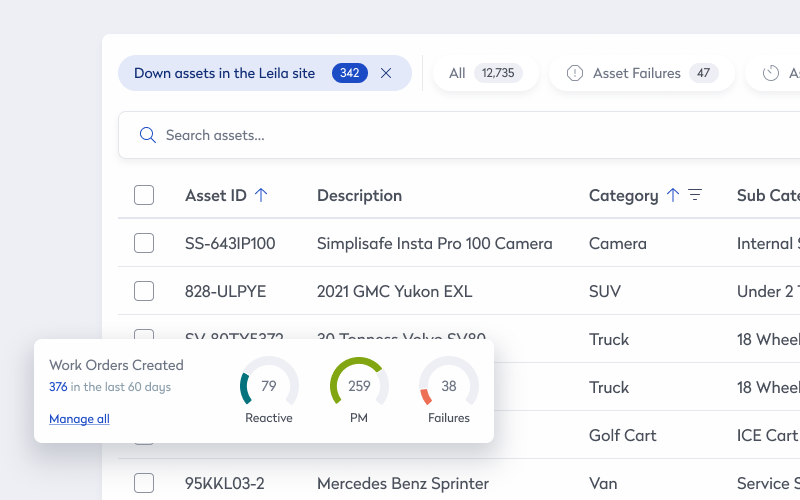
MDL implemented Eptura Asset, centralizing their maintenance data and automating work order generation for robust preventive maintenance scheduling. Technicians gained mobile access to critical information and tools, while Eptura Asset integrated seamlessly with MDL’s existing ERP and SCADA systems, providing a holistic view of operations.
After implementation, MDL saw:
- 20% reduction in equipment downtime
- 15% increase in asset lifespan
- 25% improvement in technician productivity
- 10% reduction in overall maintenance costs
The transformation allowed them to move beyond simply fixing issues as they arose, turning maintenance into a value driver that significantly improved operational reliability and cost control.
How AI is redefining the FM role: Stronger focus on strategic thinking and new partnerships across the enterprise
The integration of AI and smart technologies is fundamentally reshaping the facility management landscape. Far from replacing human expertise, AI automates routine tasks and provides important insights.
AI adoption: The shift from reactive problem-solving to strategic leadership
Instead of spending hours searching for information or responding to emergencies, managers can now use AI tools to streamline processes and make data-driven decisions that align with long-term business goals.
In the episode Empower your people: Using artificial intelligence to share knowledge in facilities maintenance from the Asset Champion podcast, Derek Crager, founder of Practical AI, explains how voice AI can centralize SOPs, safety routines, and tribal knowledge for instant access. “Voice AI can centralize SOPs, safety routines, and tribal knowledge for instant access,” he says, emphasizing that AI isn’t about replacing jobs but enhancing human capability. By reducing time spent on repetitive tasks, managers can focus on initiatives like sustainability and cost optimization, which require strategic thinking.
The conversation continues in Have a conversation: Chatbots, AI and the future of FM and asset management, where Ab DeWeese, entrepreneur and AI educator, highlights the role of conversational AI. “Chatbots will become core skills for FMs,” he notes, pointing out that these tools allow managers to query technical information quickly instead of digging through manuals. This efficiency opens the door to predictive strategies, helping managers anticipate maintenance needs and allocate resources more effectively. DeWeese adds a critical reminder: “Data organization is critical,” because clean, structured data is the foundation for AI-driven insights that inform capital planning and space utilization.
Adding another perspective, What lies ahead: AI’s role in solving key challenges in facility management from the Workplace Innovator podcast features Dean Stanberry, SFP, CFM, Immediate Past-Chair of the IFMA Global Board of Directors.
“AI can automate repetitive tasks, augment human capabilities, and offset workforce shortages.”
-Dean Stanberry, SFP, CFM, Immediate Past-Chair of the IFMA Global Board of Directors.
He emphasizes that AI isn’t about replacing people but making them more efficient so they can focus on work requiring human judgment and emotional intelligence. He also warns, “If you feed it bad data, you’re not going to get a good response,” highlighting the importance of data quality for strategic success.
In Open dialog: Discovering technology solutions and AI tools in the asset and facility management industry, Joseph Aamidor, a product management consultant, looks at the bigger picture. “Market trends show growing demand for predictive and prescriptive analytics,” he explains. These tools don’t just report what happened—they forecast what’s next and recommend actions. For facility managers, that means moving beyond firefighting to shaping the future of the workplace. AI-driven analytics help align facilities with organizational goals, whether that’s reducing energy costs or improving employee well-being.
Across these conversations, one theme stands out: AI is not replacing facility managers. Instead, it empowers them.
By leveraging voice AI, chatbots, and predictive analytics, managers can reclaim time, reduce risk, and deliver measurable business value. The future of facility management is strategic, and AI is the catalyst making it possible.
Compliance coordination: A new partnership between FM and IT
Traditionally, FM and IT have often operated in separate domains, but the lines have blurred significantly. When physical systems like access control, HVAC, and maintenance platforms leverage cloud software without adequate IT involvement, fragmented oversight can create serious vulnerabilities, which risks introducing security gaps, making it difficult to monitor threats, enforce access controls, or respond to incidents effectively.
The fragmentation can lead to auditing blind spots and expose organizations to compliance breaches and operational disruptions.
By aligning efforts, FM and IT teams can proactively identify risks, implement secure systems, and maintain consistent protocols across the organization. The partnership fosters shared accountability, leading to more informed decisions on technology investments and stronger defenses against compliance challenges.
Modern facility management platforms play an important role in enabling this collaboration.
When evaluating solutions, key features to prioritize include:
- Role-based access controls: Limiting system access based on user roles to minimize risk and enhance accountability
- Audit-ready reporting: Automatically generating detailed logs and documentation to streamline compliance reviews
- Secure cloud infrastructure: Ensuring end-to-end encryption, continuous monitoring, and secure hosting environments to protect sensitive data
- IT system integrations: Allowing seamless data sharing with existing IT security and analytics platforms for centralized oversight
For organizations seeking to ensure the highest level of cloud security, FedRAMP authorization offers significant benefits. While specifically a U.S. government-wide standard for assessing and authorizing cloud services, its rigorous evaluation process provides a powerful indicator of a platform’s security posture for any organization.
A FedRAMP-authorized solution like Aribus by Eptura has already undergone extensive third-party cybersecurity assessments and meets stringent NIST-based controls, simplifying the vetting process for IT teams, saving time and resources, and gives FM teams confidence that the solution is secure, scalable, and built to withstand sophisticated cyber threats.
For those outside the U.S., FedRAMP’s principles align with global benchmarks like ISO/IEC 27001 and GDPR, making it a reliable guide for selecting secure software.
How to successfully implement workplace AI and smart systems
The promise of workplace AI and smart tech is immense, offering opportunities for efficiency, optimization, and strategic decision-making. Realizing the potential, however, requires an understanding of common roadblocks.
According to the 2025 Workplace Index report, these challenges include:
- Insufficient skill sets: A significant barrier to AI deployment is the lack of necessary skills within organizations, indicating a gap in the workforce’s ability to effectively manage, utilize, and interpret AI technologies
- Cross-platform integration: Many organizations struggle with integrating AI solutions across their existing diverse technology platforms, often manifesting as a “lack of connected solutions” that prevents different systems from communicating and sharing data seamlessly
- Lack of perceived value: Without a clear understanding of the benefits, it becomes difficult to secure the necessary budget for these initiatives, making a lack of perceived value in integrated solutions their biggest barrier to securing budget
These challenges collectively underscore the critical need for organizations to address skill gaps, integration complexities, and value perception to successfully implement AI.
Empowering your workforce: Bridging skill gaps and fostering AI adoption
At the core of any successful AI implementation is a people-centric approach. You need to position AI as a powerful tool designed to augment human capabilities, rather than to replace them. The objective is to empower employees, enhancing their efficiency and effectiveness, thereby enabling them to focus on tasks that demand human creativity, critical thinking, and interpersonal engagement.
Transparent communication is another important element. Organizations must clearly articulate the benefits of AI, such as its capacity to automate routine and time-consuming tasks so employees can focus on higher-value work that fosters innovation and strategic growth.
To support adoption, you should also invest in targeted training and upskilling programs that give employees the necessary practical skills to proficiently utilize, optimize, and even troubleshoot AI tools.
Cultivating a data-driven ecosystem: Seamless integration for long-term success
Overcoming cross-platform integration challenges requires a foundational shift towards digitalization and a robust data culture. You can begin by digitizing core maintenance and facilities processes, moving away from fragmented systems to create a centralized, digital platform. Standardize data collection methods across all departments to ensure consistency and quality, as clean, structured data is the fuel for effective AI.
With a unified platform, AI can then deliver accurate insights and predictions. For example, AI-backed workflows can optimize space by analyzing usage patterns, as seen in smart booking systems that streamline room scheduling and provide analytics for better resource allocation. Similarly, predictive maintenance, powered by AI, can anticipate equipment failures by analyzing integrated sensor data, moving FM from reactive repairs to proactive, strategic asset management.
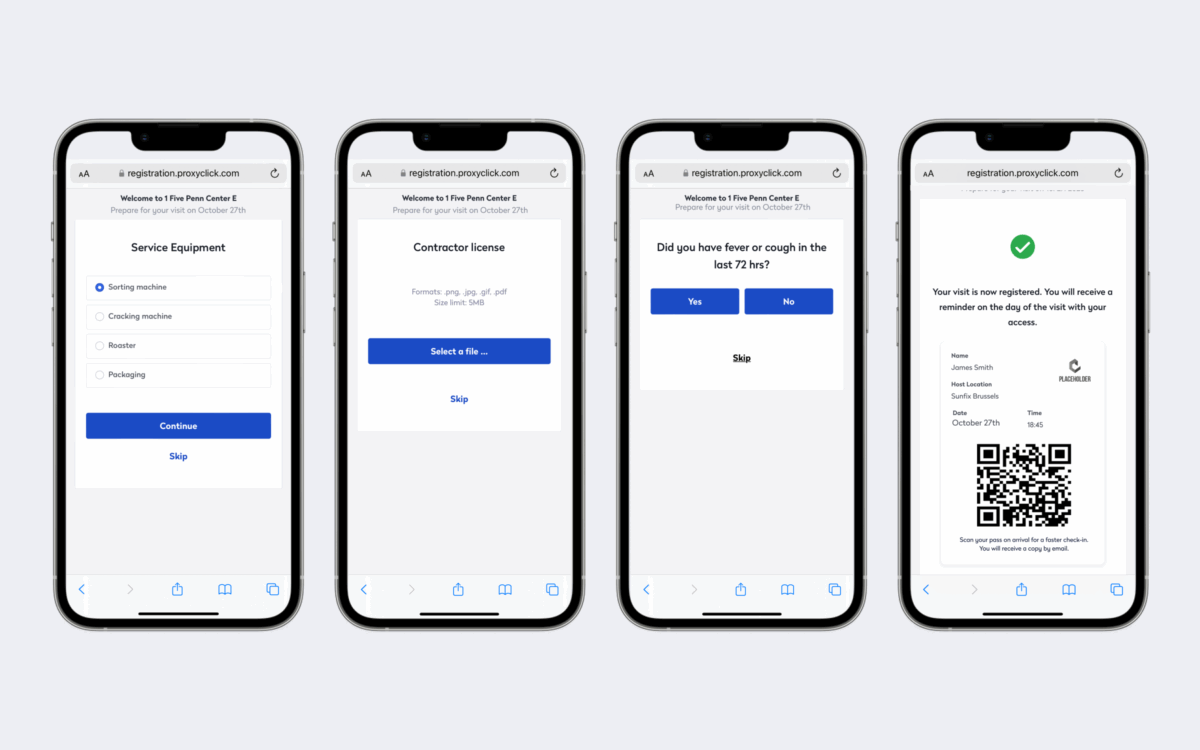
With a comprehensive data foundation, you can leverage AI to enhance everything from employee experience through intuitive service request apps to advanced security via integrated visitor management systems, ultimately blending hospitality principles with intelligent worktech to create a truly “5-star” operational environment
Building a compelling business case: Overcoming budget barriers
To secure essential investment for AI initiatives, you need to effectively articulate a clear and robust return on investment. Start by framing AI as a strategic solution that directly aligns with broader organizational objectives, including enhancing the employee experience, optimizing operational costs, and effectively mitigating various risks.
Remember that when building a comprehensive AI ROI model, you must quantify the tangible financial savings like reductions in maintenance expenditures and improvements in energy efficiency, and the significant operational enhancements, including increased asset uptime and more informed decision-making processes.
Make sure you engage early in the project with key stakeholders across the organization. Integrating perspectives from departments such as finance and IT ensures that the business case is comprehensive, addresses diverse concerns, and helps you build broader support.
Eptura’s vision for the future of workplace AI and smart technology
Eptura’s vision moves enterprise workplace AI and smart technologies beyond mere automation, creating intelligent, adaptive environments that empower people, optimize resources, and drive strategic business outcomes.
The future workplace is inherently flexible, intelligently connecting people to spaces and resources. By delivering reliable, intuitive opportunities for you to leverage AI, Eptura aims for a deeper understanding of space utilization, asset performance, and employee interaction, unlocking predictive capabilities for space planning, maintenance, and employee well-being.
A data-driven approach enables organizations to proactively adapt, optimize real estate, and cultivate environments fostering collaboration, productivity, and employee experience, elevating facility and workplace leaders to strategic partners, working across teams and departments to contribute to overall organizational goals.