



Stack planning is no longer a spreadsheet exercise. It’s how organizations transform fragmented systems and competing demands into strategic clarity by linking leases, occupancy, workplace experience, and long-term portfolio value.
Enterprise leaders tell us the greatest challenge isn’t just how much space they control it, it’s whether that space fits how people actually use it. As Ryan Anderson of MillerKnoll shared on the Workplace Innovator podcast, “If you design to the average, you fail at the peak — and it’s the peak that matters most.”
Stack planning under constraints requires real measurements, real conversations, and real leadership.
Key takeaways
- Constraints are strategic signals, not obstacles — when measured and modeled correctly
- Hybrid work requires planning to peaks, not averages, using real behavior and predictive analytics
- Cross-site visibility transforms local decisions into portfolio-level strategy
- Integrated platforms turn fragmented data into actionable insights
- Modern stack planning reduces cost, risk, and friction — while improving employee experience
Lease exposure: Seeing risk before it becomes cost
Lease timelines are fixed. Workforce plans are not.
Many organizations discover underused capacity only after renewal conversations are underway. Bryan Berthold, Global Workplace Experience Leader at Cushman & Wakefield, highlighted that mandates alone won’t drive workplace value — people and behaviors do, and they must inform strategic decisions.
“We All Have a Role” dives into why CRE teams must partner across functions rather than operate in isolation, especially when evaluating renewal risks or lease commitments.
Proactive stack planning links critical dates and obligations to utilization trends. Instead of reacting to an expiration letter, teams can evaluate scenarios months or years out — asking:
- What happens if demand grows by 10–20%?
- Can we consolidate under-utilized wings?
- Will staggered hybrid schedules reduce the need for assigned desks?
When lease data is connected to occupancy analytics, rather than trapped in separate systems, risk becomes visible early, not costly late.
Eptura Workplace centralizes leases and utilization, giving CRE, finance, and IT stakeholders a shared picture of exposure and options. This is how teams move from reactive renewals to strategic portfolio decisions.
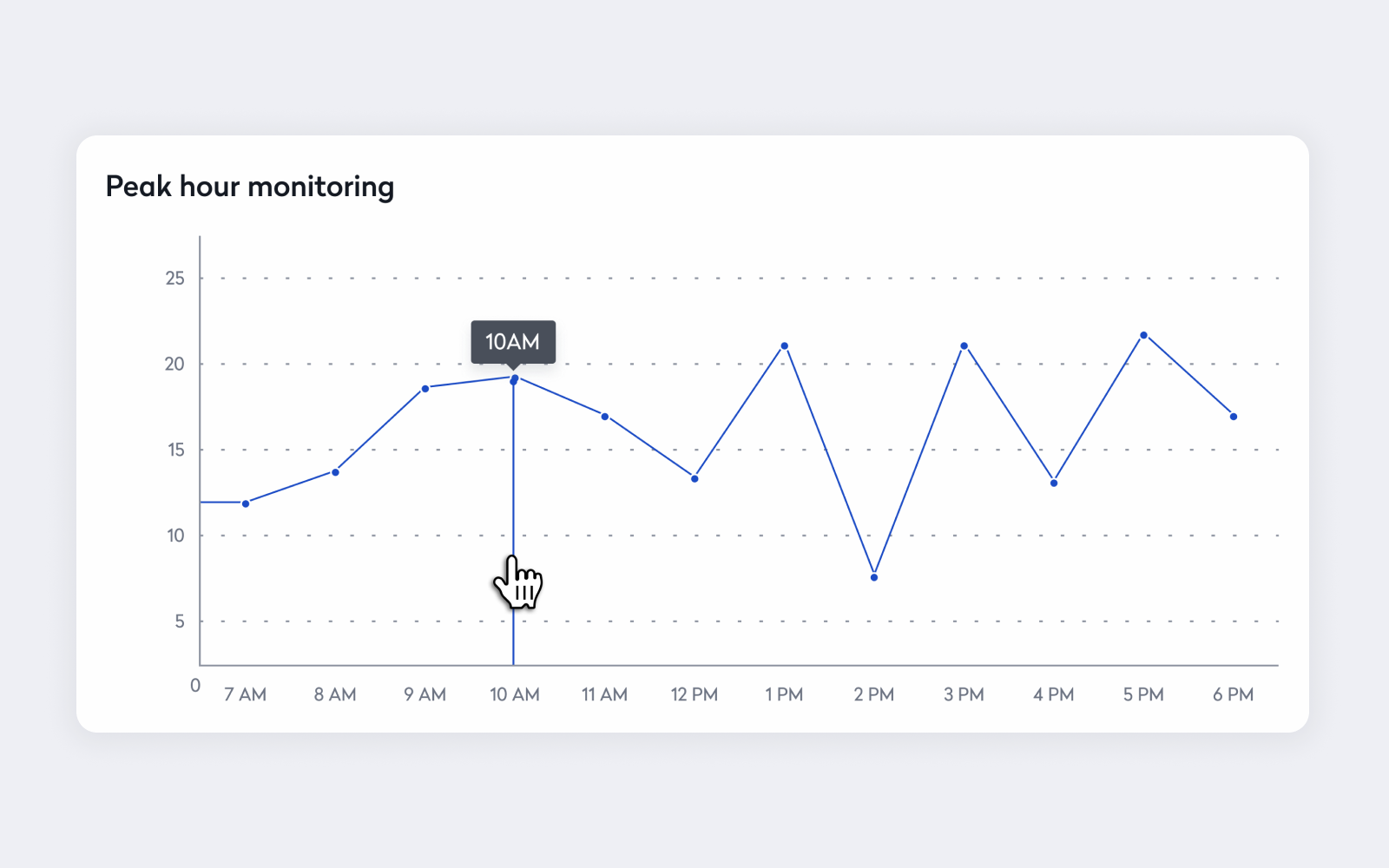
Hybrid demand and the shift from averages to real behavior
Hybrid doesn’t mean half the workforce is always remote. It means patterns shift constantly — and the only way to plan for that is with data.
Vik Bangia, MCR and CEO of Verum Consulting, explored how AI and smart systems help organizations think more strategically about workplace use and future demand.
“The Art of the Possible” with Pendrick Brown (Principal at HLW), the conversation turned to how technology + design insights can actually predict space use — offering more reliable models for peak occupancy and adjacency planning.
Here’s what this means for hybrid planning:
- Traditional averages obscure peaks. For many portfolios, mid-week occupancy can be 30–50% higher than Mondays or Fridays — data that makes a huge difference in stack decisions.
- People don’t just book desks — they seek collaboration opportunities, social interaction, and specific tools on certain days.
- Predictive analytics (backed by AI) reveal patterns that outpace legacy forecasting methods.
Tools like Serraview and Eptura’s integrated analytics allow teams to visualize scenarios based on real weekly rhythms — then optimize layouts, seat ratios, and adjacencies accordingly.
Instead of designing to a static mean, leaders design to behavior, unlocking space efficiencies often in the 15–25% reduction range while improving workplace experience.
Cross-site scenarios and the move from local to global strategy
Most enterprises don’t operate around a single workspace; they manage networks.
Acquisitions. Rapid hiring in certain markets. Regional policies. Different work cultures. All of these amplify complexity.
David Dewane, Chief Experience Officer for Physical Space at Geniant, emphasized the importance of understanding real workplace behaviors before making portfolio decisions.
One notable takeaway from that episode: you have to “understand the reality” of how teams use space — because planning without authentic insight is essentially guesswork layered with cost.
For cross-site stack planning, this means:
- Standardized metrics that apply globally
- Centralized dashboards showing occupancy, allocation, and demand across regions
- Scenario modeling that reveals where growth, contraction, or restacking will have the most impact
Leaders report that when they shift from siloed site planning to portfolio modeling, they uncover opportunities to migrate capacity, reduce redundant leases, and streamline moves.
And because real estate now behaves like an agile asset — rather than a fixed liability — teams can respond faster to change orders from finance, HR, or business strategy.
Technology enablers for modern stack planning
Across the Workplace Innovator podcast, a recurring theme is that data alone isn’t transformation — integration is.
Amanda Schneider, founder of ThinkLab, highlighted the emerging need to connect space strategy, human experience, and data storytelling — not just collect metrics in isolation.
Meanwhile, broader research from Eptura’s workspace insights confirms that many organizations still run a high number of siloed systems, which slows decision-making and inflates costs.
Stack planning under constraint needs:
- Real-time feeds
From HRMS systems to booking engines and sensors — the faster data flows, the earlier leaders can evaluate options and anticipate trends. - Prediction, not just reporting
AI models can forecast utilization peaks, highlight over-allocated zones, and suggest consolidation paths. This turns analysis into advice. - Connected platforms
Because decisions don’t live in silos. CRE, IT, HR, finance, and operations all need access to the same version of the truth.
Integrated platforms unify these domains, so stack planning under constraint isn’t guesswork but strategic planning with confidence.

Measurable impact and proof in practice
The advantage of intelligent stack planning is measurable:
- Portfolio cost optimization — organizations often find double-digit reductions through smarter distribution of space
- Velocity of moves — scenario planning tools turn what once took weeks of coordination into days of evaluation
- Employee adoption — data shows employees are more satisfied when space aligns with purpose (collaboration zones on peak days, quiet focus spaces when needed, etc.)
Rex Miller (Author & Futurist) reframed workplace planning as moving “from think tank to do tank” — essentially urging leaders to stop theorizing and start operationalizing insights across their organizations.
This kind of executive framing — to think and act strategically — mirrors the shift stack planning requires: from static planning to continuous foresight.
Strategy that holds under pressure
Constraints aren’t temporary. They’re structural.
Lease liabilities, hybrid behaviors, cross-site complexity, and expectations for workplace experience aren’t going away — they’re evolving.
Leaders who succeed turn stack planning into a capability, not a campaign:
- Connect data streams — unify HR, finance, occupancy, and space systems
- Model scenarios continuously — don’t wait for quarterly reviews
- Pilot early, scale consistently — validate in priority sites, then expand
- Drive with executive narrative — speak in cost, risk, and employee experience
Solid stack planning doesn’t just reduce space — it reduces risk, accelerates response times, and strengthens organizational confidence in workplace choices.
Frequently asked questions

By Amanda Meade
Amanda Meade is a content creator at Eptura, specializing in workplace experience, meeting productivity, and emerging trends in workspace planning and visitor management. With a background in content marketing and SEO, she crafts clear, actionable content that helps teams work smarter through in-office collaboration. Throughout her career, Amanda has worked across industries, including home services, healthcare, real estate, and SaaS, developing a unique ability to distill complex topics into practical insights.