Introduction
Hybrid work has evolved from a temporary response to disruption into a long-term operating model that reshapes how organizations plan, collaborate, and grow. Leaders are rethinking the office’s purpose, redesigning spaces to accommodate changing attendance rhythms, and adopting systems that help people move seamlessly between physical and digital environments.
Insights from the 2025 Eptura Workplace Index show that hybrid patterns have stabilized—most organizations experience in-office peaks Tuesday through Thursday, with lighter usage on Mondays and Fridays. This rhythm is driving new approaches to space planning, team scheduling, and employee experience. As expectations shift, flexibility has become a prerequisite for attracting and retaining talent, with employees prioritizing autonomy, mobility, and access to purpose-built environments that support different modes of work.
External research reinforces this momentum. Stanford economist Nicholas Bloom’s WFH Project reports that hybrid work has remained remarkably steady, while Scoop’s Flex Index shows that more than 62% of U.S. companies now operate on structured hybrid schedules. Globally, organizations are embracing hybrid to optimize real estate, strengthen productivity, and support employee well-being.
At the same time, hybrid introduces new challenges, like coordination, visibility, communication equity, and culture-building, that require intentional strategy and integrated workplace technology.
What is a hybrid workplace?
A hybrid workplace blends on-site and remote work, giving employees flexibility while ensuring a cohesive experience across locations. It sits between traditional office-based and fully remote models, with organizations intentionally coordinating when and why people come together for collaboration, culture, and shared purpose.
The goal is not flexibility alone, but creating the right conditions for productivity, connection, and well-being—requiring new approaches to office design, workflows, and employee support.
A modern hybrid workplace includes several core elements:
- Flexible work policies that define which roles can work remotely and how schedules are coordinated.
- Adaptive spaces designed for collaboration, focus work, social connection, and client interaction.
- Digital infrastructure for desk and room booking, space planning, and visitor management.
- Employee-centered design that promotes autonomy, equity, and well-being.
- Data-driven decision-making through workplace analytics.
Together, these components turn flexibility into a strategic advantage.
Hybrid models
Hybrid work is not a single structure — it’s a spectrum of operating models that blend autonomy, coordination, and workplace design in different ways. Each model determines who works where, when, and why, shaping everything from space utilization to team dynamics and leadership practices. While many organizations use a mix of approaches, most hybrid strategies fall into five core categories.
Role-based hybrid work
In a role-based model, the nature of the job determines where work occurs. Employees whose responsibilities depend on specialized equipment or in-person interaction — such as facilities teams, labs, or client-facing roles — spend more time on-site. Knowledge workers or highly autonomous roles may work remotely more frequently.
Role-based hybrid work implications for scheduling:
- In-office days vary by role rather than by team
- Space demand is predictable at a departmental level but uneven across the organization
- Requires careful definition of which responsibilities require presence to ensure fairness and clarity
Team-based hybrid work
A team-based model organizes schedules around how groups collaborate. Instead of individuals choosing their own patterns, teams align in-office days to support shared goals, project timelines, and cross-functional work.
Team-based hybrid work implications for scheduling:
- Teams determine their cadence (e.g., Tuesdays and Thursdays in-office for sprint planning, retros, and collaboration)
- Supports predictable overlap and a stronger connection among team members
- Requires cross-team coordination to avoid conflicting peaks or overcrowded spaces
Schedule-based hybrid work
In schedule-based hybrid work, the organization sets specific, recurring on-site days for all or most employees. This is the most structured approach and is often used by enterprises that need consistency for operational, compliance, or cultural reasons.
Examples include two-to-three structured in-office days per week, or “anchor days” aligned with company wide events, leadership updates, or customer engagements.
Schedule-based hybrid work implications for scheduling:
- Reliable in-office density that makes it easier to plan desk availability, meetings, and amenities
- Best suited to organizations with clear collaboration rhythms or regulatory requirements
- Limits individual autonomy but increases predictability
Flexible hybrid work
Flexible hybrid work gives employees maximum autonomy to decide when they come into the office based on personal preferences, project needs, or changing daily tasks. This model prioritizes mobility, choice, and openness.
Flexible hybrid work implications for scheduling:
- Highly variable attendance patterns that require dynamic space planning and real-time visibility tools
- Employees come in for specific reasons — collaboration, social connection, access to resources — rather than assigned days
- Strong workplace technology is essential to prevent bottlenecks, misalignment, or underutilization
Location-based hybrid work
A location-based model provides geographic flexibility, allowing employees to work from satellite offices, coworking spaces, smaller local hubs, or their homes. This model is increasingly common among global and distributed organizations.
Location-based hybrid work implications for scheduling:
- Office presence is shaped by proximity rather than mandatory attendance
- Coworking partnerships or regional hubs may supplement primary headquarters
- Requires unified systems so employees across multiple sites have a consistent workplace experience
Across these models, the most successful hybrid organizations use data, intentional scheduling frameworks, and workplace technology to balance autonomy with coordination. Choosing the right model, or combination, depends on business goals, team needs, and the level of structure required to maintain productivity and culture.

Benefits of a hybrid workplace
Hybrid workplaces offer value far beyond flexibility. When supported by the right policies, culture, and worktech, hybrid models become a catalyst for higher productivity, more efficient real estate use, stronger employee engagement, and better long-term business performance.
Increased productivity and focused work
Hybrid work allows employees to choose the environment that best fits the task. A global biotech company improved productivity by redesigning spaces around focus and collaboration using workplace utilization insights.
Greater autonomy that strengthens performance
Autonomy is a core driver of employee satisfaction, motivation, and retention. Hybrid workplaces grant employees more control over their schedules, helping them better manage life demands while staying aligned with organizational goals.
A multi-national healthcare organization empowered employees with flexible schedules and self-service booking, reducing workflow friction and improving engagement.
Cost optimization through better resource planning
Hybrid work reshapes how organizations invest in people, technology, and space. Rather than maintaining fully staffed, fully utilized facilities every day, hybrid allows real estate to scale with actual demand.
An international transport and industrial services provider used utilization data to align space capacity with real attendance, reducing waste while maintaining operational continuity.
Higher space efficiency across portfolios
Space efficiency is one of the most immediate and measurable benefits of hybrid work. Organizations shift from a model centered on assigned seating to one where flexible, purpose-built spaces support dynamic attendance patterns.
Improved engagement and a stronger workplace experience
Hybrid workplaces, when intentionally designed, support higher levels of engagement by making time in the office more meaningful. Teams come together for collaboration, mentorship, and connection, while remote work supports well-being and work-life harmony.
Challenges of a hybrid workplace
Hybrid work delivers clear organizational value, but it also introduces operational, cultural, and technological complexities. Eptura’s consultants and Workplace Index findings show that many organizations underestimate the coordination required for employees who move fluidly between locations.
Without the right systems, hybrid strategies can create friction rather than flexibility. Below are the most common challenges leaders encounter.
Scheduling complexity and coordination gaps
Hybrid attendance patterns fluctuate, often peaking midweek. This “midweek mountain” makes it difficult to plan space, align teams, and maintain a smooth employee experience. Without visibility into who plans to be onsite, organizations face overbooked rooms, underused spaces, and missed collaboration opportunities.
Eptura Engage Analytics helps leaders anticipate demand by surfacing attendance patterns, booking behavior, and collaboration hotspots.
Communication equity and inclusion across locations
Hybrid work can unintentionally favor in-person participants unless communication norms are clearly defined. Remote employees may miss informal discussions or lack timely access to information and leadership.
Standardized meeting practices, consistent communication protocols, and integrated digital tools ensure all employees, regardless of location, experience equal access and alignment.
Collaboration barriers and fragmented workflows
Teams need both synchronous and asynchronous collaboration to function effectively. Without unified systems, employees may struggle to track work, coordinate meetings, or maintain visibility into project progress.
Eptura’s connected workplace and asset platforms centralize activity, reduce workflow fragmentation, and help leaders understand how collaboration shifts between onsite and remote days.
Space usage variability and real estate right-sizing
A major challenge is the mismatch between fixed real estate footprints and dynamic hybrid attendance. Organizations often maintain too much space or allocate it inefficiently.
Utilization insights from Eptura reveal underused areas, midweek bottlenecks, and future needs—helping leaders redesign high-demand zones and right-size their footprint without hurting employee experience.
Cultural alignment and employee experience gaps
Culture can easily fragment in a hybrid environment. Employees may experience inconsistent connection, mentorship, or clarity around the purpose of office time.
Eptura’s Workplace Index shows that employee-led hybrid policies—where employees choose their onsite days—correlate with higher engagement and projected revenue gains. Engagement dashboards help leaders track sentiment and refine practices to strengthen culture.

Compliance, security, and operational consistency
With more fluid movement of employees, contractors, and visitors, hybrid work introduces added compliance and security risks. Organizations must manage access, support safety standards, and maintain reliable operations across varying occupancy levels.
Eptura’s centralized service request management, which has helped customers achieve up to 99% on-time completion rates, provides the operational backbone—reducing errors, streamlining workflows, and improving building security.
Hybrid work presents real challenges, but each can be addressed with data-driven insights, intentional policies, and integrated workplace technology. Organizations that treat hybrid as an evolving system, rather than a static model, are the ones that achieve long-term success.
Technology ecosystem for a hybrid workplace
Technology is the backbone of a successful hybrid workplace, ensuring that people, spaces, assets, and schedules stay coordinated as attendance patterns shift. Without the right systems, hybrid operations become unpredictable and inefficient.
Modern organizations depend on an integrated technology ecosystem to deliver consistency, real-time space visibility, and seamless experiences for employees and visitors.
Desk and room booking systems
Booking tools provide the foundation for coordination in a hybrid environment. They allow employees to reserve desks, offices, collaboration zones, and meeting rooms based on the day’s needs, ensuring the workspace is ready before they arrive.
Why it matters in hybrid environments:
- Reduces uncertainty about where to sit or meet
- Prevents overcrowding on peak days
- Helps teams coordinate in-office collaboration
- Supports agile space use instead of static assigned seating
When integrated with space analytics and wayfinding, booking tools help organizations proactively manage attendance patterns and ensure the office remains both functional and predictable.
Workplace management platforms
Workplace management solutions tie together space planning, move management, resource allocation, and day-to-day operations. In hybrid environments—where space demand constantly shifts—these tools give leaders the visibility and control needed to adapt.
Eptura Workplace enables:
- Space planning and floor plan management
- Seat assignments for dynamic teams
- Real-time visibility into occupancy and allocation
- Faster move processes and improved employee productivity
- Wayfinding tools for large or multi-site workplaces
Space analytics and utilization insights
Hybrid attendance patterns fluctuate daily, making data essential for decision-making. Space analytics reveal how employees use rooms, desks, and collaboration areas—highlighting underutilized zones, bottlenecks, and opportunities to optimize or consolidate.
Key benefits:
- Accurate forecasting for real estate planning
- Better alignment of space types to work modes
- Reduced wasted square footage
- Data-driven policy and scheduling decisions
Visitor management systems
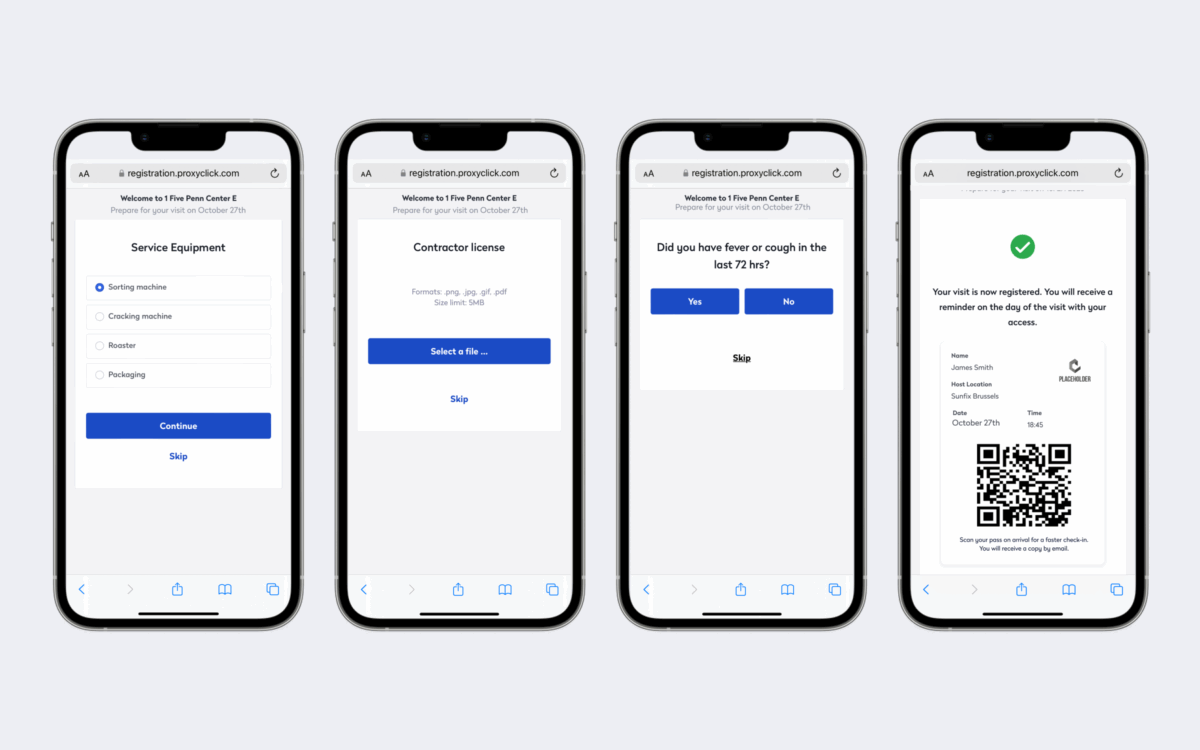
Hybrid work increases building traffic variability—from contractors and clients to rotating teams and in-person events. Visitor management ensures safe, compliant, and efficient entry for anyone who walks through the door.
Eptura Visitor includes:
- Pre-registration workflows
- Streamlined check-in and automated badge printing
- Integration with access control systems
- Emergency notifications and evacuation management
These capabilities strengthen security, reduce administrative overhead, and support compliance—making visitor experiences smooth and predictable even on high-traffic days.
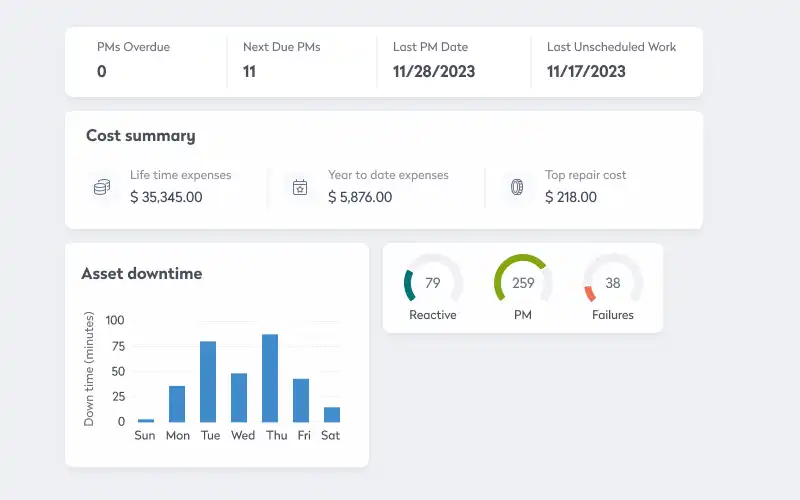
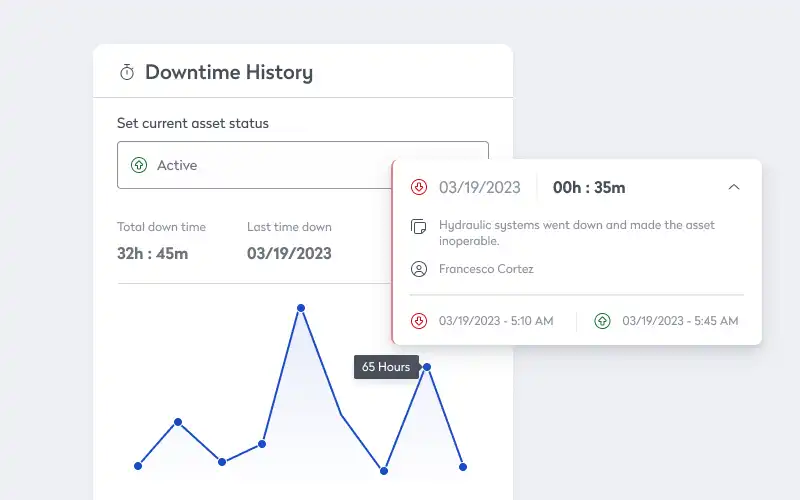
Asset coordination and preventive maintenance
Hybrid workplaces rely on a complex ecosystem of equipment, technology, and building systems that must operate reliably. Asset management tools ensure those systems stay functional.
Eptura Asset provides:
- Preventive maintenance scheduling
- Asset performance tracking and lifecycle monitoring
- Mobile work order management for distributed teams
- Compliance documentation and risk mitigation
Wayfinding and navigation tools
With dynamic seating and changing team locations, hybrid offices require intuitive systems that help employees find their way, especially in large campuses or multi-building environments.
- Guide employees to reserved desks and meeting rooms
- Visualize floor plans and available spaces
- Reduce time spent searching for resources
- Ease the transition for new hires and rotating teams
Space planning in a hybrid workplace
Hybrid work fundamentally reshapes how organizations design and manage their physical spaces. Instead of static seating and one-size-fits-all layouts, hybrid environments require adaptable, multi-purpose floor plans that support a wide range of work modes.Space planning becomes a dynamic, data-driven practice—one that must adjust to fluctuating attendance patterns and evolving employee needs.
| Focus Area |
Key Insights & Actions |
| Utilization & Occupancy |
Measure peak vs. low-day attendance and space type usage to identify underused areas and confirm if policies match real behavior. |
| Booking Patterns |
Track reservation volume, no-shows, and hotspots to uncover friction points and improve access to high-demand resources. |
| Employee Experience |
Use pulse surveys and engagement dashboards to understand how hybrid work supports well-being and performance. |
| Meeting Effectiveness |
Monitor the mix of remote vs. in-person attendees and tech reliability to strengthen collaboration and meeting equity. |
| Cost & Portfolio |
Evaluate cost per seat and consolidation savings to guide smarter real estate ROI and portfolio decisions. |
| Visitor Flow |
Track check-in volume and pre-registration rates to improve security and the overall visitor experience. |
| Technology Adoption |
Measure booking adoption and work order completion to ensure digital workflows deliver maximum value. |
Coordinating People & Schedules in a Hybrid Workplace
Hybrid success depends on more than flexible space—it requires intentional planning to ensure teams overlap at the right times, avoid overcrowding, and maintain strong communication no matter where they work. Coordination is the glue of hybrid work: the system that transforms freedom into alignment.
Aligning team days to enable effective collaboration
Designating team days helps groups plan, problem-solve, and connect with predictable overlap. This improves collaboration quality, reduces meeting congestion, strengthens culture, and ensures purposeful use of shared spaces. With booking tools and analytics, leaders can stagger team days to prevent midweek overload.
Preventing overcrowding through forecasting and visibility
Hybrid attendance fluctuates, often creating midweek peaks. Forecasting tools help organizations predict busy days, manage capacity across floors or sites, and guide teams toward alternative spaces. When employees can see who plans to be onsite, they make better choices around coordination and scheduling.
Communication norms that support distributed teams
Hybrid teams function best when real-time collaboration is paired with strong async workflows. Synchronous work benefits from planned in-office overlap, while asynchronous tasks, like documentation and deep-focus work. thrive through shared tools and clear processes. This balance improves alignment, reduces burnout, and streamlines project execution.
Balancing synchronous and asynchronous work
Hybrid teams function best when real-time collaboration is paired with strong async workflows. Synchronous work benefits from planned in-office overlap, while asynchronous tasks, like documentation and deep-focus work, thrive through shared tools and clear processes. This balance improves alignment, reduces burnout, and streamlines project execution.
Hybrid Implementation Roadmap
Implementing hybrid work is not a single decision—it’s an organizational transformation that affects people, policies, workflows, space, and technology. The most successful organizations treat hybrid work as a structured change initiative rather than an ad hoc shift in scheduling.
Eptura’s consultants emphasize that hybrid success depends on clear role definitions, data-driven planning, consistent policy application, and iterative improvement based on real utilization patterns and employee behavior.
The roadmap below outlines the high-level stages every organization should follow when planning and rolling out hybrid operations.
1
Role Identification and Work-Type Analysis
The foundation of hybrid work begins with understanding who can work remotely, when, and why. Eptura’s consulting teams note that organizations often skip this step, resulting in inconsistent expectations and poor adoption.
Actions:
- Categorize roles based on task requirements (focus work, client interaction, equipment needs, regulatory constraints).
- Identify which responsibilities require on-site presence and which can be performed remotely.
- Segment roles into groups such as fully on-site, hybrid eligible, fully remote, or field/mobile.
- Engage department leaders to validate assumptions and ensure alignment with team workflows.
Outcome: A role-based hybrid eligibility framework that creates clarity and sets realistic expectations for employees and managers.
2
Policy Creation and Governance
Policies must balance structure with flexibility. Eptura Insights show that employee-led hybrid policies deliver the highest engagement and projected revenue gain (3–8%), but even flexible models require clear rules.
Actions:
- Define expectations for in-office attendance (team days, anchor days, minimum presence, or flexible guidelines).
- Establish meeting equity standards and communication norms to support distributed teams.
- Document security, compliance, and access controls for employees, contractors, and visitors.
- Align policies to company culture—consultants note that misalignment here is one of the top causes of hybrid failure.
- Create governance guidelines for adjusting policies over time based on metrics.
Outcome: A clear, inclusive hybrid policy that removes ambiguity and ensures consistency across departments, locations, and managers.
3
Space Assessment and Scenario Planning
Hybrid work changes space needs dramatically. Eptura consultants often find that organizations carry excess real estate or underutilized rooms because space planning hasn’t been updated for modern behavior.
Actions:
- Use utilization data to identify peak days, unused zones, and high-demand collaboration areas.
- Map existing floor plans to work-mode needs: focus rooms, collaboration spaces, project rooms, social hubs.
- Conduct scenario planning with tools like Archibus or Serraview to evaluate future layouts, consolidation opportunities, or campus redesigns.
- Plan for flexible seating (hot desks, neighborhoods, shared workpoints) rather than fixed assignments.
- Define space entitlements per role or team, particularly for high-traffic departments.
Outcome: A workspace strategy tailored to hybrid behaviors—right-sized, flexible, and aligned with real demand.
4
Technology Planning and Integration
Hybrid work depends on a seamless tech ecosystem that unifies people, spaces, and schedules. Eptura consultants consistently find that fragmented systems create friction, duplicate work, and inconsistent experience.
Actions:
- Assess current tools for booking, wayfinding, visitor management, asset tracking, and service requests.
- Identify gaps and integration needs across departments and locations.
- Deploy Eptura Workplace for space planning, seat assignments, move management, and wayfinding.
- Implement Eptura Asset for preventive maintenance, asset performance tracking, and mobile work order management.
- Roll out Eptura Visitor for secure check-in, pre-registration, and access control alignment.
- Integrate Facility Solutions (Archibus, Serraview) for real estate planning, occupancy analytics, and multi-phase move coordination.
- Ensure all platforms share data for unified reporting.
Outcome: A connected technology ecosystem that provides real-time visibility and a cohesive experience across the hybrid workplace.
5
Scheduling Rules and Coordination Frameworks
Hybrid work requires intentional scheduling to maximize collaboration and prevent overcrowding—especially on mid-week peak days identified by Workplace Index data.
Actions:
- Establish rules for team days, anchor days, or flexible attendance planning.
- Use analytics dashboards to forecast peak days and guide smarter scheduling.
- Provide visibility into who will be on-site to support planning and reduce bottlenecks.
- Standardize meeting formats to support both in-person and remote participants.
- Encourage teams to align in-office days for major planning cadences or project cycles.
Outcome: Predictable, coordinated attendance that aligns people, projects, and spaces.
6
Training and Change Management
Hybrid work introduces new norms around communication, space usage, and technology. Eptura consultants identify change management gaps as one of the biggest barriers to hybrid success.
Actions:
- Train employees on booking tools, wayfinding, visitor workflows, and meeting equity practices.
- Equip managers with hybrid leadership skills: asynchronous communication, outcome-based management, and team alignment.
- Provide role-specific training (e.g., facilities teams for move management tools, IT for integration workflows).
- Offer guides, onboarding modules, and quick-reference resources for new employees.
- Communicate regularly about policy updates, space changes, and tool enhancements.
Outcome: A confident, informed workforce that can navigate hybrid workflows smoothly.
7
Phased Rollout and Pilot Programs
A phased approach allows organizations to test strategies, validate assumptions, and gather employee feedback before large-scale rollout.
Actions:
- Start with a pilot group or single location to test hybrid policies, booking tools, and new floor plans.
- Collect qualitative and quantitative feedback on usability, collaboration, and space usage.
- Adjust policies, layouts, or tools based on findings.
- Expand rollout across departments, campuses, or regions in structured phases.
- Document playbooks for consistency across new locations.
Outcome: A scalable hybrid model reinforced by evidence, not guesswork.
8
Monitoring, Analytics, and Continuous Improvement
Hybrid work is never “done”—it evolves as employee needs, and business priorities evolve.
Actions:
- Use Eptura Engage Analytics to track occupancy, booking trends, attendance rhythms, and space demand.
- Monitor service request completion rates and asset performance metrics to maintain operational efficiency.
- Evaluate employee sentiment through engagement dashboards and pulse surveys.
- Refresh space layouts, scheduling rules, or policies based on utilization patterns.
- Benchmark performance against Workplace Index findings and industry best practices.
- Create quarterly or semiannual hybrid reviews to adjust strategy.
Outcome: A living, adaptable hybrid program supported by real-time data and continuous optimization.
Measuring Success in a Hybrid Workplace
A hybrid workplace is most effective when leaders can continuously evaluate how well the model supports people, productivity, and operations. Measuring success requires more than tracking attendance—it demands a holistic understanding of how spaces are used, how employees experience work, and how efficiently the organization operates.
| Success Dimension |
What to Measure / Why it Matters |
| Utilization and Occupancy Trends |
Metrics: Peak vs. low-day occupancy, space type usage, desk/room check-ins, floor/building distribution.
Why it matters: Improves capacity planning, identifies underused areas, and confirms whether policies align with real behavior. |
| Booking Patterns and Resource Demand |
Metrics: Reservation volume, no-shows, late cancellations, booking hotspots, advance lead times.
Why it matters: Highlights friction points, improves meeting room availability, and prevents competition for high-demand spaces. |
| Employee Satisfaction and Experience |
Metrics: Pulse surveys, experience scores, engagement dashboards, sentiment trends, workspace feedback.
Why it matters: Combines sentiment and utilization insights to show how hybrid work supports well-being and performance. |
| Meeting Effectiveness and Collaboration |
Metrics: % of hybrid meetings, AV/tech performance, meeting overload (frequency/duration), post-meeting outcomes.
Why it matters: Identifies barriers to inclusive collaboration and helps optimize hybrid meeting practices. |
| Cost Efficiency and Portfolio Performance |
Metrics: Cost per occupied seat, savings from consolidation, asset/maintenance costs, utilities, real estate ROI.
Why it matters: Enables scenario planning and justifies real estate decisions using tools like Archibus and Serraview. |
| Visitor Flow and Building Access |
Metrics: Check-in volume, pre-registration rates, processing time, badge compliance, emergency preparedness.
Why it matters: Improves security, compliance, and visitor experience through Eptura Visitor insights. |
| Technology Adoption and Workflow Efficiency |
Metrics: Booking platform adoption, wayfinding/mobile usage, work order completion, service request resolution times.
Why it matters: Reveals where digital workflows succeed or need refinement; high adoption drives maximum operational value. |
Future trends — What’s next for hybrid work
Hybrid workplaces are still evolving. What once was a reactive response to disruption is now rapidly morphing into a dynamic, technology-powered, employee-centric model. Looking ahead, several trends stand out as defining the next phase of the hybrid transformation.
AI-powered analytics & intelligent workflows
AI and predictive analytics are becoming essential for managing hybrid workplaces, helping organizations forecast occupancy, optimize space usage, and streamline maintenance. As highlighted in Eptura insights, AI-backed workflows enable faster, data-driven decisions that improve operational excellence.
Workplace Innovator guests emphasize that emerging technologies and dynamic space assignment are shifting offices from reactive to predictive environments, where automated, context-aware systems reduce overhead and increase agility.
“We’re entering an era where AI doesn’t just collect data — it connects the dots for us. The workplace is becoming predictive, not reactive.”
— Workplace Innovator Podcast: Emerging Workplace Technologies and the Dynamic Assignment of Space
As a platform combining workplace, asset, visitor, and facility management tools, Eptura is already structured to support AI-enabled workflows. Organizations using Eptura are well-positioned to adopt predictive maintenance, dynamic space assignment, and real-time occupancy forecasting.
Dynamic scheduling & experience-first offices
By 2026, hybrid work will be the norm, moving beyond “office versus remote” debates toward fluid scheduling supported by smart booking systems and workplace technology.
The physical office will continue shifting toward a hub for connection and culture—requiring flexible, multipurpose spaces rather than rows of fixed desks. Expect greater adoption of activity-based design and modular layouts as companies prioritize experience over square footage.
“Flexible work isn’t going away. What’s changing is how intelligently we can plan it. Technology now lets organizations design in-person moments with purpose.”
— Workplace Innovator Podcast: Designing Intentional Workplaces with Liz Burow
Sustainability & real estate optimization
Organizations are increasingly using data to right-size their real estate—consolidating footprints and cutting environmental waste. When paired with predictive maintenance, hybrid workplaces lower energy use and extend asset lifecycles.
“Real estate leaders are rethinking every square foot. With the right data, we can finally align footprint to actual behavior — not assumptions.”
— Workplace Innovator Podcast: Data-Driven Solutions for Improving Workplace Experience
From hybrid to “blended” work
Emerging research suggests the next frontier is blended work, where AI, automation, human creativity, and flexible spaces converge:
- Physical desks coexist with virtual collaboration hubs and AI-powered workflows.
- Workplaces adapt in real time to team needs and tasks rather than forcing people to adapt to static design.
- Individuals fluidly transition between remote work, office collaboration, and AI-augmented productivity.
“The future workplace is fluid. It blends people, digital systems, and adaptable space to support work that is always changing.”
— Workplace Innovator Podcast: The Next Evolution of Work and Workplace Technology
Eptura’s vision for the future hybrid workplace
Eptura isn’t just adapting to these trends — it’s helping shape them. As workplaces evolve, Eptura’s platform delivers:
- An integrated foundation for AI analytics and occupancy intelligence.
- Tools for flexible scheduling and real-time coordination across roles and buildings.
- Space- and asset-management capabilities for sustainable real estate decisions.
- Visitor and compliance workflows critical for distributed work environments.