Definition of hoteling
When traveling far from home, you visit a hotel and need a place to rest and recuperate. You might stay a few days, but eventually, you’ll be on your way. The concept of a hotel desk is much the same—everything you need to work when you don’t have a workplace to call “home.” But there are some significant differences.
What is hoteling in the workplace and how is it different from hot desking?
It’s essential to understand hoteling as a practice in the modern workplace. Having a grip on the framework of revolving desk reservations will help better integrate this concept into the workplace. With the right processes, it’s easy to maximize the convenience of hoteling while downplaying the pitfalls of non-traditional desking arrangements.
Hoteling vs. hot desking
There’s a lot of confusion between workplace hoteling and hot desking. The terms are often incorrectly used interchangeably. The difference comes down to the level of control and organization.
Hoteling involves pre-booking and checking into a concierge to access a space, much like at an actual hotel. Even in a room full of empty desks and unoccupied workstations, a person has to check in with central booking to access their spot. It may be a person, or it could be self-directed software. What matters is that the process is the same for everyone, and there’s a standardized record of the desk assignment.
Hot desking is more free-wheeling. It’s still based on an unassigned desk concept, but the execution is first-come, first-served. If any employee sees an open space, they can claim it and get to business — no reservation is required. Some hot desking setups may still require a check-in, but there’s no need for reservations. Check-in is merely a form of capacity control.
Though similar in concept, hoteling and hot desking diverge in how workers access space. Workplaces seeking more control over space utilization will opt for hoteling; casual environments without capacity concerns tend to embrace hot desking.
Does hoteling work?
The benefits of office hoteling or hoteling desks come from its marriage of order and freedom. Just as you can pick the room right at the hotel you want over defined dates, hotel desking works the same way. There’s freedom of choice dictated by standardization. An example:
Jim wants a workspace with a view on Friday. There are two coworking spaces within walking distance from his apartment, both with great views. Jim checks Friday availability for both and sees that Workspace A is booked, while Workspace B has an open workstation from 8 a.m. to 2 p.m. He books Workspace B, arrives on time, and enjoys his workspace.
In this simple scenario, there’s no frantic search for a space with a view or finding out last-minute spaces aren’t available. Jim knows exactly what he’s getting and for how long. He’s paid upfront. All he needs to do is check in to his workspace and get to work. The process is straightforward and chaos-free.
Standardizing the hoteling process
Desk hoteling isn’t without its drawbacks. Thankfully, they’re easily handled if the process is well-standardized. Workplace hoteling software resolves many of the common gaps.
- Workers submit their reservation requests to the system, which checks desk availability
- A reservation is confirmed, with details automatically emailed to the worker
- The system is updated with the new occupancy information
- A reminder is emailed to the worker before their visit, including pertinent information
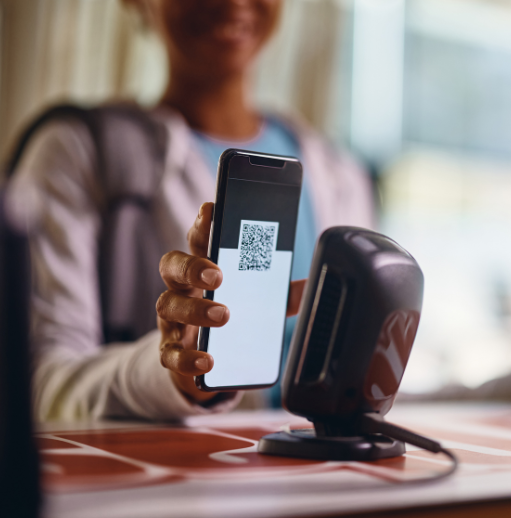
- The worker checks in at their scheduled time and enjoys their reserved desk space
This bare-bones framework becomes more complicated depending on the situation. Taking payment, providing IT access, processing cancellations, and addressing special requests all have a place in the standard hoteling process. Therefore, building them on this simple, central framework is imperative.
Hoteling by scale for success
The great thing about hoteling is that it works at any scale. You’re liable to find a 10-room hotel in the same city as a 150-room hotel. No matter where you stay or for how long, the process is the same: 1) Reservation; 2) Confirmation; 3) Check-in; and 4) Check-out.
The same goes for hotel desks. It doesn’t matter if there are ten desks or 150 workspaces; the hoteling process is scalable. What matters is that the process for accessing these desks remains the same for all workers in all situations. So whether they’re reserving a 10-person conference room or a single desk for half a day, the process should be familiar, simple, and orderly. It’s the only way to make hoteling work well.

By Jonathan Davis
As a content creator at Eptura, Jonathan Davis covers asset management, maintenance software, and SaaS solutions, delivering thought leadership with actionable insights across industries such as fleet, manufacturing, healthcare, and hospitality. Jonathan’s writing focuses on topics to help enterprises optimize their operations, including building lifecycle management, digital twins, BIM for facility management, and preventive and predictive maintenance strategies. With a master's degree in journalism and a diverse background that includes writing textbooks, editing video game dialogue, and teaching English as a foreign language, Jonathan brings a versatile perspective to his content creation.