According to recent research from Eptura, companies report the same barriers to meeting sustainability objectives regardless of how much progress they’ve made toward becoming a digitally connected workplace. Governments and markets are putting more pressure on companies to go green, but across all four stages, from non-digital to ecosystem, companies say roadblocks remain. Part of the answer could be a better understanding of sustainability and a wider appreciation of how integrated solutions for workplace and facility management cut overall costs by reducing different types of waste.
Eptura’s H1 2024 Workplace Index features independent research from enterprises in North America, Europe, and Asia Pacific, and leverages anonymous user data sets from more than 5,000 companies, covering 19,000 buildings, 95.5 million desk bookings, and 25 million room bookings.
Facing the growing calls to cut emissions
Governments around the world are setting increasingly aggressive sustainability standards to prevent pollution and protect human health. The regulations cover both government agencies and private industries.
For example, the Canadian government has pledged to:
- Reduce greenhouse gas emissions from federal facilities and fleets by 40% below 2005 levels by 2030
- Divert at least 75% of non-hazardous waste, including plastic waster, from landfills by 2030
- Double government investments in clean energy research, development, and demonstration
Meanwhile, the U.S. government is moving to a “clean energy economy,” with the goal of achieving a net-zero emissions economy by 2050.
And the European Union (EU) now has The Corporate Sustainability Reporting Directive, which means stricter sustainability reporting requirements to help “investors, civil society organizations, consumers and other stakeholders to evaluate the sustainability performance of companies, as part of the European green deal.”
Reducing the collective carbon footprint means increasing demands on enterprise leadership.
“We all have a corporate responsibility to protect the environment while also avoiding financial penalties,” explains Meg Swanson, Chief Marketing Officer at Eptura.
Unfortunately, many might struggle to achieve compliance. “There’s an estimated 20% of all buildings worldwide at risk of being fined for not meeting emissions targets by 2030,” she says.
Looking beyond the regulatory benefits of sustainability
There is a growing body of research into the wide-ranging benefits of sustainability programs for companies.
According to Harvard Business School, sustainability initiatives help:
- Protect brand image
- Attract and retain top talent
- Grow market share through key differentiators
Investing in processes and procedures that protect the environment means the enterprise can avoid the negative publicity that comes from an accidental spill or revelations about poor environmental practices. Instead of investing in the core business activities, you scramble to spend money cleaning up public relations disasters. A strong environmental record keeps the company image clean.
And that clean reputation makes it easier to find and talent you need for continued future success. In fact, according to one study on sustainability and the job market, 71% of perspective employees say they want to work for environmentally friendly employers, while 67% say they’re more likely to apply at sustainable companies. A full third felt so strongly about sustainability they’d accept a lower salary to be at a company that cares about the environment.
Customers also care. A recent Forbes survey on sustainability and consumer trends found people are increasingly concerned with a company’s environmental practices, and they’re willing to pay more for sustainable products. In fact, “Nearly 90% of Gen X consumers said that they would be willing to spend an extra 10% or more for sustainable products, compared to just over 34% two years ago.”
Examining the core challenges of going green
For all the benefits to the bottom line, many of the organizations included in Eptura’s recent research mentioned money as a key challenge to implementing sustainability programs.
When for the biggest barriers to meeting the organization’s sustainability objectives, the most common answers for facility and building leaders are “Competing priorities due to economic climate” and “Costs of sustainable technology and solutions.” Those two dominate, taking up together a full 39% of the responses. And compared to the other responses, they’re the only two sharply focused on costs.

The data stands out from other sections of the report for its uniformity across time. As organizations move through the four stages of the digitally connected workplace, the challenges change. So, do the benefits. A company in stage 2: Single digital, for example, is starting to bundle multiple solutions from a single vendor, which can help them streamline management and software costs. At the third stage, though, they’ve moved to a single solution that generates additional operational value, especially through cross-solution functionality, digital mapping, and combined data sets.
But for sustainability goals, companies report the same roadblocks remain at every stage.
Leaders can leverage existing solutions to meet future sustainability targets
Sustainability is a multifaceted challenge requiring a combination of approaches. But a big part of the answer could be that companies are simply not seeing the value of existing solutions.
So, they have many of the tools they need to reach certain sustainability goals, but they’ve labeled them as something else. Many organizations might be making strong strides toward their sustainability goals without realizing it.
Cutting emissions comes down to never using more than you need. An integrated digital solution for workplace and facility management delivers comprehensive centralized data that empowers operational professionals to paint a complete, sharply focused picture of performance. From there, they can leverage data-backed decision-making into operational efficiencies that cut costs — and in the process reduce facility carbon footprints — across the real-estate portfolio.
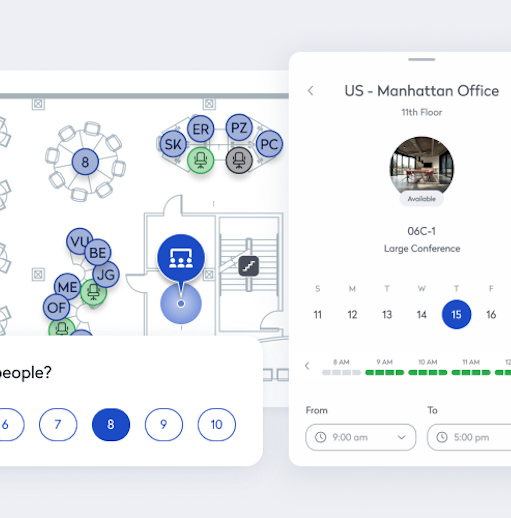
For example, an organization can use occupancy and utilization data to determine how much and what types of space it needs. Instead of wasting energy heating, cooling, lighting, and cleaning two floors of office space, it can right-size down to one. And if the company knows people are coming into the office to connect and collaborate with colleagues, it can reduce the number of individual desks to make more space for conference rooms to maximize utilization.
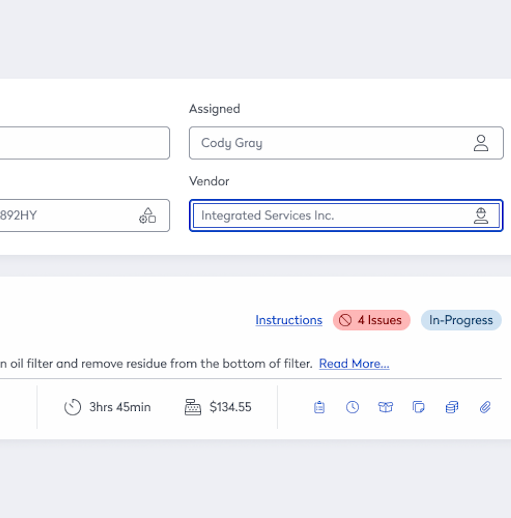
Preventive maintenance is all about making everything last, keeping as much as possible out of the landfill for as long as you can. And a properly maintained asset runs more efficiently, consuming less energy over its now longer life cycle. Facility management solutions start with a complete hierarchy that connects assets with their maintenance and repair histories and associated parts and materials. From there, the maintenance team sets up and schedules a preventive maintenance program that cuts costs by using less material, fewer parts.
Operational efficiency means sustainability
Leaders face many challenges. Supporting employee connection and collaboration in the era of the hybrid work model requires integrated sensor-backed digital solutions, while optimizing facility management relies on sophisticated, centralized data sets and strategies. Ensuring the uptime of revenue-generating assets depends on proactive maintenance.
Closely connected to all these solutions is sustainability. It’s there when you set sensors to adjust HVAC and lights in empty rooms in real time. It’s a part of why you leverage larger data right-size the enterprise-wide real-estate portfolio. Instead of seeing sustainability as a separate set of goals, leaders should think of it as one element under the umbrella of operational efficiency, allowing them to solve sustainability with software solutions they already have or plan to implement in the near future.

By Jonathan Davis
As a content creator at Eptura, Jonathan Davis covers asset management, maintenance software, and SaaS solutions, delivering thought leadership with actionable insights across industries such as fleet, manufacturing, healthcare, and hospitality. Jonathan’s writing focuses on topics to help enterprises optimize their operations, including building lifecycle management, digital twins, BIM for facility management, and preventive and predictive maintenance strategies. With a master's degree in journalism and a diverse background that includes writing textbooks, editing video game dialogue, and teaching English as a foreign language, Jonathan brings a versatile perspective to his content creation.