Employees often experience a meeting room shortage long before the wider portfolio appears full. They arrive on a busy office day, search for a small room, find the available options unsuitable, or discover that a reserved space sits empty. A weekly utilization average can hide all of that friction.
In its 2025 Asia Pacific Office Occupier Survey, CBRE found that 48% of occupiers see insufficient small rooms as a barrier to higher office attendance. It also found that 55% reported peak utilization above 80%, compared with 28% reporting average utilization above 80%. Together, the figures show how an APAC office can have enough space on average while employees still encounter meeting room bottlenecks during the busiest periods.
Those findings point to a meeting room management problem within the existing portfolio. Organizations need to understand which rooms employees need, when demand concentrates, whether reservations become actual use, and how consistently the experience works across offices.
Solving that challenge takes a connected view of booking activity, actual room usage, employee feedback, and operational issues.
Key takeaways
- Peak demand creates hidden room pressure across APAC: An office can have enough space on average while employees struggle to find suitable rooms on its busiest days. Compare peak and average demand before expanding the portfolio
- Connected data reveals the right response: Booking, occupancy, employee feedback, and service data help teams distinguish genuine capacity shortages from no-shows, unsuitable room mixes, inaccurate records, and recurring technology problems
- Regional consistency needs local flexibility: Shared room categories, technology standards, support processes, and performance measures give APAC portfolios a comparable baseline while allowing each office to adapt to local buildings and employee needs
Meeting room availability improves when workplace and corporate real estate teams can connect demand with actual use and operational performance. That evidence helps them recover existing capacity, prioritize changes, and make more confident investment decisions across locations
Meeting room management starts with actual demand
Meeting room management covers the processes, policies, data, and technology organizations use to make shared rooms easy to find, reserve, use, and measure. It connects employee experience with space planning and day-to-day workplace operations.
Effective management gives employees access to an appropriate space when they need one. It also helps workplace and corporate real estate teams identify unused capacity, recurring shortages, and room types that no longer match demand across the week.
Employees also see a clear reason to come together. JLL’s Workforce Preference Barometer 2025 found that 56% of APAC employees believe in-person teamwork produces better results.
Higher attendance and stronger collaboration demand can create pressure even when the portfolio has plenty of space overall. The first step is separating total space from usable meeting capacity.
That distinction is central to space optimization in the hybrid workplace, where the goal is to align the workplace with how employees actually use it while reducing waste and unnecessary cost.
As workplace data becomes more comprehensive, organizations can start to use analytics and AI-assisted insights to identify recurring demand patterns and anticipate potential room shortages. AI-assisted decision support can then help teams evaluate possible responses, such as adjusting booking policies, changing room configurations, or prioritizing investments before employee frustration grows.
Look beyond the appearance of a room shortage
Employees may say an office needs more meeting rooms when the existing supply fails in several different ways. The location may be inconvenient, the room may be too large, or it may lack the privacy, equipment, or acoustic control the meeting requires. Reservations may also remove rooms from availability even when no one uses them.
Other familiar causes of room friction include large rooms that rarely reach capacity, recurring meetings that continue after teams stop using them, and amenities available in only a small number of spaces. Hybrid work has made those mismatches more consequential. Employees now need rooms that support both people in the office and participants joining remotely, often across multiple countries and time zones.

Eptura’s preliminary Workplace Index 2026 findings show how room and technology issues affect the wider workplace experience. Globally, 33.6% of employees experience meeting delays caused by room or technology problems at least sometimes. Another 30.1% can’t find a space that supports their work, while 44.6% plan their day around workspace availability.
Looking at one signal in isolation, though, can lead to misleading conclusions. Booking data may suggest high demand, occupancy data may reveal unused reservations, and service requests may point to recurring technology issues. Combining these sources creates a more complete view of room performance and employee experience, helping teams choose between operational changes, room conversions, and additional space with greater confidence.
Before adding capacity, compare several signals:
- Booking demand by office, floor, day, time, room size, and equipment
- Check-in or occupancy data that confirms whether employees used reserved rooms
- Search activity, booking patterns, and employee requests that indicate unmet demand
- No-shows, early departures, and recurring reservations that hold unused capacity
- Employee feedback on availability, room quality, technology, noise, and privacy
- Service requests that reveal recurring equipment or environmental problems
Together, these signals show whether the organization needs more rooms, a different mix, or better management of the rooms it already has. That distinction can help corporate real estate teams avoid unnecessary expansion, delay capital spending, and direct investment toward the locations and room types with the clearest need.
The same approach applies when teams compare space occupancy and utilization metrics to understand whether attendance, reservations, and actual room use tell the same story.
Match the room mix to how people meet
Many workplaces still contain a room portfolio designed around large formal meetings. Daily demand often looks very different.
Many organizations discover that room demand concentrates around smaller collaboration spaces rather than large formal conference rooms. As teams spend more time coordinating hybrid meetings, demand often shifts toward private rooms that support focused discussions, video calls, and small-group collaboration.
That pattern helps explain CBRE’s finding that nearly half of APAC occupiers lack enough small rooms. Employees may use a large conference room for a two-person video call because no private room or booth is available. The organization then appears to have both a large room shortage and underused open collaboration space.

You can test the room mix by comparing stated capacity with typical attendance. Look for large rooms that regularly host one to four people, small rooms that remain fully booked through peak periods, and open spaces that employees avoid for calls or confidential conversations.
The right response may include converting underused open areas into enclosed huddle rooms, adding phone booths near team neighborhoods, or improving smaller rooms with the technology employees currently seek in larger spaces. When demand genuinely exceeds supply, the same evidence gives you a stronger case for adding rooms or expanding the portfolio.
Looking across the workplace, space utilization in critical work areas helps teams evaluate how meeting rooms and other high-impact spaces contribute to employee experience and portfolio performance.
Analytics and AI-assisted insights can help workplace teams identify which room types are consistently over- or under-utilized, helping inform decisions about changes to the room mix.
A connected workplace platform brings booking and occupancy insights into one view, helping teams assess those patterns across rooms, floors, and locations. That shared view helps leaders decide where to repurpose space, where to improve existing rooms, and where additional capacity may be justified.
Plan for peak demand across the week
APAC organizations increasingly face different workplace conditions on busy and quiet days. CBRE found that 55% of occupiers achieved peak utilization above 80%, while only 28% achieved average utilization above that level. The gap suggests that many offices experience concentrated pressure on certain days and times.
The right analytics can help workplace leaders anticipate peak demand periods by location, day, and room type. Paired with analytics and trend insights, those forecasts can support earlier policy and space adjustments before shortages affect employees or undermine attendance plans.
A room portfolio built around the average can fail employees on the days they value most. Teams often coordinate their office schedules around shared presence, planned meetings, and collaborative work. The result can be simultaneous pressure on small rooms, video-enabled spaces, and informal meeting areas.
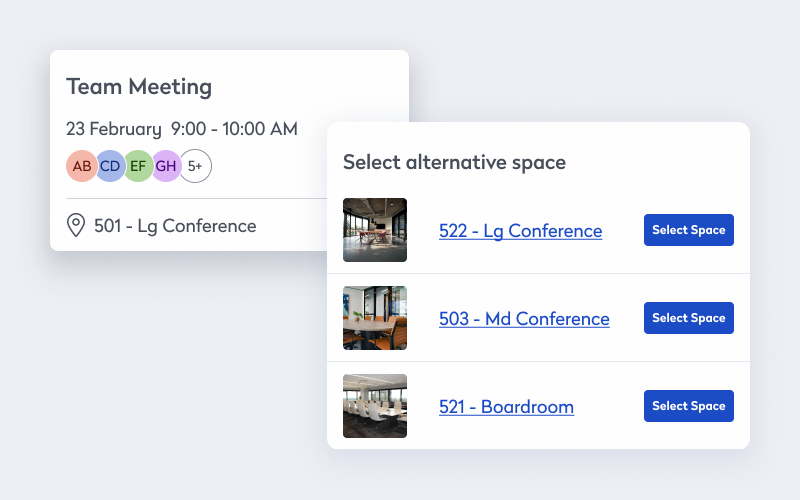
Track peak and average room performance separately. A weekly utilization figure may show sufficient capacity, while Tuesday morning data reveals repeated demand pressure and meeting delays. Review demand by room type and time block so you can see whether the same shortage occurs every week or whether one event, team, or recurring reservation creates the pressure.
Operational policies can recover capacity before construction or leasing becomes necessary. Check-in requirements confirm that employees still need a room. Release rules return no-show reservations to availability. Automated notifications can alert employees when previously unavailable rooms become available, while recurring-booking limits prevent teams from holding space they no longer use.
Connecting demand patterns with actual room use gives teams the evidence to adjust those policies by location and room type. They can recover capacity during peak periods while reducing the risk of adding space to solve a scheduling or usage problem.
Avoid applying one rule to every room. A two-person room booked for a quick conversation can use a shorter release window than a large room prepared for a client meeting with catering and audiovisual support.
Make digital availability reflect usable availability
A room can appear available in a booking platform and still fail the employee. Another team may occupy it without a reservation, equipment may not work, or the room record may contain inaccurate information about capacity and amenities.
The Workplace Index shows why access and data coverage matter. Only 36.7% of employees in the global survey report access to workplace booking software or a mobile app, and 38.2% say their organization provides no technology for workplace interactions. Booking data gives an incomplete picture when many employees can’t or don’t use the system.
Create a consistent room record across every office. Each record should include current capacity, layout, location, accessibility, conferencing equipment, available services, and any booking restrictions. Employees should see the same type of information whether they work from their home office or visit another site.
Accurate room records also make meeting room booking software more useful by helping employees choose spaces that match the meeting’s size, layout, technology, and service needs.
Then compare reservations with actual use. Check-ins, room screens, occupancy sensors, and employee reports can help identify ghost meetings, unrecorded use, and spaces that appear functional in the system but fail in practice.

A connected workplace platform can bring booking, occupancy, and service data together so teams can see where availability breaks down and which operational issues need attention. Teams can then prioritize repairs, correct room information, adjust policies, or recover unused reservations based on the source of the problem.
One common mistake is measuring booking volume as the outcome. A completed reservation only shows that someone requested a room. Successful meeting room management measures whether employees can consistently find an appropriate, available, and functioning space when they need it.
Create a consistent hybrid meeting experience across offices
APAC portfolios often include headquarters, regional hubs, and satellite offices with different layouts, technology, and local working patterns. Clear room categories, booking policies, equipment standards, support processes, and reporting frameworks give employees a predictable baseline while allowing each office to adapt to local needs. For large organizations, hybrid meeting technology for enterprise collaboration also determines whether in-room and remote participants receive a reliable experience.
An IDC Asia Pacific team collaboration survey of 1,080 executives found that 72% of meetings use videoconferencing to connect locations. Audio or video failures affected physical meetings for 63%, while 55% cited missing equipment and the same share struggled to set up or use meeting technology.
Consistent standards and measures help corporate real estate leaders compare room demand, no-shows, service requests, delays, equipment failures, and satisfaction across cities. A connected platform supports that portfolio view without forcing every office into the same operating model, helping teams identify recurring problems and direct investment where it can have the greatest impact.
Turn meeting rooms into dependable shared capacity
Meeting room shortages are rarely caused by a lack of space alone. Booking patterns, no-shows, room mix, technology performance, and hybrid work behaviors all influence how employees experience availability. By connecting these data points, you gain a clearer understanding of where demand exists, which rooms create the most value, and where operational improvements can recover capacity before additional investment is required.
To connect room booking, occupancy, and utilization insights to improve meeting room availability, support hybrid collaboration, and make better workplace decisions across every location, learn more about Eptura Engage.
Frequently Asked Questions

By Erin Sevitz
As Vice President of Content and Customer Marketing at Eptura, Erin Sevitz oversees teams responsible for providing worktech insights and engaging 25 million Eptura users worldwide. With over 10 years in thought leadership on workplace management and the built environment, Erin brings deep industry knowledge to her role. Previously, she led communications for the International Facility Management Association, a global nonprofit dedicated to professional development for workplace strategists and building managers, and served as editor in chief for IFMA’s FMJ magazine.