Corporate real estate (CRE) portfolios almost never present an obvious path. A location may look underused but remains essential for collaboration, client access, specialized work, or future growth. Another may appear cost-effective until lease, maintenance, and capital requirements reveal its full exposure.
Our latest Workplace Index highlights the challenge. Although 57.3% of managers say their organizations plan to increase workplace space during the coming year, 53% estimate that at least a quarter of their existing portfolio is underutilized. The planned changes include more flexible, collaboration, meeting, and focus spaces, suggesting that many organizations need a different portfolio mix rather than a simple increase or reduction.
Key takeaways
- Portfolio optimization requires more than utilization data: Evaluate workplace demand alongside total cost, employee needs, operational risk, facility condition, and business requirements before deciding what should change
- Optimization does not always mean reducing space: Depending on the evidence, the right action may involve adjusting operations, reconfiguring or repurposing space, consolidating locations, exiting a lease, relocating, or expanding
- Portfolio decisions must connect planning with execution: Scenario planning creates value when teams carry approved decisions into floor plans, moves, maintenance changes, asset relocations, vendor work, and employee communications
Corporate real estate portfolios continue to change after teams implement a decision. Connected data and ongoing measurements help you confirm whether the selected action delivers the expected value and identify when new demand, costs, or operational risks require another adjustment.
Create a connected portfolio baseline
Start by building a consistent view of every location, including property details, lease status, critical dates, headcount, attendance, utilization, occupancy costs, facility condition, capital plans, service performance, and employee experience signals.
Each source answers a different question. Badge access may indicate entry, while reservations show where employees intended to work. Sensors can confirm actual use, lease records show financial commitments, and facility and asset records reveal whether a location can support future demand without major investment. Use aggregated, role-appropriate information and follow applicable privacy, labor, and governance requirements.
System integration alone does not guarantee reliable decisions. The Workplace Index findings show that 73.9% of managers describe their workplace systems as mostly or fully integrated, yet 41.5% often or very often rely on assumptions rather than live data. Your baseline must use current, consistent information that teams can interpret in context.
When your workplace platform includes AI-assisted analysis, you can use it to examine a larger and more varied set of portfolio information than you could possibly accurately, efficiently review one record at a time.
A spreadsheet can help you calculate the formulas, filters, and comparisons you define. AI-assisted analysis, though, can also help you reconcile records from different systems, review unstructured information, identify unusual patterns, and flag missing or conflicting data for investigation. These capabilities are a newer addition to some workplace and real estate platforms, not a standard feature of every system. Use the findings to strengthen your evidence, then rely on cross-functional expertise to determine portfolio strategy.
Use a four-factor framework to evaluate every location
A single utilization rate or cost benchmark cannot explain whether a location creates value. Evaluate each property across workplace demand, total cost, risk, and business requirements before deciding what should change.
Compare workplace demand with available space
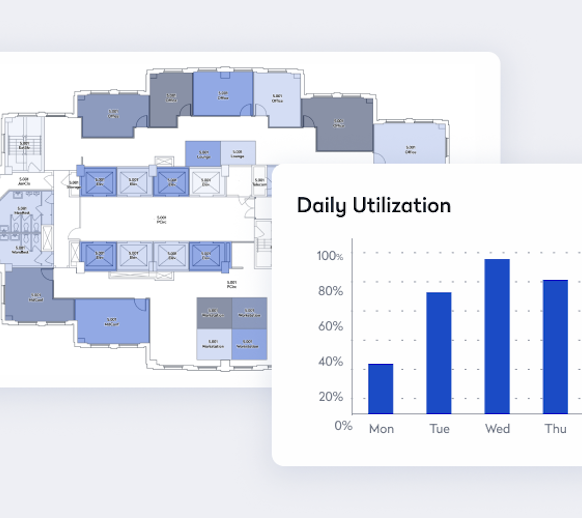
Review average and peak attendance, utilization by space type, booking behavior, team patterns, and expected headcount. Look beyond whether the building appears busy. A site may have empty desks while employees compete for meeting rooms, focus spaces, or project areas.
Optimization does not always mean reducing space. Sometimes the portfolio has enough square footage but the wrong mix. Occupancy and utilization metrics can help you identify the mismatch, so you can compare downsizing with options such as repurposing desk areas, reconfiguring the floor, or changing how teams share space.
You can use AI-assisted analysis to identify recurring patterns across teams, locations, days, and space types. For example, the analysis may show that demand consistently exceeds supply for six-to-10-person collaboration rooms while focus rooms remain underused. Validate the pattern before deciding whether policy, scheduling, reconfiguration, or a portfolio change offers the best response.
Compare the full cost of each location
Calculate more than rent or ownership cost. Include utilities, insurance, taxes, maintenance, planned capital work, and implementation costs. Compare cost per employee, seat, visit, or square foot with actual demand instead of assigned headcount alone.
A portfolio reduction can improve the numbers initially while creating new inefficiencies as attendance shifts or retained locations require more services and investment than expected. Cost per employee becomes more useful when teams track it continuously alongside occupancy and utilization.
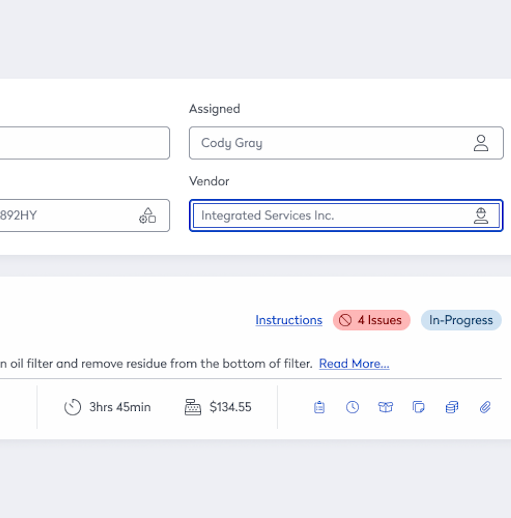
Portfolio actions also change facility and asset requirements. Consolidating locations can affect preventive maintenance coverage, energy demand, vendor contracts, equipment utilization, asset moves, and future capital plans. Include those downstream effects before describing an option as a saving.
Identify financial, operational, and portfolio risk
Review lease expirations, escalation clauses, renewal options, compliance exposure, facility condition, asset health, capacity constraints, and business continuity requirements. A high-cost location may protect a critical market or operation, while a less expensive site may carry significant capital or operational risk.
You can use AI-assisted analysis to review lease portfolios for upcoming renewal windows, escalation clauses, termination options, and contractual risks that may be difficult to track manually across locations. Instead of reviewing each record separately or relying only on predefined spreadsheet formulas, you can ask the software to surface relevant terms and patterns for your team to investigate. You still need to verify the original lease documents and work with legal, finance, CRE, and facility stakeholders before deciding.

Combine the verified lease findings with asset condition, deferred maintenance, compliance information, energy-performance requirements, sustainability commitments, and local regulations. Together, those factors help you evaluate whether a location remains financially and operationally viable over the long term.
Test alignment with business and workforce needs
Ask what each location enables. Consider talent access, collaboration, client service, specialized work, regional presence, employee experience, and planned growth alongside cost and utilization.
Evaluate employee experience with the other evidence. A lower-cost portfolio that limits access to needed spaces can create service issues, lost productivity, and resistance to change. A strong recommendation balances cost, utilization, workforce effectiveness, employee needs, and business requirements.
Choose the portfolio action that fits the evidence
Once you understand the location, you can compare the full range of available actions. The goal is not to default to consolidation or choose whichever option produces the largest immediate saving. You need to identify the response that best balances workplace demand, cost, risk, employee needs, and long-term business value.
Each option also creates different operational consequences. Reconfiguring a floor may require new furniture, technology, and service arrangements. Consolidating locations can affect maintenance coverage, asset utilization, team access, and business continuity.
Before recommending an action, consider both the expected portfolio outcome and the work required to implement and sustain it:
- Maintain: Keep the location when demand, cost, risk, and strategic value remain aligned
- Optimize operations: Adjust service levels, operating schedules, seating ratios, reservation rules, or hybrid-work practices
- Reconfigure or repurpose: Change the space mix when employees need different environments rather than less total space
- Consolidate: Bring teams onto fewer floors or into fewer locations when sustained patterns show excess capacity
- Sublease or exit: Reduce long-term exposure when demand and strategic value no longer justify the commitment
- Expand or relocate: Add or replace space when growth, building limitations, location risk, or persistent demand supports investment
Every selected action creates work across the organization. Facilities teams may need to change maintenance and service coverage. Asset teams may move, retire, or recommission equipment. IT may update infrastructure, while HR and workplace teams coordinate communication and adoption.
Compare scenarios before committing resources
Start with a baseline that shows what happens if the organization maintains the current portfolio. Compare it with alternatives such as reconfiguration, consolidation, subleasing, relocation, or expansion.
Each scenario should account for headcount, attendance, lease timing, project expenses, employee access, facility condition, asset changes, service delivery, and implementation risk. Model expected conditions and credible changes in growth, workplace policy, or demand.
AI-backed workplace scenario planning lets you compare combinations of attendance patterns, growth forecasts, lease options, workplace policies, and facility requirements. Use the analysis to understand trade-offs and test assumptions, not to select the final strategy.
Scenario planning creates value when teams connect approved decisions directly to execution. Preserve the assumptions and connect them to floor plans, moves, maintenance changes, asset relocations, vendor work, employee communications, responsibilities, and timelines.
Measure whether the decision keeps working
Portfolio optimization continues after implementation. Track occupancy cost, cost per employee or visit, attendance, utilization by space type, lease exposure, service performance, maintenance demand, energy use, and access to needed spaces.
Compare the results with the approved business case. Did the consolidation reduce costs without creating space shortages? Did reconfiguration improve access to collaboration and focus areas? Did service and maintenance requirements change as expected?

You can use AI-assisted monitoring to compare performance with the plan and identify deviations in utilization, cost, workplace demand, or service levels. The analysis can also highlight leading indicators, such as rising meeting-room pressure, declining space availability, or increasing maintenance demand, that may signal the need for further review. Use each signal as a reason to investigate, not an instruction to change strategy.
Avoid portfolio decisions built on partial evidence
Don’t treat low average occupancy as automatic proof that the organization should remove space. Avoid comparing locations with inconsistent cost definitions, relying on assigned headcount instead of actual demand, or ignoring employee experience, facility condition, maintenance needs, and asset implications.
Teams also create risk when they wait until a lease deadline to analyze options, treat AI outputs as final decisions, or disconnect an approved scenario from implementation. Revisit assumptions regularly as attendance, costs, building conditions, space planning, and business needs change.
Connect portfolio strategy with execution
The difference between a portfolio that remains optimized and one that accumulates new inefficiencies is not access to another metric. It is the ability to connect demand, cost, employee needs, operational risk, and business requirements before choosing an action, then coordinate the work and measure whether the decision continues to deliver value.
To compare options, carry approved plans into implementation, and monitor results across your global portfolio, explore Eptura real estate planning.
Frequently asked questions

By Erin Sevitz
As Vice President of Content and Customer Marketing at Eptura, Erin Sevitz oversees teams responsible for providing worktech insights and engaging 25 million Eptura users worldwide. With over 10 years in thought leadership on workplace management and the built environment, Erin brings deep industry knowledge to her role. Previously, she led communications for the International Facility Management Association, a global nonprofit dedicated to professional development for workplace strategists and building managers, and served as editor in chief for IFMA’s FMJ magazine.