

Space utilization has evolved from a facilities metric into a strategic business priority. As organizations adapt to hybrid work, fluctuating attendance, and increasing pressure to justify real estate spend, the focus has shifted from how much space exists to how effectively it supports people and performance.
Across industries, four workplace areas consistently shape the day-to-day experience and operational outcomes: the lobby, conference rooms, dining areas, and the open office. When these spaces are managed using assumptions instead of data, organizations risk underutilization, inefficiencies, and missed opportunities to improve employee experience.
Key takeaways
- Real‑time utilization data transforms space from a cost center into a strategic asset. Modern workplace platforms and IoT sensors give organizations accurate insight into how people actually use space
- The four most influential workplace zones benefit most from data‑driven management. The lobby, conference rooms, dining areas, and open office shape daily experience and resource allocation. When supported by utilization analytics, each space can be redesigned, right‑sized, or repurposed to better match real behavior and demand
- Organizations that use utilization insights reduce waste and improve performance. From avoiding unnecessary construction to reclaiming underused square footage, data‑backed decisions lead to measurable savings, better collaboration, and more adaptable workplaces
With today’s workplace and facilities platforms, space utilization becomes measurable, adaptable, and actionable. By connecting utilization insights with planning and experience tools, organizations can continuously optimize these core spaces as work patterns change.
As Elizabeth Redmond, CEO and Co-Founder of CoWorkr, noted on Eptura’s Workplace Innovator Podcast: “The opportunities for workplace leaders to leverage real-time data for strategic planning and delivering enhanced employee experiences is made possible by IoT sensors and space utilization tools.”
The lobby: First impressions informed by real-time insight
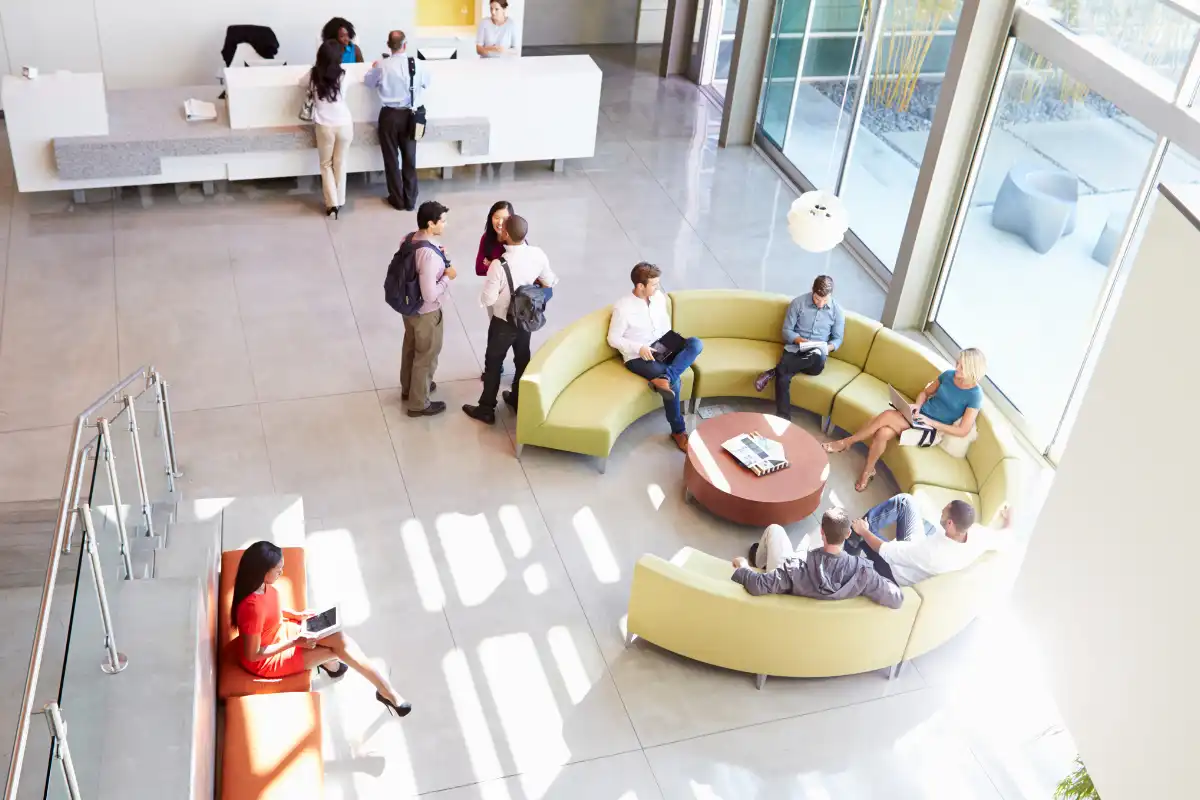
The lobby is more than an entry point. It serves as a brand touchpoint, a security gateway, and often a shared transition space for employees and visitors alike.
Organizations increasingly rely on visitor management capabilities to support this balance. Tools like Eptura Visitor help streamline registration, badge printing, and host notifications, while maintaining clear visibility into who is on site. This not only improves the guest experience, but also supports compliance and security teams with accurate, real-time data.
From a space perspective, digital floor plans and utilization insights allow facilities teams to understand traffic patterns and adjust layouts accordingly. Rather than relying on static designs, teams can test and refine lobby configurations to better support peak times, events, or changing visitor volumes.
This shift reflects a broader change in workplace priorities. According to CBRE’s 2024–2025 Global Workplace & Occupancy Insights, employee satisfaction has increased dramatically in importance, while traditional space density metrics have declined. The success of a space is now measured by experience and effectiveness, not just capacity.
Actionable takeaway: Elevate the lobby through data‑driven design and visitor flow
Use real‑time visitor management and utilization insights to continuously refine the lobby, so it functions as both a welcoming brand experience and an efficient security checkpoint.
By pairing tools like digital floor plans, occupancy analytics, and automated visitor workflows, workplace teams can adjust layouts, staffing, and processes to match actual traffic patterns—improving guest experience, strengthening compliance, and ensuring the lobby adapts to changing volumes rather than relying on static assumptions.
Conference rooms: Right-sizing collaboration with utilization data
Conference rooms remain essential in hybrid workplaces, yet they are frequently among the most misaligned spaces in the office. Booking conflicts, no-shows, and mismatched room sizes are common symptoms of planning without utilization insight.
By combining occupancy sensors with booking and scheduling data, organizations gain a clearer picture of how meeting spaces are actually used.
A global life sciences firm demonstrated the value of this approach by using badge-swipe analytics across more than 100 buildings. Automating occupancy tracking saved over 30 hours per week and approximately $140,000 in annual labor costs, while delivering full ROI in under six months. More importantly, leadership gained visibility into building-level and department-level usage patterns that informed safer, more efficient space planning.
These insights allow organizations to reconfigure rooms, adjust booking policies, or repurpose underused spaces without sacrificing collaboration.
Actionable Takeaway: Use utilization data to right‑size meeting spaces and eliminate friction
Leverage real‑time occupancy insights, booking analytics, and sensor data to align conference room supply with actual collaboration demand.
By understanding which rooms are overbooked, underused, or mismatched in size, workplace teams can redesign layouts, update booking rules, and repurpose low‑value spaces—reducing no‑shows, improving meeting flow, and ensuring teams always have the right space for the work they need to do.
Dining areas: Flexible spaces that support culture and productivity
Dining areas are often underestimated in space planning, yet they play a key role in connection and culture. In many organizations, these spaces now function as cafés, informal collaboration zones, and event venues depending on the time of day.
Utilization insights help facilities teams understand how these spaces are used throughout the day and week. With visual floor planning tools in Eptura Workplace, teams can test layouts, seating density, and circulation patterns before making physical changes.
Higher education environments offer a clear example of this impact. Purdue University used occupancy analytics to identify underutilized labs and shared spaces, reclaiming more than 10,000 square feet and achieving $14 million in net cost avoidance. That reclaimed space was redirected toward collaborative and student-focused environments aligned with actual usage.
The takeaway for corporate environments is similar. When dining and shared spaces are planned using real data, they become flexible assets that support both productivity and employee satisfaction.
Actionable takeaway: Use real‑time utilization insights to transform dining areas into multipurpose, high‑value spaces
Apply occupancy analytics and visual planning tools to understand how dining areas function throughout the day, then adjust layouts, seating, and flow based on actual usage patterns.
By treating these spaces as flexible hubs rather than static cafeterias, organizations can create environments that support social connection, informal collaboration, and productivity while ensuring every square foot delivers meaningful value.

The open office: Designing for behavior, not assumptions
The open office is where space utilization insights deliver the most immediate value. Without accurate data, organizations often default to fixed desk ratios that no longer reflect hybrid work realities.
By integrating desk booking, occupancy sensors, and employee-facing tools within Eptura Workplace, facilities teams gain real-time visibility into how desks and zones are used. This enables dynamic planning based on actual attendance patterns rather than historical averages.
At Ubisoft Montreal, sensors were deployed across 250,000 square feet of varied workspace. Anonymous utilization data revealed how desks, meeting rooms, lounges, and production areas were truly being used, enabling workplace teams to adjust layouts and resourcing based on real behavior.
In larger enterprises, the impact scales quickly. One organization with more than 41,000 employees used sensor-backed utilization data to enforce a “use it or lose it” approach to space allocation. The result was the avoidance of 90,000 square feet of new construction and $55 million in savings over 18 months, alongside improvements in energy use and cleaning efficiency.
Actionable takeaway: Use real‑time utilization data to continuously align open office layouts with actual work patterns
Combine desk booking insights, occupancy sensors, and employee‑facing tools to understand how people truly use desks, zones, and shared areas.
With this visibility, workplace teams can adjust seating strategies, redistribute resources, and redesign layouts based on real behavior rather than assumptions. This approach prevents overbuilding, improves daily functionality, and ensures the open office evolves in step with hybrid work needs.
From utilization metrics to strategic workplace outcomes
Across industries, the message is consistent. Organizations that rely on real-time utilization data make better space decisions, reduce waste, and create workplaces that adapt as needs change.
As highlighted in Eptura’s research and Workplace Innovator Podcast discussions, effective space planning today depends on turning floor plans into actionable data. When facilities, real estate, IT, and HR leaders share a common understanding of how space is actually used, the workplace becomes more resilient, efficient, and employee-centered.
By focusing on the lobby, conference rooms, dining areas, and open office, and supporting each with connected workplace, visitor, and sensor technologies, organizations can unlock the full potential of their workplace without overbuilding or overspending.
Frequently asked questions

By Amanda Meade
Amanda Meade is a content creator at Eptura, specializing in workplace experience, meeting productivity, and emerging trends in workspace planning and visitor management. With a background in content marketing and SEO, she crafts clear, actionable content that helps teams work smarter through in-office collaboration. Throughout her career, Amanda has worked across industries, including home services, healthcare, real estate, and SaaS, developing a unique ability to distill complex topics into practical insights.