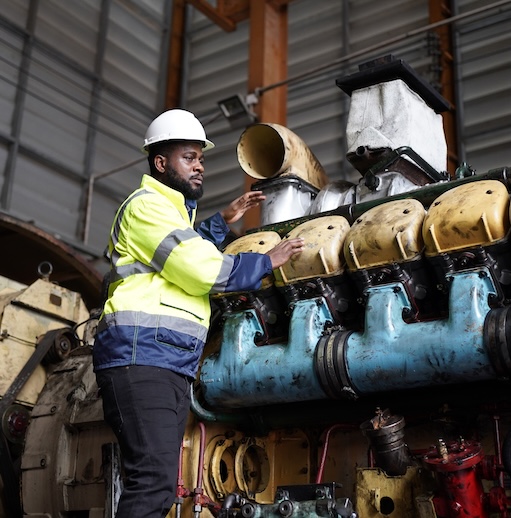



When field service teams give every piece of equipment the same amount of maintenance attention regardless of business impact, they waste resources on low-consequence repairs while high-risk assets operate without adequate oversight until they fail catastrophically. Technicians dispatch to fix break room refrigerators with the same urgency as production line equipment showing early failure indicators, for example, treating asset maintenance as an undifferentiated queue of tasks rather than a portfolio of varying business risk.
Organizations that implementing structured criticality assessment by systematically evaluating equipment based on failure consequences can focus maintenance resources toward protecting operations, safety, and revenue while reducing wasted effort on low-impact issues.
Key takeaways
- Traditional maintenance approaches waste resources by giving low-impact assets the same attention as mission-critical systems. Systematic criticality assessment helps organizations focus maintenance efforts where failure consequences matter most, protecting operations, safety, and revenue while reducing wasted effort on routine issues
- Criticality is multi-dimensional, not binary. Equipment criticality isn’t just “important” versus “unimportant.” Effective assessment evaluates multiple failure consequence dimensions including safety implications, operational disruption, financial impact, regulatory exposure, and environmental effects.
- While criticality assessment can be done manually, digital maintenance platforms embed equipment criticality into daily workflows, making risk-based prioritization practical at scale. Centralized asset data, integrated work order systems, and mobile access ensure criticality insights reach dispatchers and technicians when decisions happen, not just leadership during annual reviews
Moving from intuition to systematic assessment requires understanding how criticality differs from simple importance rankings.
Understanding criticality assessment: Beyond “important” and “not important”
Most intuitively understand that some equipment matters more than others. Production line assets are more critical than office equipment. Life safety systems take precedence over convenience amenities. Emergency generators deserve more attention than landscape irrigation controllers.
The challenge comes when trying to operationalize these intuitive judgments across hundreds or thousands of assets distributed across multiple facilities, where individual technicians and managers may have vastly different interpretations of what “critical” means, making it difficult to choose the best maintenance strategy for each asset.
Criticality assessment provides a systematic framework for evaluating equipment based on multiple failure consequence dimensions. Rather than simple subjective labels like “critical” versus “non-critical” that mean different things to different people, structured assessment examines what happens when specific equipment fails.
The multi-dimensional evaluation considers different factors, including:
- Safety implications for personnel and building occupants
- Operational disruption to core business processes
- Direct financial loss from downtime or damaged product
- Regulatory compliance exposure and potential penalties
- Environmental impact from releases or energy waste
It’s a framework that helps teams see complexity that simple prioritization can completely miss.
So, a backup generator might at first seem inherently less critical than primary electrical systems that power operations continuously. However, deeper analysis shows that backup generator failure during a power outage could shut down emergency operations, cause refrigerated inventory loss worth millions, or compromise life safety systems in healthcare facilities.
The equipment sits idle 99% of the time, but its criticality during that 1% operational window is exceptionally high. In the same way, a seemingly redundant component in a production system might appear disposable until analysis reveals that replacing it during failure requires complete production shutdown for days, while preventive replacement can happen during scheduled maintenance windows with minimal disruption.
Organizations implementing structured criticality assessments often discover they’ve been misallocating their maintenance resources. Low-impact equipment in high-visibility locations receives disproportionate attention because facility managers notice and complain about issues.
Meanwhile, genuinely critical assets tucked away in mechanical rooms or operating without regular human oversight deteriorate under reactive “fix-when-broken” approaches that eventually cause preventable failures with serious operational consequences.
The assessment process brings these misallocations into clear view and creates the foundation for more rational resource allocation — helping organizations reduce unplanned maintenance so they can avoid expensive surprises.
Why field service operations struggle with risk-based prioritization
Even when organizations recognize that equipment has varying criticality levels and conduct initial assessments, translating those evaluations into daily field service decisions remains challenging without structured approaches and supporting systems.
When equipment knowledge walks out the door
Experienced technicians develop intuitive understanding of equipment criticality through years of exposure to failures and consequences. They know which assets require immediate response and which can wait. However, this knowledge exists only in individual minds rather than documented, accessible formats.

When experienced technicians leave or retire, their insights and understanding disappear with them.
New team members might then treat all maintenance requests similarly until they accumulate years of experience. Dispatchers can’t make informed prioritization decisions when work orders compete for limited resources.
First-come, first-served doesn’t equal highest priority
Traditional manual maintenance ticketing treats service requests as interchangeable tasks queued by submission time. The 9 a.m. work order processes before the 10 a.m. one, regardless of whether the first involves a conference room thermostat, and the second concerns a production line control system.
Over time, facility managers might start marking everything as urgent once they learn that it improves response times, degrading the priority system’s ability to distinguish genuine business risk from routine requests.
Yesterday’s backup becomes today’s single point of failure
Equipment criticality changes over time, but documentation rarely reflects these operational shifts. Assets that were non-critical when installed become mission critical as facilities reconfigure operations, eliminate redundancy, or expand production through existing equipment.
So, a secondary pump that was genuinely redundant five years ago may now represent a single point of failure after the facility decommissioned backup systems. Manufacturing equipment rated as moderate criticality becomes critical during peak season. Maintenance approaches continue following patterns from initial deployment rather than adapting to current reality.
Why criticality alone doesn’t determine urgency
The relationship between criticality and failure probability creates additional complexity that teams forced to rely on manual methods struggle to manage. High-criticality equipment in excellent condition may need less immediate attention than moderate-criticality assets showing signs of imminent failure.
A critical production system that just received comprehensive overhaul presents lower actual risk than a less critical support system experiencing abnormal vibration, unusual temperatures, and approaching expected service life. Effective prioritization requires combining consequence with likelihood — a calculation that becomes impractical when managing large asset populations manually.
These barriers explain why risk-based maintenance remains out of reach for many organizations rather than operational reality.
The role of digital platforms in operationalizing criticality assessment
While criticality assessment can be conducted manually through spreadsheets and documents, digital maintenance platforms make the approach practical and sustainable at scale by embedding equipment criticality into daily operational workflows.
The difference between documented criticality and operationalized criticality determines whether assessment efforts translate into actual maintenance improvements or remain unrealized good intentions.
Centralized data makes criticality accessible to everyone
Asset management platforms provide centralized repositories where criticality ratings become persistent asset attributes accessible to dispatchers, technicians, planners, and leadership. When maintenance teams document that specific equipment is critical due to safety implications or production dependencies, that information becomes immediately visible across the organization. This proves particularly valuable for multi-site operations where identical equipment models may have vastly different criticality levels in different locations — your critical single-point-of-failure conveyor in Phoenix versus the same model with backup capacity in Atlanta.
Work orders show why equipment matters, not just what needs fixing
Modern platforms integrate criticality data directly into work order management. When technicians receive service assignments, they immediately see not just what equipment needs attention, but why it matters to the organization — whether they’re working on critical data center cooling or routine office comfort systems.
Mobile access puts context in technicians’ hands
Digital platforms with mobile maintenance apps provide field technicians with equipment criticality information while they’re physically on-site making maintenance decisions. Technicians scanning equipment tags see documented criticality ratings, operational dependencies, and historical failure patterns.
So, they can also update asset condition and document inspection findings in real-time, immediately flagging elevated risk when they identify degradation on critical equipment. This real-time condition reporting triggers appropriate follow-up rather than waiting for monthly reports to work through review processes, helping maintenance technicians deliver more value through better-informed decisions.
Portfolio analytics reveal patterns and quantify risk
Digital platforms aggregate criticality data across entire asset portfolios, enabling strategic analysis that’s impossible with facility-level documentation scattered across spreadsheets. Organizations can quantify total operational risk exposure in concrete financial terms rather than making vague statements about aging equipment.
The analytics also support performance benchmarking across facilities, identifying best practices from high-performing sites that can be deployed network-wide.
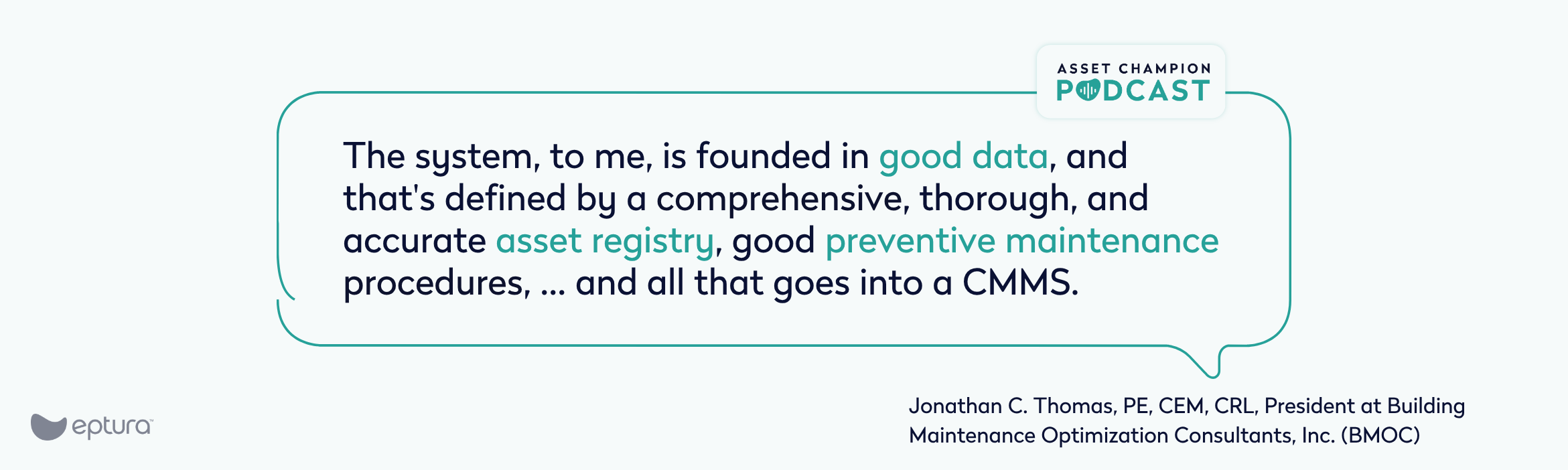
Jonathan C. Thomas, PE, CEM, CRL, President at Building Maintenance Optimization Consultants, Inc. (BMOC), emphasized the role of data as the foundation of effective risk-based prioritization in a recent Asset Champion podcast episode, “Be Strategic – A Systems Approach to Asset Management”:
“The system, to me, is founded in good data, and that’s defined by a comprehensive, thorough, and accurate asset registry, good preventive maintenance procedures, … and all that goes into a CMMS.”
A systems approach to asset data creates the foundation for meaningful criticality assessment. Without comprehensive asset registries and accurate CMMS data, organizations lack the baseline information needed to evaluate failure consequences systematically. Digital platforms transform this theoretical framework into operational reality by centralizing the asset intelligence that drives prioritization decisions.
Transform your maintenance approach with risk-based prioritization
Criticality assessment represents a fundamental shift in how organizations think about maintenance — moving from treating all equipment equally to positioning resources so that they can deliver the greatest operational protection.
Dive into the Asset Management Guide to explore how comprehensive asset tracking, maintenance scheduling, and lifecycle management create the foundation for effective risk-based prioritization.

By Jonathan Davis
As a content creator at Eptura, Jonathan Davis covers asset management, maintenance software, and SaaS solutions, delivering thought leadership with actionable insights across industries such as fleet, manufacturing, healthcare, and hospitality. Jonathan’s writing focuses on topics to help enterprises optimize their operations, including building lifecycle management, digital twins, BIM for facility management, and preventive and predictive maintenance strategies. With a master's degree in journalism and a diverse background that includes writing textbooks, editing video game dialogue, and teaching English as a foreign language, Jonathan brings a versatile perspective to his content creation.