


Most organizations have plenty of maintenance data. Work orders, inspection results, asset records, parts data, spreadsheets and years of technician experience all contain potentially useful information. The problem is that the information often lives in different systems, follows different processes, or remains with individual employees. When technicians, planners, and supervisors need to make a decision, they may have to reconstruct the full picture from several incomplete sources.
During Eptura’s webinar, “From work orders to operational insight: Making data useful for frontline teams,” Kris Konrath, vice president of demand generation, and Fred Kraus, vice president of product management, explored how connected maintenance data helps teams make faster, better-informed decisions.
Key takeaways
- Connected data improves decision-making: Technicians, planners, and supervisors make faster, better-informed decisions when asset history, inspections, inventory, and work records are connected instead of scattered across multiple systems.
- Reducing reactive work starts with better context: Teams can break the cycle of repeated failures and emergency repairs by giving frontline workers the information they need before work begins.
- Standardization creates long-term value: Consistent asset records, work-order processes, and documentation improve execution today while creating a stronger foundation for compliance, reporting, analytics, and AI.
Making maintenance data useful starts with understanding how small information gaps create larger operational consequences.
Fragmented information slows maintenance decisions
Major operational problems don’t always begin with a major equipment failure. They often begin with smaller gaps between systems, teams, shifts, and locations.
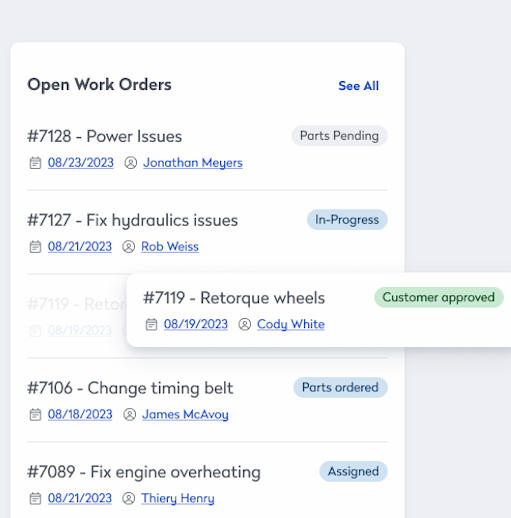
A technician receives a work order but cannot see what happened during the previous repair. An inspection identifies a concern, but the findings do not reach the planner. A crew arrives at an asset before discovering that the required part is unavailable. Each gap appears manageable on its own, but the delays accumulate as people search for information and coordinate the next step.
Eptura’s 2025 Workplace Index found that 67% of companies use between six and 40 facility and workplace technology solutions. The research also found that 37% of organizations employ 11 or more full-time employees to collate, analyze, and report worktech data.
That means people often become the only connection between systems.
In an asset maintenance environment, the work order may sit in one application, inspection photographs in another and parts information in an inventory or financial system. Asset history may exist in a spreadsheet or in the memory of an experienced technician.
“Having more systems doesn’t automatically create more useful intelligence,” Kris explained.
The important measure is not the number of systems an organization has. Maintenance leaders need to understand how quickly a technician, planner, or supervisor can develop an accurate picture of what happened, what matters, and what should happen next.
Missing context creates downtime, rework, and risk
When crews have to search for information, reconstruct asset history, or wait for parts, the asset remains unavailable while the team investigates. In some cases, the organization has already encountered and resolved the same issue, but the learning never became part of an accessible asset record.
Inconsistent procedures create another source of friction. Teams may use different naming conventions, completion requirements, or documentation practices across sites and shifts. A useful repair note can remain buried in an individual work order, forcing the next technician to begin the diagnosis again.
The same fragmentation can also create operational and compliance risk. If inspection records, certifications, photographs, procedures and approvals are difficult to trace, leaders may struggle to demonstrate that teams completed work correctly.
Instead of relying on a universal downtime estimate, Kris recommended looking at indicators inside the operation by asking the right questions, including:
- How long does it take to move from a request to an informed decision?
- How much corrective work does the team repeat?
- How often does the team fix an issue correctly the first time?
- How frequently does parts availability delay execution?
These measures reveal where disconnected information creates practical delays and where better context could have the greatest effect.
Reactive work reduces the capacity for prevention
Reactive maintenance consumes more than the labor and materials required to restore an asset. Emergencies also use the people and time needed for preventive maintenance, inspections and planning.
As urgent work expands, planned work moves to the next available window. The team carries more unknowns forward, and some of those unknowns eventually become new emergencies.
Kris described this accumulation as “risk debt.”
“Reactive maintenance simply doesn’t cost more at the moment of failure,” he said. “It reduces the time available to prevent the next failure.”

The goal is not to eliminate reactive work. Unexpected failures will remain part of maintenance operations, and some lower-risk assets may intentionally run to failure. The goal is to protect enough capacity for preventive work and help teams learn from corrective work so they do not repeatedly solve the same problems under pressure.
During the webinar, Fred said most customers he speaks with tend to be at least 50% reactive, with some operating much closer to 100%. That’s a problem, because reactive work tends to take longer, particularly when teams run assets to failure. Disconnected systems add to that burden and make it harder to adopt a more proactive approach.
Shared context helps teams learn from every maintenance event
A completed work order records activity. Operational insight emerges when the information from that work improves the next decision.
Fred outlined four connected practices that help organizations create that improvement cycle:
- Standardize: Establish common asset hierarchies, naming conventions, statuses, and required fields
- Contextualize: Connect work with asset history, criticality, procedures, inspection findings and risk
- Execute: Give frontline teams relevant information through the workflows they use at the point of work
- Learn: Use completed work, labor, parts, condition data and failure information to improve future maintenance decisions
Standardized records create the foundation. If sites describe identical assets and maintenance activities differently, leaders cannot easily compare performance or recognize patterns.
Context then gives the record meaning. A work order becomes more useful when the technician can see the asset’s maintenance history, understand its operational importance and review the inspection or condition information that triggered the work.
“The important idea here also is reusable,” Fred said. “A technician shouldn’t have to enter the same information in several places.”
A failed inspection, for example, should influence the maintenance workflow. The resulting work should retain the asset, location, and findings that prompted the response. Once the repair is complete, that information should update the asset history and inform future preventive work.
The right information improves frontline execution
More data will not necessarily help technicians complete work more effectively. Frontline teams need the specific information that changes how they prepare for, prioritize, or perform a job.
Before beginning work, a technician should be able to answer several practical questions:
- What happened before?
- What work or inspection is due now?
- Which procedure applies?
- Are the required parts available?
- What risk should change the priority?
Asset history can show whether the problem has occurred before and which repair the team attempted. Open work, inspection findings and preventive maintenance schedules help technicians coordinate related tasks. Parts information can prevent unnecessary travel and delays, while asset criticality, safety requirements and downstream operational effects provide the context needed to prioritize work.
Technicians also need the correct procedures and inspection criteria while completing the job. Afterward, repair notes, parts usage, validation results and condition updates give planners better information for the next action.
“It’s not really about the amount of data,” Fred said. “It’s about the right data.”
That distinction also affects adoption. When frontline tools add complexity without helping people complete the work, technicians may return to paper or create manual workarounds. A useful frontline experience gives technicians the information they need and makes it easier to leave a complete record for the next person.
Standardized processes strengthen compliance confidence
Experienced technicians often compensate for weak processes through individual knowledge and effort. That knowledge can keep maintenance operations moving, but it becomes difficult to scale across sites and shifts.
When procedures live primarily with individuals, teams may capture evidence differently and prepare for audits by searching for documents, photographs, and approvals. Compliance confidence can depend on whether the employee who knows where everything is happens to be available.
The webinar contrasted that approach with processes built around a consistent system of record.
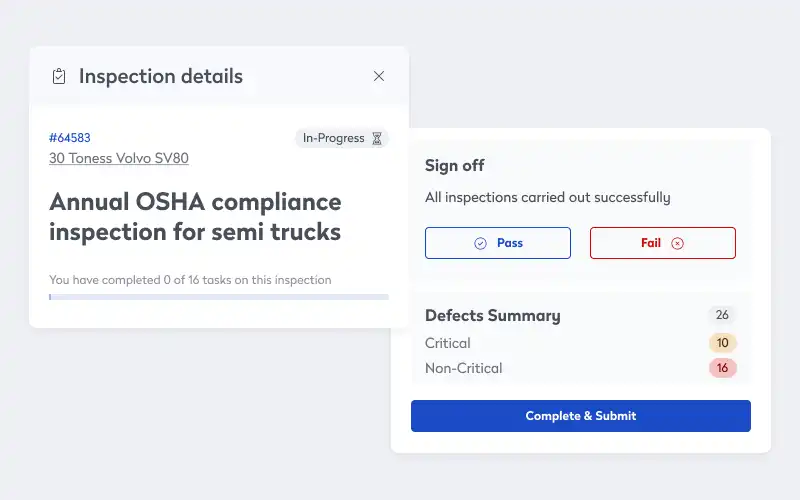
Teams can use the same minimum documentation requirements across sites, capture completion evidence as part of the workflow, and identify missing information before an audit begins.
“Audit compliance shouldn’t depend on whether an employee happens to be working that week,” Kris said.
Standardization does not discount technician expertise. It helps the organization preserve expertise in procedures, asset records, and repeatable workflows so every shift can benefit from it.
Reliable maintenance data creates a foundation for AI
Standardized asset names, consistent work-order structures and complete maintenance histories give AI a more reliable foundation for finding information and identifying patterns. Inconsistent or incomplete records limit the value of more advanced tools because the underlying operational context remains unclear.
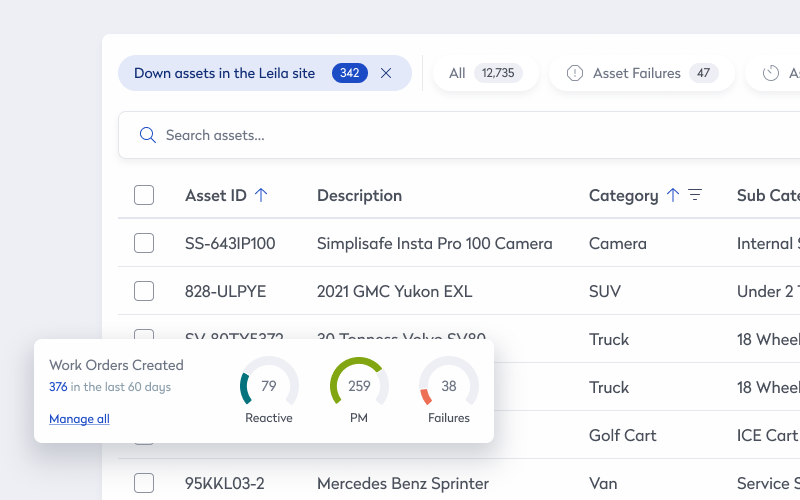
“Having a standard set of data is what’s needed to leverage AI,” Fred said. “You start with standards and shared data, and then you can actually start utilizing and leveraging AI for more optimized processes going forward.”
Maintenance leaders therefore do not need to begin by selecting an advanced AI use case. They can first improve the records and workflows people already rely on. That work creates immediate operational value while preparing the organization to use analytics, automation, and AI more effectively.
Better decisions start with a shared operational record
Every inspection, repair, and preventive maintenance task creates information that can help the organization make a better decision. That value disappears when the information remains isolated in separate systems, spreadsheets, or individual memory.
A shared operational record helps technicians understand what happened before they arrive. It gives planners clearer information about priority, parts, and readiness. It also helps leaders see where repeated failures, delays, and risks are accumulating.
To see the five-step framework Kris and Fred recommend for turning disconnected maintenance records into actionable operational insight, watch the webinar on demand.
Frequently Asked Questions

By Jonathan Davis
As a content creator at Eptura, Jonathan Davis covers asset management, maintenance software, and SaaS solutions, delivering thought leadership with actionable insights across industries such as fleet, manufacturing, healthcare, and hospitality. Jonathan’s writing focuses on topics to help enterprises optimize their operations, including building lifecycle management, digital twins, BIM for facility management, and preventive and predictive maintenance strategies. With a master's degree in journalism and a diverse background that includes writing textbooks, editing video game dialogue, and teaching English as a foreign language, Jonathan brings a versatile perspective to his content creation.