


Gartner® has named Eptura a Leader in the 2026 Magic Quadrant™ for Workplace Experience Applications, a recognition that we feel reflects our architectural approach to connecting workplace experience directly to facility operations, real estate strategy, and outcomes businesses can measure.
Many workplace experience platforms today rely on similar language to address hybrid work and employee experience. As a result, enterprises often struggle to separate claims from true operational value. To choose the right platform, organizations need objective criteria grounded in how workplaces actually run.
We believe this Gartner report establishes this standard. The research evaluates vendors based on the capabilities that matter most at enterprise scale, including supporting complex operations, adapting as requirements change, and delivering measurable business impact.
Our key takeaways
- Gartner recognized Eptura as a Leader in the 2026 Magic Quadrant for Workplace Experience: We believe our positioning reflects how we connect workplace experience directly to facilities operations, real estate strategy, and measurable business outcomes
- Integration eliminates operational friction: When workplace experience platforms connect directly to HR systems, facility management, and IT infrastructure, organizations eliminate manual data entry, reduce security gaps, and gain real-time visibility across their entire workplace ecosystem
- Data-driven space decisions deliver measurable ROI: Organizations that connect utilization data to lease costs can confidently reduce real estate footprint, justify portfolio decisions with actual usage patterns, and quantify workplace investments in terms executives understand

The journey to the modern workplace experience
For years, workplace technology struggled to keep pace with how people actually work. Early solutions focused narrowly on desk booking or room scheduling without connecting to the broader enterprise ecosystem. HR systems couldn’t share data with the facility management platform. Real estate analytics operated separately from occupancy data. Workplace experience tools had no visibility into operational systems.
The fundamental challenge was fragmentation — not a lack of technology, but systems that couldn’t talk to each other. When workplace platforms operate in isolation, organizations face manual data entry, duplicate records, security gaps, and real estate decisions based on incomplete information.
What enterprises need is a unified approach where workplace experience integrates with how organizations manage their people, places, and assets — connecting employee experiences directly to facility management workflows while giving workplace leaders real-time data for informed decisions.
What Gartner evaluated in leading workplace experience systems
In evaluating workplace experience platforms for the 2026 Magic Quadrant report, Gartner identified the key capabilities that define market-leading systems. On Peer Insights™, Gartner defines the Workplace Experience Applications category as including the following features:
- Enterprise integration architecture: Prebuilt integrations with Human Capital Management (HCM) systems, Integrated Workplace Management Systems (IWMS), Identity and Access Management (IAM) platforms, physical security systems, IT Service Management (ITSM) platforms, and collaboration tools that enable seamless data exchange and workflow automation across HR, facility management, and IT functions
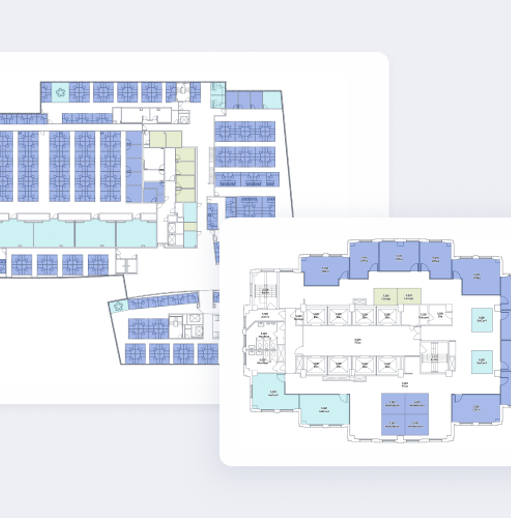
- Space management and planning: Tools for seat assignment, floorplan visualization, scenario modeling, and business rules that connect utilization data to strategic real estate decisions
- AI-powered coordination: Planning capabilities that help teams coordinate in-office days, locate colleagues, and book workspaces through natural language interfaces while balancing employee autonomy with organizational visibility
- Actionable analytics: Leadership dashboards that aggregate reservation, occupancy, and real estate data in real time, with benchmark comparisons and trend analysis that connect workplace decisions to measurable business outcomes
- Wayfinding and navigation: Interactive floorplans showing real-time space availability and colleague locations, with mobile navigation and filters for space attributes
- Comprehensive booking: Flexible reservation capabilities covering desks, rooms, parking, neighborhoods, wellness spaces, and event areas, with delegation support, recurring reservations, and sensor-driven no-show release
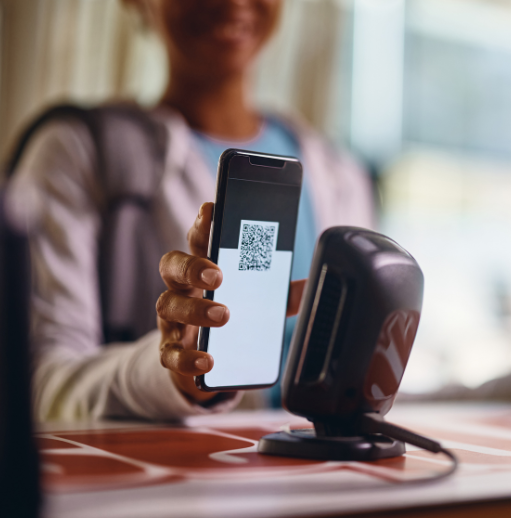
- Multi-channel access: Native integration with work hubs including Teams, Outlook, Google Workspace, Slack, mobile apps, and sensor integration with badge readers and room displays for touchless check-in
- Operational connectivity: Direct integration between workplace experience and facility management systems so employee requests automatically generate and track work orders
As hybrid work and return-to-office campaigns continue to evolve, platforms that deliver across all areas give organizations the flexibility to adapt while maintaining operational control and measurable business outcomes.
How Eptura delivers industry-leading capabilities that drive business impact
Market-leading platforms don’t just implement features. They connect capabilities to operational systems and business outcomes. While standalone features create adoption gaps and data silos, only integrated delivery connects teams across the enterprise with the data-driven insights they need to produce measurable results.
Enterprise integrations that eliminate fragmentation
When your workplace systems can’t connect to HR, facility management, and IT infrastructure, you face manual data entry errors, duplicate records, and employees jumping between tools just to book a desk. Your IT team spends hours provisioning access across disconnected systems, while your real estate team makes portfolio decisions without current organizational data.
We deliver production-ready integrations with Microsoft 365, ServiceNow, Okta, Power BI, and major IWMS/CMMS platforms, eliminating duplicate data entry and keeping security synchronized without custom development.
When someone joins or leaves your organization, workspace permissions update automatically across every system. Your data flows seamlessly between HR systems, identity and access management tools, and workplace applications, reducing manual effort while accelerating adoption.
Space management that quantifies real estate decisions
Without utilization data connected to costs, your real estate teams can’t justify footprint reductions. You’re paying for square footage based on projected headcounts from three years ago, not actual usage patterns.
Our space management platform connects what your employees book with what you’re paying per square foot, giving you cost-per-desk visibility and utilization benchmarks for portfolio decisions. Now you can set business rules for space usage, restrict areas post-occupancy for maintenance, and run scenario modeling to answer questions like “What if we reduced our footprint by 20%?”
After implementing our platform, Sodexo, a multinational integrated facility management company, was able to combine utilization and lease data to reduce their real estate footprint by 50% and deliver $3 million in verifiable savings, proving that connecting booking data to lease costs can drive tangible business outcomes.
AI-powered coordination that drives adoption
When booking takes too many clicks and managers can’t see team schedules, people start to work around the system instead of with it.
Platforms with built-in AI suggest optimal team days based on colleague schedules and past patterns while letting employees maintain control instead of mandating attendance. Managers gain visibility into when teams plan to be in the office without tracking individual movements. Natural language booking via Copilot in Teams means your employees can reserve spaces by simply asking.
A financial regulator we worked with achieved 365% improvement in workplace engagement and utilization because employees found the system helpful instead of a complicated extra step. When your coordination tools support autonomy instead of enforcing compliance, you get higher adoption rates
Frequently Asked Questions

By Erin Sevitz
As Vice President of Content and Customer Marketing at Eptura, Erin Sevitz oversees teams responsible for providing worktech insights and engaging 25 million Eptura users worldwide. With over 10 years in thought leadership on workplace management and the built environment, Erin brings deep industry knowledge to her role. Previously, she led communications for the International Facility Management Association, a global nonprofit dedicated to professional development for workplace strategists and building managers, and served as editor in chief for IFMA’s FMJ magazine.