



The preventive maintenance program might have worked well enough back when you managed two warehouses, but now there’s multiple distribution centers across the country, and the old schedules that once prevented failures are generating expensive false starts while missing critical problems.
The solution isn’t simply better scheduling, though. Instead, you need a centralized platform that combines the right maintenance management capabilities to match service to actual utilization, enforce consistent documentation, and surface failure patterns across your entire network before they cascade into costly downtime.
Key takeaways
- Preventive maintenance programs can fail at scale when it treats all facilities the same regardless of actual equipment utilization: Facilities processing higher volume during peak season accumulate more wear than underutilized warehouses, yet have identical maintenance schedules, creating preventable failures on high-cycle assets while wasting resources on equipment that doesn’t need service
- Successful multi-site maintenance requires specific features: Look for platforms that let you create standardized PM templates with location-specific adjustments, system-enforced documentation fields that prevent premature work order closure, and pattern detection
- Successful proactive maintenance depends on centralized visibility into portfolio-wide patterns: When equipment failures at multiple sites remain isolated incidents in local systems, you can’t identify systemic issues requiring site-wide intervention. The right platform helps you identify and leverage data patterns
Implementing the best solution starts with ensuring it has the right combination of features.
Why preventive maintenance programs fail logistics operations at scale
Your maintenance team executes PM schedules consistently, completes work orders on time, and maintains detailed service records. Yet equipment still fails unexpectedly, causing operational disruptions that ripple through your distribution network.
The problem isn’t execution discipline — it’s fundamental program design that doesn’t match logistics operational realities:
- Calendar intervals can’t keep pace with variable utilization: E-commerce facilities process 3x normal volume during peak season, yet PM schedules remain identical—leading to failures on high-cycle assets while wasting resources on underutilized equipment
- Compliance documentation overwhelms pattern recognition: Your 47 facilities complete 4,200 PM work orders monthly, but when hydraulic failures spike across six locations, nobody notices—the data exists but enterprise-wide pattern analysis doesn’t happen
- Standard preventive tasks don’t address actual failure modes: Freezer warehouse forklifts experience seal failures from temperature cycling. Conveyor systems wear faster with abrasive materials. Generic procedures don’t adapt to operational conditions causing unplanned downtime
These execution gaps explain why maintenance costs continue rising while equipment reliability stagnates — your program generates compliance documentation without preventing the failures that matter most to your operation.
Essential platform capabilities for logistics maintenance at scale
When evaluating maintenance management solutions for multi-site logistics operations, you need to ensure you’re getting the specific features that address the unique challenges of distributed networks operating at varying utilization levels.
Configurable preventive maintenance templates with location-based scheduling
Look for preventive maintenance software that lets you create standardized PM templates once — inspection checklists, lubrication requirements, adjustment procedures, component replacement intervals — then deploy them across your entire network with location-specific frequency adjustments.
This batch template deployment approach maintains consistency while enabling local adaptation without forcing you to create and manage dozens of unique PM programs for each facility. You maintain corporate reliability standards while allowing your climate-controlled Midwest warehouse to run quarterly dock leveler inspections, and your Gulf Coast facility exposed to humidity and salt air to inspect monthly. Both facilities use identical procedures, but you control frequencies based on actual operating conditions affecting each location.
The platform should make these adjustments simple — configure your base template once, then set location-specific intervals through a few dropdown selections rather than recreating entire PM procedures for every site. This ensures your Phoenix and Atlanta facilities follow the same maintenance protocols on identical forklift models, but Phoenix services equipment every 200 operating hours while Atlanta’s higher-utilization units trigger maintenance at the same hour threshold they reach in half the time.
Mandatory work order documentation fields that enforce data quality
Your platform should let you configure required documentation fields — problem description, root cause analysis, corrective actions, follow-up recommendations—that technicians must complete before closing work orders. The facility management platform feature ensures consistent data quality across all 47 facilities automatically through system-enforced documentation standards that prevent work order closure until all required fields contain complete information.
Look for integration with mobile applications that support photo capture requirements. When technicians must photograph failed components, document proper installation, and capture equipment nameplate data, you build visual documentation that supports root cause analysis and creates training materials across your network.
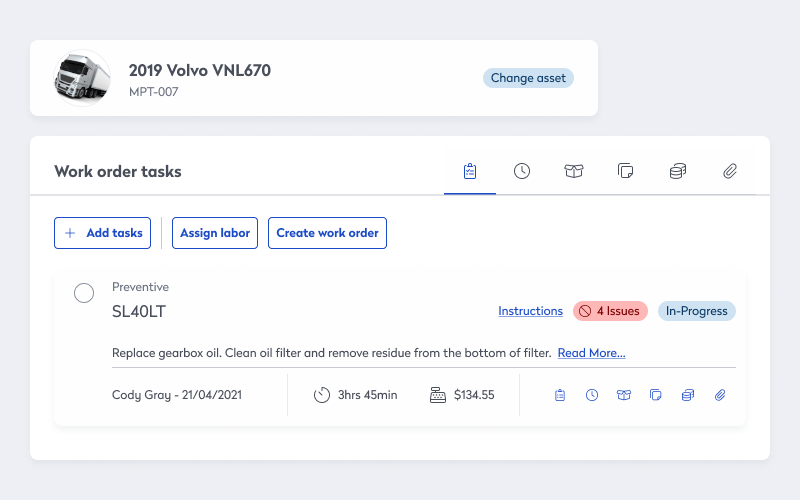
Enforcement happens at the point of service — field technicians can’t mark work orders complete and move to their next assignment until they’ve filled every mandatory field and attached required photos. The system prevents the documentation gaps that affect multi-site operations where one facility provides comprehensive failure analysis while another records only “fixed” in the notes field. Instead, yur corporate reliability engineers get consistent, analyzable data from every location without depending on individual technician discipline or supervisor oversight.
Enterprise-wide analytics dashboards with portfolio-level metrics
You need centralized asset management analytics that track performance across all facilities: mean time between failures by equipment type, unplanned downtime percentages, maintenance cost per operating hour, emergency repair frequency.
The platform should generate comparative scorecards showing each facility’s performance against network benchmarks, highlighting sites achieving exceptional results, and those requiring improvement focus.
Automated performance reporting aggregates data from all locations into enterprise-level dashboards showing portfolio-wide trends and site-by-site comparisons, giving you visibility that’s impossible to achieve through facility-level reporting.
True visibility drives continuous improvement through friendly competition — when your Atlanta facility achieves industry-leading forklift reliability, you can document their approach and deploy it network-wide.
So, now you can spot performance outliers immediately: Tampa runs 97% PM compliance with excellent uptime while Phoenix achieves 92% compliance but experiences high unplanned downtime, signaling that Phoenix needs different intervention despite acceptable PM completion rates. Your corporate team provides targeted support to underperforming sites rather than applying generic improvement programs that don’t address specific failure modes affecting individual locations.
Centralized asset management with cross-site failure pattern analysis
Your platform must maintain centralized equipment records and work order histories across all locations, giving corporate reliability teams visibility into failure patterns that local maintenance supervisors can’t detect. Automated pattern detection correlates failure modes across distributed facilities, identifying systemic issues requiring fleet-wide intervention before they cascade across your entire network.
When hydraulic pump failures on a specific forklift model spike at six facilities within 90 days, the system should surface this pattern — enabling your corporate engineering team to investigate root causes, issue technical bulletins, and implement preventive measures network-wide before additional sites experience failures. Your Phoenix warehouse reports a transmission failure,
Now when Atlanta sees the same problem three weeks later, Dallas reports identical issues the following month. Without centralized pattern analysis, each facility treats these as isolated incidents requiring reactive repairs rather than recognizing a systemic problem affecting multiple sites.

The platform should provide correlation tools that let your corporate reliability engineers query failure modes by equipment manufacturer, model number, component type, and operating conditions. They can identify that specific forklift models from a particular vendor consistently fail earlier than expected across multiple sites, enabling you to engage the vendor about quality issues while adjusting PM procedures and monitoring intensity on affected equipment fleet wide.
How a major auto parts retailer achieved visibility across 28 distribution centers with Eptura
A leading auto parts retailer faced the exact challenges that plague multi-site logistics operations. Managing 28 distribution centers serving over 6,000 retail locations with 29,000+ employees, they struggled with fragmented data scattered across facilities. Identifying root causes of downtime required manual data gathering, and tracking total cost of ownership for assets consumed time that should have been spent preventing failures.
Centralized reporting transforms distributed operations
The retailer implemented Eptura Asset to create a centralized platform for downtime reporting accessible from both mobile apps and computers. The system required technicians to specify downtime reasons when logging equipment failures, transforming generic “forklift down” entries into actionable intelligence about hydraulic failures, electrical issues, or operator errors affecting specific equipment models.
Individual technician efficiency reporting gave managers visibility into performance patterns, enabling targeted training and workload balancing. Real-time notifications ensured maintenance technicians received immediate alerts about new work assignments, reducing response delays that previously allowed minor issues to escalate.
Measurable improvements in efficiency and uptime
The implementation delivered transformative results across the entire network, including:
- Individual dashboards for each of the 28 distribution centers providing unprecedented performance visibility
- Decreased downtime through better root cause tracking and faster response times
- Increased technician efficiency via performance reporting and optimized work assignment
They were able to leverage the platform to finally see which equipment models consistently underperformed and required replacement versus those delivering strong ROI despite higher initial costs — insights impossible to extract from fragmented facility-level data.
To discover how this auto parts retailer transformed their multi-site maintenance operations, read the full customer story.
Frequently asked questions

By Jonathan Davis
As a content creator at Eptura, Jonathan Davis covers asset management, maintenance software, and SaaS solutions, delivering thought leadership with actionable insights across industries such as fleet, manufacturing, healthcare, and hospitality. Jonathan’s writing focuses on topics to help enterprises optimize their operations, including building lifecycle management, digital twins, BIM for facility management, and preventive and predictive maintenance strategies. With a master's degree in journalism and a diverse background that includes writing textbooks, editing video game dialogue, and teaching English as a foreign language, Jonathan brings a versatile perspective to his content creation.