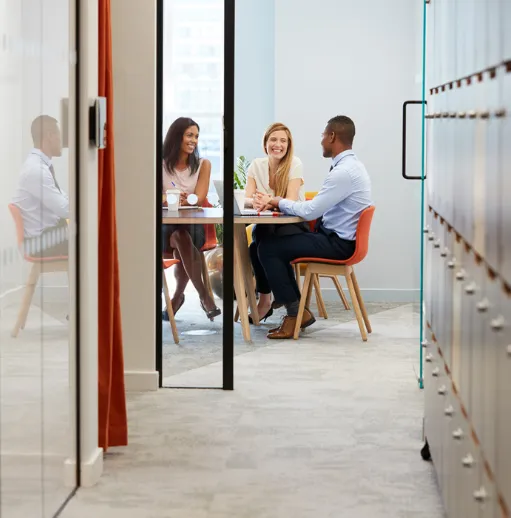



For large, multi-site organizations, the conversation around the workplace has shifted.
It’s no longer about whether people are coming into the office. In most enterprise environments, they are. The real question is whether that time is actually delivering value.
Across regions, portfolios, and thousands of employees, even small inconsistencies in workplace experience become amplified. What works in one office doesn’t always translate to another. What feels seamless for one team can feel fragmented for another.
Over time, those gaps add up.
This is where many organizations get stuck. They’ve invested in space, technology, and policies, but the day-to-day experience still feels unpredictable. And when the experience is unpredictable, it’s difficult to scale.
This playbook is about closing that gap. Not by increasing attendance, but by making in-office time more intentional, more connected, and more aligned with how enterprise organizations actually operate.
Key takeaways
- In-office time should be designed around outcomes, not attendance
- Coordination across teams and locations drives more consistent workplace value
- Visibility into people, not just space, improves alignment and engagement
- Small friction points scale quickly across large organizations and impact adoption
- Data-driven decisions reduce waste and improve long-term portfolio performance
- Experience, not policy, is what sustains participation in the office
Recognizing the experience gap
There’s a pattern that shows up in large, distributed organizations.
The office is open. The systems are in place. People are coming in. But the experience is inconsistent. One location feels energized and collaborative, another feels underused. Meeting rooms are overbooked in one region and empty in another. Employees show up without knowing who else will be there, and some leave wondering why they came in at all.
This isn’t a utilization issue. It’s an experience gap.
And it’s more common than most leaders expect.
Across multi-site portfolios, workplace data consistently shows the same imbalance: 30–50% of space can sit underutilized on a given day, while collaboration spaces are simultaneously in high demand. That disconnect creates friction, and friction compounds quickly across regions, teams, and time zones.
When employees choose to come into the office, expectations are higher. They expect connection, momentum, and clarity. Without that, attendance becomes inconsistent and difficult to sustain.
Intentional in-office time: designed, not managed
For leaders, the opportunity isn’t to increase attendance. It’s to increase value.
That requires a shift from managing presence to designing experiences.
Organizations that make this shift see measurable improvements. Teams that intentionally coordinate in-person time can experience 25–35% gains in collaboration efficiency, especially across cross-functional groups. At the same time, companies that align workplace experience with how people actually work see stronger engagement and more consistent participation across locations.
The solution is not more policy. It’s more coordination.
When employees can plan their week, align with teammates, and understand how their time in the office will be used, the experience becomes more predictable. And at enterprise scale, predictability is what creates consistency.
Design for moments, not attendance
It’s easy to measure how often people come into the office. It’s much harder to measure whether that time was actually useful.
Organizations that are getting this right are focusing less on attendance metrics and more on outcomes.
- What work moved forward?
- What decisions were made faster?
- What interactions wouldn’t have happened remotely?
This shift reflects a broader trend. Workplace data shows that collaborative work has increased by roughly 45%, while individual work continues to move outside the office.
That changes the role of the workplace.
The office is no longer a default setting. It’s a destination for specific types of work. And when it’s designed around those moments, its value becomes clear.
The benefit is straightforward: more meaningful time in the office, fewer wasted trips, and stronger alignment between presence and productivity.
Bring structure to when people come in
Lack of coordination doesn’t just create inconvenience. It creates inconsistency across regions.
One office may organically adopt shared in-office days, while another operates without alignment. Over time, this leads to uneven experiences across the organization and unpredictable space usage.
The solution is to introduce structure, not rigidity.
Shared rhythms like team days or anchor days give employees clarity around when it matters to be in the office. When implemented well, organizations often see 20–30% improvements in space utilization consistency across locations, along with more reliable collaboration patterns.
The benefit is scale. Instead of each location operating independently, the workplace begins to function as a connected system.
Remove friction from the day-to-day experience
In large organizations, friction scales faster than experience.
- A confusing booking process
- Uncertainty around space availability
- Inconsistent setups across locations
Each of these might seem minor on its own. But across thousands of employees and dozens of sites, they quickly become systemic issues.
Over time, that friction changes behavior. Employees begin to avoid the office, not because it lacks value, but because it feels harder than it should.
The solution is to simplify the experience.
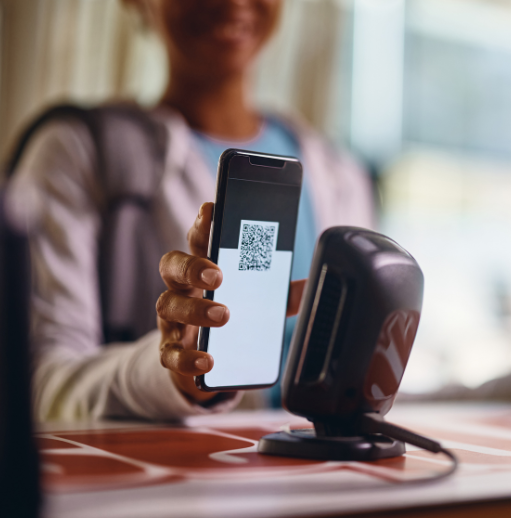
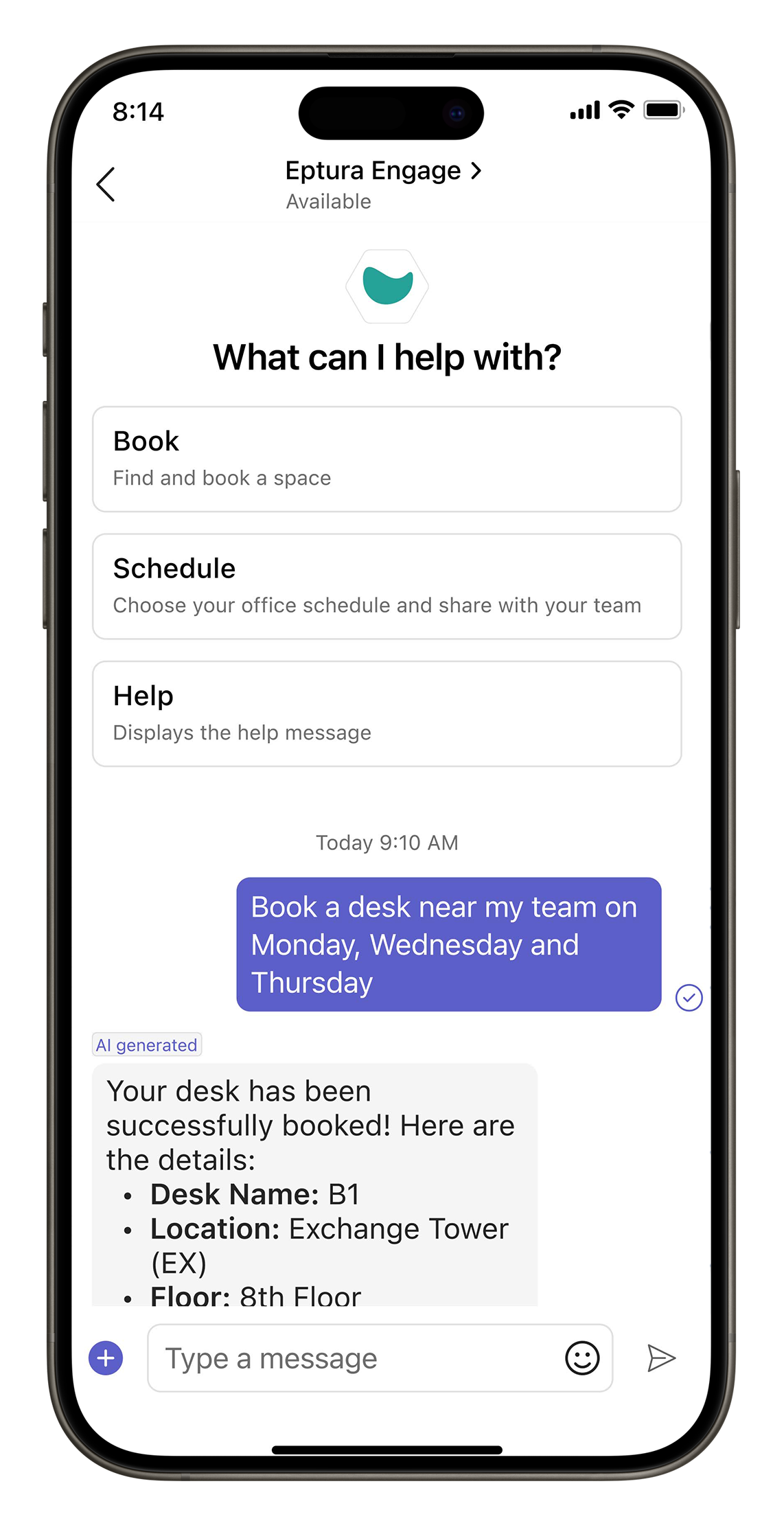
When employees can easily reserve space, confirm availability, and move through their day without unnecessary obstacles, the workplace becomes easier to use. And when it’s easier to use, it gets used more effectively.
The benefit is adoption. A frictionless experience supports sustained engagement across the entire organization.
Make people visible, not just spaces
Most workplace strategies focus on space: desks, rooms, and occupancy.
But people are what drive value.
Employees don’t just want to know if a desk is available. They want to know if their team is there. Without that visibility, coordination breaks down.
This is especially true in environments where teams are distributed across locations and schedules vary widely.
The solution is to make presence visible.
When employees can see who’s coming in, they naturally align their schedules. Teams form consistent in-office patterns. Collaboration becomes intentional instead of accidental.
The benefit is stronger connection. Visibility creates alignment, and alignment drives better outcomes.
Let data guide the experience
Workplace decisions are often made with incomplete data.
Badge swipes show presence. Booking systems show intent. Surveys show sentiment. But rarely are these signals connected in a way that reflects the full picture.
Without that visibility, leaders are forced to rely on assumptions.
At scale, that creates risk. Even small inefficiencies can translate into significant cost across large portfolios.
The solution is to unify workplace data.
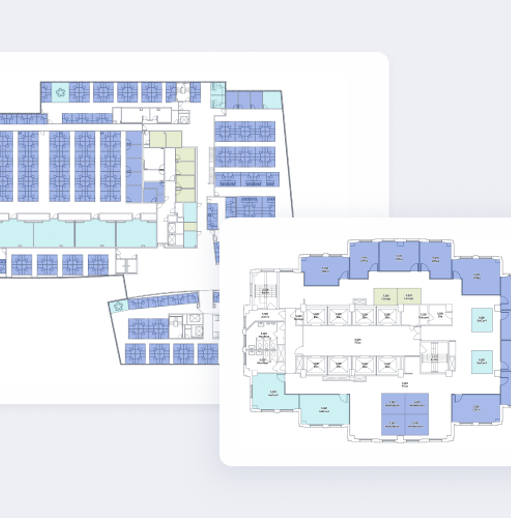
When leaders can see how space, people, and behavior intersect across locations, they can make informed decisions. They can identify patterns, adjust strategies, and optimize resources with confidence.
Organizations that adopt data-driven workplace strategies consistently report:
- Better alignment between space and demand
- Reduced wasted capacity
- More accurate long-term planning
The benefit is control. Data transforms workplace strategy from reactive to proactive.
Give people a reason to come in
Functionality gets people through the door. Experience brings them back.
This is where many organizations fall short. They invest in infrastructure but overlook what makes the workplace feel worthwhile.
Employees are more likely to come in when the office offers something they cannot get elsewhere. That might be collaboration, access to resources, or simply a more connected experience.
The solution is to design the workplace as a destination.
When employees can easily access events, services, and meaningful interactions, the office becomes a place people choose, not just a place they’re expected to be.
The benefit is sustained engagement. Experience drives consistency in attendance over time.
Support how the business actually operates
Workplace experience is deeply connected to operations.
It intersects with real estate strategy, facilities management, IT systems, and asset performance. When these systems operate in silos, inefficiencies multiply.
The solution is alignment.
Organizations that connect workplace experience with operational systems see measurable improvements. Research shows that teams supported by integrated workplace and collaboration tools can see up to a 37% increase in performance.
The benefit is reliability. When systems work together, the workplace becomes more consistent, scalable, and aligned with business needs.
Proof points and measurable impact
Organizations that focus on coordination, visibility, and data-driven decision-making are seeing:
- 30% increases in meeting space utilization
- Up to 90% reductions in booking conflicts
- More consistent attendance patterns across locations
- Improved alignment between real estate investment and actual usage
At the same time, broader workplace trends reinforce the shift:
- Office utilization continues to evolve as hybrid strategies mature
- Collaborative spaces are expanding as a share of workplace design
- Employees increasingly prioritize in-person time for team-based work
These outcomes are not driven by mandates. They’re driven by experience.
Turning the workplace into a consistent advantage
People don’t come into the office just to be there.
They come in for moments that matter. For connection, progress, and a sense that their time is well spent.
In enterprise organizations, delivering those moments consistently across locations, teams, and regions is the real challenge.
But when it’s done well, the impact compounds.
The workplace becomes more predictable. More valuable. And more aligned with how the business actually works.
That’s what turns in-office time into something worth showing up for.
Frequently Asked Questions

By Amanda Meade
Amanda Meade is a content creator at Eptura, specializing in workplace experience, meeting productivity, and emerging trends in workspace planning and visitor management. With a background in content marketing and SEO, she crafts clear, actionable content that helps teams work smarter through in-office collaboration. Throughout her career, Amanda has worked across industries, including home services, healthcare, real estate, and SaaS, developing a unique ability to distill complex topics into practical insights.