


ESG has shifted from a reporting exercise to something far more operational. It shows up in how space is used, how buildings consume energy, and how people experience the workplace day to day. That matters because buildings account for roughly 30% of global final energy consumption and about 26% of energy‑related carbon emissions.
Sustainability targets increasingly rise or fall based on what happens inside offices every day, not just what appears in an annual report.
The challenge is not defining sustainability goals. It is making them real in the flow of everyday decisions.
That is where workplace performance data comes in.
Key takeaways
- Workplace performance data connects sustainability goals to everyday operations
- Real-time insights make it possible to identify inefficiencies and act quickly
- A unified view of data improves alignment and decision-making
- Predictive analytics supports smarter planning and measurable outcomes
- Data-driven workplaces are more efficient, adaptable, and sustainable.
Occupancy patterns, energy use, and asset performance all reflect how a workplace is actually functioning. Today, many offices operate far below full capacity. Global workplace utilization typically sits in the low‑to‑mid‑40% range, even as hybrid work stabilizes. Yet those same spaces continue to be heated, cooled, lit, and cleaned as if they were full. This gap between use and operation is where ESG commitments can quietly erode — or meaningfully accelerate.
When signals like space utilization, system runtime, and employee behavior are connected, they stop being background noise and start becoming direction. Instead of static schedules and assumptions, organizations can begin making sustainability decisions based on how the workplace is actually used, hour by hour.
Earth Day tends to spark reflection. But the real opportunity is not in a single moment or campaign. It is in using the data organizations already have to continuously shape workplaces that are more efficient, more responsible, and better aligned with how people work — every day of the year.
The link between workplace data and ESG outcomes
It is easy to think of ESG as something tracked in dashboards and reports. In reality, it is shaped in operational details.
A half-empty floor still drawing full power. A building system running on a fixed schedule instead of responding to actual occupancy. Meeting spaces that are overbooked in one area and underused in another. These are not abstract inefficiencies. They directly influence emissions, energy consumption, and employee experience.
When workplace data is connected, those patterns become visible.
- Instead of relying on assumptions about how space is used, teams can see it clearly
- Instead of estimating energy needs, they can align them with real demand
- Instead of reacting to issues after they happen, they can anticipate and adjust in real time
That shift changes ESG from something measured after the fact to something shaped in the moment.
Key workplace data types that drive ESG progress
Not all data carries the same weight when it comes to sustainability. Some signals directly influence how resources are used, how space is managed, and how people experience the workplace. Focusing on the right data points makes it easier to move from insight to action without overcomplicating the process.
The goal is not to track everything. It is to identify the data that reveals where meaningful change can happen and use it to guide smarter, more sustainable decisions.
Space utilization metrics
There is often a gap between how workplaces are designed and how they are actually used.
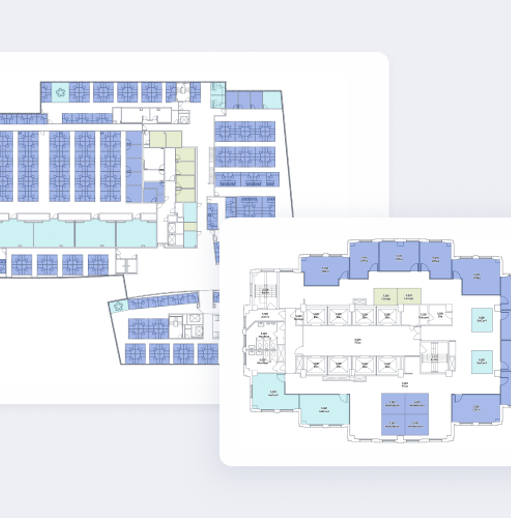
Across global portfolios, average workplace utilization typically sits around 40–45% on an average day, even as hybrid work stabilizes.
Utilization data closes that gap. It shows which spaces are consistently active and which sit idle. It reveals patterns across days, teams, and locations. And it creates a foundation for making more intentional decisions about space.
In many U.S. office markets, weekly occupancy averages just over 55%, with pronounced mid‑week peaks and significant underuse on Mondays and Fridays.
When that data is acted on, the impact is immediate. Less unused space means less energy consumed. Fewer underutilized buildings mean a smaller operational footprint. And in hybrid environments, it allows the workplace to flex without excess.
Asset and maintenance data
Assets tell their own story over time.
Maintenance records, performance trends, and failure patterns all point to how systems are aging and where inefficiencies are building. Without that visibility, the default response is often reactive. Replace the system when it breaks. Fix the issue after it escalates.
Building operations account for roughly 26% of global energy‑related emissions, much of it driven by HVAC and mechanical systems operating below optimal efficiency.
With data, the approach changes. Maintenance becomes proactive. Lifecycles are extended. Waste is reduced. Energy-intensive failures are avoided before they happen.
It is not just about keeping systems running. It is about making sure they run as efficiently as possible for as long as possible.
Employee experience and health and safety data
The social side of ESG is often less tangible, but it is just as dependent on data.
Workplace experience platforms capture how people interact with their environment. Whether they can find space when they need it. Whether the environment supports focus or collaboration. Whether there are consistent points of friction.
Employee surveys show that collaboration is the single most common reason people choose to come into the office, underscoring the link between experience and space design.
Layer in health and safety data, and the picture becomes clearer. Air quality, occupancy levels, and environmental conditions all contribute to how people feel in a space.
When those insights are used to guide decisions, the workplace becomes more responsive, more inclusive, and more aligned with how people actually work.
Practical strategies for leveraging workplace data
Turning data into impact requires more than visibility. It takes structure, alignment, and a clear approach to how insights are used across teams. Without that, even the most valuable data can remain underutilized.
The most effective strategies focus on simplifying complexity. They connect systems, clarify priorities, and make it easier to act on what the data is showing in real time.
Create a single, connected view
One of the biggest challenges is not a lack of data. It is too many disconnected versions of it.
Facilities systems, space management tools, security platforms, and employee experience apps often operate independently. Each holds part of the picture, but none show the whole.
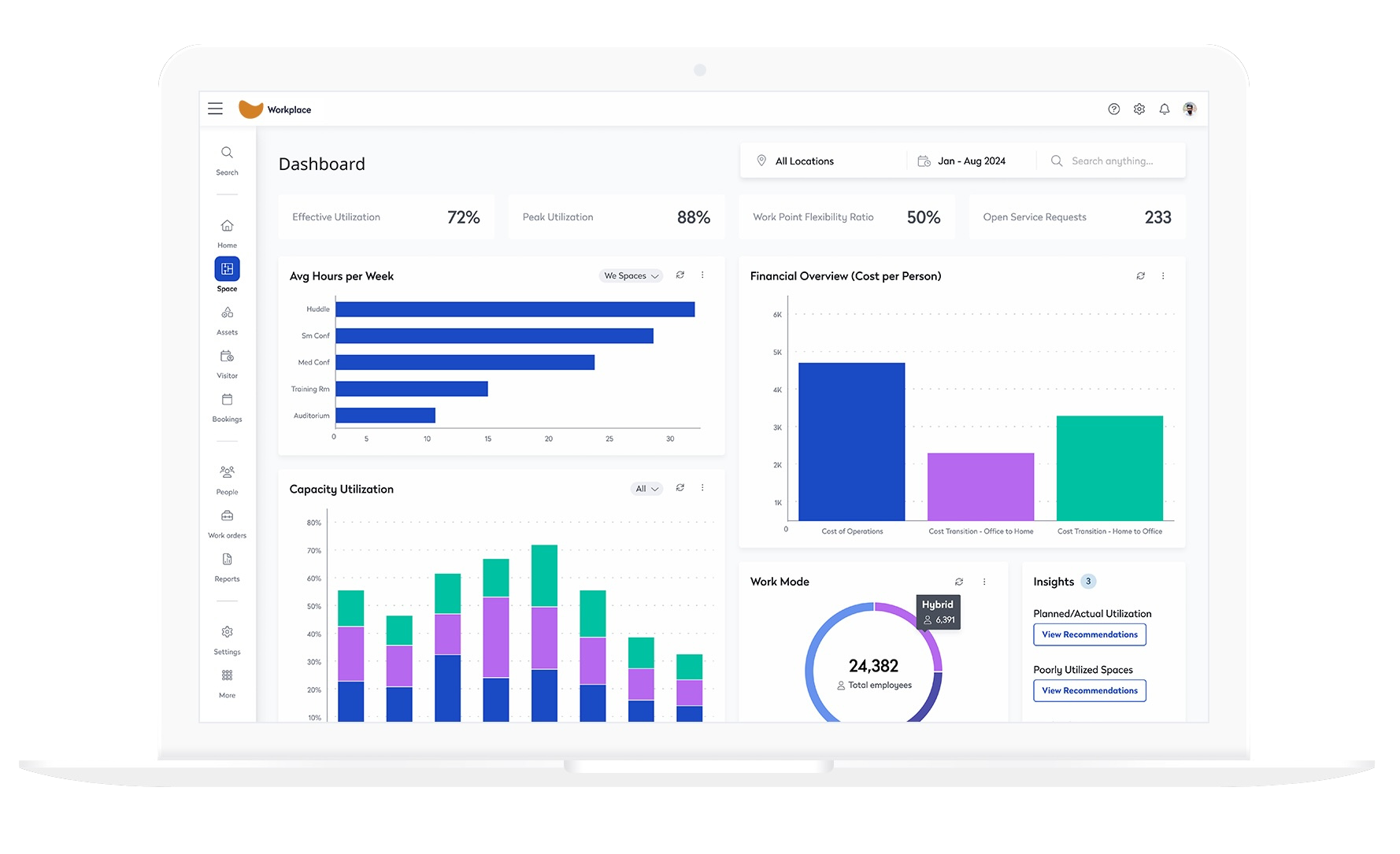
Bringing that data together changes how decisions are made. Instead of comparing reports across systems, teams can see how everything connects. Space usage alongside energy consumption. Occupancy patterns alongside access data.
That shared view creates alignment. It also removes friction from the process of turning insight into action.
Move from hindsight to foresight
Looking back explains what happened. Looking ahead is what creates change.
Predictive analytics makes it possible to test scenarios before committing to them. Adjusting space allocations, shifting attendance patterns, or consolidating locations can all be modeled in advance.
This allows decisions to be guided by likely outcomes rather than guesswork. It also helps balance sustainability goals with cost, experience, and operational needs.
Reduce the burden of reporting
ESG reporting can quickly become a manual, fragmented process.
Pulling data from multiple systems, reconciling inconsistencies, and building reports takes time and introduces risk. Automating that process not only improves accuracy but also frees teams to focus on improvement instead of collection.
More importantly, it creates a rhythm of continuous visibility. Instead of waiting for reporting cycles, teams can track progress and adjust in real time.
Overcoming common challenges
Fragmented systems
Disconnected systems make it difficult to act with confidence.
The solution is not adding more tools. It is connecting the ones already in place. Integration allows data to flow across systems, creating a more complete and reliable picture.
Lack of alignment
Even with strong data, progress can stall without shared priorities.
Connecting workplace insights to outcomes that matter across the business helps create alignment. Cost savings, operational efficiency, and employee experience all intersect with ESG. Framing data in that context makes it easier to move forward.
Making sustainability part of daily decisions
Sustainability is often treated as a separate initiative.
It becomes more effective when it is embedded into everyday workflows. When facilities teams adjust systems based on occupancy data. When workplace leaders use utilization insights to guide planning. When employees have visibility into how their choices impact the environment, they are more successful.
Small, consistent actions driven by data create lasting change.
Adjacent value: Beyond ESG reporting
The same data that supports ESG goals also strengthens the workplace in other ways.
It helps control costs by identifying inefficiencies. It improves employee experience by making environments more responsive. It increases resilience by providing visibility into how systems perform under changing conditions.
When workplace platforms are integrated with access control, visitor management, and digital workflows, that value expands even further. The workplace becomes not just a physical environment, but a connected system that can continuously adapt.
Turning insight into impact
Workplace performance data has a way of cutting through assumptions.
It shows what is actually happening, not what is expected to happen. And in doing so, it creates a clear path toward more sustainable operations.
Earth Day is a reminder of the bigger picture. But the real progress happens in the details. In how space is used, how systems are managed, and how decisions are made every day.
The opportunity is already there.
By connecting workplace data and using it intentionally, organizations can move beyond reporting and start shaping outcomes. Not just once a year, but continuously. Not just at a high level, but in the way the workplace actually works.
Frequently Asked Questions

By Amanda Meade
Amanda Meade is a content creator at Eptura, specializing in workplace experience, meeting productivity, and emerging trends in workspace planning and visitor management. With a background in content marketing and SEO, she crafts clear, actionable content that helps teams work smarter through in-office collaboration. Throughout her career, Amanda has worked across industries, including home services, healthcare, real estate, and SaaS, developing a unique ability to distill complex topics into practical insights.