

A security team investigating unusual building activity often needs more than access records to understand what happened. Most organizations already collect information that can provide critical context, including visitor data, room reservations, occupancy information, and maintenance schedules. The challenge is that the information often lives in different systems managed by different teams.
That challenge sits at the center of many conversations happening September 14-16 at Global Security Exchange (GSX) 2026. As organizations adopt AI, expand workplace technology programs, and look for better ways to manage increasingly complex facilities, security leaders are paying closer attention to the connections between workplace operations, facilities data, visitor activity, and security information.
The result is a growing interest in workplace intelligence: the ability to understand what is happening across people, places, assets, and operations by connecting information that traditionally lived in separate systems.
Key takeaways
- AI success depends on more than technology: Organizations often struggle with governance, integration, and data readiness long before they struggle with AI itself
- Employee presence data provides valuable operational context: Access records, visitor activity, reservations, and occupancy information can help security, workplace, and facility teams build a more complete view of workplace activity
- Modern security requires cross-functional collaboration: Security leaders increasingly rely on facilities, workplace, IT, HR, and legal teams to address shared challenges around operations, resilience, governance, and risk management
Many of the most important discussions at GSX this year revolve around how organizations can create that visibility while maintaining privacy, governance, and trust.
AI is changing how organizations think about workplace data
For years, workplace systems generated valuable information that rarely extended beyond its original purpose. Reservation systems helped employees find desks and meeting rooms. Visitor management platforms supported guest experiences and site security. Access control systems tracked entries and exits. Facility teams collected maintenance and operational data to keep buildings running efficiently.
Most organizations viewed those systems as separate tools designed to solve separate problems. As workplace technology environments expanded, data often remained fragmented across multiple platforms, making it difficult to create a unified view of workplace activity. In fact, nearly 77% of respondents agree that data silos hinder their organization’s ability to perform real-time analytics and data-driven decision-making, according to IBM.
AI is changing that conversation. Leaders increasingly want to understand how information from different sources can work together to reveal patterns, support decision-making, and provide operational context that would be difficult to identify from a single system alone. The focus has shifted from simply collecting data to connecting it, governing it, and making it useful.
The opportunity is significant, but so is the challenge. According to JLL’s Global Real Estate Technology Survey 2025, 92% of occupiers were running AI pilots, yet only 5% had achieved all their AI program goals. The findings suggest that organizations often struggle not with access to AI itself, but with the underlying data, governance, integration, and operational processes needed to support successful adoption.
For security leaders, that challenge creates an important question: How can workplace, facilities, visitor, and operational data work together to create clearer visibility into what’s happening across the organization while maintaining appropriate controls around access and use?
Security increasingly depends on collaboration across departments
Many of the most important security decisions no longer happen within the security department alone. Organizations increasingly bring together security, facilities, workplace, IT, HR, and legal teams to respond to shared challenges ranging from emergency preparedness and visitor management to hybrid work policies and AI governance.
Consider a common workplace scenario. A contractor needs access to a secure area of a facility. Security teams may manage access policies, facility teams may oversee the work being performed, workplace teams may coordinate site logistics, and HR or legal teams may establish compliance requirements. Each group owns part of the process, but none owns the entire picture.
The same pattern appears during investigations, business continuity planning, and workplace safety initiatives. Security leaders increasingly rely on information and expertise from other departments because the underlying risks often span multiple functions. As organizations collect more workplace and operational data, they also need stronger collaboration to ensure teams interpret and use that information consistently.
That shift helps explain why conferences like GSX continue to broaden their focus. According to ASIS leadership, today’s security leaders increasingly need to understand how technology, intelligence, business continuity, and risk management intersect with traditional security responsibilities. GSX 2026 reflects that shift with more than 200 educational sessions covering topics such as AI, governance, investigations, resilience, information security, intelligence, and enterprise risk management.
Employee presence data is becoming a critical source of workplace intelligence
For years, organizations have collected information about how employees, visitors, and contractors interact with physical workplaces. Historically, much of that information lived in separate systems, serving individual operational purposes. Badge systems controlled access. Visitor platforms managed guests. Workplace tools handled reservations. Occupancy systems measured space utilization.
Today, leaders are beginning to view those signals collectively as a strategic source of . That shift reflects a growing need for context. Security teams can often determine that an event occurred, but understanding why it happened or whether it aligns with expected workplace activity frequently requires information from multiple systems.
Employee presence data is often misunderstood as attendance tracking. In reality, it represents a collection of workplace signals that help organizations understand how people interact with spaces, services, and workplace technology throughout the day.
These signals can include:
- Badge access activity
- Workspace and meeting room reservations
- Visitor interactions
- Occupancy and utilization data
- Workplace applications
- Identity and access systems
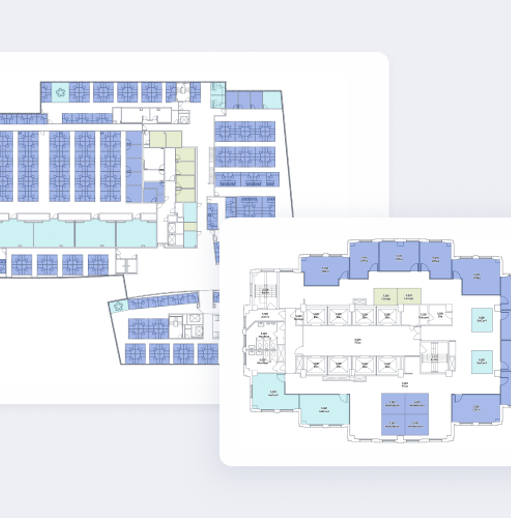
- Location and floorplan information
- Check-ins and workplace service requests
- Team scheduling and collaboration patterns
Consider a common workplace scenario. A security team reviews after-hours activity in a building. Access records confirm that several employees entered the facility. Visitor data shows a contractor checked in earlier in the day. A reservation system indicates a project team booked nearby collaboration space. Facilities records reveal scheduled maintenance in the same area.
Each record provides a piece of information. Taken together, they create a more complete picture of what occurred.
The value of employee presence data looks different depending on who is using it. Security teams, workplace leaders, facilities managers, and executives often rely on the same underlying signals, but they use them to answer different operational questions.
| Stakeholder | What they may want to understand |
|---|---|
| Security teams | Whether workplace activity aligns with expectations and whether related access, visitor, or operational events provide additional context. |
| Workplace and real estate leaders | Utilization patterns, collaboration trends, and opportunities to optimize space. |
| Facilities and operations teams | How to prioritize services, allocate resources, and identify changing demand across facilities. |
| Executive leaders | Insight into workplace investments, operational resilience, and how effectively people, places, and resources are being used. |
The organizations making the most progress are not necessarily collecting more data than their peers. They are finding ways to connect existing workplace signals, establish clear governance practices, and turn workplace intelligence into better operational decisions.
Where the employee presence data conversation goes next: Eptura at GSX 2026
Many of the themes appearing across this year’s GSX agenda come together in Eptura’s session, Protecting and Harnessing Employee Presence Data in the Age of AI.
Presented by Richard Noel, director of Security Operations & Infrastructure, and Miguel Perez, vice president of Product Management, the session explores how organizations can use workplace signals more effectively while maintaining governance, privacy controls, and accountability. Rather than focusing on a single technology, the presentation examines how workplace systems generate information that can help security, workplace, and technology teams better understand activity across facilities.
One of the most valuable aspects of the presentation is its practical approach to governance. Richard and Miguel explore questions many organizations are actively trying to answer: Who owns workplace data? Who can access it? What authorizes its use? How long should organizations retain it? Can decision-making processes be reconstructed months later if questions arise?
The session also outlines a practical maturity framework that helps organizations move from collecting workplace signals to governing, operationalizing, and preparing those signals for AI-enabled use cases. The framework recognizes a reality many organizations face today. Most already possess valuable workplace information. The greater challenge is building the governance, integrations, accountability structures, and operating models needed to use that information responsibly and effectively.
Learn more and add the session to your GSX agenda.
Frequently Asked Questions

By Erin Sevitz
As Vice President of Content and Customer Marketing at Eptura, Erin Sevitz oversees teams responsible for providing worktech insights and engaging 25 million Eptura users worldwide. With over 10 years in thought leadership on workplace management and the built environment, Erin brings deep industry knowledge to her role. Previously, she led communications for the International Facility Management Association, a global nonprofit dedicated to professional development for workplace strategists and building managers, and served as editor in chief for IFMA’s FMJ magazine.