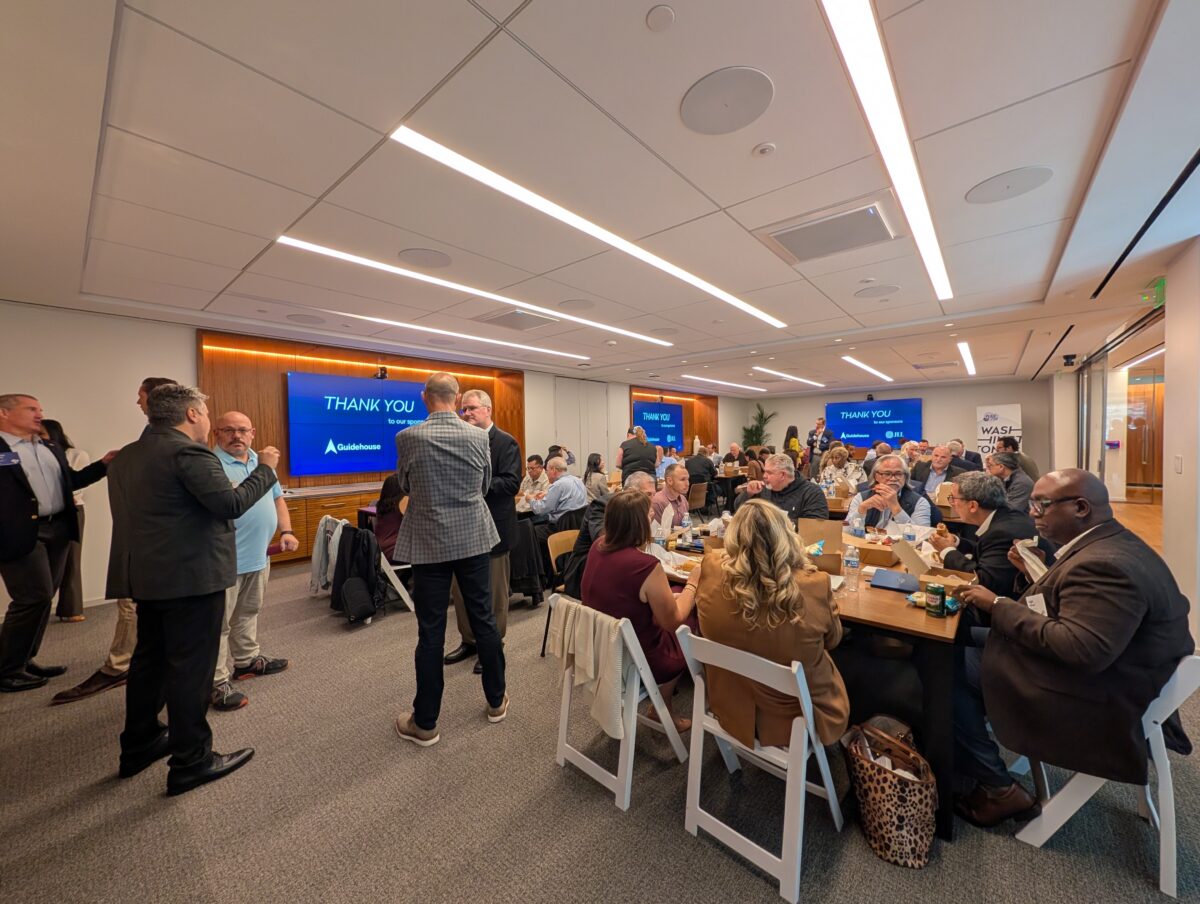
At Eptura Flex DC 2026, leaders from government, building science, real estate, and workplace technology shared insights and advice on how federal agencies can get more value from their buildings while supporting the mission. The event covered utilization mandates, aging assets, workplace effectiveness, data quality, artificial intelligence, and the standards agencies need to modernize with confidence
Across the sessions, there were common core messages. Federal facilities management is moving beyond periodic space reports and disconnected operational records. Agencies need a clearer picture of how people use space, where assets create risk, how maintenance affects operations, and which investments can produce the greatest value.
Key takeaways
- Connect facilities decisions to mission performance: Evaluate space, assets, employee experience, energy, and capital as parts of one operating system, using shared evidence to measure conditions, make decisions, coordinate action, and demonstrate results
- Interpret utilization in operational context: Combine occupancy rates with asset condition, maintenance, cost, service, and workplace data so benchmarks support defensible decisions about consolidation, redesign, and investment
- Build the foundation for sustainable modernization: Strengthen data quality, integration, governance, standards, and workforce readiness before scaling AI, while keeping facilities professionals responsible for decisions and risk
Federal facilities leaders face interconnected pressures, including fiscal constraints, aging assets, workforce needs, security, resilience, and mission requirements. Connected data and consistent operating standards help teams balance those priorities without allowing one metric to drive the entire decision.
Treat the workplace as a mission performance system
Eptura CEO Raj Batra opened the discussion by encouraging federal leaders to view space, assets, employee experience, energy, and capital as parts of one performance system. A facility performs when people can access the right environment, critical assets remain available, services respond effectively, and leaders can account for the capital invested.
That perspective changes the role of facilities data. Occupancy figures, asset histories, service requests, lease information, and capital plans become more valuable when teams interpret them together. A recurring equipment failure might affect maintenance schedules, capital planning, workplace availability, and mission risk. A consistently underused location might create an opportunity to consolidate, repurpose, or redesign space.
Raj described the leadership discipline as a sequence:
- Measure conditions
- Make a defensible decision
- Act across functions
- Prove the impact
In fact, several sessions returned to the obstacles disconnected systems create. Teams spend time reconciling records, leaders receive competing versions of the truth, and agencies struggle to explain how a portfolio decision supports responsible stewardship.
A connected operating model gives facilities, real estate, finance, information technology, human resources, security, and agency leadership a common view of performance.
Use utilization data to support better portfolio decisions
Utilization sat near the center of the Flex DC conversation. Raj highlighted three figures shaping agency planning: a 60% statutory utilization benchmark, 150 usable square feet per person, and a General Services Administration fiscal year 2026 occupancy objective above 80%.
The USE IT Act fireside chat then brought the policy and implementation questions into focus.
Two specialists with experience in federal real estate discussed how the legislation has increased attention on space use and forced agencies to examine trade-offs. Teams are revisiting floor plans, updating metrics, and looking for evidence that can justify a proposed program or portfolio decision.
The session also reinforced the limits of a utilization rate on its own. A high rate can conceal an unsuitable mix of rooms, equipment failures, service delays, or employee friction. A low rate can reflect excess capacity, temporary work patterns, restricted space, regional differences, or operational requirements.
Federal facilities managers are trying to answer practical questions, including:
- Which locations support current and projected mission demand?
- Where does underuse justify consolidation, redesign, or release?
- Which spaces support collaboration, focused work, security, and accessibility?
- How do asset condition and maintenance risk affect a space decision?
- What evidence will help leadership defend the decision and demonstrate its outcome?
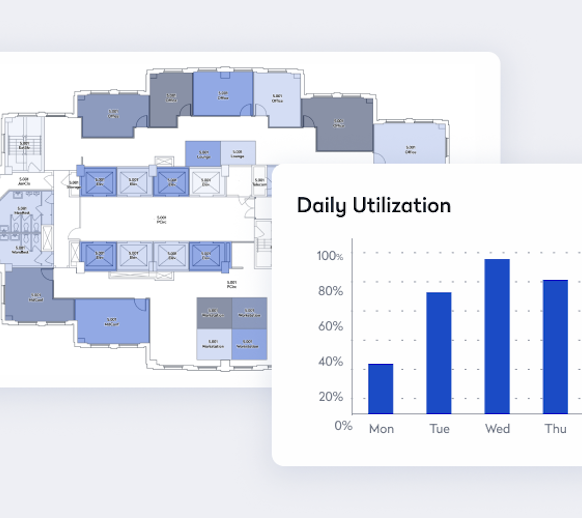
Daily occupancy information becomes more useful when teams connect it with asset, maintenance, cost, service, and workplace data. The combined view helps leaders interpret the rate, evaluate alternatives, and avoid treating a benchmark as the sole measure of performance.
Optimize existing capacity before expanding the portfolio
Eptura Chief Product Officer Meg Swanson used findings from the 2026 Workplace Index to illustrate a broader industry tension. Across surveyed organizations, 57% plan to increase workplace space in the coming year, while 53% estimate that at least 25% of their current portfolio remains underutilized. The findings cover organizations beyond the federal government, but the management issue also matters to public-sector portfolios.
Her discussion showed why planned growth does not always require a uniform increase in square footage. Organizations expect the mix of space to change, with more emphasis on shared workplaces, collaboration areas, meeting rooms, and focus rooms. Agencies can study which settings employees and operational teams need, then reshape capacity around those requirements.
Meg also shared evidence that the physical workplace can support performance. In the Workplace Index, 56% of respondents said being onsite always or often helps them work more effectively, and 43% said their workplace supports connection and collaboration very or extremely effectively. However, 30% still struggle to quantify workplace value.
Those findings point to a balanced federal strategy. Better evidence can show where an agency has low-value fixed capacity, where employees lack suitable environments, and where a redesigned workplace could improve both efficiency and mission delivery.
Build a trustworthy data foundation before scaling AI
A workplace and real estate strategist from a large professional services organization advised facilities teams to address data quality and system integration before adding AI tools. AI recommendations depend on the information available to them. Incomplete asset records, inconsistent space definitions, or disconnected maintenance histories can limit the value of even sophisticated analysis.
The examples discussed at Flex DC included natural-language analysis, maintenance summaries, work prioritization, predictive asset management, and replacement forecasting. Together, they suggest an industry direction in which facilities teams will spend less time finding and reconciling information and more time evaluating recommendations in context.

That direction gives federal leaders a practical planning priority today. Agencies can strengthen data standards, integration, governance, and workforce readiness so they can evaluate emerging capabilities against real operational needs.
Human oversight remains central. AI can surface risks, recommend priorities, summarize information, and help teams analyze complex operational records. Facilities professionals and agency leaders retain responsibility for approving actions, interpreting mission context, and managing risk.
Combine standards with technology to make modernization sustainable
A senior building-science and public-sector strategy leader described another requirement for modernization. Standards define trustworthy practice, while technology helps organizations apply that practice across a large portfolio.
Federal facility owners face aging assets, lean teams, limited capital, and growing volumes of operational information. Technology can make data easier to collect and act on, but common standards give that data consistent meaning. The combination supports stronger asset reliability, workforce development, decision-making, and building design.
The discussion explored a model that connects consensus building-industry guidance with operational workflows. Standards strengthen data integrity, while technology places the guidance into the systems people use to run facilities.
The same principle applies to the facilities workforce. As experienced employees retire, agencies need reliable processes that preserve institutional knowledge and make proven practices easier to follow. Mobile workflows, accessible records, common data structures, and clear operating standards can help teams retain knowledge while adopting new technology.
What Flex DC 2026 made clear for FMs at government facilities
Federal facilities leaders must balance fiscal pressure, mission effectiveness, workforce needs, sustainability requirements, security, and resilience. The sessions showed why no single metric can resolve those priorities. Agencies need connected operational evidence and a management model that helps teams interpret it together.
Ready to connect facilities decisions more directly to mission performance? Explore Eptura for Government
Frequently asked questions

By Mike Petrusky
As Director of Podcasts at Eptura, Mike Petrusky hosts both the Workplace Innovator Podcast and the Asset Champion Podcast, sharing thought leadership with CRE, FM, and IT leaders in the digital and hybrid workplace. Mike has produced more than 500 podcast episodes listened to in over 111 countries. As an in-demand public speaker, Mike engages audiences at numerous industry events each year, including International Facility Management Association and CoreNet conferences, focusing on the human element of workplace and facility management.