

A lot has been going on. AI has moved from experiment to operations, hybrid work has matured past its planning phase, and smart building systems are generating more data than many teams know how to use. Through it all, a single question keeps surfacing in the most important conversations happening in the field: Are we designing all this for the technology or for the people who work with and inside it?
The answer, according to a growing chorus of workplace strategists, facility management innovators, and people operations leaders, is clear, and it’s reshaping how forward-thinking organizations approach everything from space design to AI adoption to change management.
Welcome to our monthly deep dive into the trends important to busy workplace and facility management (FM) professionals.
Key takeaways
- People-first is a strategy, not a sentiment: The organizations seeing the most meaningful returns on their workplace investments are those that define human outcomes before selecting tools, technologies, or layouts
- Visibility is a leadership skill: FM and CRE teams that measure, communicate, and tell the story of their impact are earning a seat at the strategic table — those that don’t risk being seen as cost centers instead of value drivers
- Co-created change sticks: When employees are genuinely involved in shaping workplace decisions, adoption becomes a natural outcome rather than an uphill management challenge
What does it mean to design a workplace around people instead of tools?
It sounds straightforward, but many organizations still get it backwards. They start with a platform, a policy, or a piece of technology, and then work outward, asking how employees should adapt to it. The result is friction, underutilization, and the nagging sense that something expensive isn’t quite working.
Rebecca Swanner, Associate Principal and Senior Workplace Design Leader at HED, argues for a fundamentally different starting point on the Workplace Innovator podcast episode “’What are the Outcomes? – AI Strategies for Building the Responsive Workplace of the Future.”
Before any workplace decision is made — before a space is redesigned, before an AI tool is procured, before a hybrid policy is finalized — organizations need to define the outcomes they’re trying to achieve for the people inside those spaces, she explains.
“Outcome-based decision making” isn’t just a planning framework for Swanner. It’s a filter. By asking what success looks like in terms of innovation, retention, engagement, and productivity, leaders can evaluate their investments against something that actually matters to the business. This moves workplace strategy from a facilities function to a true driver of organizational performance.
Daniel Grilli, General Manager for Australasia at VECOS, takes the same principle and applies it directly to technology in the Workplace Innovator episode “’Stay Curious’ – Using Smart & Adaptive Technologies to Build People-Centric Workplace Experiences”
His framing is simple but worth repeating: “Technology should be invisible and built around people.” The most successful workplace technology, he argues, isn’t the most sophisticated. Instead, it’s the most seamlessly integrated into how people naturally move through and use their environment. When employees have to consciously interact with a system to make it work, the system has already started to fail.
How should FM leaders think about change management when people are at the center?
Even the most thoughtfully designed workplace strategy will stall if the people it’s meant for don’t feel like it belongs to them. This is the change management problem, and it’s one that David George, CEO and founder of CRUX Workplace and managing director of IPWC Limited, addresses directly in the Workplace Innovator episode “Get Aligned on Purpose: Change Management and the Three Pillars of Workplace Strategy.”
George draws on years of leading global workplace strategy initiatives, including extensive work in his earlier career at the BBC, to make a case that most organizations are still designing around habits and assumptions that no longer match how people work. Hybrid teams, digital workflows, and flexible schedules don’t align with rigid layouts that were built decades ago for a different era of work.
“Why is it we’re still creating offices which replicate that?” he asks.
The answer, he suggests, lies in three core conditions that effective workplaces must support: how people collaborate, how they access information, and how they build the relationships that move work forward. Organizations that focus on optimizing these conditions as human needs rather than as technology requirements create environments where performance follows naturally.
But the how of change matters as much as the what. George emphasizes that co-creation isn’t just good practice; it’s the mechanism that turns resistance into ownership.
“Truly engaging people in that process gives a level of acceptance of the new space. It becomes theirs,” he explains.
Why do FM and real estate teams need to make their “invisible” work more visible?
Facility management and corporate real estate teams face a persistent challenge that goes beyond strategy or execution: the work they do is often invisible until something goes wrong. Preventive maintenance, space optimization, vendor coordination, compliance tracking have enormous organizational value, but they rarely show up in the conversations where budgets are decided and strategic priorities are set.
Alexander Wennerberg, CEO and Founder at Hives.co, speaks to this directly in the Workplace Innovator episode “‘Prove That Value’ – FM Innovation & Making Your Invisible Work More Visible” when he argues the gap between the value FM teams deliver and the perception of that value in leadership conversations is largely a communication and measurement problem.
He also draws a sharp distinction between genuine innovation and what he calls “innovation theater” — the appearance of progress without the outcomes to back it up. When FM and real estate teams focus on measuring and communicating their actual impact, they begin to shift their organizational reputation from cost centers to strategic contributors, and that shift opens the door to the resources and influence needed to do the work well.
What role should AI play in all of this?
In the Workplace Innovator episode “‘What are the Outcomes?’ – AI Strategies for Building the Responsive Workplace of the Future” Rebecca Swanner covers what she sees as genuinely exciting about AI’s role in the workplace. As AI absorbs routine, low-cognitive-load tasks — email coordination, scheduling, basic data processing — employees have more space for complex, creative, and meaningful work. That’s a genuine shift in what the workplace is for, and it demands a parallel shift in how spaces are designed, what success looks like, and how leaders measure impact.
Alex helps define the limits, drawing a careful boundary: “AI is most effective when used to surface insights, not replace human decision-making.” The risk isn’t that AI will make decisions for us. It’s that we’ll treat AI-generated summaries as a substitute for actually listening to the people in our buildings.
Lindsey Brackett, Chief Empowerment Officer at Legacy FM, LLC, and a prominent voice in healthcare facilities management, echoes these ideas in the Asset Champion podcast episode “‘Building the Next Generation’ – Leadership, Growth, and the Future of Facility Management.”
“AI should be used to enhance human skills, but not at the expense of losing core capabilities like critical thinking and judgment,” she explains. Authenticity and genuine human connection, she argues, matter more in a technology-driven world, not less.
Stay on top of the trends in intelligent worktech and facility management
Workplace and facility management are constantly evolving with new technologies, regulations, and best practices. Industry professionals always have something new to learn.
For more videos, podcasts, and webinars to keep you updated on the latest trends, visit Eptura’s resource page.
Frequently Asked Questions
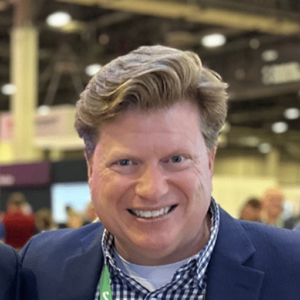
By Mike Petrusky
As Director of Podcasts at Eptura, Mike Petrusky hosts both the Workplace Innovator Podcast and the Asset Champion Podcast, sharing thought leadership with CRE, FM, and IT leaders in the digital and hybrid workplace. Mike has produced more than 500 podcast episodes listened to in over 111 countries. As an in-demand public speaker, Mike engages audiences at numerous industry events each year, including International Facility Management Association and CoreNet conferences, focusing on the human element of workplace and facility management.