


Visitor management no longer sits at the front desk. As organizations expand across regions and offices, the simple act of checking in a guest becomes part of a wider ecosystem tied to cybersecurity, identity, compliance, and workplace operations. This shift is accelerating, with recent workplace studies showing that around 69% of organizations now integrate visitor management systems with access control and broader security infrastructure, reflecting a clear shift toward connected workplace ecosystems.
What starts as a basic check-in process quickly fragments. One location may still rely on manual logs, while another uses mobile credentials or integrates directly with access control and room scheduling systems. Over time, these inconsistencies create security gaps, operational inefficiencies, and disconnected experiences that are difficult to govern at scale.
The challenge is no longer just granting entry. It is ensuring that every system behind the scenes works together securely and consistently across locations. At enterprise scale, success looks like a unified visitor ecosystem with shared standards, centralized visibility, and seamless integrations, while still allowing for local flexibility.
That is why more organizations are moving toward connected workplace platforms that bring visitor management, access, and operational workflows into a single environment, with IT ensuring everything functions reliably behind the scenes.
Key takeaways
- Enterprise visitor management requires more than simple check-in tools. IT teams need secure, integrated systems that support governance, compliance, workplace operations, and consistent experiences across locations
- Visitor management and access control are different but connected. Access control manages building entry, while visitor management coordinates registration, host notifications, visitor routing, and workplace workflows
- Shared standards help organizations maintain security and operational consistency across offices while still allowing local teams to customize workflows for different buildings, visitor types, and regional needs
- Connecting visitor systems with workplace platforms, booking tools, and space data helps reduce manual coordination, improve front-of-house visibility, and create smoother visitor experiences.
Visitor management and access control are not the same thing
One of the most common misconceptions in enterprise workplaces is treating visitor management as identical to access control. While the two systems often integrate, they serve different operational purposes.
Access control determines whether someone can physically enter a building or secured area. Badge systems, mobile credentials, turnstiles, and biometric readers typically handle authentication and entry permissions.
Visitor management extends beyond entry. It orchestrates the full arrival experience. That includes pre-registration, invitation workflows, identity verification, arrival notifications, host coordination, space assignment, compliance acknowledgments, and navigation guidance once someone enters the workplace.
For example, a visitor management platform may:
- Send pre-registration invitations to guests
- Verify identity before arrival
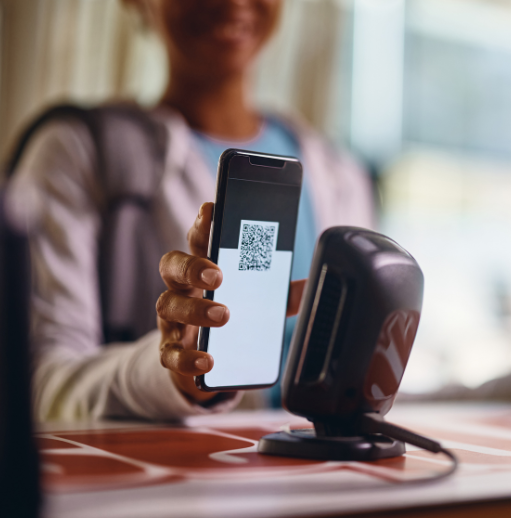
- Enable facial recognition or QR-code check-in
- Notify hosts automatically upon arrival
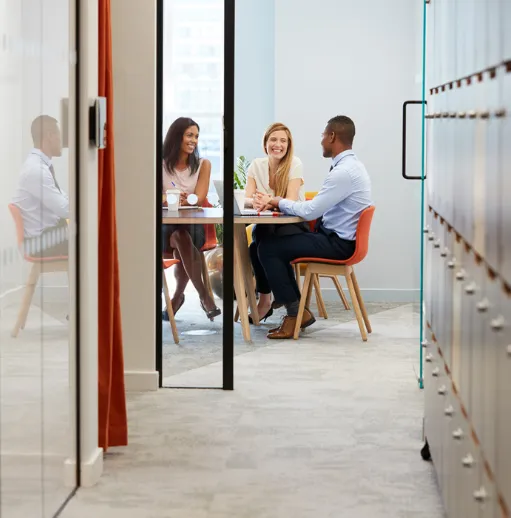
- Assign visitors to meeting rooms or designated spaces
- Coordinate front-of-house workflows
- Trigger temporary access credentials
- Track visitor history for compliance and audits
These workflows become significantly more complex because different visitor types often require different processes. Contractors may need safety documentation and limited building access. Candidates may require escorted entry and interview room assignments. Vendors may need recurring credentials tied to service schedules. Clients may need seamless executive-level hospitality experiences.
The challenge is ensuring all these workflows remain standardized enough for governance while still allowing local workplace teams to execute them appropriately for each site.
Enterprise scale requires shared standards
As organizations expand globally or across multiple campuses, inconsistent visitor processes create operational and security risks quickly.
Different offices often adopt different tools, different check-in processes, different data handling practices, and different approval paths. Over time, this fragmentation makes it difficult for IT teams to maintain visibility into how visitor information is collected, where it is stored, and whether workflows remain compliant with internal security policies.
A scalable enterprise visitor strategy starts with shared standards.
That does not mean every office must operate identically. It means the organization establishes centralized governance around:
- Identity verification requirements
- Data retention policies
- Security permissions
- Compliance workflows
- Audit logging
- Integration standards
- Approved systems and APIs
- Credential management
- Visitor categorization rules
Standardization reduces risk and simplifies administration. Teams can manage integrations more consistently, apply security policies centrally, and reduce the number of unsupported edge-case workflows that create vulnerabilities over time.
This becomes especially important when organizations operate hybrid workplaces where visitor flows change constantly. Some offices may host daily client meetings. Others may see mostly contractors or vendors. Without shared governance, workplace experiences and security protocols can drift significantly between locations.
Local flexibility still matters
Standardization alone is not enough. Enterprise visitor administration also requires flexible local execution.
Regional offices often have different building layouts, compliance obligations, staffing structures, and operational requirements. A headquarters location with a staffed security desk operates differently than a smaller satellite office or a coworking environment.
Strong enterprise visitor systems allow IT teams to define global rules while enabling local workplace teams to adapt workflows appropriately.
For example, organizations may standardize:
- Visitor identity verification
- Data encryption requirements
- Security logging
- Badge expiration policies
- Approval structures
But allow individual locations to customize:
- Arrival instructions
- Language preferences
- Notification workflows
- Lobby staffing procedures
- Visitor routing
- Space assignment logic
- Contractor onboarding requirements
This balance between governance and operational flexibility is where many legacy visitor systems struggle. Disconnected tools often force organizations into either rigid standardization or uncontrolled local variation.
Modern workplace platforms improve this by enabling configurable workflows that operate within shared governance frameworks. IT maintains oversight of integrations, permissions, and security while workplace teams manage the day-to-day execution details needed for their location.
Why integration matters more than ever
The real complexity is not simply deploying a visitor management system. It is making sure the entire workplace technology stack works together securely and reliably.
Visitor systems now interact with:
- Access control platforms
- Workplace booking systems
- Identity providers
- Collaboration platforms
- Email and calendar systems
- Security monitoring tools
- Space management systems
- Mobile credential systems
Disconnected systems create operational friction quickly. A visitor may successfully check in but not have room access configured properly. A host may reserve a conference room, but the visitor workflow may not recognize the meeting location. Front desk teams may lack visibility into arrival schedules tied to actual workspace assignments.
This is where integration becomes operationally valuable, not just technically impressive.
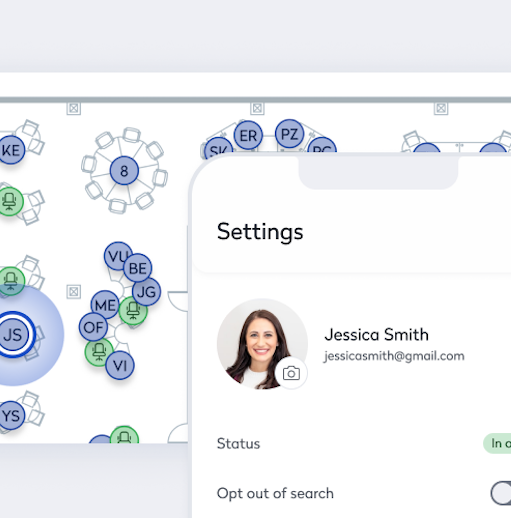
When visitor management connects to workplace space data, organizations can coordinate arrivals more effectively across hosts, front-of-house teams, and onsite operations.
For example, linking visits to specific spaces or reservations can help:
- Route guests to the correct meeting room automatically
- Notify hosts when visitors arrive at assigned locations
- Coordinate visitor flows during high-volume events
- Reduce confusion in multi-building campuses
- Improve lobby staffing visibility
- Support emergency response and occupancy awareness
- Minimize manual front desk coordination
Instead of operating as an isolated check-in tool, visitor management becomes part of the larger workplace orchestration layer.
For IT leaders, this creates opportunities to reduce duplicate systems, simplify integrations, and improve data consistency across workplace technologies.
Security and compliance stay central
Teams evaluating visitor systems often focus first on cybersecurity and compliance risks, especially when visitor data intersects with identity management and physical security systems.
Questions typically include:
- Is visitor data encrypted end to end?
- How are integrations authenticated?
- What audit logs are available?
- How is personally identifiable information stored?
- Are regional compliance requirements supported?
- Can workflows be standardized globally?
- Are access permissions role-based?
- How are temporary credentials managed?
- Does the system support centralized oversight?
These concerns grow significantly when organizations operate internationally or across regulated industries.
Modern enterprise visitor administration increasingly requires platforms that support centralized visibility into how visitor workflows operate across locations. Auditability matters not only for security reviews but also for operational troubleshooting and governance consistency.
IT teams also need confidence that workplace technologies can evolve without creating fragile integration environments. Open APIs, secure authentication frameworks, and scalable architecture become critical when connecting visitor systems to broader workplace ecosystems.
Supporting front-of-house teams through better coordination
While IT manages infrastructure and governance, the success of enterprise visitor management still depends heavily on frontline operational execution.
Front desk staff, workplace coordinators, and onsite teams need systems that reduce manual effort rather than adding complexity.
Integrated workplace platforms help by automating many of the coordination steps that traditionally rely on emails, spreadsheets, or disconnected systems.
For example:
- Hosts can automatically receive arrival notifications
- Visitors can receive dynamic wayfinding instructions
- Temporary credentials can activate automatically
- Visitor records can sync with meeting reservations
- Space assignments can update in real time
- Front desk teams can view daily arrival forecasts
These capabilities become especially valuable across distributed enterprises where visitor volumes fluctuate between offices and staffing models differ by region.
The goal is not simply deploying technology. It is enabling workplace operations to execute consistently and securely without requiring constant manual intervention.
What enterprise-scale visitor administration looks like
Successful visitor administration is less about individual lobby experiences and more about operational coordination across the workplace ecosystem.
Strong programs typically share several characteristics:
- Centralized governance with local configurability
- Secure integrations across workplace systems
- Shared compliance and security standards
- Clear audit visibility across locations
- Role-based administrative controls
- Connected visitor and space workflows
- Automated coordination between systems
- Reduced manual front desk intervention
- Consistent user experiences across offices
The objective is creating an environment where visitor workflows operate predictably, securely, and efficiently regardless of building, region, or visitor type.
As workplace ecosystems become increasingly interconnected, visitor management is evolving from a standalone operational tool into a core component of enterprise workplace infrastructure. Organizations that successfully scale these systems are not simply improving check-in experiences. They are building more coordinated, secure, and operationally resilient workplaces across every location.
Frequently Asked Questions

By Amanda Meade
Amanda Meade is a content creator at Eptura, specializing in workplace experience, meeting productivity, and emerging trends in workspace planning and visitor management. With a background in content marketing and SEO, she crafts clear, actionable content that helps teams work smarter through in-office collaboration. Throughout her career, Amanda has worked across industries, including home services, healthcare, real estate, and SaaS, developing a unique ability to distill complex topics into practical insights.