


Security teams rarely design systems with the intention of creating friction. Most workplace security decisions are made around a threat model, such as protecting facilities, systems, data, and people from risk. Employees, however, don’t experience the threat model. They experience the outcome.
They experience an access request that takes hours to process. They encounter a door that rejects credentials they were issued days earlier. They reserve a workspace through a workplace app only to discover that building access hasn’t been updated in another system. What security teams see as policy enforcement, employees often experience as disruption.
The resulting friction is rarely the product of a single policy decision. More often, it emerges where policy meets infrastructure. It appears in disconnected systems, inconsistent workflows, and gaps between platforms that were never designed to work together. These seams shape employee perceptions of IT, influence workplace behavior, and ultimately affect security outcomes.
Organizations that focus exclusively on policy design may overlook a critical reality: employee experience is increasingly determined by how security systems interact behind the scenes. The quality of those interactions influences productivity, compliance, and trust in workplace technology.
Key takeaways
- Workplace security friction is often a systems integration challenge rather than a policy design issue
- Employee workarounds are valuable diagnostic signals that reveal where systems and workflows break down
- Daily interactions with workplace technology have a greater impact on employee trust in IT than policy communications
- Onboarding and visitor experiences often expose gaps between security architecture and operational reality
- Security strategies built around user journeys can improve both compliance and employee experience
The gap between policy intent and daily experience
Security policies are typically designed with clear objectives. Access should be controlled. Sensitive information should remain protected. Visitors should be verified. Devices should be authenticated.
The challenge emerges when those objectives are implemented across multiple systems.
A modern workplace often relies on a combination of access control platforms, visitor management tools, room booking software, workplace apps, identity providers, and device management solutions. Each system may perform its function effectively in isolation. The employee experience, however, depends on how well they work together.
Consider a common workplace scenario. An employee reserves a desk for the day through a workplace app. From the employee’s perspective, the reservation confirms they can use the workspace. Behind the scenes, several systems may need to communicate, like workspace scheduling, building access control, occupancy management, and identity services.
When one connection fails, employees encounter confusion rather than clarity.
The same challenge appears during approval workflows. A manager approves access to a system, but permissions do not update immediately. An employee receives credentials but cannot enter the facility. A visitor receives a confirmation email but encounters delays at reception because required information was not synchronized across platforms.
These situations create a disconnect between policy intent and actual experience.
Importantly, employees often judge the effectiveness of IT based on these daily interactions. They rarely evaluate the sophistication of security architecture. Instead, they evaluate whether systems consistently enable them to do their work.
Repeated friction can gradually erode confidence in workplace technology. Employees begin to expect delays, anticipate complications, and seek alternatives. Over time, adoption suffers, even when the underlying security strategy is sound.
This perception challenge matters because employee trust directly affects the success of future technology initiatives. When users believe systems create unnecessary obstacles, resistance to change becomes more likely.
Workarounds as a diagnostic signal
Security discussions often rely on a familiar assumption: users are the weakest link.
While user behavior can introduce risk, this perspective can obscure an important source of insight. Workarounds frequently reveal where systems fail to align with actual work patterns.
Employees rarely wake up intending to bypass security controls. Most workarounds emerge because employees are trying to complete tasks efficiently.
When access requests consistently take too long, employees may share credentials. When approved tools are difficult to use, teams may adopt unauthorized applications. When visitor registration processes create delays, staff may seek informal alternatives.
These behaviors should not automatically be viewed as isolated compliance failures. They are often signals that a workflow, process, or integration requires attention.
Organizations that monitor workaround behavior gain valuable visibility into operational friction. Patterns begin to emerge:
- Repeated manual overrides
- Frequent access-related help desk tickets
- Informal credential sharing
- Shadow IT adoption
- Visitor processing exceptions
- Recurring onboarding delays
Each pattern highlights a point where employee expectations and system design have diverged.
The relationship between friction and circumvention is particularly important. As friction increases, employees naturally seek ways to reduce it. Unfortunately, those alternative paths often bypass the very controls security teams have implemented.
This creates a paradox. Systems designed to improve security can unintentionally encourage risky behavior when they create excessive barriers to routine tasks.
Organizations that treat workaround behavior as a source of operational intelligence are often better positioned to improve both security and employee experience simultaneously.
Where onboarding and visitor flows expose the architecture
Few workplace interactions reveal system integration challenges more clearly than onboarding and visitor management.
These moments represent some of the most visible tests of workplace technology because users are encountering systems for the first time. They have no established expectations, no familiarity with workarounds, and little patience for delays.
For new employees, day-one access experiences establish an immediate impression of how the organization operates.
Ideally, employees arrive with credentials activated, facility access configured, devices provisioned, workplace reservations confirmed, and applications ready to use. The experience feels coordinated and intentional.
In less integrated environments, the experience can look very different.
Employees may arrive without building access. Accounts may remain pending approval. Workspace reservations may not appear in scheduling systems. Devices may require additional manual configuration before productive work can begin.
Each issue appears minor when viewed independently. Collectively, they create friction at the exact moment organizations are attempting to build engagement and confidence.
Visitor experiences create similar challenges.
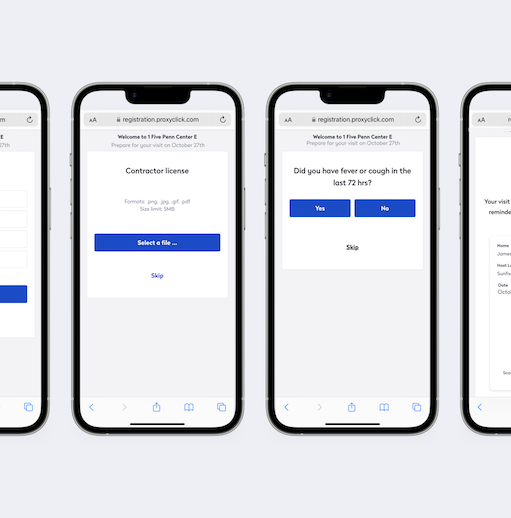
Modern organizations increasingly rely on digital visitor management systems to improve security, streamline registration, and support compliance requirements. Yet visitors often interact with multiple disconnected processes before entering the workplace.
A pre-registered guest may still require manual verification at reception. Meeting information may not synchronize with visitor records. Temporary access credentials may not connect to physical access systems.
These gaps expose architectural weaknesses that may remain hidden during routine operations.
Time-to-productivity offers a useful lens for evaluating these experiences. Traditionally viewed as an operational metric, time-to-productivity also reflects security effectiveness.
When employees receive the right access at the right time through a coordinated process, productivity improves and security controls remain intact. When delays occur, users are more likely to seek alternative paths that introduce risk.
Reducing onboarding and visitor friction therefore strengthens both experience and security outcomes.

Designing security around user paths, not just threat vectors
Security programs are naturally oriented around risk. Threat models identify vulnerabilities, assess likelihood, and prioritize controls.
While this perspective remains essential, organizations must also account for user paths.
A user path represents the actual sequence of actions employees, contractors, and visitors take to accomplish work. These journeys frequently cross multiple systems, departments, and approval processes.
Designing around user paths requires organizations to ask a different set of questions:
- How many systems does an employee interact with to complete a task?
- Where do handoffs occur?
- Which processes generate the most exceptions?
- How often must users seek assistance?
- Where do delays consistently appear?
The answers often reveal opportunities to simplify rather than add controls.
In many cases, reducing exception paths delivers greater security value than adding additional enforcement layers. Every exception introduces complexity. Complexity increases support requirements, creates confusion, and expands opportunities for error.
Unified identity and access management strategies can play a significant role here.
When workplace systems share a common identity framework, organizations reduce the need for redundant approvals, duplicate credentials, and manual synchronization. Employees experience a more consistent environment while security teams gain better visibility and control.
This same principle applies to workplace technologies that manage space reservations, visitor workflows, access control, and employee services. The more these systems operate from a shared source of truth, the fewer opportunities there are for friction to emerge.
Predictability also matters.
From a user experience perspective, predictable systems behave consistently across locations, devices, and workflows. Employees know what to expect. Access requests follow familiar patterns. Credentials work across connected environments. Approvals occur within established timelines.
Predictability reduces cognitive load and lowers the likelihood that users will seek alternatives.
It also supports compliance.
When secure behavior becomes the easiest and most reliable path, employees are significantly more likely to follow established processes. Compliance stops feeling like an obligation and becomes part of the normal workflow.
This alignment between usability and security is where modern workplace strategies deliver the greatest value.
Security experience is becoming a workplace experience issue
Security decisions increasingly influence how employees experience the workplace every day.
The quality of access workflows, onboarding processes, visitor interactions, and workplace technology integrations shapes perceptions of efficiency, trust, and organizational competence. Employees may never see the policies driving these systems, but they experience the outcomes constantly.
Organizations that view security solely through the lens of threat prevention risk overlooking the employee experience implications of their architecture. Those that examine how systems interact across the workplace gain a broader perspective.
The goal is not less security. The goal is security that works predictably within the realities of how people actually work.
When workplace systems are connected, access paths are streamlined, and user journeys are considered alongside threat models, organizations can reduce friction without sacrificing protection. In many cases, they improve both.
For IT leaders, that shift represents an opportunity. Security can move beyond being a control function and become an enabler of a more efficient, productive, and trusted workplace experience.
Frequently Asked Questions

By Amanda Meade
Amanda Meade is a content creator at Eptura, specializing in workplace experience, meeting productivity, and emerging trends in workspace planning and visitor management. With a background in content marketing and SEO, she crafts clear, actionable content that helps teams work smarter through in-office collaboration. Throughout her career, Amanda has worked across industries, including home services, healthcare, real estate, and SaaS, developing a unique ability to distill complex topics into practical insights.