

Hybrid work is no longer a new operating model for Australian organisations. The bigger question is what comes next.
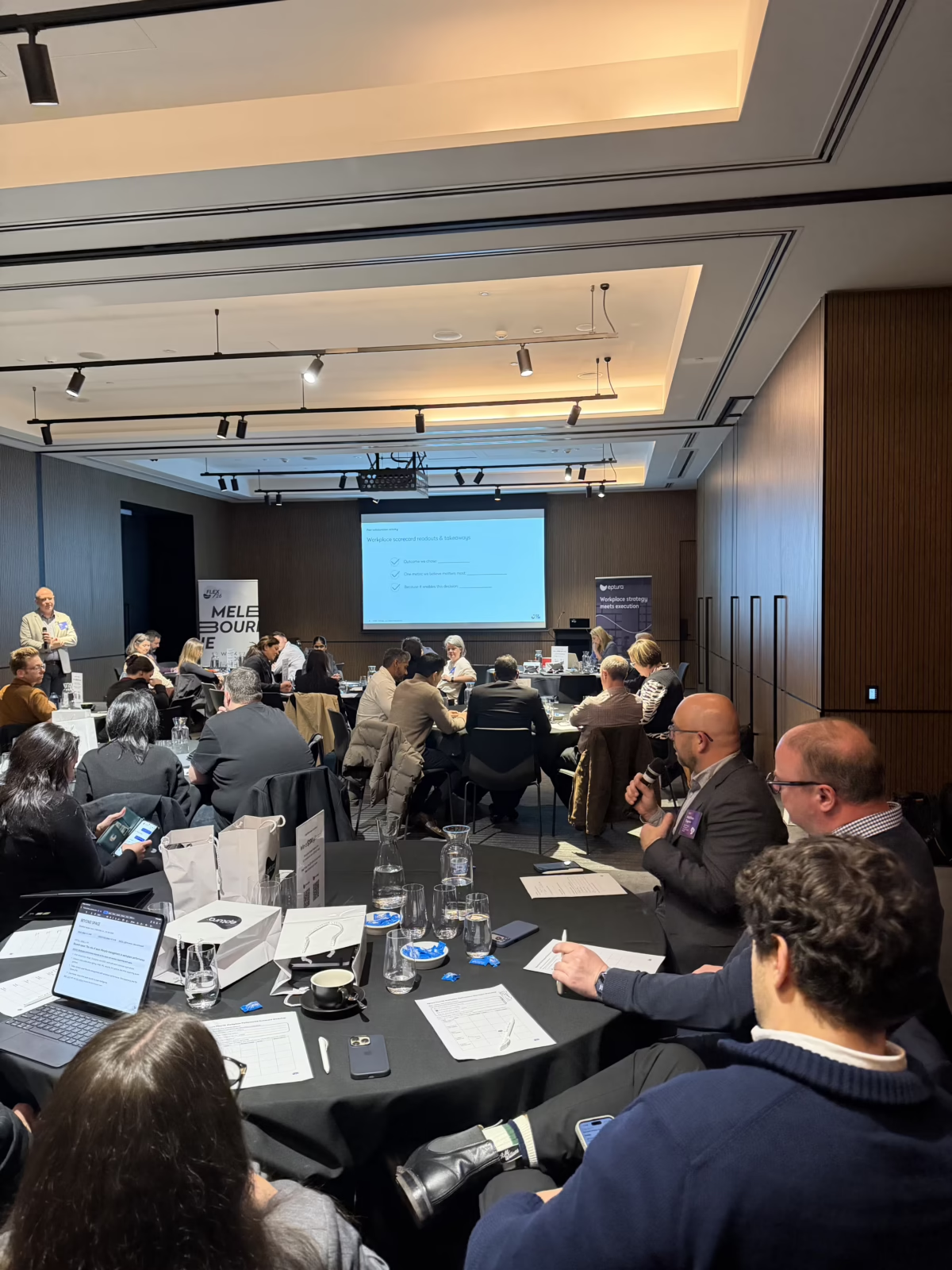
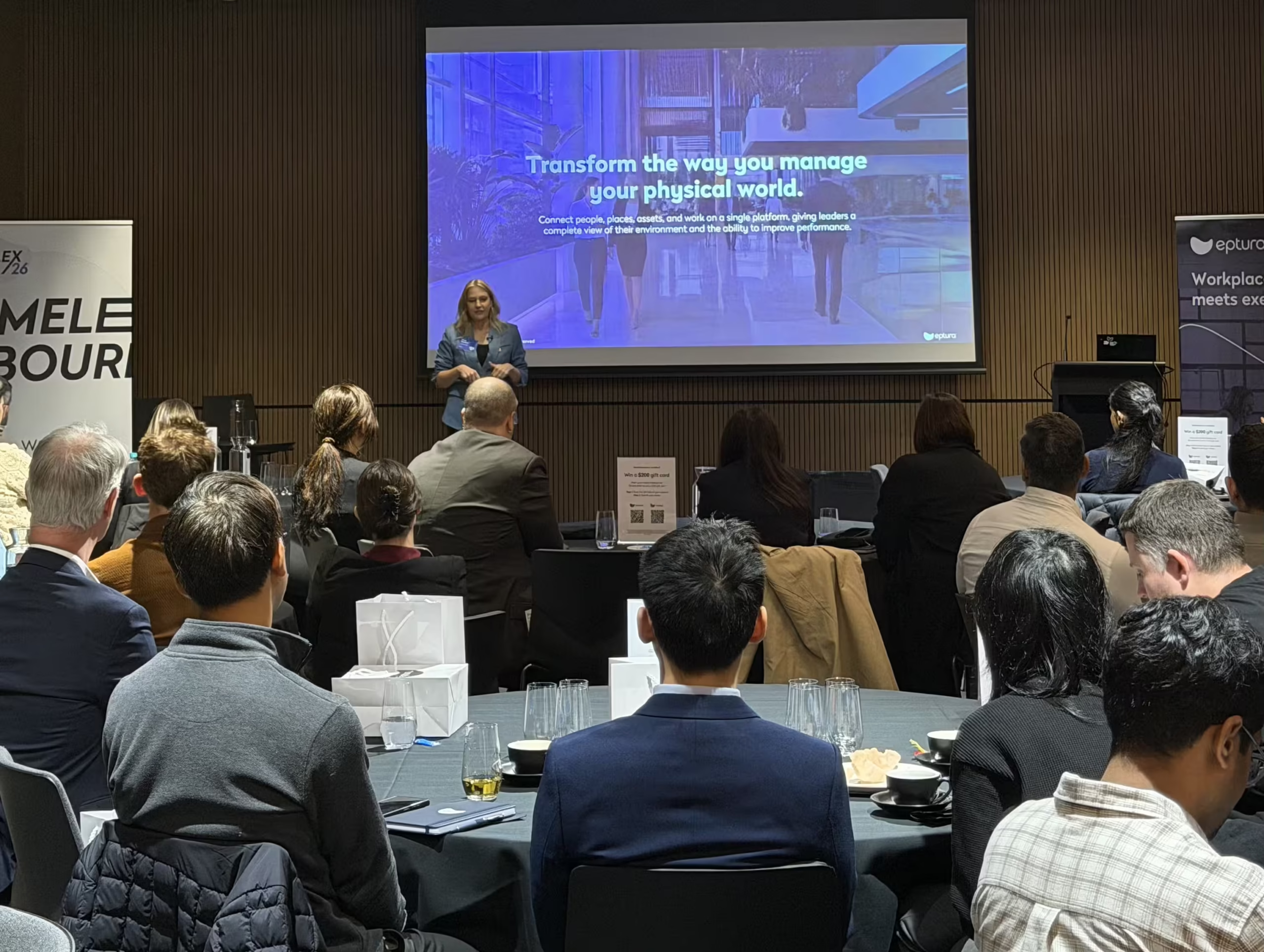
At Flex/26 Melbourne, workplace, facilities, real estate, HR, and technology leaders came together to explore how organisations can move from adapting to hybrid work to operating effectively within it. Across conversations about workplace strategy, space utilisation, artificial intelligence (AI), employee experience, asset lifecycle management, and portfolio optimisation, a common theme emerged: workplace decisions are becoming more connected.
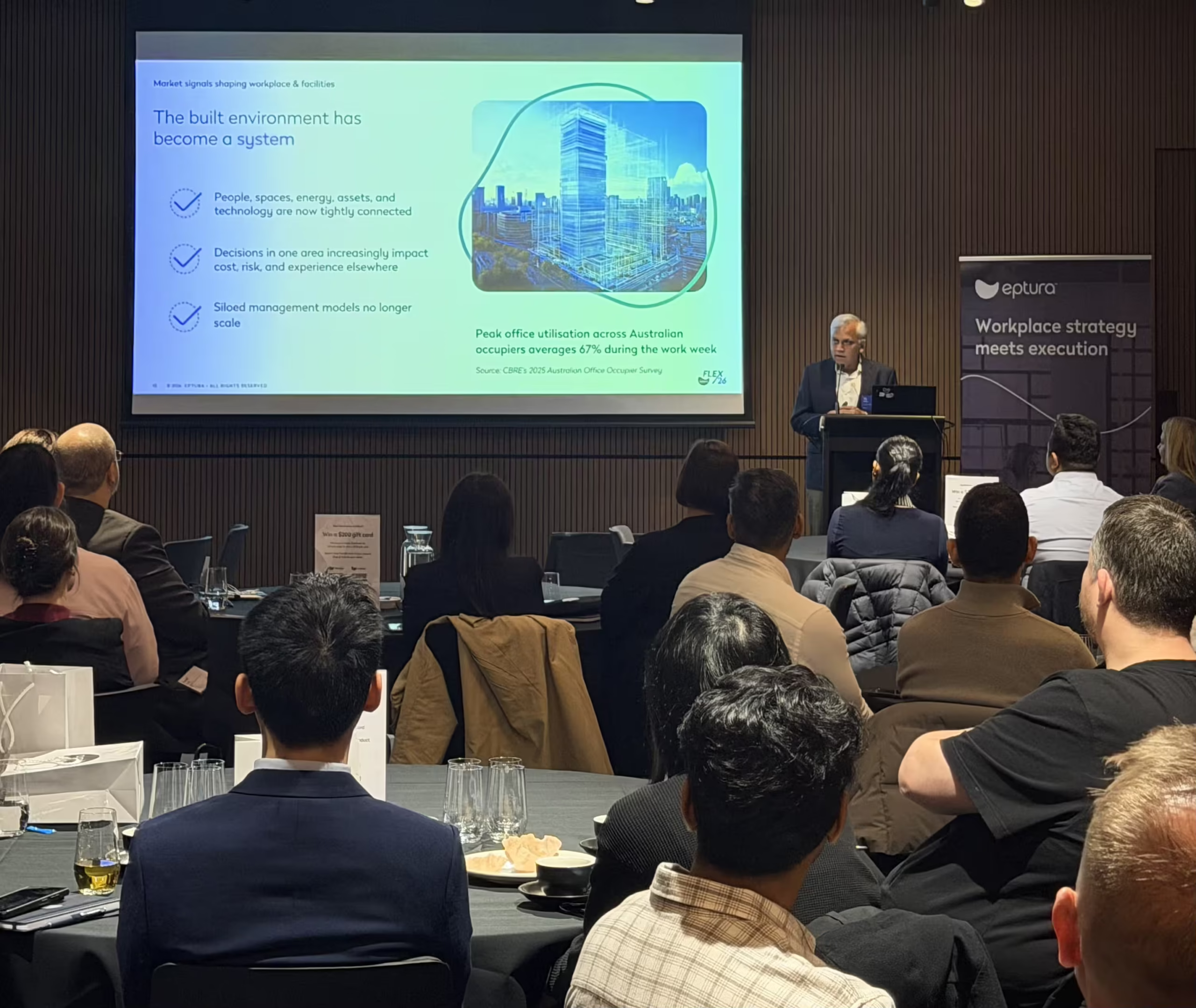
One of the clearest messages from the event was that the built environment now operates as an interconnected system. People, spaces, energy, assets, and technology are increasingly linked, which means decisions in one area can affect cost, risk, operational performance, and employee experience elsewhere. As a result, siloed management models are becoming harder to sustain as organisations prepare for the next phase of workplace evolution.
The market forces driving this shift extend well beyond hybrid work. Speakers highlighted growing pressure from rising employee costs, sustainability targets, expanding digital infrastructure, increasingly connected buildings, and accelerating AI adoption. Together, these trends are pushing organisations toward a new operating model where workplace, facilities, real estate, technology, and employee experience can no longer be managed independently.
Key takeaways
- Workplace strategy is becoming continuous. Hybrid work, changing employee expectations, and evolving business needs mean organisations need to regularly evaluate how their workplaces are performing rather than relying on annual planning cycles
- Connected data is becoming essential for better decisions. Bringing together workplace, occupancy, facilities, real estate, and asset data gives leaders greater context for decisions about space, operations, risk, and investment
- AI readiness depends on operational readiness. AI can help workplace teams identify patterns, reduce manual work, and surface insights, but its value depends on reliable data, connected systems, and clear governance
- Office value matters more than attendance alone. Australian organisations are increasingly focused on providing workplaces employees actively choose to use, supported by strong experiences, amenities, and technology
- Asset performance and workplace performance are connected. Maintenance, asset condition, sustainability performance, and building operations directly affect how reliably employees can use workplace spaces and services
- Cross-functional alignment will become increasingly important. Workplace, facilities, real estate, HR, and IT teams need shared information and objectives to make faster, more informed decisions about the workplace
Leaders are no longer looking at space, technology, people, and assets as separate priorities. They are considering how each influences the others and how better information can help teams make decisions as conditions change.
As organisations plan for 2027, five priorities from Flex/26 Melbourne stand out.
- Workplace strategy is becoming continuous
Workplace strategy was once built around relatively predictable assumptions about where people worked, how much space organisations needed, and how offices would be used. Hybrid work has made those assumptions harder to maintain.
Employee behaviour changes. Demand varies throughout the week. Business priorities shift. Regulations evolve. Portfolios expand, contract, and change purpose.
Market data discussed during Flex/26 Melbourne highlighted just how dynamic workplace demand has become. Peak office utilisation across Australian occupiers now averages 67% during the work week. While significantly stronger than pandemic-era levels, this figure demonstrates why organisations can no longer rely on static workplace plans. Capacity, utilisation, employee demand, and business requirements need ongoing review.
For Australian organisations, that makes workplace strategy less of a periodic planning exercise and more of an ongoing operational discipline.
The shift was reflected throughout Flex/26 Melbourne, including conversations about market trends, workplace strategy, space utilisation, and benchmarking. Rather than asking whether employees should be in the office, leaders are increasingly asking what they need from the workplace when they are there and whether their current environment supports those outcomes.
The growing adoption of flexible workplace models reinforces this trend. Data shared during the event showed that 53% of Australian employees now sit in unassigned seating environments, representing a 20% increase since 2019. This increase in workplace flexibility creates new opportunities for optimisation, but it also requires stronger visibility into how spaces are actually being used.
That requires teams to compare strategy with observed behaviour continuously. Booking, occupancy, utilisation, employee, and portfolio data can help workplace leaders see where assumptions no longer match reality and adjust accordingly.
The result is a workplace that can respond to changing demand rather than relying on plans based on yesterday’s patterns.
- Workplace data needs to lead to decisions
Workplace teams have access to more data than ever. The challenge is turning it into something useful.
Organisations can collect information from desk and room bookings, occupancy sensors, access control, maintenance systems, employee platforms, building systems, and real estate portfolios. When those sources remain disconnected, however, leaders may still struggle to answer basic questions about how effectively their workplaces are operating.
The discussion at Flex/26 Melbourne moved beyond simply collecting more information. Interactive roundtables focused on workplace metrics and benchmarking, while sessions across workplace and asset management considered how data can support practical operational decisions.
Several conversations reinforced that workplace data becomes most valuable when it provides context. Occupancy data, asset performance information, workplace service usage, real estate metrics, and employee experience insights often sit in different systems owned by different teams. Yet decisions increasingly require understanding how these datasets influence one another.
The need for connected information is becoming more urgent as workplace ecosystems become increasingly digital. Event discussions highlighted the rapid growth of connected technologies across commercial buildings, with billions of IoT devices generating operational data from assets, building systems, environmental controls, occupancy sensors, and workplace technologies. While this connectivity creates unprecedented visibility, it also increases complexity for workplace teams.
For 2027, the priority is creating stronger connections between information and action.
A utilisation percentage, for example, has limited value on its own. Combined with booking patterns, occupancy information, space types, and employee behaviour, it can help leaders understand whether they have the right spaces in the right places.
The same principle applies beyond workplace utilisation. Connecting asset condition, maintenance history, building information, and workplace demand can give facilities teams greater context for prioritising work and planning investments.
This connected approach also supports better trade-off decisions. Changes to workplace amenities, service delivery, asset investments, and portfolio strategies often affect employee experience, operating costs, risk, and workplace performance simultaneously.
The discussions also highlighted how workplace and facilities platforms are evolving to support these more connected decision-making models. Examples shared during the event included new approaches to data lake integration that bring together facilities, workplace, real estate, and asset information into a unified operational view. By making previously disconnected data easier to access and analyse, organisations can spend less time assembling reports and more time identifying trends, evaluating risks, and acting on insights.
The goal is not another dashboard. It is a clearer view of what is happening and what to do next.
- AI readiness starts with connected operations
AI was another important part of the conversation in Melbourne, particularly as organisations consider how emerging capabilities can support workplace planning, employee experience, and facilities operations.
The potential applications continue to grow.
Event discussions reflected a broader shift occurring across Australia’s workforce. AI is increasingly changing how work gets done, moving employees away from repetitive administrative tasks and toward higher-value activities focused on judgment, collaboration, creativity, and problem-solving. For workplace leaders, this means considering not only how AI can improve operations, but also how workplaces can support changing workforce expectations.
AI can help teams analyse workplace patterns, identify trends across large datasets, reduce repetitive administrative work, and make information easier to access. Over time, it could also support more dynamic decisions about how people, teams, and spaces come together.
But AI cannot compensate for fragmented or unreliable information.
If workplace, asset, occupancy, and employee systems operate independently, AI has only a partial picture of the environment it is being asked to analyse. Organisations therefore need to think about AI readiness as a data and operational challenge as much as a technology challenge.
The broader workplace ecosystem discussed at Flex/26 Melbourne reinforces this point. AI increasingly depends on data from workplace platforms, asset management systems, building technologies, occupancy tools, and employee applications. When these sources remain disconnected, organisations limit the quality of insights AI can generate and the outcomes it can support.
Participants also highlighted how rapidly adoption is expanding. According to data shared during the event, nearly 84% of Australian office workers already use AI at work, increasing demand for AI training, digital workplace capabilities, and technology environments that make information more accessible and actionable.
The conversation also extended beyond individual AI tools. Leaders discussed the growing need for technology-native workplaces with AI embedded into workflows, workplace applications, and operational processes.
Sessions focused on facilities and asset management provided examples of what this evolution looks like in practice. New AI-powered capabilities are making it easier for teams to interact with workplace and facilities data using natural language rather than relying on complex reports or specialised analytics expertise. Instead of building custom reports, teams can ask questions, surface trends, identify risks, and explore portfolio data through conversational interfaces.
These developments are particularly important for facilities and real estate teams, where valuable operational information often remains locked within complex enterprise systems. By reducing barriers to data access, AI can help more stakeholders participate in decision-making while maintaining governance and control.
Rather than treating AI as a standalone initiative, organisations are increasingly looking to integrate intelligence throughout the workplace ecosystem.
That means establishing trusted data, connecting relevant systems, defining governance, and determining which business problems AI should help solve.
Importantly, leaders emphasised that modernisation should not come at the expense of governance. As AI capabilities expand, organisations must balance accessibility with controls around data quality, security, permissions, and compliance. The most effective deployments will be those that make information easier to consume while preserving confidence in the underlying data.
The organisations best positioned to gain value from AI in 2027 may not be those deploying the most tools. They will be those that have created the operational foundation necessary to use intelligence effectively.
- Offices need to earn the commute
Hybrid work has also changed the way organisations think about workplace experience.
The office is no longer the automatic setting for every activity. Employees can complete many individual tasks remotely, which raises the bar for what an office needs to deliver.
The conversation is therefore shifting from office attendance to office value.
Research highlighted during Flex/26 Melbourne showed that 65% of Australian occupiers identify improving employee experience through the workplace as a key priority. At the same time, 77% cite workplace amenities as a critical factor in office decisions. Together, these findings demonstrate that organisations are increasingly focused on creating workplaces employees actively choose to use rather than simply measuring attendance.
For many organisations, the strongest reasons to bring people together are activities that are difficult to reproduce remotely: building relationships, collaborating on complex problems, learning from colleagues, strengthening culture, and connecting across teams.
Creating those experiences requires more than changing an attendance policy.
Workplace leaders also face the challenge of supporting multiple generations in the workplace simultaneously. Event discussions highlighted how workplace strategies must accommodate a workforce that includes Generation Z, millennials, Generation X, and baby boomers, all with different work preferences, technology expectations, and collaboration styles.
At the same time, employee expectations continue to evolve alongside technology. As AI changes how employees work and where they derive value, workplaces must increasingly support activities that benefit most from in-person interaction, including coaching, innovation, mentorship, relationship building, and complex collaboration. The workplace experience is becoming a complement to digital work rather than a replacement for it.
Workplace leaders need to understand the employee journey, from deciding when to come into the office and finding the right space to navigating the building, collaborating with colleagues, and accessing workplace services.
Technology plays an important role when it removes friction from that journey. Booking, visitor management, workplace services, and other systems should make it easier for people to use the workplace rather than adding another layer of administration.
Space also needs to reflect what employees are coming in to accomplish. That can mean looking beyond desk counts and considering whether the workplace has the right balance of collaboration areas, meeting rooms, focused work settings, and social spaces.
In fact, discussions throughout the event suggested that more than half of future workplaces will increasingly serve as destinations for collaboration, social connection, and team engagement rather than solely individual task work.
In 2027, workplace effectiveness will increasingly depend on whether the office supports purposeful in-person work, not simply how many people pass through the door.
- Workplace performance extends beyond space
One of the important themes at Flex/26 Melbourne was that workplace performance cannot be separated from the assets and infrastructure supporting it.
Speakers repeatedly emphasised that buildings should be viewed as interconnected systems rather than collections of independent functions. Workplace spaces, energy systems, assets, digital technologies, and employee services influence one another, meaning failures or inefficiencies in one area can quickly affect cost, risk, and workplace experience elsewhere.
This broader perspective also extends to sustainability and cost management. Discussions highlighted the significant role buildings play in global greenhouse gas emissions, reinforcing the growing importance of energy efficiency, asset optimisation, and operational visibility. As organisations pursue sustainability targets, workplace and facilities leaders are increasingly expected to balance environmental goals alongside utilisation, cost, and experience objectives.
A workplace can have the right layout and strong employee demand, but the experience quickly deteriorates when rooms are unavailable, equipment fails, building systems underperform, or maintenance interrupts critical spaces.
The session on asset lifecycle management highlighted the connection between asset decisions and broader workplace performance, while the Archibus discussion extended that view across facility operations and the building lifecycle.
Several product and roadmap discussions demonstrated how facilities management itself is evolving. Workplace and facilities platforms are increasingly focused on simplifying how information moves between teams while maintaining appropriate governance and control. Examples included unified work request processes, enhanced building-data visibility through BIM integrations, improved user profile management, and AI-generated summaries that help teams review and prioritise maintenance requests more efficiently.
These capabilities reflect a broader industry trend. As facilities teams manage growing portfolios, increasing compliance requirements, and more complex building environments, there is rising demand for solutions that reduce administrative effort while improving visibility into operations.
For facilities teams, this creates an opportunity to move beyond reactive maintenance and look at assets in a wider operational context.
Asset condition, maintenance history, utilisation, costs, and lifecycle information can help teams decide where to direct resources and when repair, replacement, or other intervention makes the most sense.
Connecting that information with workplace demand adds another layer of context. Teams can better understand not only which assets require attention, but also how those assets affect the people and spaces relying on them.
Emerging planning approaches are also helping organisations align workplace demand with operational realities. Discussions around neighbourhood planning and organisational hierarchy data highlighted how teams can better understand where people work, how teams collaborate, and how spaces support business outcomes. Linking workforce and workspace data provides a more complete view of both utilisation and workplace effectiveness.
That connection between workplace and asset intelligence will become increasingly important as organisations look for ways to improve efficiency while extending asset value.
Real estate leaders face similar pressures. Event discussions highlighted increasing demand for lease optimisation and portfolio visibility as organisations reassess space needs in a hybrid environment. With workplace costs continuing to rise and many organisations still lacking clear visibility into lease obligations and portfolio performance, data-driven real estate decisions are becoming a strategic priority rather than an administrative exercise.

What these priorities mean for 2027
Taken together, the conversations at Flex/26 Melbourne point toward a workplace model built around connected decision-making.
The workplace is increasingly being managed as an integrated system where people, spaces, assets, technology, and operational processes continuously influence one another.
That shift is occurring against a backdrop of broader market transformation. AI adoption is accelerating, workplace expectations continue to evolve, sustainability requirements are increasing, and organisations face growing pressure to optimise real estate investments. At the same time, connected technologies are generating more operational data than ever before, creating both opportunities and challenges for workplace leaders.
Organisations that recognise these connections will be better positioned to optimise utilisation, improve employee experiences, support AI initiatives, and make smarter investment decisions across their portfolios.
Technology investments will increasingly need to demonstrate measurable business outcomes rather than simply adoption. Leaders will want to understand whether investments improve utilisation, reduce operational friction, strengthen employee experience, increase asset performance, or support better portfolio decisions.
Data maturity will matter for the same reason. Organisations that can connect information across workplace, real estate, facilities, and asset operations can build a more complete picture of performance and respond faster when conditions change.
AI raises the stakes further. Reliable, connected information gives AI more context to support useful decisions, while fragmented data limits what organisations can realistically expect from it.
Most importantly, these priorities cannot remain isolated within individual functions. Workplace, facilities, real estate, HR, and IT decisions increasingly affect one another. Cross-functional alignment is becoming part of effective workplace management.
From workplace management to workplace intelligence
Flex/26 Melbourne showed how far the workplace conversation has moved.
Australian organisations are no longer simply figuring out hybrid work. They are entering a new operating era for the built environment, one defined by connected systems, intelligent operations, changing workforce expectations, and increasing business complexity.
Across workplace, facilities, and real estate discussions, one message remained consistent: intelligence is becoming essential for managing complexity and risk.
What was particularly notable at Flex/26 Melbourne was how the conversation has shifted from simply digitising workplace and facilities processes to making those processes more intelligent. New capabilities focused on AI-assisted analysis, integrated enterprise data, automated operational insights, and more accessible reporting demonstrate how organisations are beginning to transform information into action.
The next phase of workplace technology will not be defined by collecting more data. It will be defined by helping more people understand that data, act on it faster, and make better decisions while maintaining the governance and operational discipline required at enterprise scale.
Organisations that can preserve existing investments while creating a foundation for future capabilities, including AI, sustainability initiatives, workplace experience improvements, and portfolio optimisation, will be better positioned to adapt as conditions continue to evolve.
The roadmap examples shared during the event reinforced a broader industry direction. Organisations are looking for ways to modernise facility management, workplace operations, and real estate planning without sacrificing governance. Whether through AI-assisted analytics, integrated data environments, unified workflows, or more intelligent planning tools, the objective remains the same: make complex workplace information easier to understand and act on while maintaining the controls required for enterprise environments.
Australian organisations are asking harder questions about how to make hybrid work work better: how much space they need, which experiences employees value, where assets require investment, what their data is telling them, and where AI can meaningfully improve decisions.
Answering those questions requires more than individual tools or isolated datasets.
It requires connecting people, places, assets, and information so leaders can see how the workplace is performing as a whole.
As organisations move toward 2027, the ability to turn workplace information into actionable intelligence will be central to creating workplaces that can adapt to changing employee expectations, operational pressures, sustainability requirements, and business priorities.
Ready to turn workplace data into better decisions? Discover how Eptura connects workplace, people, and asset operations to help your organisation improve visibility, optimise resources, and prepare for what comes next. Explore Eptura’s solutions and see how connected workplace intelligence can support your priorities for 2027.
Frequently Asked Questions

By Craig Maroney
Craig Maroney is Vice President, APAC, at Eptura, with more than two decades of experience in workplace strategy, facilities leadership, and corporate real estate. He has led workplace transformation initiatives for large organisations across Australia and regularly contributes to industry conversations on hybrid work, workplace technology, and the future of work.