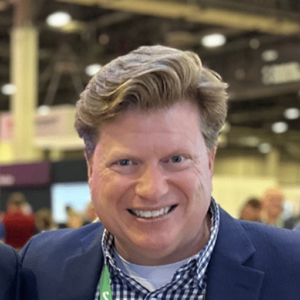





In episode 173 of the Asset Champion podcast, host Mike Petrusky speaks with Bryan Glatfelter, CFM, FMP, the AVP, Facilities Officer at Ephrata National Bank who is passionate about integrating innovative practices and technology to align facilities solutions with organizational objectives to create value-driven outcomes. Mike asks Bryan about his facility management career journey and how the “accidental profession” can turn into a very rewarding one when embracing new opportunities, growing your expertise and seeking advancement. They explore the importance of aligning FM efforts with the broader goals of the organization to deliver value and gain recognition within a company. Bryan believes that FM leaders should act as liaisons between technical teams and upper management, translating operational realities into strategic contributions, so he shares process improvement methods to drive efficiency and consistency.
Agenda
- Building strong foundations in bank facilities management. Mastering the basics, construction knowledge, systems, and operations, creates long-term success in complex, regulated environments like financial institutions
- Aligning people, process, and business strategy in facilities operations. A facility manager’s role as a connector between organizational goals, operational processes, and the people who deliver and experience the service
- Technology, data, and scalability in multi‑location environments. Building automation systems, monitoring tools, and data-driven decision-making support risk reduction and operational efficiency across distributed bank branches
What you need to know: Facility and asset management takeaways
Takeaway 1: Strong fundamentals create resilient facilities organizations
“Always know your basics is a big thing for me. Be solid in your basics, from ground up, from construction,” Brian explains.
This philosophy underscores the importance of foundational knowledge in facilities and asset management. While technology and automation continue to evolve, success still starts with a deep understanding of building systems, infrastructure, and core operational principles. Leaders who invest time in mastering the basics are better equipped to evaluate new tools, manage vendors, and make sound long-term decisions.
By grounding facility teams in core competencies, organizations gain stability, consistency, and the ability to adapt as complexity increases.
Takeaway 2: Facilities leaders must bridge people, process, and business goals
“People in process are two big things, and… become, as a manager, become the liaison between that,” Brian notes.
Facilities managers are no longer just caretakers of buildings — they are strategic partners within the organization. This role requires aligning daily operational decisions with broader business objectives, ensuring that spaces and assets actively support employees, customers, and organizational growth.
Mike reinforces this point, emphasizing that facilities teams are part of a larger system: caring for physical assets while supporting the people who rely on them. When facilities leaders connect operational work to business outcomes, they help “move the needle in the right direction” for the entire organization.
Takeaway 3: Technology enables scale — but people remain at the center
Technology adoption, from building automation systems to real-time monitoring and data analytics, plays a critical role in managing geographically dispersed assets and reducing operational risk.
However, the episode makes it clear that automation does not replace the human element. Facilities professionals are still needed to manage evolving processes, interpret data, and make judgment-based decisions. As Mike points out, even as lean, Six Sigma, and AI-powered systems advance, the need for skilled leaders who can oversee, guide, and adapt those systems will only grow.
The most successful facilities programs balance smart technology investments with continuous learning and human expertise.
Maintenance and facilities management insights
- Foundational knowledge remains essential, even as automation and smart systems become more prevalent.
- Facilities leaders function as strategic liaisons, aligning people, processes, and organizational objectives.
- IFMA plays a critical role in professional development, offering education, credentials, and peer connection across the FM community.
- Scalable processes, informed by lean and Six Sigma principles, allow teams to manage growth across multiple locations effectively.
- Human experience — including staff, customers, and community needs — remains central, even in highly regulated and automated environments.
- Regional and cultural contexts, such as serving Amish and Mennonite communities, highlight the importance of tailored facility solutions.
Do a deep dive into more asset management insights by exploring all Asset Champion Podcast episodes.
Watch the full video here: https://youtu.be/jNXJaj2BISA?si=yJl5lK4WYhTACfzI