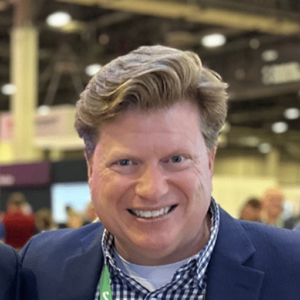





Marc Weigum is Senior Director at the Cumming Group and Founder of Unified Purpose where he is a dynamic leader focused on strategic change management, AI-driven program management and workforce strategy formulation. Host Mike Petrusky recently hosted Marc for a conversation around “The future of facility and change management” where they discussed how to identify vital problems that need to be solved, communication strategies that enable transparency and which technologies you can leverage for your facility.
Agenda
- The future of facility management and change management
- Discussion on the three pillars of strategic change: cultural, digital, and physical
- The challenges in implementing strategic change
- Practical advice on implementing strategic change
What you need to know: Facility and maintenance takeaways
Takeaway 1: Hybrid work environments require a balance between culture, technology, and physical space.
The three pillars of strategic change — culture, digital, and physical — need to work together to create an effective and innovative workspace.
“You can have pockets of it. So, if the cultural and physical are working together, that’s really spatialization. If you’re doing your digital and cultural, that’s how you’re doing your digital culture. And then smart spaces, we have physical and digital,” he explains.
Moreover, Weigum emphasizes that all these elements need to align with the strategic goals of the company to avoid friction. “You really need a tip of the spear for them. And you could even go as far as having its own budget and having it be its own business unit,” he proposes.
Takeaway 2: Change management in facility management is a continuous process that requires critical thinking and empathy.
It’s well-known in the industry that change management, especially during this time of constant change, requires a new way of thinking.
Weigum references Albert Einstein’s famous quote, saying we “cannot solve problems with the same kind of thinking we employed when we came up with them.” He also emphasizes the importance of empathy in communication, citing that every message is an expression of a need.
Weigum also provides practical advice for facility managers, suggesting that they should talk directly with people instead of sending out surveys. He advises them to “set up time to talk with people and you can ask them the same questions [as the survey] but try to see if you can get a few people together and methodically go through some of the business orgs and talk with different levels, different people.”
Takeaway 3: The future of facility management involves staying ahead of technological changes and maintaining a balance in the workplace.
Weigum emphasizes that it’s crucial for facility managers to stay updated with the latest technological advancements and to adapt their strategies accordingly. He notes that technology is changing at double the speed of Moore’s Law and that facility managers can’t always rely on outdated methods or technology. He also states that maintaining a balance in the workplace is key.
“If you’re sitting on a balloon and you lean one way and it pops out the other side, you know something’s not balanced,” he says. He suggests that equal attention is given to all elements, be it cultural, digital, or physical, to ensure a productive and satisfying work environment.
Asset management insights
- The three pillars of strategic change are cultural (people and processes), digital (tech), and physical (environment and space). All three need to work together to innovate the workspace.
- Change is an integral part of corporate facilities management. It can range from changing a panel swap to redoing a whole office or a whole floor.
- Maintaining culture when people aren’t in the same place is a major challenge for companies.
- Technology is changing at a rapid pace, and AI is able to do more than researchers initially thought. However, it’s still in an infant stage and needs to be used maturely.
- Resistance to change is a major challenge in implementing strategic change.
Watch the full hour-long video with Mike and Marc here.