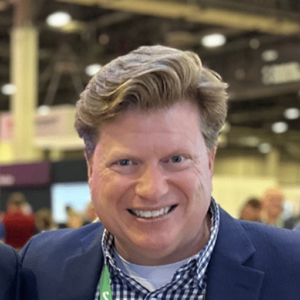





In episode 395, host Mike Petrusky speaks with Raul Garcia-Moncada, Principal & Director of Design at BR Design Associates, where he focuses on collaborating with real estate executives to develop strategies that empower teams to achieve high-quality, sustainable results. They explore why good design is not just about aesthetics but is intrinsically linked to positive business outcomes. Raul discusses innovation in workplace design and encourages leaders to embrace flexibility, adaptability, and the prioritization of well-being in their organizations. He explains how multi-sensory design, including fragrance, lighting, and influences from fashion and music, can subtly enhance the workplace experience and emotional connection for occupants. Raul emphasizes that hospitality and residential influences are shaping workplace design evolution, and while technology helps measure space utilization, understanding sensory impact often requires direct feedback from users.
Agenda
- Exploring multi-sensory design approaches that go beyond visual aesthetics
- Understanding how to design for performance through experience while aligning with business outcomes
- Creating flexible, adaptable workplace ecosystems that prioritize well-being and choice
- Building cross-functional partnerships that elevate facilities management to strategic leadership
- Measuring success through space utilization, employee feedback, and behavioral data
What you need to know: Workplace takeaways
Takeaway 1: Good design is intrinsically linked to business outcomes
“Good design is good business,” Raul shares, quoting Florence Knoll, who built an empire and transformed the post-war workplace with concepts we still use today.
Workplace leaders should remember that design isn’t merely about creating beautiful spaces. It’s also about delivering measurable business value. While Raul’s everyday focus is on “the pretty things,” his team keeps him aligned with the reality that they’re designing for business outcomes.
By creating infrastructure that can react to whatever comes next, workplace leaders can build environments that serve both immediate needs and future requirements without constant reinvestment.
Takeaway 2: Multi-sensory design creates environments worth returning to
“You’re not forcing people to come back to the office. You’re creating environments that are worth coming back to the office,” Raul emphasizes, highlighting the shift in workplace strategy.
Drawing from his studies in fashion styling and fragrance development, Raul brings a unique vocabulary that extends beyond four walls, a ceiling, and a floor. It’s one that takes a more ethereal and sensorial approach.
Hospitality design has long used signature scents and curated experiences, and while workplaces must be more cautious, there are opportunities to thoughtfully incorporate fragrance, lighting variation, and other sensory elements.
It’s an approach particularly important for neurodivergent employees who benefit from choice, whether that’s heads-down spaces separated from open areas, calm and moody environments with softer lighting, or dramatically different scenarios within the same workplace.
Takeaway 3: Cross-functional collaboration elevates FM to strategic leadership
Successful workplace transformation requires breaking down silos and partnering across functions. Facilities management and commercial real estate teams are now driving workplace change, building repositioning, and rebranding efforts that create hospitable, beautiful environments where people want to spend time.
Raul shares how much he values regularly surveying employees and analyzing usage data. Rather than relying solely on sensors, which can measure space utilization but not sensory impact, workplace leaders should directly ask employees about their experiences and track which spaces get reserved most frequently.
They also discuss the value of investing in pilot spaces to test concepts, gather metrics, and validate what employees value before full rollout. The goal, then, is to design for flexibility, not perfection, creating beautiful spaces that remain adaptable and scalable.
Workplace management insights
- Multi-sensory design goes beyond visual aesthetics to incorporate fragrance, lighting, acoustics, and influences from fashion and hospitality.
- Innovation comes from designing for performance through experience, not just implementing flashy technology or futuristic furniture.
- Neurodiversity considerations require creating dramatically different workspace types, from bright open plans to calm, moody, softly lit environments.
- Hospitality design principles, including signature scents and curated sensorial experiences, can be thoughtfully adapted for workplace environments.
- Residential design influences are making workplaces feel more comfortable and home-like, encouraging employees to return voluntarily.
- Technology can measure space utilization through sensors and reservation systems, but understanding sensory impact requires direct employee feedback.
- Pilot spaces allow organizations to test concepts, gather usage metrics, and validate what employees value before full-scale implementation.
- Cross-functional partnerships with HR, IT, commercial real estate, and facilities management are essential for successful workplace initiatives.
- Listening to employees through regular surveys and analyzing behavioral data are critical for understanding what works in workplace design.
Learn more about Eptura’s Flex/26 New York and explore the full library of Workplace Innovator podcast episodes for an in‑depth look at workplace insights.
Watch the full video here: https://youtu.be/liEnkYaHltQ?si=LsAHdCxTqt9Z2lVf