The modern workplace is no longer a single, static location. It’s a living system shaped by hybrid schedules, flexible seating, shared amenities, and a constant flow of employees, visitors, and vendors.
Wayfinding and workplace navigation shape how people move, connect, and feel inside a space. From the moment someone walks through the door, clear navigation reduces friction, builds confidence, and signals that the workplace was designed with people in mind. When done well, wayfinding supports accessibility, inclusion, and productivity across large, evolving, and multi-location environments.
Wayfinding combines digital displays, real-time data, and system integrations to help employees, visitors, and operators navigate complex spaces efficiently. At Eptura, wayfinding is enabled through software integrations with trusted hardware and display partners, allowing organizations to deliver flexible, scalable navigation experiences across TVs, kiosks, touchscreens, and mobile devices—without being locked into a single hardware ecosystem.
What is wayfinding and why it matters in modern workplaces
As workplaces and facilities grow more dynamic, navigation has become a critical experience layer. Hybrid work, flexible seating, multi-building campuses, and shared environments mean people can no longer rely on memory or informal directions. Clear wayfinding reduces friction, improves confidence, and helps spaces function as designed.
The Eptura 2025 Workplace Index report and related resources confirm that workplace friction, such as difficulty finding a workspace or meeting room, directly impacts employee satisfaction and perceived productivity. Key findings include:
- Frictionless Experience as a Top Priority: 18% of workplace leaders identified creating a frictionless/seamless employee experience as a primary operational challenge, with 16% focused on enhancing employee productivity.
- Impact of Fragmented Technologies: Fragmented workplace technologies and time-consuming processes for accessing or leveraging data are cited as major roadblocks to delivering a seamless experience.
- Employee Experience Drives Outcomes: The report highlights that a thoughtfully designed workplace experience is pivotal for employee engagement, motivation, and productivity. When employees feel supported by their environment, they are more likely to be satisfied and productive.
- Supporting Data: Companies with a strong workplace experience see a 42% reduction in turnover and a 21% increase in profitability, underscoring the measurable impact of reducing friction in daily workflows.
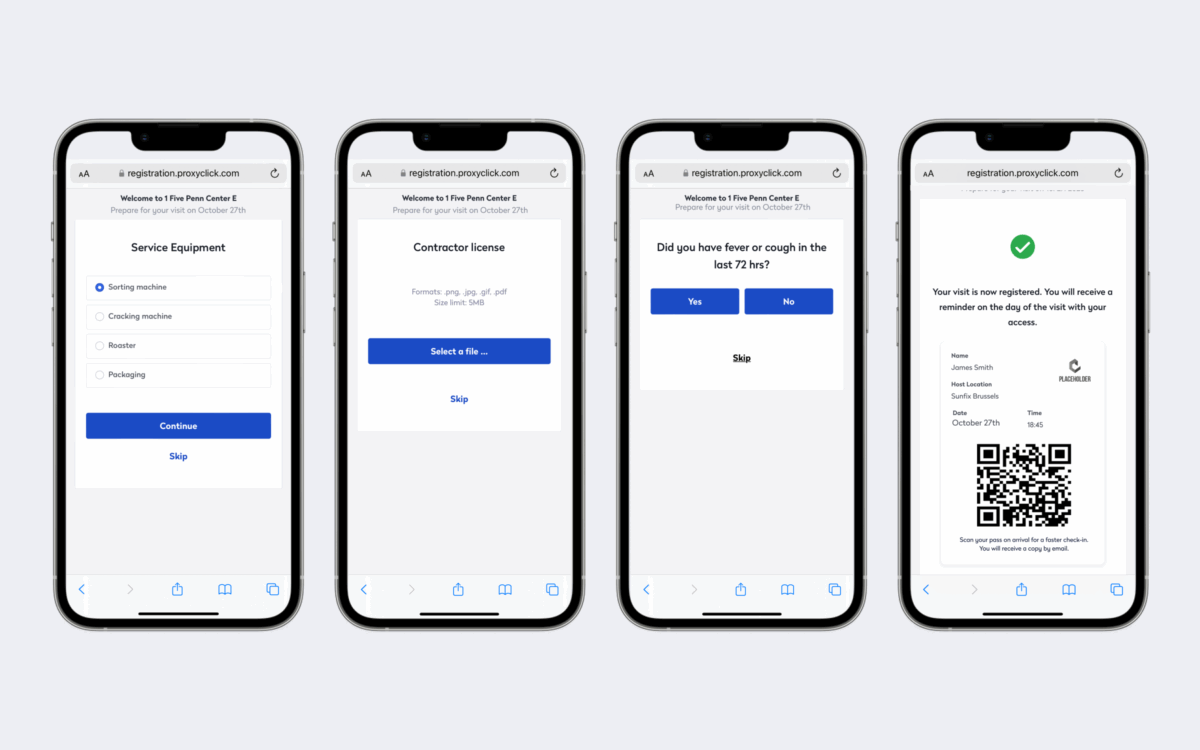
For guests and visitors, wayfinding creates a strong first impression. It makes arrivals smoother, reduces reliance on front desks, and helps guests feel welcomed rather than lost. Whether it’s a candidate arriving for an interview, a vendor checking in, or a student navigating campus for the first time, clear directions signal professionalism and care.
For employees, especially those who are hybrid or new to a space, wayfinding supports productivity and autonomy. People spend less time searching for rooms, desks, equipment, or colleagues and more time doing meaningful work.
As discussed on the Workplace Innovator Podcast, Bryan Berthold of Cushman & Wakefield highlights that workplace experience is still underprioritized across most organizations. Yet small, visible improvements like wayfinding can significantly elevate how people experience a space without requiring structural change.
Wayfinding beyond the office
Wayfinding is not limited to corporate workplaces. Its value extends across many environments where clarity, efficiency, and safety matter.
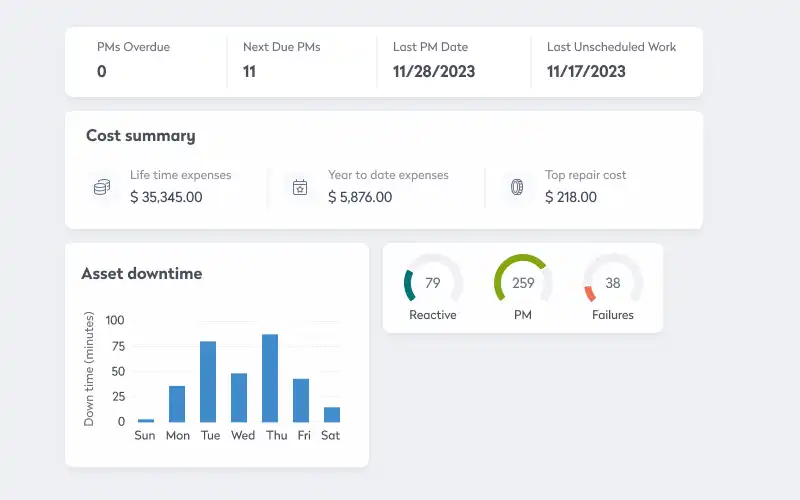
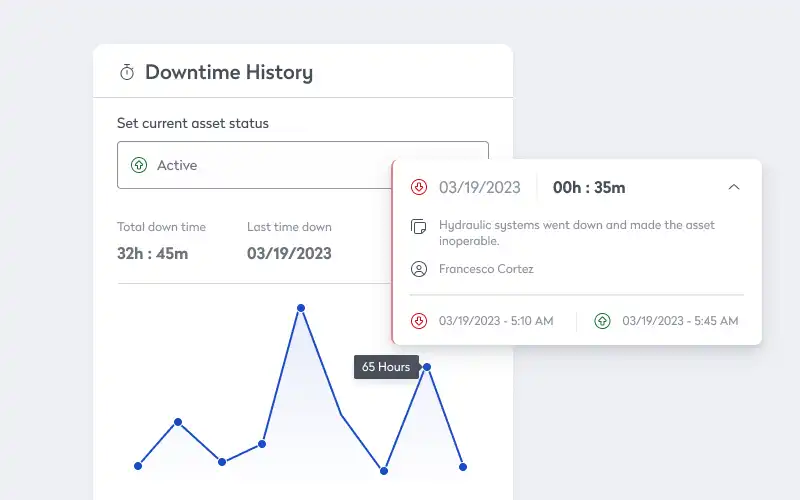
- In maintenance and facilities management, wayfinding can be used to map routes to equipment, mechanical rooms, assets, or service areas. Technicians can quickly locate what they need, plan efficient routes, and reduce unnecessary movement through a building. Over time, this visibility supports preventive maintenance by making it easier to understand where assets are located and how they relate to one another.
- In airports, wayfinding helps manage complex passenger flows, security checkpoints, gates, and services. Clear navigation reduces congestion, improves traveler confidence, and supports operational efficiency in high-pressure environments.
- On college and university campuses, wayfinding supports students, faculty, visitors, and maintenance teams alike. Large, multi-building campuses benefit from digital maps and displays that help people find classrooms, offices, housing, event venues, and service locations, especially as layouts evolve over time.
Across all these environments, the goal is the same: make spaces easier to understand, easier to use, and easier to maintain.
Wayfinding works best when it is connected to the systems that already run a facility. When navigation reflects real layouts, live data, and operational context, it becomes a powerful tool for experience, efficiency, and long-term facility health—not just a map on a screen.
Core components of workplace wayfinding
Effective wayfinding is built from a coordinated set of components that work together to support navigation, experience, and operations across dynamic environments.
Signage
Signage provides foundational orientation within a space. Clear room identification, directories, floor markers, and visual landmarks help people quickly understand where they are and where they need to go. Consistency in language and design is critical, especially across multi-floor or multi-building environments.
Digital maps
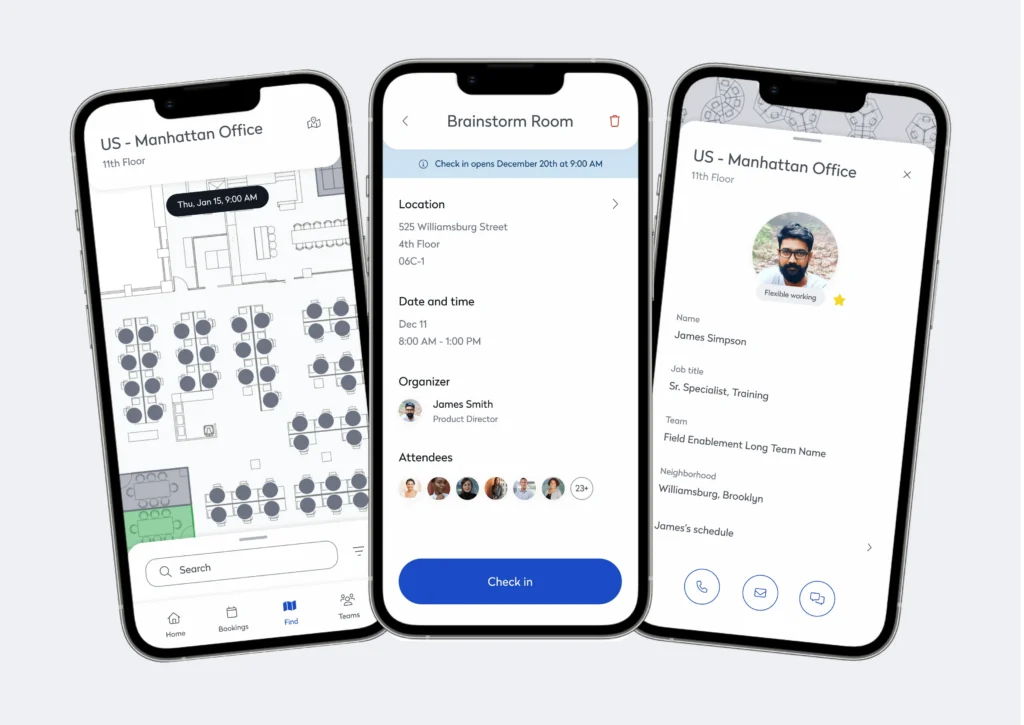
Digital maps provide a real-time view of how a space is organized. Unlike static floor plans, they can reflect layout changes, temporary closures, or reconfigured seating. Users can search for destinations, preview routes, and understand available amenities before moving through a space.
Mobile navigation
Mobile navigation allows people to access directions directly from their devices. This is especially valuable for hybrid employees, visitors, and large campuses where physical signage alone may not be sufficient.
Accessibility-first design
Inclusive wayfinding ensures that navigation works for everyone. This includes accessible routes, readable fonts, high-contrast visuals, intuitive language, and support for assistive technologies. Accessibility-first design improves usability for all users, not just those with accommodations.
Integration with booking and workplace systems
When wayfinding integrates with room booking, desk booking, visitor management, and maintenance systems, navigation becomes contextual. People can move directly to reserved spaces, scheduled meetings, or assigned assets without confusion or duplication.
Benefits of integrated wayfinding
When these components work together, organizations benefit from faster orientation, improved employee experience, smoother visitor journeys, and better support during safety or emergency situations.
The Workplace Index also highlights that disconnected workplace systems are a common source of frustration. Employees are more likely to adopt flexible seating and shared spaces when navigation reflects real-time booking data and availability. Wayfinding that integrates with workplace systems helps close the gap between planning and execution—ensuring spaces that are booked are also easy to find and use.
How a Leading U.S. Energy Company Transformed Navigation & Space Efficiency with Eptura
A top U.S. energy provider used Eptura’s wayfinding and space planning solutions to reduce their real estate footprint by 20%, consolidate 600 employees, and optimize 36 floors — all while improving the hybrid employee experience for more than 15,000 workers. With Eptura, employees navigate complex sites with ease, locate amenities instantly, and feel supported during major workplace transitions.
Visitor experience and workplace culture
Wayfinding plays a significant role in shaping how people feel about a workplace. For visitors, it sets the tone immediately upon arrival. Clear, intuitive navigation reduces anxiety and minimizes the need for assistance, allowing guests to focus on their purpose for being there.
Workplace Index insights show that perception of the workplace is shaped within the first moments of arrival. Visitors who experience confusion or delays at entry points are more likely to rate the workplace as disorganized or difficult to navigate. Clear wayfinding helps organizations present a more polished, inclusive, and experience-led environment to guests, candidates, and partners.
For employees, wayfinding supports onboarding, inclusion, and day-to-day confidence. New hires, hybrid workers, and employees visiting unfamiliar locations are more likely to engage with a space when it feels easy to navigate and well considered.
As Mike Petrusky discusses with Bryan Berthold on the Workplace Innovator Podcast, people come to the office to collaborate and connect. Environments that remove friction help reinforce that purpose and support a more intentional workplace culture.
Technology and tools powering modern wayfinding
Wayfinding today is supported by a growing ecosystem of technologies designed to adapt to changing spaces and user needs.
Common tools include mobile workplace apps, interactive kiosks, indoor positioning systems using Wi-Fi or Bluetooth, QR-code navigation for quick access, and integrations with visitor and workplace platforms like Eptura.
Data from the Workplace Index indicates that technology investments tied directly to day-to-day experience—such as navigation, booking, and visitor flows—are more likely to drive adoption than tools perceived as administrative or background systems. Wayfinding succeeds when it is visible, intuitive, and embedded into the employee journey rather than treated as a standalone feature.
Building a workplace wayfinding strategy
Successful wayfinding starts with understanding how people actually move through a space. Strategy should be grounded in real user journeys rather than idealized floor plans.
Key considerations include mapping employee and visitor journeys, identifying friction points, standardizing naming conventions, designing with accessibility in mind, and testing navigation with real users. Continuous feedback ensures that wayfinding evolves as the workplace changes.
Implementation roadmap
A phased implementation approach helps organizations deploy wayfinding with minimal disruption while delivering early value.
Typical steps include assessing current layouts and signage, defining experience and operational goals, standardizing visual and language systems, selecting integrated technology partners, piloting in high-traffic areas, rolling out across locations, and optimizing over time based on usage and feedback.
Measuring success and impact of wayfinding
To demonstrate the value of wayfinding, organizations should track metrics that reflect both experience and efficiency.
Common measures include time to destination, employee and visitor satisfaction, navigation engagement metrics, reduced front desk or help desk inquiries, and accessibility or compliance benchmarks. These insights help workplace leaders connect wayfinding investments to measurable outcomes.
Together, these findings reinforce a core Workplace Index theme: when workplaces are easier to understand and easier to use, people are more likely to engage with them intentionally, making wayfinding a foundational experience investment rather than a tactical add-on.