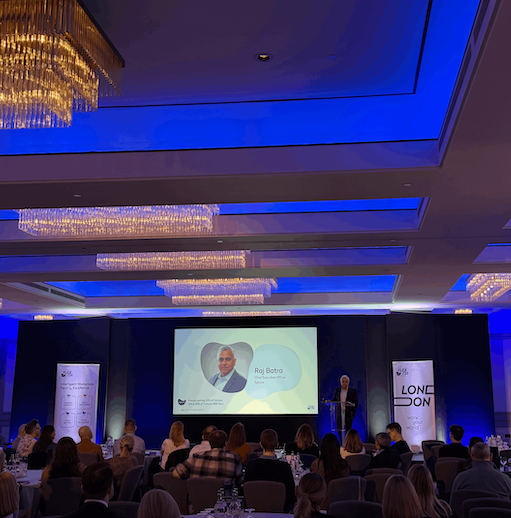



In financial services, the office has always carried weight. It signals credibility to clients, stability to regulators, and ambition to prospective talent. That said, today’s financial offices operate in a very different environment and are being asked to do more than impress. They must support hybrid work, enable rapid growth through acquisitions, and help teams move faster without sacrificing trust or confidentiality.
For CRE leaders in finance, workplace design is no longer just about aesthetics or square footage. It’s a strategic lever, one that directly impacts talent attraction, client confidence, and deal velocity.
Key takeaways
- The office remains a strategic asset in finance, supporting trust, confidentiality, and high‑stakes collaboration even in a hybrid world
- Data‑driven design is essential, ensuring workplaces are right‑sized, flexible, and aligned with how employees actually use space
- Standardization accelerates transformation, enabling faster decision‑making, smoother integrations, and consistent experiences across locations
- CRE teams are now strategic partners, using unified data and processes to attract talent, optimize portfolios, and support business growth
Why the financial office still matters in a hybrid world
Despite widespread hybrid work, the office remains central to how financial institutions operate. High-stakes conversations, complex collaboration, and client meetings still benefit from in-person interaction.
At the same time, employees expect flexibility, efficient use of space, and workplaces that feel purposeful rather than obligatory.
This creates a balancing act for CRE and workplace teams:
- Attract top talent who expect modern, flexible environments
- Support client-facing work that requires professionalism and privacy
- Adapt quickly during mergers, acquisitions, and portfolio changes
- Optimize costs while making smart, data-backed real estate decisions
Achieving all of this requires more than good design instincts. It requires visibility into how space is actually used—and the ability to act on that insight.
From design vision to data-driven reality
Financial offices often span dozens (or hundreds) of locations, each shaped by local regulations, legacy systems, and historical design standards. Over time, this complexity makes it difficult to answer basic questions:
- Which offices are underutilized?
- Where do teams need more collaboration space?
- How can we integrate newly acquired locations without disrupting operations?
- Are we designing for how people work today, or how they worked five years ago?
Without consistent data and standardized processes, even well-intentioned design strategies can stall.
That’s where CRE technology becomes a differentiator—not just for operational efficiency, but for workplace experience.
How BMO unified workplace design at scale
A clear example of this shift comes from Bank of Montreal (BMO), one of North America’s leading financial institutions.
Following the acquisition of Bank of the West, BMO faced a familiar challenge for large financial organizations: merging two portfolios with different drawing standards, processes, and systems. While both organizations had strong workplace practices, inconsistencies in data and space documentation created friction.
These drawings weren’t just static records. They were foundational to occupancy analysis, space planning, move management, and future design decisions. Without alignment, CRE teams lacked the strategic visibility needed to move quickly and confidently.

Standardization as a design strategy
Rather than treating the issue as a one-time integration task, BMO approached it as a long-term workplace evolution initiative.
By expanding their existing partnership with Eptura, BMO standardized portfolio drawings across locations and centralized space data within Serraview. This allowed occupancy and planning data from the Bank of the West acquisition to integrate seamlessly into BMO’s broader workplace ecosystem.
The results were significant:
- 60 floorplans added from the acquired portfolio
- 1.3 million square feet consolidated in Serraview
- 5,000 total workpoints aligned across 50 office locations
More importantly, the CRE team gained a single source of truth—enabling consistent design decisions, faster planning cycles, and better collaboration between workplace, real estate, and leadership teams.
As Tera Oswald, Head of Global Portfolio Strategy & Workplace Evolution at BMO, shared:
“There are so many other aspects we can use the Eptura system for, which has been great to see as the team has been settling into all the changes from the integration.”
What this means for financial office design
BMO’s experience highlights a broader shift in how financial institutions approach office design. The most successful strategies share a few common traits:
-
Design starts with trusted data
Attractive offices aren’t just visually compelling—they’re right-sized, purpose-built, and responsive to how people actually work. Reliable occupancy and utilization data ensure design decisions are grounded in reality, not assumptions.
-
Consistency enables speed
Standardized drawings and processes make it easier to scale workplace changes, especially during acquisitions. When teams speak the same “space language,” decisions move faster and with less risk.
-
Flexibility builds confidence
For both employees and clients, well-designed offices signal preparedness. Spaces that support collaboration, privacy, and seamless movement between teams reinforce trust—an essential currency in financial services.
-
CRE Is a strategic partner
When CRE leaders have visibility across the portfolio, they can proactively support business goals: attracting talent, enabling growth, and optimizing costs without compromising experience.
Designing offices that work as hard as your teams
In financial services, the office remains a powerful asset—but only when it’s actively managed and thoughtfully designed. As portfolios grow more complex and expectations continue to rise, intuition alone isn’t enough.
By unifying workplace data, standardizing processes, and aligning design with real usage patterns, CRE teams can create offices that do more than look good. They help financial institutions compete—for talent, for trust, and for the deals that drive long-term growth.
Frequently asked questions

By Amanda Meade
Amanda Meade is a content creator at Eptura, specializing in workplace experience, meeting productivity, and emerging trends in workspace planning and visitor management. With a background in content marketing and SEO, she crafts clear, actionable content that helps teams work smarter through in-office collaboration. Throughout her career, Amanda has worked across industries, including home services, healthcare, real estate, and SaaS, developing a unique ability to distill complex topics into practical insights.