


Maintenance scheduling is often viewed as an administrative task: assigning work orders, coordinating technicians, and filling calendars. In reality, it plays a much larger role. For organizations responsible for hundreds or even thousands of assets, effective maintenance scheduling helps reduce downtime, extend asset life, improve workforce productivity, and support long-term operational goals.
The difference becomes clear when equipment unexpectedly fails. A manufacturing line sits idle while maintenance searches for replacement parts. A hospital delays non-emergency procedures because a critical HVAC unit is offline. An office building experiences repeated comfort complaints because recurring issues were never addressed during scheduled maintenance. In each case, the breakdown didn’t begin when the asset failed. It started weeks or months earlier when maintenance work wasn’t prioritized, scheduled, or completed effectively.
High-performing maintenance organizations understand that scheduling isn’t simply about assigning work. It’s about ensuring the right maintenance happens at the right time, with the right people and resources, to keep operations running smoothly. When scheduling is connected to broader asset management strategies, maintenance teams spend less time reacting to failures and more time improving reliability across the organization.
Key takeaways
- Maintenance scheduling is more than assigning work orders. It helps organizations improve reliability, reduce downtime, and maximize asset performance
- Effective scheduling depends on strong maintenance planning, accurate asset data, and prioritization based on business risk
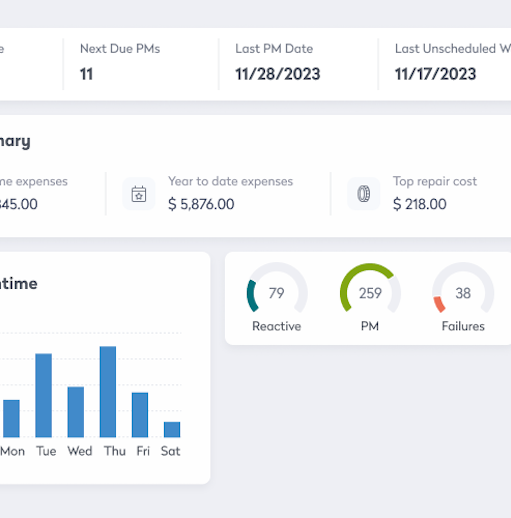
- Tracking metrics such as schedule compliance, preventive maintenance completion, downtime, wrench time, and backlog helps maintenance teams continuously improve
- Organizations achieve better results when maintenance scheduling is connected to broader enterprise asset management strategies rather than managed through disconnected point solutions
- Purpose-built platforms designed for managing the physical workplace provide maintenance teams with the visibility needed to make smarter scheduling decisions while supporting long-term asset lifecycle management
What is maintenance scheduling?
Maintenance scheduling is the process of assigning planned maintenance work to specific technicians, dates, and timeframes based on asset priorities, available labor, required materials, and operational needs. While maintenance planning determines what work should be completed and how it should be performed, scheduling answers when the work will occur and who will complete it.
A strong schedule balances competing priorities. Maintenance teams must coordinate reduce dive work alongside inspections, repairs, compliance activities, and the occasional emergency without disrupting daily operations. The goal isn’t simply to fill every available hour. It’s to complete the highest-value work before minor issues become costly failures.
Modern maintenance scheduling has also evolved beyond static calendars and spreadsheets. Today’s enterprise maintenance teams rely on connected asset data, historical work orders, technician availability, and business priorities to make scheduling decisions that support both maintenance objectives and broader organizational performance.
Maintenance planning vs. maintenance scheduling
Maintenance planning and maintenance scheduling are closely related, but they serve different purposes.
Maintenance planning focuses on preparing work before it begins. Planners define the scope of work, identify required parts and tools, estimate labor hours, document procedures, and verify safety requirements. Effective planning reduces uncertainty, enabling technicians to complete work efficiently once it is scheduled.
Maintenance scheduling takes those prepared work orders and organizes them into an achievable schedule based on technician availability, asset criticality, production schedules, and business priorities.
Think of it this way: planning prepares the work. Scheduling ensures the work gets done.
Organizations often struggle because they blur these responsibilities. When maintenance planners spend their days responding to emergencies or creating last-minute work orders, there is little time left to prepare future maintenance activities. The result is reactive scheduling, where urgent requests continually replace preventive maintenance.
High-performing organizations create enough separation between planning and execution to maintain a healthy backlog of prepared work. That gives maintenance leaders flexibility to adjust schedules without sacrificing long-term reliability.
Why maintenance scheduling matters
Every maintenance department faces competing priorities. Equipment needs preventive maintenance, production wants maximum uptime, technicians have limited availability, and budgets remain under constant pressure. Maintenance scheduling helps balance these demands while keeping critical assets operating reliably.
Organizations with mature scheduling processes often experience benefits that extend well beyond the maintenance department.
Reduced unplanned downtime
Preventive maintenance only creates value when it actually happens. Scheduling ensures inspections, lubrication, calibration, and routine servicing occur before equipment failures interrupt operations.
Over time, fewer emergency repairs lead to greater operational stability and lower costs associated with unexpected outages.
Better technician productivity
When technicians begin their day with clearly defined priorities, required documentation, available parts, and assigned work, they spend more time maintaining assets and less time searching for information or waiting for approvals.
This improves wrench time while reducing unnecessary travel, delays, and duplicate work.
Lower maintenance costs
Emergency maintenance typically costs more than planned maintenance because it often involves overtime labor, expedited parts, production disruptions, and secondary equipment damage.
An effective maintenance schedule shifts more work into planned maintenance windows, helping organizations better control labor and operating costs.
Improved collaboration across operations
Maintenance scheduling doesn’t happen in isolation. Production managers, facilities leaders, operations teams, and maintenance supervisors all have competing priorities that must be balanced.
Organizations that connect maintenance scheduling with operational planning gain greater visibility into upcoming work, making it easier to coordinate planned shutdowns, communicate maintenance windows, and minimize business disruption.
This level of visibility becomes increasingly important across large portfolios where multiple facilities, asset types, and maintenance teams operate simultaneously. Rather than relying on disconnected point solutions for scheduling, work orders, and asset records, organizations benefit from maintaining activities within a broader operational platform. That unified view enables maintenance decisions to support broader business objectives rather than solving isolated problems.

How maintenance scheduling supports asset lifecycle management
Maintenance scheduling doesn’t just keep work organized. It directly influences how long assets remain reliable, productive, and cost-effective throughout their lifecycle.
Every maintenance decision contributes to an asset’s long-term performance. Skipping inspections, delaying preventive maintenance, or repeatedly responding to emergency failures accelerates wear and shortens useful life. Conversely, consistently scheduling maintenance based on asset condition, operational risk, and historical performance helps organizations maximize the return on their capital investments.
Preventive maintenance protects asset value
Preventive maintenance programs are only effective if scheduled work is completed consistently.
Whether servicing HVAC equipment in a corporate campus, inspecting manufacturing equipment, or maintaining healthcare facilities, routine maintenance reduces unnecessary wear while identifying small issues before they become expensive failures.
Reliable scheduling helps ensure preventive work remains a priority even when reactive requests increase.
Asset history improves future scheduling
Every completed work order adds valuable context for future maintenance decisions.
Maintenance history reveals recurring failures, seasonal trends, repair frequency, labor requirements, and parts usage. Over time, maintenance leaders can use this information to adjust schedules, optimize preventive maintenance intervals, and prioritize investments in aging equipment.
This is where connected asset information becomes particularly valuable. Rather than maintaining separate records across multiple systems, organizations gain better insights when maintenance history, asset data, and work orders are centralized. Purpose-built enterprise asset management solutions make it easier to identify patterns that would otherwise remain hidden across disconnected applications.
Prioritize maintenance based on asset criticality
Not every asset deserves the same maintenance schedule.
A backup conference room projector and a hospital’s emergency power system have very different business impacts. High-performing maintenance organizations evaluate assets based on operational risk, regulatory requirements, replacement costs, and business criticality.
This risk-based approach allows maintenance teams to allocate limited labor and resources where they create the greatest organizational value.
Support long-term capital planning
Maintenance scheduling also provides valuable information beyond day-to-day operations.
Consistently scheduled maintenance generates data about repair costs, equipment reliability, maintenance frequency, and asset performance over time. Facilities and operations leaders can use these insights to determine when continued maintenance is no longer the most cost-effective option and when replacement becomes the better investment.
Instead of relying solely on age-based replacement strategies, organizations can make capital planning decisions using actual maintenance performance.
How to build an effective maintenance schedule
An effective maintenance schedule doesn’t begin with assigning work orders to technicians. It starts with understanding which work creates the greatest value for the organization.
Successful maintenance teams typically follow a structured process:
- Prioritize work based on business impact
Every maintenance request should be evaluated according to asset criticality, safety implications, regulatory requirements, and operational impact. This ensures limited maintenance resources are focused where they reduce the greatest amount of risk. - Build schedules from prepared work
Scheduling should rely on well-planned work orders that already include labor estimates, required parts, procedures, and safety documentation. Prepared work minimizes delays once technicians begin the job. - Match work with technician skills
Assigning work based on certifications, experience, and technical expertise improves productivity while reducing rework and safety risks. - Balance preventive and corrective maintenance
Even the best maintenance organizations respond to unexpected failures. The goal is preventing reactive work from overwhelming preventive maintenance schedules. Maintaining this balance helps improve reliability over time. - Continuously review and adjust
Maintenance scheduling isn’t a one-time exercise. Work priorities, technician availability, production demands, and asset conditions change constantly. Leading organizations regularly review schedule performance, gather technician feedback, and adjust future schedules based on maintenance data rather than assumptions.
Common maintenance scheduling mistakes
Even organizations with experienced maintenance teams can struggle with scheduling. The challenge usually isn’t a lack of effort. It’s that competing priorities, limited resources, and disconnected systems make it difficult to execute maintenance consistently.
Recognizing these common pitfalls can help organizations shift from reactive maintenance to a more strategic, data-driven approach.
Treating every asset the same
Not all assets have the same impact on business operations. A failed lighting fixture in an office is inconvenient, but a failed chiller in a data center or a malfunctioning production asset can bring operations to a halt.
Maintenance schedules should reflect asset criticality, not simply maintenance frequency. By prioritizing work based on operational risk, organizations can focus resources where they have the greatest impact on uptime and business continuity.
Allowing reactive work to dominate the schedule
Emergency work will always be part of maintenance, but it shouldn’t define the maintenance program.
When technicians spend most of their time responding to breakdowns, preventive maintenance is often postponed. Over time, deferred maintenance creates even more failures, leading to an expensive cycle of reactive work.
High-performing organizations intentionally protect time for planned maintenance, even when unexpected repairs arise.
Scheduling without complete asset information
Maintenance teams make better scheduling decisions when they have access to accurate asset history, work orders, warranty information, inspection records, and technician notes.
Unfortunately, many organizations still manage this information across multiple systems or spreadsheets. Maintenance leaders may have one application for work orders, another for inventory, and yet another for asset records. Valuable context gets lost, forcing technicians to spend time searching for information instead of maintaining equipment.
Purpose-built enterprise asset management platforms address this challenge by connecting maintenance activities with broader asset information. Rather than creating another point solution, they provide a centralized view that supports better scheduling decisions across the entire asset lifecycle.
Failing to review schedule performance
Creating a schedule is only the beginning.
Maintenance leaders should regularly review completed work to understand what went well, where delays occurred, and whether estimates accurately reflected actual labor requirements. These reviews create a continuous improvement cycle that strengthens future schedules.
Key maintenance scheduling metrics
You can’t improve maintenance scheduling without measuring its effectiveness. While every organization tracks different KPIs, several metrics consistently help maintenance leaders evaluate whether schedules are improving operational performance.
Schedule compliance
Schedule compliance measures how much planned work was completed as scheduled.
Low compliance may indicate unrealistic schedules, resource shortages, frequent emergency work, or inaccurate labor estimates. Improving schedule compliance helps organizations execute preventive maintenance more consistently while reducing disruptions.
Preventive maintenance completion rate
A preventive maintenance program is only valuable if scheduled work is completed on time.
Tracking PM completion rates helps maintenance leaders identify whether preventive work is consistently being delayed in favor of reactive repairs.
Equipment downtime
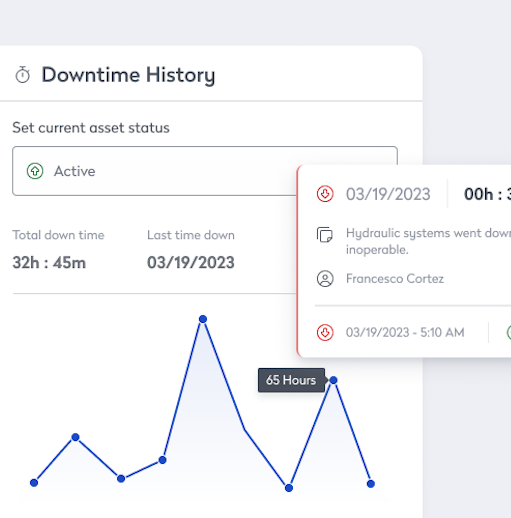
One of the clearest indicators of scheduling effectiveness is whether unplanned downtime decreases over time.
While downtime has many contributing factors, consistent maintenance scheduling helps reduce unexpected failures by ensuring critical assets receive timely inspections, servicing, and repairs.
Wrench time
Wrench time measures the percentage of a technician’s day spent performing maintenance work rather than waiting for parts, traveling between locations, searching for documentation, or handling administrative tasks.
Improving wrench time often requires more than optimizing technician schedules. Organizations also need better coordination between maintenance planning, inventory management, and operational workflows.
Maintenance backlog
A healthy maintenance backlog isn’t necessarily a problem. In fact, it often indicates maintenance teams have enough planned work prepared to build effective schedules.
The goal isn’t eliminating backlog entirely but maintaining a well-prioritized pipeline of ready-to-execute work that allows schedules to remain flexible without becoming reactive.
What high-performing maintenance organizations do differently
The organizations that consistently reduce downtime don’t simply schedule more maintenance. They approach maintenance as a business strategy rather than an operational necessity.
They connect maintenance with business priorities
Maintenance doesn’t operate independently from facilities, operations, finance, or production.
Leading organizations align maintenance schedules with broader operational goals, coordinating planned maintenance around production schedules, occupancy patterns, compliance requirements, and capital planning initiatives.
This cross-functional visibility helps reduce operational disruptions while ensuring maintenance investments support business outcomes.
They rely on connected data instead of disconnected systems
Many organizations have invested in digital workflows, but maintenance information often remains fragmented across multiple applications.
General workflow platforms are excellent for managing IT service requests and digital processes. Managing physical assets presents different challenges. Maintenance teams need visibility into equipment history, work orders, inspections, preventive maintenance schedules, space information, technician availability, and operational dependencies.
Purpose-built platforms designed for the physical workplace bring these data points together, helping maintenance leaders make better scheduling decisions without piecing information together from multiple systems.
They continuously optimize instead of maintaining the status quo
Maintenance scheduling should evolve alongside the organization.
As assets age, facilities expand, workforce availability changes, and operational priorities shift, schedules should be refined using performance data rather than relying on outdated assumptions.
Modern enterprise asset management solutions support this continuous improvement by providing configurable workflows, analytics, and reporting that help organizations adapt without rebuilding their entire maintenance program. Instead of forcing teams to work around legacy technology, today’s platforms are designed to support the way modern maintenance organizations actually operate.
Take the next step
Maintenance scheduling has evolved beyond organizing work orders. Today’s maintenance leaders are expected to improve reliability, support operational goals, and maximize the value of every asset across the organization. Achieving those outcomes requires more than a calendar or standalone maintenance tool. It requires connected data, configurable workflows, and visibility across the physical workplace.
Eptura Asset helps organizations bring maintenance scheduling, asset management, and operational insights together in a single purpose-built platform. With a modern foundation built specifically for managing physical assets and facilities, maintenance teams can reduce downtime, improve planning, and make more informed decisions that support long-term business performance.
Learn how Eptura Asset can help your organization modernize maintenance scheduling and improve enterprise asset performance.
Frequently Asked Questions

By Jonathan Davis
As a content creator at Eptura, Jonathan Davis covers asset management, maintenance software, and SaaS solutions, delivering thought leadership with actionable insights across industries such as fleet, manufacturing, healthcare, and hospitality. Jonathan’s writing focuses on topics to help enterprises optimize their operations, including building lifecycle management, digital twins, BIM for facility management, and preventive and predictive maintenance strategies. With a master's degree in journalism and a diverse background that includes writing textbooks, editing video game dialogue, and teaching English as a foreign language, Jonathan brings a versatile perspective to his content creation.