


The hybrid workplace changed more than meeting schedules and desk usage. It also changed the flow of physical work inside the office. Packages arrive for employees who are not onsite. Sensitive documents sit waiting for pickup. Teams expect the same speed and transparency from workplace services that they receive from consumer delivery apps. Meanwhile, facility managers are being asked to do more with fewer resources while maintaining security, service quality, and operational consistency across locations.
For many organizations, the mailroom has quietly become one of the most visible indicators of workplace efficiency. When deliveries are delayed, packages are misplaced, or employees cannot easily retrieve items, frustration spreads quickly. In hybrid environments where people divide time between home and office, those disruptions become even more noticeable.
Hybrid work also remains firmly established across enterprise environments. Robert Half reported that 24% of new U.S. job postings in late 2025 were hybrid roles, while another 11% were fully remote, reinforcing the long-term shift away from fully centralized office operations.
The challenge is not simply processing mail faster. It creates visibility across the entire delivery experience while adapting services to unpredictable workplace patterns. Modern mailroom operations now sit at the intersection of employee experience, workplace technology, security, and operational efficiency.
Hybrid work has made mailroom demand harder to predict
Traditional mailroom operations were built around consistency. Employees came into the office five days a week, deliveries followed predictable schedules, and mail distribution routines remained relatively stable. Hybrid work disrupted those assumptions.
Occupancy levels can fluctuate dramatically throughout the week. Some organizations see offices packed on Tuesdays and Wednesdays while Mondays and Fridays remain relatively quiet. Axios recently reported that average U.S. office occupancy remains slightly above 50%, with attendance patterns varying heavily throughout the workweek.
At the same time, package volume has increased. Employees now receive more shipments related to remote work equipment, replacement devices, office supplies, and personal deliveries. Corporate mailrooms are handling a wider mix of items while supporting a workforce that is less physically present to receive them.
This creates operational friction for facility teams. Staff may not know whether recipients are onsite, deliveries may accumulate in staging areas, and manual notification processes can quickly become overwhelming. Without centralized visibility, mailroom operations become reactive instead of proactive.
The problem extends beyond logistics. Employees increasingly expect workplace services to feel seamless regardless of where they work. Delays in package pickup or confusion around delivery status can negatively affect employee satisfaction and perceptions of workplace efficiency.
Visibility is now the foundation of effective mailroom operations
In hybrid environments, visibility matters as much as speed. Facility teams need to know what arrived, where it is located, who it belongs to, and whether the recipient is onsite or remote.
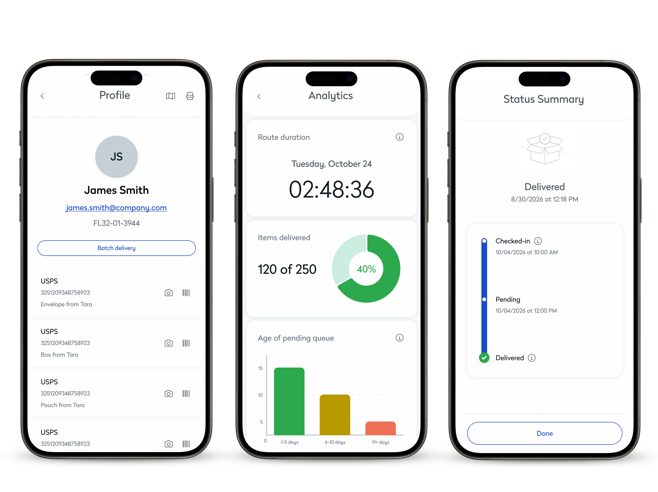
Real-time tracking helps eliminate many of the blind spots that traditionally slowed mailroom operations. Instead of relying on spreadsheets, paper logs, or disconnected systems, digital tracking creates a shared operational view across workplace teams.
When a package arrives, staff can log it immediately, associate it with a recipient, and trigger automated workflows for notifications and pickup coordination. Employees gain transparency into delivery status while facility managers maintain oversight of operational performance.
The value becomes even greater when mailroom operations connect with broader workplace management systems. Occupancy data, desk reservations, visitor activity, and employee schedules can help facility teams better understand delivery patterns and staffing needs.
For example, if occupancy analytics show significantly higher attendance midweek, mailroom staffing and delivery scheduling can adjust accordingly. If certain locations consistently experience higher package volumes, resources can be allocated more effectively. Instead of operating in isolation, the mailroom becomes part of a connected workplace ecosystem.
Organizations are increasingly investing in workplace analytics and operational visibility tools to better understand how people interact with workplace services across locations. CBRE’s 2026 workplace insights report noted that occupancy and utilization analytics continue to play a growing role in operational planning and resource allocation decisions.
This level of visibility also supports more strategic decision-making. Facility leaders can identify peak delivery periods, monitor service bottlenecks, and evaluate operational trends over time. Data moves the conversation beyond anecdotal complaints and toward measurable workplace improvements.
Employees now expect consumer-grade service experiences
The rise of digital commerce fundamentally changed employee expectations. People are accustomed to receiving real-time delivery updates, automated notifications, and precise tracking information in their personal lives. Those expectations increasingly carry into workplace services.
Manual mailroom processes struggle to meet those standards. Employees may not know when packages arrive, where to retrieve them, or whether someone signed for sensitive items. In hybrid workplaces, that uncertainty creates additional frustration because employees are not always physically present to check mailrooms in person.
Automated notifications and digital workflows help bridge that gap. Employees can receive alerts through workplace apps, email, or messaging systems as soon as deliveries arrive. Pickup instructions become standardized and consistent. Some organizations also implement secure locker systems or contactless pickup workflows to improve convenience and reduce congestion.
Research from Reworked found that many hybrid employee experience challenges stem from disconnected workflows and fragmented digital experiences rather than hybrid work itself.
Security and compliance remain equally important, especially in regulated industries such as healthcare, finance, and legal services. Sensitive documents, confidential shipments, and high-value equipment require clear chain-of-custody tracking and auditability.
Digital tracking systems help reduce the risk of lost packages while creating documentation for compliance reporting. Access controls, user authentication, and delivery histories provide greater accountability compared to manual sign-in sheets or paper logs.
For facility managers, these workflows reduce operational friction while improving trust in workplace services. Employees spend less time searching for deliveries or contacting support teams, and mailroom staff spend less time managing repetitive administrative tasks.

Modern mailroom technology works best when it connects to the workplace ecosystem
One of the biggest challenges organizations face is fragmentation. Mailroom systems often operate separately from visitor management tools, workplace apps, access control platforms, and service request systems.
Disconnected technologies create operational silos. Employees may need multiple apps to manage workplace interactions, while facility teams lack a unified operational view.
Modern workplace platforms are increasingly addressing this problem by connecting mailroom operations with broader workplace services. Instead of treating the mailroom as a standalone function, organizations are integrating it into unified service management strategies.
That integration matters because workplace experiences rarely happen in isolation. A visitor arrives onsite, receives temporary access credentials, checks into a workspace, and receives equipment deliveries all within the same operational ecosystem. When systems share data, workflows become faster and more intuitive.
Integration with employee experience applications also improves communication. Employees can receive package notifications through the same platforms they already use for desk booking, room reservations, or workplace updates. This reduces friction while encouraging adoption.
Many enterprises are prioritizing integrated workplace management systems that centralize workplace operations, service workflows, and employee experiences within a single environment. Gartner’s 2025 digital workplace research emphasized that organizations are increasingly investing in technologies that improve operational efficiency while supporting hybrid work flexibility.
Analytics capabilities add another layer of value. Facility leaders can monitor delivery times, pickup rates, staffing efficiency, and service performance across locations. These insights help organizations measure ROI while identifying opportunities for operational improvement.
Instead of viewing mailroom modernization as a narrow operational upgrade, many organizations are recognizing it as part of a broader workplace transformation strategy.
Facility leaders should start with operational visibility gaps
For organizations evaluating mailroom modernization, the first step is understanding where visibility breaks down today.
Common warning signs include:
- Employees frequently asking about package status
- Manual spreadsheets or paper-based tracking processes
- Inconsistent workflows between locations
- Delayed package notifications
- Limited reporting or analytics capabilities
- Difficulty auditing sensitive deliveries
- Mailroom congestion during peak occupancy days
Assessing these gaps helps facility leaders identify where operational friction is affecting service quality or employee experience.
Implementation strategies should focus on integration as much as functionality. The most effective solutions connect with existing workplace systems instead of adding another disconnected operational layer.
Facility teams are also increasingly pairing mailroom modernization with broader visitor management solutions to create more seamless workplace operations across the employee journey.
Change management is equally important. Employees adopt workplace technologies more successfully when workflows feel intuitive and integrated into tools they already use. Facility teams should prioritize communication, training, and simplified user experiences during rollout.
It is also important to establish measurable success metrics early. Delivery times, pickup rates, employee satisfaction, and operational efficiency benchmarks help organizations demonstrate value and guide future optimization efforts.
The mailroom has become a strategic workplace service
The modern mailroom is no longer a back-office operational function hidden from the rest of the organization. In hybrid workplaces, it plays a visible role in employee experience, operational efficiency, and workplace coordination.
As office attendance patterns continue evolving, facility managers need better visibility into how workplace services operate across locations and teams. Manual processes and disconnected systems make that increasingly difficult.
Organizations that modernize mailroom operations through integrated platforms, real-time visibility, and automated workflows are creating more responsive workplace environments while reducing operational complexity.
For facility leaders, the opportunity is larger than improving package delivery. It is about building connected workplace operations that support employees wherever and however they work.

By Amanda Meade
Amanda Meade is a content creator at Eptura, specializing in workplace experience, meeting productivity, and emerging trends in workspace planning and visitor management. With a background in content marketing and SEO, she crafts clear, actionable content that helps teams work smarter through in-office collaboration. Throughout her career, Amanda has worked across industries, including home services, healthcare, real estate, and SaaS, developing a unique ability to distill complex topics into practical insights.