

As organisations continue to navigate hybrid work, rising costs, and increasing operational complexity, the conversation about the workplace has matured. The focus has moved beyond mandates and floor plans to a more fundamental question: how can the workplace actively support how work really gets done?
To explore that question, I spoke with Lisa Copland, a portfolio and workplace strategist, change specialist, and the managing director of Presynct, an Australian consultancy that helps organisations with workplace strategy, transition, and portfolio decision‑making. With more than two decades in the industry, Lisa has worked with public‑ and private‑sector organisations navigating some of the most complex shifts in how, where, and why work happens.
Key takeaways
- Most organisations already have the systems they need. The problem is that those systems operate in isolation. When connected intentionally, technology shifts from obstacle to enabler and people can focus on work rather than navigating disconnected tools
- Attendance alone no longer equals value. The office earns its relevance in a hybrid world by offering what remote cannot — building relationships, solving complex problems together, and reinforcing shared culture
- When strategy, behaviour, space, and data are disconnected, even well-intentioned investments struggle to deliver. A clear strategy, as Matt Clugston puts it, knows what problem it is solving
Our conversation covered the evolving purpose of the office, the growing importance of integrated data and systems, and why coherence, rather than simply adding more tools, is becoming the defining challenge of the modern workplace.
When leaders talk about the “future of the workplace,” what are they really asking for right now?
What I am hearing from leaders is less about the future as a distant concept and more about solving very present frustrations. Many organisations have spent the last few years reacting at speed, responding to hybrid work, new technologies, and changing employee expectations. Now there is a sense that simply adding more space, more tools or more policies have not delivered the clarity or momentum they hoped for.
At its core, the question leaders are asking is how the workplace can actively support their business strategy. They want environments, both physical and digital, that strengthen culture, enable collaboration and reduce friction in day‑to‑day work. Increasingly, leaders are recognising that the workplace influences behaviour, decision-making, and performance far more than they previously acknowledged.
As a result, the workplace is no longer seen as a passive container for activity. It is increasingly understood as part of the operating model, something that either reinforces how the organisation wants to work or quietly works against it. That shift requires organisations to look beyond design and square metres, and instead focus on how space, data, systems, and behaviours combine to support performance.
You’ve said that many organisations already have the technology they need, but it isn’t connected. Where do you see the biggest gaps?
The biggest gap is not capability. It’s coherence.
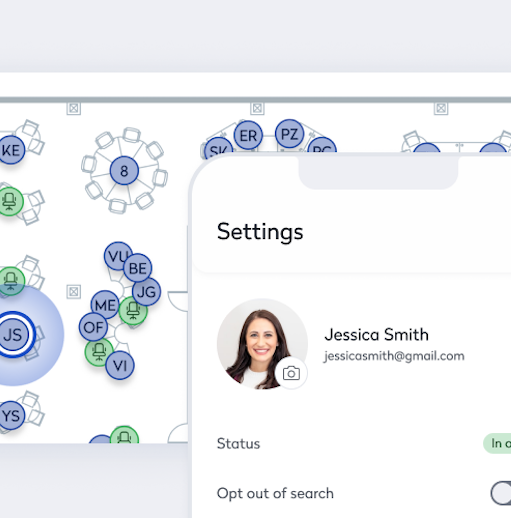
Most organisations already operate a wide range of workplace systems. Access control, booking platforms, people data, building systems, and collaboration tools are all fairly standard. These systems are often implemented for good reasons at different points in time, owned by different functions and optimised in isolation.
Individually, many of these systems are fit for purpose. The challenge is how they come together.
From an employee or visitor perspective, they feel fragmented and inconsistent. People may need to switch between multiple tools to complete simple tasks or repeat the same steps in different systems.
Over time, this fragmentation erodes focus and momentum. It increases cognitive load and makes the workplace feel harder to use than it should be. When systems are integrated intentionally, interactions become simpler and more intuitive. Instead of thinking about technology, people can focus on their work. At that point, technology starts to feel like an enabler rather than an obstacle.
What does meaningful integration actually look like?
Integration does not need to be abstract or highly technical to be effective. Some of the most impactful examples are quite practical and immediate.
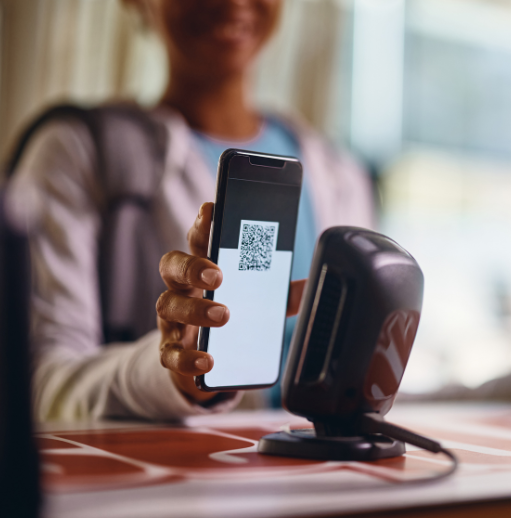
We are seeing organisations link attendance planning with access control, so digital passes appear automatically in Apple Wallet or Google Wallet when someone comes into the office, whether they planned to be in the office or not. Destination‑controlled lifts are activated through a digital swipe and guide people to the correct floor without manual input. Desk and meeting room check‑ins are automated based on real utilisation rather than manual confirmation.
Each of these examples connects systems that have traditionally operated separately. Access control, booking platforms, and building systems work together to create a single experience rather than a series of disconnected steps. The result is a workplace that reduces friction and saves time.
Hybrid work has shifted expectations significantly. What role does the office play now?
The office has become a value‑based choice rather than a default location.
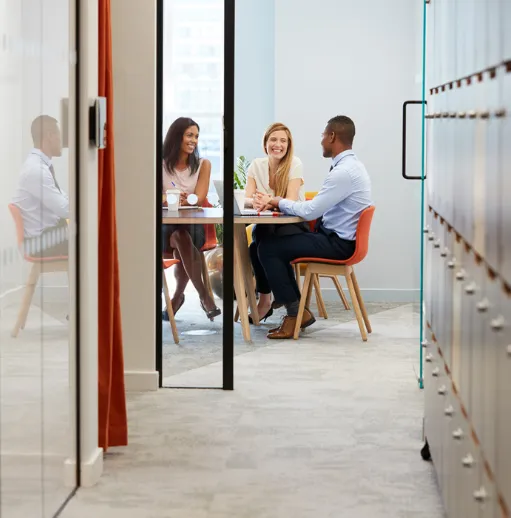
People come into the office for experiences that are difficult to replicate remotely. Building relationships, working through complex issues together, learning through proximity and reinforcing shared culture all benefit from being in the same place at the same time. These activities are what give the office its relevance in a hybrid world.
What has changed is that attendance alone no longer equals value. An office full of people does not automatically deliver energy or productivity, just as an empty office does not mean work is not happening. Organisations that are making progress are designing time in the office intentionally. They connect in‑person time with activities that genuinely benefit from being face to face and supporting those activities through space, technology, and leadership behaviour.
Where does workplace or portfolio strategy fit into the overall picture?
It’s what brings coherence to decisions that are otherwise made in isolation.
Without a clear strategy, organisations often respond reactively. A new tool is introduced to solve one problem. Space is reconfigured to address another. Policies are adjusted without addressing the behaviours they are meant to support. Over time, this creates complexity rather than reducing it.
A strong workplace strategy defines what behaviours the organisation wants to support, which experiences really matter, and what success looks like in practical and measurable terms. As Matt Clugston says, it knows what problem it is solving. Once that clarity exists, decisions about space, technology, and data become far more focused.
Strategy also helps organisations avoid integrating systems simply because they can. Instead, they can identify where integration will genuinely reduce friction, support desired behaviours, or improve outcomes. Strategy ensures that investment is tied to purpose, not technology for its own sake.
You’ve spoken about emerging uses of AI and more dynamic ways of allocating space. How do you see that evolving?
One of the most interesting developments is the move towards aligning people, space, and purpose dynamically, rather than fixing those relationships in advance.
Some organisations are beginning to use AI to analyse planned and actual attendance, collaboration patterns, team structures, and preferences. This provides insight into how work really happens rather than how it was assumed to happen. From there, space can be organised in ways that better reflect reality.
This can include continuous team stacking, where teams are grouped based on real working patterns rather than static organisational charts. As work evolves, the workplace can adapt with it instead of locking organisations into assumptions they made years ago.
The value is not in the technology itself. It comes from clarity about what the organisation is trying to enable. Tools make workplaces more responsive, more flexible, and more resilient to change.
Presynct has invested in its own office as a kind of living lab. Why was that important?
We wanted a space where clients could experience integration in practice rather than just talk about it.
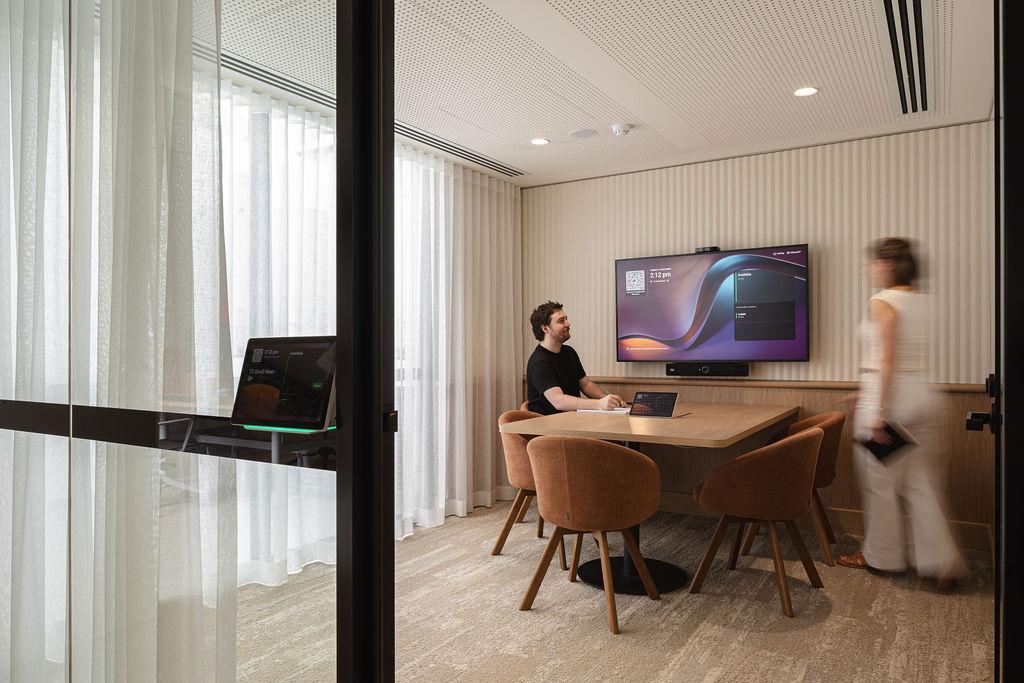
The office brings together access systems, workplace planning data, digital content, and analytics into a connected environment. It allows us to test ideas, explore barriers such as cyber security and system ownership, and observe how people interact with the workplace in real time.
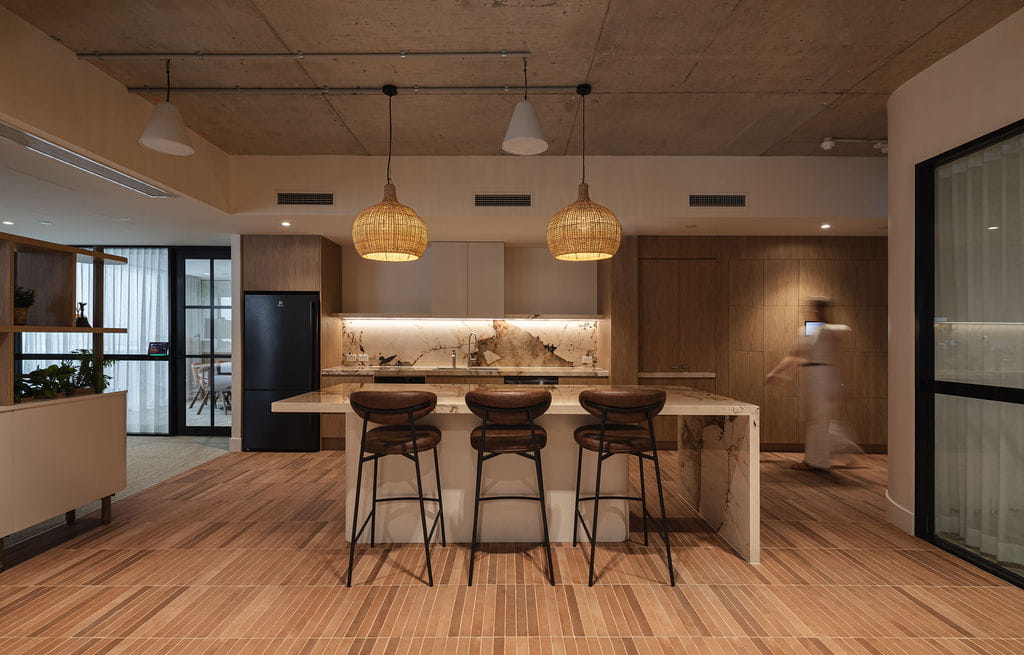
It’s not about demonstrating a perfect solution. We’re learning what works, where friction still exists, and why. We then use that to shape how we support clients facing similar challenges, often at a much larger scale, and higher level of complexity.
If leaders take one thing away from this conversation, what should it be?
Most workplace challenges today are not space problems or technology problems. They are alignment problems.
When those elements are disconnected, even well‑intentioned investments struggle to deliver value. But when companies connect strategy, behaviour, space, and data, the workplace can genuinely support performance and culture.
Frequently Asked Questions

By Craig Maroney
Craig Maroney is Vice President, APAC, at Eptura, with more than two decades of experience in workplace strategy, facilities leadership, and corporate real estate. He has led workplace transformation initiatives for large organisations across Australia and regularly contributes to industry conversations on hybrid work, workplace technology, and the future of work.