

Hybrid work has introduced new flexibility, but it has also exposed cracks in how workplaces are managed. Employees arrive to find the right space already booked but empty. Workplace teams juggle manual booking fixes, no-shows, and changing attendance patterns. Leaders are expected to make real estate decisions with incomplete data and disconnected tools. Instead of clarity, many organizations have added complexity.
The issue isn’t a lack of workplace technology. It’s that experiences, operations, and analytics are fragmented. Booking tools don’t reflect actual use. Employee apps don’t connect to facilities workflows. And hybrid policies move faster than the systems meant to support them, leaving teams reactive instead of in control.
The new product announcement addresses these challenges by unifying space, people, and services into a single workplace experience. With mobile‑first access, AI‑driven automation, and real‑time analytics, it removes friction from everyday employee interactions while giving leaders the insight they need to optimize space, reduce waste, and scale hybrid work with confidence.
Key takeaways
- Hybrid work fails when systems are fragmented. The new product unifies booking, navigation, automation, and analytics so experience and operations work together.
- AI reduces manual effort while improving outcomes. Conversational booking and pattern based recommendations remove admin work and align space to real behavior.
- Utilization improves when reality drives decisions. Sensor driven automation and real-time analytics expose waste and unlock measurable space gains.
- Enterprise scale requires more than a booking app. Built-in governance, security integrations, and configurability support global complexity without fragmenting experience.
A mobile first experience that removes daily workplace friction
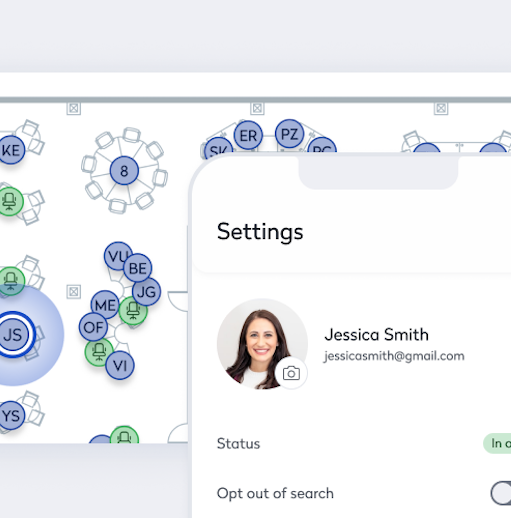
When employees decide to come into the office, the experience should be simply, not another obstacle. The product is built mobile first, giving employees a single place to plan their day, book what they need, and navigate the workplace with confidence.
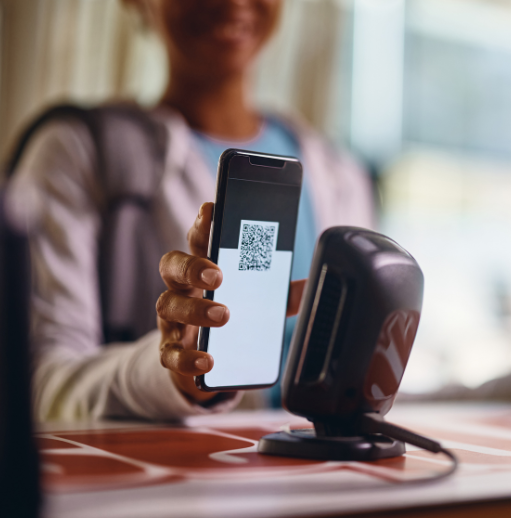
From mobile or web, employees can book desks, rooms, parking, lockers, and other shared resources in seconds. Integrated wayfinding and people finding tools help them locate teammates and spaces without wasting time. Touchless check‑in streamlines arrivals and reduces congestion, while secure identity integrations ensure a smooth and compliant access experience.
By integrating directly with calendars and collaboration tools employees already use, this product eliminates the need to juggle disconnected apps or learn new processes. The result is higher adoption and workplace experience that feels intuitive rather than imposed.
What this solves: low adoption, wasted time, and employee frustration caused by fragmented tools.
AI‑driven booking and automation that scale with hybrid work
Manual coordination doesn’t scale in a hybrid environment. As attendance patterns shift week to week, workplace teams need systems that adapt automatically.
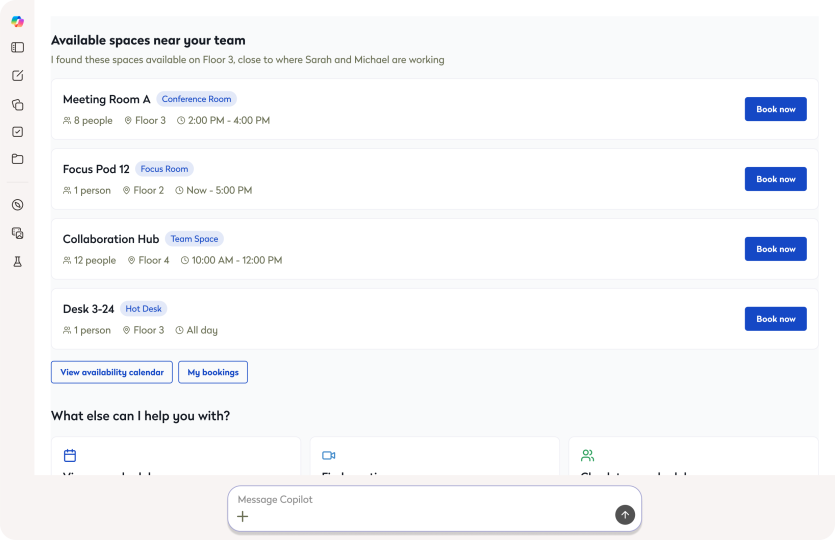
The new product announcement uses AI‑powered automation and conversational chat to simplify booking and planning. Employees can reserve desks or rooms using natural language within collaboration tools, while intelligent booking logic handles availability, permissions, and policy rules behind the scenes.
For teams planning in office days, AI analyzes usage patterns and attendance trends to recommend seat assignments and collaboration spaces that support real behavior — not assumptions. Over time, the system learns which spaces work best for different types of work and suggests optimal options proactively.
What this solves: manual booking bottlenecks, inconsistent hybrid planning, and administrative overload.
Smarter reservations and resource management across the workplace
Hybrid workplaces struggle with one persistent issue: space that’s reserved but never used. Eptura products address this with intelligent reservation management that reflects reality.
In addition to desks and rooms, teams can manage parking, wellness spaces, event areas, and other shared resources through one unified system. Sensors detect real-time occupancy and automatically release unused reservations, eliminating no-shows and freeing space for others.
Workplace teams gain more control without adding manual work, while employees gain fairer, more reliable access to shared resources.
What this solves: low utilization, artificial space shortages, and inefficient use of shared assets.
Real‑time analytics that turn usage into insight
Convenience alone isn’t enough. Enterprise leaders need visibility into how hybrid work actually functions across their portfolios.
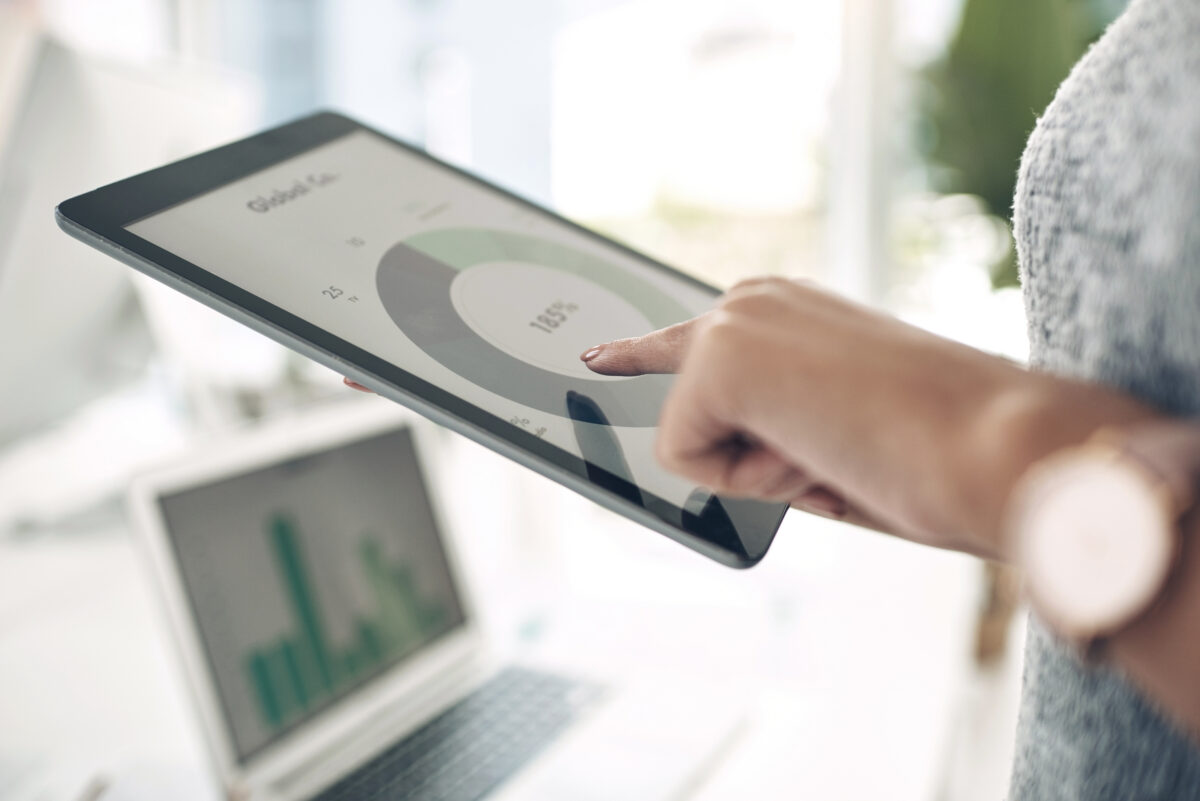
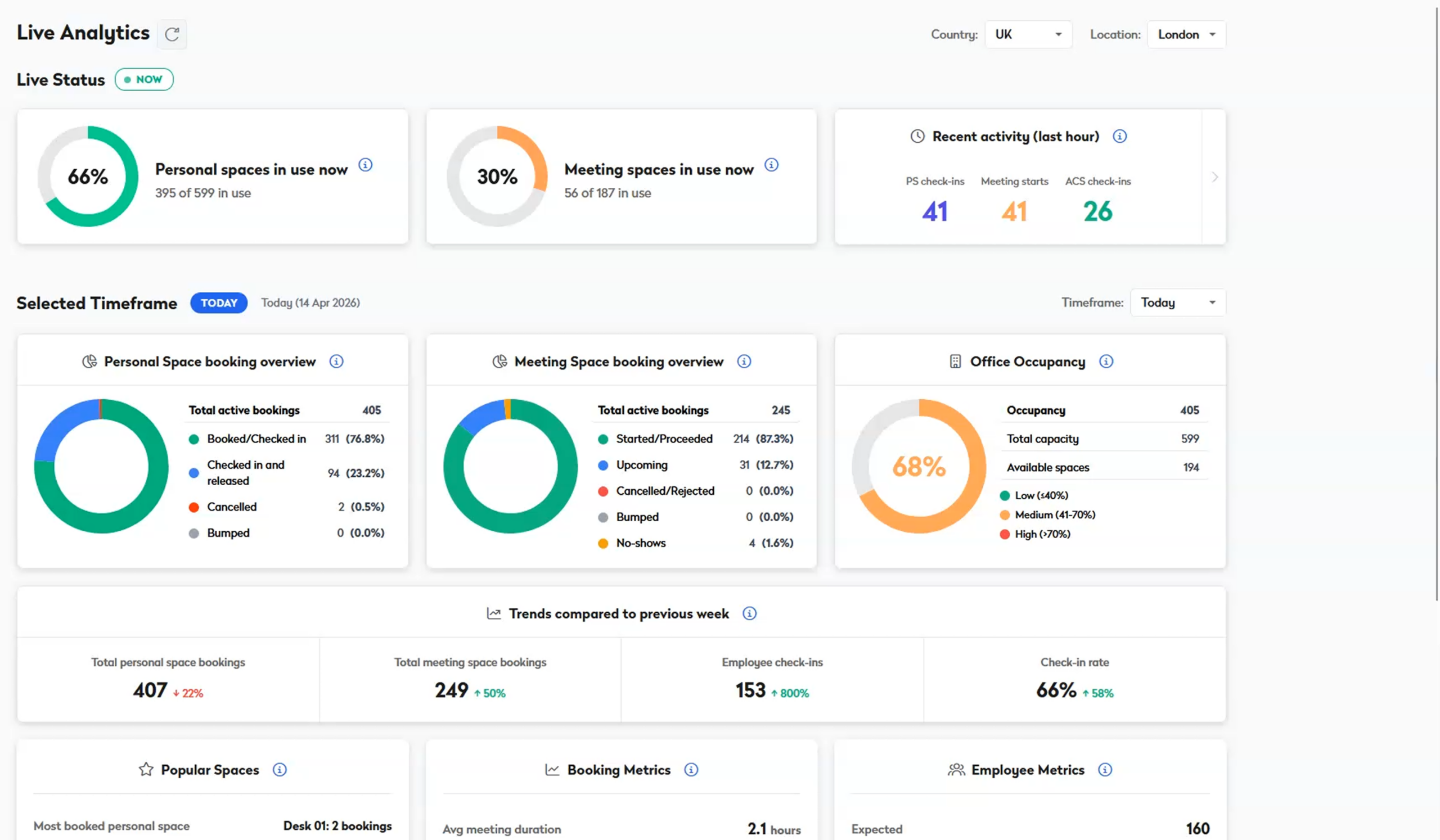
This product provides real-time analytics that unify booking, occupancy, and utilization data into clear dashboards. Leaders can see which spaces are used, when demand peaks, and where capacity is consistently underutilized. Sensor driven insights provide accuracy, while integrations with BI tools allow deeper analysis and executive reporting.
Instead of relying on snapshots or anecdotes, organizations gain a continuous feedback loop between employee behavior and workplace strategy.
What this solves: unclear utilization, slow decision-making, and risk when planning restacks, consolidations, or redesigns.
Built for enterprise scale, governance, and ongoing innovation
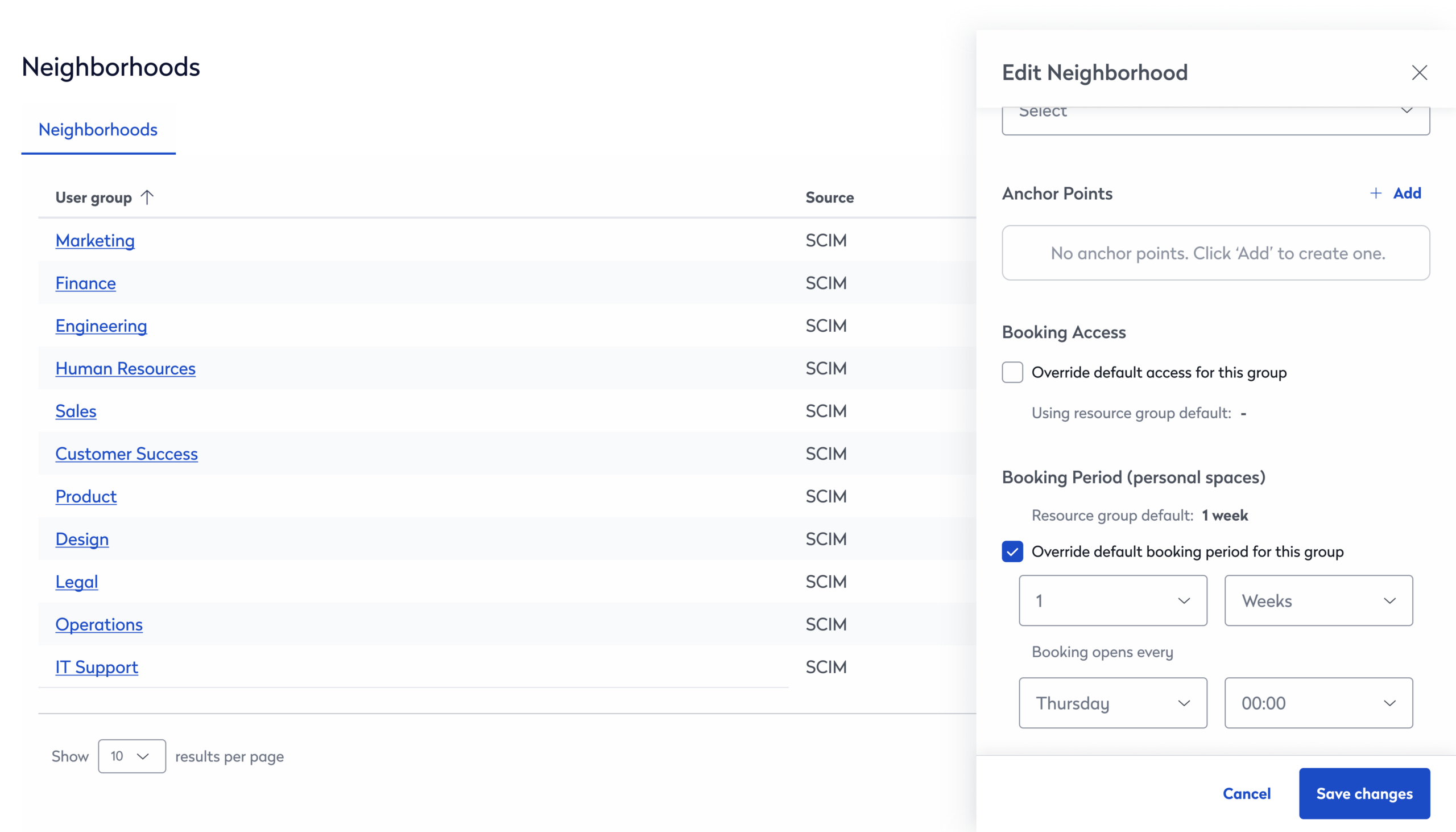
To support global organizations, workplace experience platforms must handle complexity without fragmenting the user experience. The product is designed with enterprise governance in mind, offering role based access, centralized administration, and deep integrations with identity and security systems.
The platform connects employee interactions directly to facilities and real estate workflows, so insights don’t stop at dashboards, but enable action. Enhancements are delivered continuously, extending functionality without forcing disruptive migrations or additional tools.
What this solves: tool sprawl, inconsistent governance, and platforms that can’t evolve alongside workplace strategy.
Proven outcomes across complex organizations
Organizations using Eptura products report measurable improvements across experience, operations, and real estate performance, including:
- Significant gains in workplace engagement and utilization
- Dramatically reduced check‑in times and arrival delays
- Faster space reconfiguration and planning cycles
- Meaningful reductions in overall real estate footprint
These results reflect a unified approach — where experience, automation, and analytics reinforce each other rather than operating in silos.
Why organizations choose a unified workplace experience
Many workplace tools focus on a single task: booking, engagement, or reporting. The new product takes a broader view, connecting everyday employee actions to operational efficiency and strategic outcomes.
By unifying space, people, and services into one experience, it helps organizations move beyond reactive hybrid management toward confident, data driven decisions.
| Workplace challenge | What organizations experience | Eptura products capability | Resulting outcome |
|---|---|---|---|
| Low adoption of workplace tools | Employees avoid using booking platforms because they feel complex or disconnected | Mobile‑first app with unified booking, wayfinding, and people‑finding | Higher adoption and smoother day‑to‑day employee experience |
| Friction when coming into the office | Time wasted finding desks, rooms, or colleagues; crowded entry points | Real‑time navigation, people‑finding, and touchless check‑in | Faster arrivals and less frustration on in‑office days |
| Manual booking doesn’t scale for hybrid work | Workplace teams manage constant requests and last‑minute changes | Conversational AI booking and automated coordination | Reduced admin effort and faster bookings |
| Team days are hard to plan efficiently | Overcrowded floors one day, underused spaces the next | AI‑driven team day planning and usage‑pattern recommendations | Better collaboration without wasting space |
| Space is reserved but unused | High no‑show rates create artificial shortages | Sensor‑driven occupancy detection and automatic space release | Increased utilization and fairer access to space |
| Limited visibility into space usage | Decisions based on assumptions or outdated reports | Real‑time dashboards and sensor‑driven analytics | Data‑backed decisions about space and portfolios |
| Fragmented reporting across systems | Workplace data lives in silos | Integration with BI tools for unified analysis | Clear trends and executive‑level insight |
| Tool sprawl increases risk and complexity | Multiple point solutions with inconsistent governance | Unified platform with deep identity and security integrations | Simplified IT oversight and reduced operational risk |
| Global consistency is difficult to maintain | Different experiences and rules across locations | Configurable, role‑based access across regions | Scalable deployment without fragmenting experience |
Eptura delivers a unified, AI‑powered workplace experience designed for the realities of enterprise hybrid work. With mobile first access, intelligent automation, and real-time analytics, it helps organizations reduce friction, eliminate waste, and make better decisions about space and experience — at scale.
Frequently Asked Questions

By Amanda Meade
Amanda Meade is a content creator at Eptura, specializing in workplace experience, meeting productivity, and emerging trends in workspace planning and visitor management. With a background in content marketing and SEO, she crafts clear, actionable content that helps teams work smarter through in-office collaboration. Throughout her career, Amanda has worked across industries, including home services, healthcare, real estate, and SaaS, developing a unique ability to distill complex topics into practical insights.