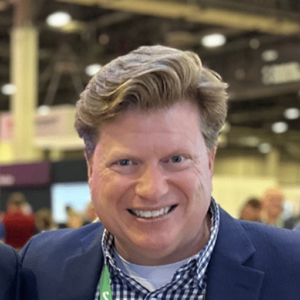





In episode 420, host Mike Petrusky welcomes Rob Clark, Senior Director at Cushman & Wakefield where he is designing client strategies at the intersection of experiences and real estate, while also sharing his story as an accomplished motivational speaker and author of “Everyday Resilience for Everyday Heroes” and The Resilient Worker blog. Mike asks Rob why he believes that assuming good intentions and maintaining positivity are essential strategies for workplace and facility management professionals who often face adversity and competing interests. They explore the power of human connection, collaboration, and community through organizations like IFMA and discuss the role of the FM in the future of the built environment. The workplace has shifted from being a mandatory destination to a chosen environment, making thoughtful workplace strategy, culture, and design more important than ever and Rob says that facility managers play a key role in creating safe, comfortable, and collaborative environments.
Agenda
- Why assuming good intentions can help FM professionals navigate difficult situations and competing priorities
- How everyday resilience supports workplace leaders through change, setbacks, and uncertainty
- Why collaboration, community, and connection have become central to the purpose of the office
- How facility managers can help create safe, comfortable, and engaging workplace experiences
- The role positivity and empathy play in strengthening workplace culture
- How FM leaders can balance people, technology, operations, and financial priorities
- Why the future of facility management requires both human-centered thinking and operational expertise
What you need to know: Workplace takeaways
Takeaway 1: Resilience helps workplace leaders navigate competing demands
Facility management professionals often operate at the intersection of competing priorities. They have to balance the expectations of leadership, clients, employees, and their own teams, frequently while responding to challenges that require quick decisions and adaptability.
For Rob, resilience provides a way to approach those pressures with greater perspective. He describes viewing the world “through a lens of resiliency,” recognizing that difficult situations and setbacks are inevitable but do not have to define how workplace professionals respond.
One practical part of that mindset is assuming good intentions. As Rob explains, “You’re gonna have bad days like as an FM manager, professional, you’re caught in the middle, right? You have your boss, you have your client, you have people kind of constantly putting you in a tough situation. Assume good intentions.”
For workplace leaders, resilience is therefore about more than recovering from disruption. It means developing a mindset that helps them remain constructive, adaptable, and focused when priorities compete and circumstances change.
Takeaway 2: Connection, collaboration, and community give people a reason to come together
As employees have gained greater flexibility around when and where they work, the office is no longer automatically the center of the workday. That shift makes the experiences people have when they do come together increasingly important.
Rob identifies three factors at the center of a successful office: collaboration, community, and connection. “To set up a successful office, it’s that collaboration, community and connection,” he says.
That perspective shifts the workplace conversation away from simply providing space and toward creating environments that support meaningful interactions. Facility and workplace teams can help employees connect with colleagues, collaborate effectively, and feel part of a larger community.
Technology has also blurred traditional boundaries between professional and personal life. Mike notes that working across different locations and schedules has made work “part of who we are as individuals, as team members, as professionals, and as leaders in the workplace.”
For workplace leaders, creating a successful office increasingly means understanding why people choose to use a space and designing experiences around the interactions that are most valuable when they get there.
Takeaway 3: Positive workplace cultures start with how people respond to one another
Workplace culture is shaped not only by policies or formal programs but also by everyday interactions. Rob encourages FM and workplace professionals to actively bring optimism to environments where employees and teams may be facing competing pressures.
“When you get into that office environment, you need a ray of positivity and so be that ray,” he says. While acknowledging that maintaining this attitude is not always easy, Rob argues that keeping that perspective can contribute to a more positive environment.
His broader philosophy is centered on helping other people succeed. Quoting an idea that has shaped his perspective, Rob says, “You can have everything you want in life if you help enough other people get what they want.”
For workplace leaders, that means listening to what employees, clients, and colleagues need rather than approaching every interaction solely through the lens of their own priorities. Empathy, mutual understanding, and a willingness to assume good intentions can help teams navigate disagreement while building stronger relationships.
Especially in flexible and hybrid environments, where employees may interact less frequently in person, those behaviors can play an important role in building trust and reinforcing a sense of community.
Takeaway 4: Workplace innovation requires FM leaders to think beyond technology
Innovation in facility management is not simply a matter of adopting new technology. Today’s workplace leaders need to consider how technology, workplace design, operational strategy, and financial stewardship work together to support both people and the organization.
That requires FM professionals to develop a broader view of their role. Alongside maintaining reliable operations, leaders increasingly need to understand financial efficiency and how workplace decisions contribute to larger organizational objectives.
Technology can support that evolution by giving teams new ways to manage workplaces and respond to changing employee expectations. But tools alone do not create an effective workplace. Their value depends on how well they support the human experiences, operational requirements, and business outcomes an organization is trying to achieve.
For Rob, the people responsible for managing these complex environments deserve greater recognition. He describes FM professionals as “the superheroes of the industry” and encourages them to bring resilience and an assumption of good intentions to their work.
The opportunity for FM leaders is to combine that human perspective with operational expertise, financial awareness, and thoughtful use of technology to create workplaces that can adapt as organizational and employee needs continue to change.
Workplace management insights
- As the office becomes a chosen environment rather than a mandatory destination, workplace leaders need to give employees meaningful reasons to come together.
- Resilience helps FM professionals balance employee expectations, leadership priorities, client needs, budgets, and operational demands when those priorities compete.
- Assuming good intentions can help workplace teams approach difficult conversations with empathy, work through disagreements, and build stronger relationships.
- Workplace culture is shaped by everyday interactions and by how people communicate, respond to challenges, and support one another.
- Technology is most valuable when it supports a clear workplace strategy, improves operations, provides useful data, and makes the workplace experience easier for employees.
- FM leaders increasingly need to think beyond traditional facility operations and understand employee experience, workplace strategy, financial efficiency, and technology.
- Creating safe and reliable facilities remains essential, but successful workplaces also need to help people feel comfortable, connected, and supported.
Explore the full library of Workplace Innovator podcast episodes for an in-depth look at workplace insights and watch the full video here.