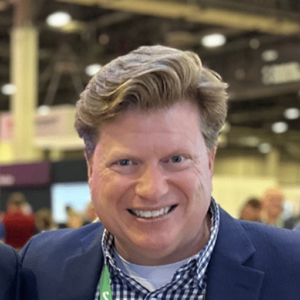





In episode 418, host Mike Petrusky sits down with Michael Geary, CAE, President & CEO of IFMA, to discuss the power of community, professional networking, and collaboration in advancing the facility management profession. Drawing on his experiences leading IFMA’s global membership community, Michael shares how facility managers around the world learn from one another, solve challenges together, and help shape the future of the industry. He and Mike also preview World Workplace 2026 in Anaheim, California, highlighting the learning opportunities, networking events, industry recognition programs, and keynote presentation from BJ Novak. Throughout the conversation, Michael returns to a simple idea that guides both IFMA and the profession itself: meaningful progress happens when people come together to share knowledge, solve problems, and support one another.
Agenda
- How IFMA’s global community connects facility managers around the world
- Why World Workplace 2026 remains the profession’s premier networking and education event
- How collaboration helps facility managers solve challenges and shape the industry’s future
- Why innovation often starts with curiosity, adaptability, and incremental change
What you need to know: Workplace takeaways
Takeaway 1: Global connections create stronger facility managers
One of the aspects Michael enjoys most about leading IFMA is seeing how facility management professionals work in different countries and cultures. Through chapters, conferences, and volunteer communities across every continent, members gain exposure to new perspectives and solutions that may never emerge within a single organization or region.
Michael describes learning firsthand from facility managers around the world, observing not only how they approach business and workplace challenges but also how cultural differences shape professional relationships. Those experiences reinforce the value of belonging to a global professional community where members can learn from one another and bring fresh ideas back to their own organizations.
For facility managers, that global perspective can be a competitive advantage. Exposure to different approaches helps professionals adapt more quickly, discover new solutions, and expand their understanding of what is possible within the built environment.
Takeaway 2: World Workplace is where the profession comes together
As IFMA’s flagship conference, World Workplace brings together facility management professionals, industry partners, educators, and thought leaders from around the world. For Michael, the event’s value extends beyond education sessions and technology showcases.
He sees the conference as an opportunity to strengthen the relationships that help drive the profession forward. Attendees can learn from peers, explore new technologies, and discuss challenges face-to-face with people who understand the realities of managing facilities and workplaces.
As Michael explains, “World Workplace is like the university of facility management.” The conference offers access to education, technology, and professional networking in a single environment.
In an increasingly digital world, he believes those in-person interactions are becoming even more valuable. Facility managers can still use online tools, webinars, and AI-powered resources, but conversations that happen in hallways, networking events, and conference sessions often lead to ideas and insights that cannot be replicated online.
Takeaway 3: Solving facility management challenges takes a village
When Mike asks Michael to share an inspirational message, he returns to a concept that has become central to his vision for IFMA and the profession.
“It takes a village.”
While the phrase originally referred to raising children, Michael believes it applies equally well to professional communities. Whether the challenge involves facility operations, workplace strategy, standards development, advocacy, or career growth, progress happens when people share knowledge and work together.
Throughout the discussion, he emphasizes that no individual has all the answers. Instead, facility managers benefit from participating in a broader community where professionals can exchange ideas, learn from one another’s experiences, and collaborate on solutions.
As Michael explains, “We bring together the village to solve problems.”
That philosophy also helps shape IFMA’s future. Through strategic planning, volunteer leadership, advocacy efforts, conferences, publications, and professional development programs, members collectively influence the direction of both the association and the profession.
Takeaway 4: Innovation begins with a willingness to consider what’s next
When the conversation turns to innovation, Michael challenges the common assumption that innovation always means adopting the newest technology or pursuing risky, disruptive change.
Instead, he describes innovation as a mindset. It starts with asking what comes next and being willing to consider different approaches. While technology certainly plays an important role, many innovations emerge through gradual improvements rather than dramatic breakthroughs.
Michael points to the evolution of everyday technologies as an example. Progress often happens incrementally, with each advancement building on the one before it. The same principle applies to facility management, where small improvements can create meaningful long-term impact.
He also acknowledges that people often resist change because of uncertainty rather than the change itself. Effective innovators help solve that uncertainty by focusing on practical outcomes and real-world problems.
The goal is not to become the next Thomas Edison. The goal is to keep learning, keep improving, and remain open to new possibilities. As Michael puts it, “Innovation shouldn’t be scary.”
Workplace management insights
- Professional communities help facility managers learn from experiences outside their own organizations.
- Global networking exposes practitioners to new perspectives, ideas, and cultural approaches to facility management.
- World Workplace combines education, technology, and relationship building in a single event.
- In-person interactions continue to deliver unique value in an increasingly digital workplace.
- Knowledge sharing remains one of the profession’s most effective problem-solving tools.
- Advancing facility management requires collaboration among practitioners, service providers, owners, and industry partners.
- Innovation often comes from incremental improvements rather than disruptive change.
- Facility managers can become innovators by staying curious, adaptable, and open to new ideas.
Explore the full library of Workplace Innovator podcast episodes for an in-depth look at workplace insights and watch the full video here.