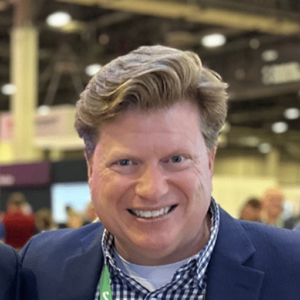





In episode 419, host Mike Petrusky welcomes Jenna Mikus, PhD, CEO of Eudae Group, LLC, for a conversation about human flourishing, workplace innovation, and the future of workplace design. Drawing on her background in engineering, workplace strategy, smart buildings, architecture, and wellbeing science, Jenna explains why organizations should move beyond siloed thinking and embrace interdisciplinary collaboration when designing workplaces. Together, Mike and Jenna explore the concept of eudaimonia, discuss the critical role facility managers play in occupant wellbeing, examine how technology can support human outcomes, and share practical advice for fostering innovation through curiosity, intentionality, and unconventional thinking.
Agenda
- What “eudaimonia” means and why human flourishing should guide workplace design
- How facility managers influence occupant health, wellbeing, and workplace experience
- Why innovation thrives when organizations embrace diverse perspectives and unconventional thinking
- How technology can support people and workplaces when deployed with intention
What you need to know: Workplace takeaways
Takeaway 1: Human flourishing provides a powerful framework for workplace strategy
At the center of Jenna’s work is the concept of eudaimonia, often translated as human flourishing or becoming one’s best self. Rather than focusing solely on productivity, efficiency, or operational outcomes, this approach encourages workplace leaders to think about how environments help people perform, grow, and thrive over time.
By combining architectural science with wellbeing science, organizations can create environments that enable employees to bring their best selves to work while also supporting broader business objectives. Jenna believes workplace leaders should view this philosophy as a practical North Star, using it to guide decisions about workplace experience, operating models, technology, and design.
For workplace leaders, the key question becomes simple: Does this decision help people flourish?
Takeaway 2: Facility managers have a greater impact on wellbeing than many people realize
Jenna argues that facility managers often play a much larger role in occupant health and wellbeing than they receive credit for. While workplace conversations frequently focus on executives, designers, or HR leaders, facility management professionals are uniquely positioned to understand how buildings actually function and how occupants experience those environments every day.
Referencing a perspective shared by Harvard’s Joseph Allen, Jenna notes that “facility managers have more impact on occupant health and well-being than general practitioners or PCPs.”
Because facility managers oversee everything from building systems and environmental conditions to workplace operations and service delivery, they influence comfort, collaboration, health, and productivity in ways that are often invisible but highly significant.
Jenna encourages organizations to include facility managers in strategic workplace conversations earlier and more often. Their operational knowledge, combined with their understanding of occupant needs and changing workplace requirements, makes them essential contributors to successful workplace strategies.
Takeaway 3: Innovation requires diverse perspectives and unconventional thinking
When Mike asks what it means to be a workplace innovator, Jenna rejects the idea that innovation is simply about adopting new technologies or following the latest trends.
Instead, she describes innovation as “being able to draw parallels and connect the dots in very different ways, being creative to identify the dots and then to coalesce them and connect them in meaningful ways.”
Jenna believes many organizations unintentionally limit innovation by relying on the same voices, disciplines, and frameworks. Breaking down silos and encouraging interdisciplinary collaboration creates opportunities for more creative and effective solutions.
Throughout the conversation, she advocates for bringing together people with different backgrounds, experiences, and perspectives. Some of the most valuable contributors are often the people who do not fit traditional molds, and organizations that create space for those perspectives are more likely to uncover new ideas and drive meaningful innovation.
In Jenna’s view, innovation is not about finding people who think alike. It is about creating environments where different ways of thinking can work together.
Takeaway 4: Technology and design should intentionally support people
Her approach focuses on understanding how people, buildings, and technology interact. Before selecting tools or deploying new systems, workplace leaders should first identify the outcomes they want to achieve, and the support employees need. Technology can then be layered into the workplace ecosystem to strengthen those experiences and processes.
As Jenna explains, technology should serve as “an enabler and an enhancer rather than just a mechanism to do and often superficially do.”
That same principle extends beyond technology to workplace design itself. Organizations create better outcomes when they welcome different perspectives, challenge traditional assumptions, and intentionally design for a variety of needs and ways of working.
Jenna closes the conversation with a reminder that innovation rarely comes from following conventional paths: “Embrace unconventional approaches to design. That’s really where innovation is going to thrive.”
Workplace management insights
- Facility managers influence occupant health, wellbeing, and workplace experience every day.
- Innovation often emerges when organizations connect ideas across disciplines and perspectives.
- Breaking down organizational silos can lead to stronger workplace outcomes.
- Humility, trust, respect, and active listening create better collaboration across teams.
- Diverse perspectives help organizations uncover new opportunities for creativity and innovation.
- Technology should support people and processes rather than become the primary objective.
- Organizations benefit when unconventional thinkers are included in workplace decision-making.
- Designing for different needs and ways of working can create more engaging, resilient, and effective workplace environments.
Explore the full library of Workplace Innovator podcast episodes for an in-depth look at workplace insights and watch the full video here.