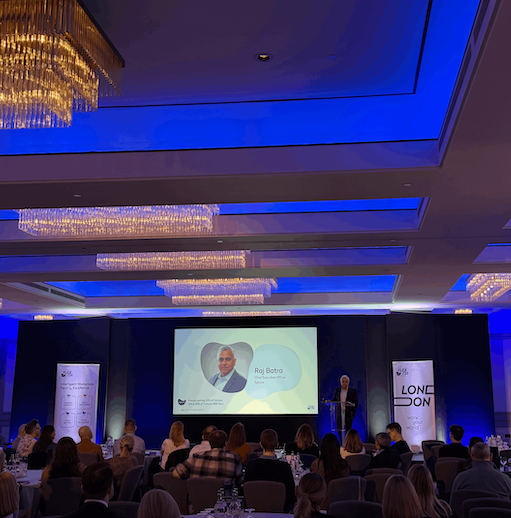



Many organizations across industries have workplace strategies mapped out in impressive detail. They’ve documented hybrid work policies, outlined AI deployment roadmaps, and built comprehensive employee experience frameworks. The challenge facing workplace and facility management leaders isn’t creating plans, though. It’s turning those plans into operational reality.
Key takeaways
- Strategy paralysis is stalling some workplace initiatives: Business leaders suffer from decision distress, with planning becoming a substitute for action as organizations struggle with too many options, too much data, and too many stakeholders to satisfy
- Implementation beats overplanning in today’s environment: Economic pressures, AI moving from experiment to operations, and hybrid work maturing past its experimental phase are driving demand for proven results over strategic promises—leadership expects proof today, not tomorrow
- Data storytelling is the bridge to executive action: FM teams possess extensive operational data, but success requires translating maintenance histories and asset assessments into risk-based conversations about organizational resilience rather than simple budget requests
Welcome back to our monthly look into the trends shaping the workplace and facility management (FM) industries.
What is strategy paralysis and why does it affect workplace initiatives?
Strategy paralysis is when planning becomes a substitute for action. It happens when teams have too many options, too much data, and too many stakeholders to satisfy, resulting in stalled decisions and projects that never move past pilot phase.
Organizations can find themselves launching pilot programs that run for months without scaling. They’re developing strategic plans everyone agrees are important, but nobody implements. Cross-functional teams soon struggle to connect and align on next steps, and technology investments sit unused because deployment stalled somewhere between procurement and rollout.
Recent search reveals the scope of the challenge, with 85% of business leaders reporting they suffer from decision distress and nearly a third of executives don’t use available data when making decisions, according to Oracle’s The Decision Dilemma study. Organizations are collecting more information than ever while becoming less decisive about how to use it.
Why is implementation more important than ever?
In “Dream a New Dream” – Casting a Vision for the Future of Facility Management Leadership, Mike Petrusky, Director of Podcasts at Eptura and host of both the Workplace Innovator and Asset Champion podcasts, explains how the next decade will bring as much transformation as the last, but only for leaders who move beyond vision to implementation.
Economic, technological, and social conditions are converging into a growing demand for results that help build the bottom line.
As organizations look ever more closely at their budgets, leadership expects proof today from workplace and facility management professionals, not promises about tomorrow. AI has crossed from experiment to operations, driving a new urgency around deployment decisions. Hybrid work, meanwhile, has also moved past its early experimental phase. Three years into widespread adoption, organizations are no longer asking whether hybrid models can work. Instead, they’re focused on optimizing what they’ve already built, which shifts attention from planning to refinement.
How should organizations approach technology deployment?
Technology isn’t the first thing you should think about. Instead, define the business outcome first, then select the technology you’ll need to achieve it. Starting with the tool and searching for applications doesn’t deliver the desired results.
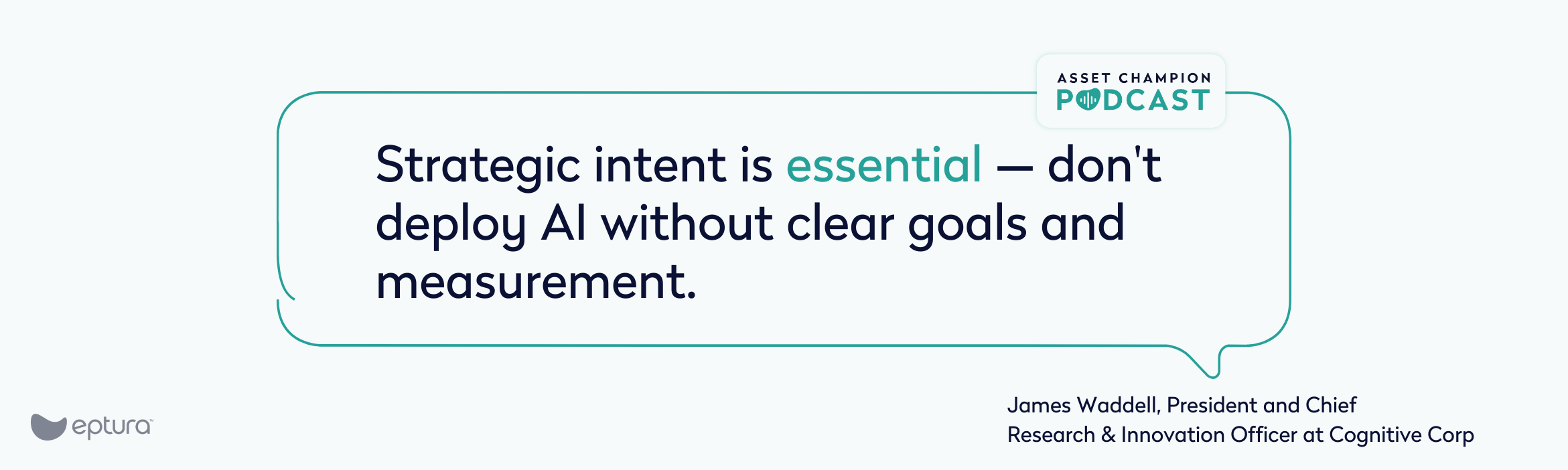
James Waddell, President and Chief Research & Innovation Officer at Cognitive Corp, addresses this directly in the Asset Champion podcast episode “A Very Real Trend” – The Impact of AI on Asset and Facility Management: “Strategic intent is essential—don’t deploy AI without clear goals and measurement.”
Technology isn’t the only thing you should think about, either.
In her appearance on the Workplace Innovator podcast episode “Onwards and Upwards” – Technology, Workplace Innovation and Transforming Work, Sophie Wade, work transformation strategist and host of the Transforming Work podcast, encourages organizations to remember technology is there to support people.
“We need to be talking to HR, we need to be talking to IT… to get more data, to have more understanding,” she explains. Successful implementation requires considering the human element alongside technology. Integration across facilities management, HR, and IT creates cohesive work environments, not just cohesive technology stacks.
Why doesn’t facility management data always drive executive decisions about implementation?
Even armed with the best intentions, there are always still challenges, and for facility and workplace leaders, it often comes down to not being able to find ways to tell the right stories with data.
So, even though facility management teams already have a lot of data about their operations, including asset condition assessments, maintenance histories, life cycle projections, FM budgets still get cut, and strategic initiatives struggle to gain executive support.
Maureen Roskoski, Vice President at FEA, talks about the challenge in the Asset Champion podcast episode “My Facility Podcast Crossover” – The Value of Storytelling in Facilities and Asset Management. “One of the things we’ve seen over the past couple of years becoming more important is the ability to be able to tell your story,” she explains.
“People will say, I’ve been telling them for 10 years we’re going to have major replacements due, and we have to double our budget in 10 years. And nobody’s been listening.”
In many cases, executives can hear the message, but it still doesn’t translate data into a framework for decision-making. FM leaders request budgets when they should be enabling risk-based conversations about organizational resilience, Maureen says.
What role should research play in what and how organizations implement technology?
Some build their workplace strategies on assumptions about what employees need or prefer but treating them as universal truths leads to investments that don’t deliver the right results.
Dr. Tracy Brower, Vice President of Workplace Insights at Steelcase, challenges organizations to base decisions on evidence rather than intuition in the Workplace Innovator podcast episode “Critical Connections” – How Leaders Can Harness the Power of Community in the Workplace.
The proximity effect she describes on the episode proves the value of looking to additional sources of insights.

“When we’re sitting within 25 feet of a top performer, our performance increases by 15%.” This isn’t theoretical — it’s measurable impact. Similarly, “if we’re sitting within 65 feet of other people, there’s a measurable knowledge spillover.”
For organizations wrestling with return-to-office strategies, this research can help shift the conversation from philosophical debates about whether people should be in the office to evidence-based optimization of how spaces support collaboration and learning.
She also looks at larger social trends for ideas on how to design company spaces.
“When cities have more gathering places—parks, restaurants, coffee shops, libraries—people are more likely to report they have friends,” she says, and this means organizations that intentionally create gathering places build stronger relationships and social capital among employees.
“50% of people globally experience loneliness and record levels of depression and anxiety.” The workplace can provide “a sense of stability, a center of gravity” in an uncertain world, but only if leaders design it with that intention, backed by research rather than assumptions.
How can organizations use conflict to improve productivity?
Most workplace leaders have been trained to minimize friction and build consensus. These are valuable skills in many situations. They can also become obstacles to action when taken too far.
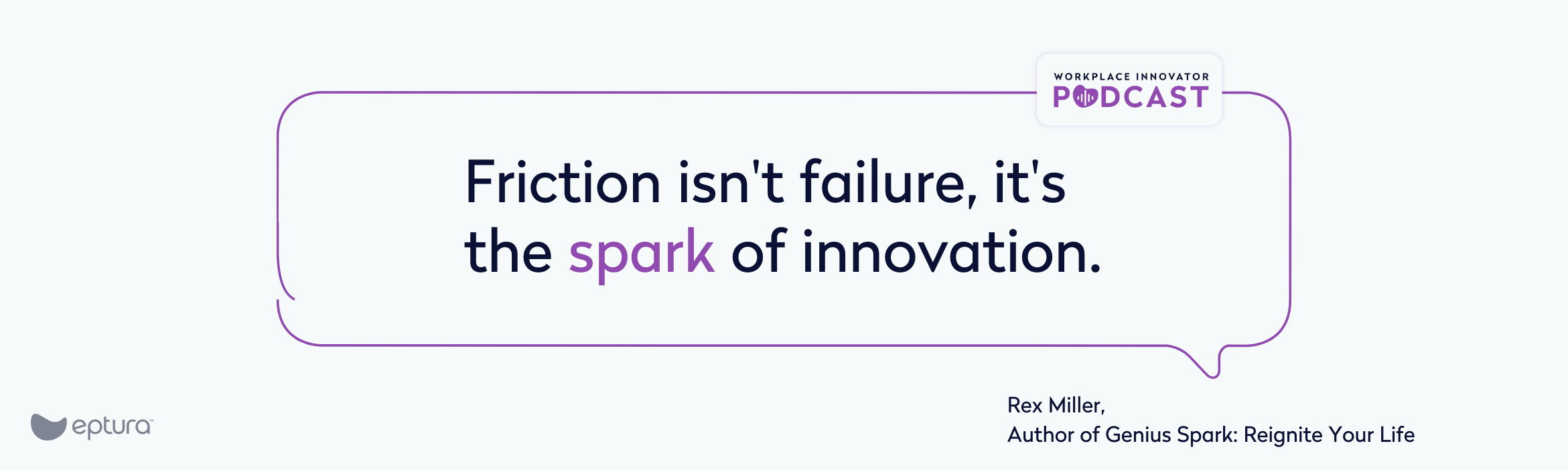
Rex Miller, keynote speaker, futurist, and author of “Genius Spark: Reignite Your Life,” challenges conventional thinking about conflict in the Workplace Innovator podcast episode “From Think Tank To Do Tank” – Driving Change in Corporate Real Estate and the Workplace. “An opposite is not your obstacle, it’s your advantage,” he explains. “Friction isn’t failure, it’s the spark of innovation.”
Rex wants companies to shift from “think tank” to “do tank” mode. Organizations get trapped in endless strategizing while trying to achieve complete alignment before acting. The pursuit of perfect consensus, though, can trap what Rex calls “hidden genius” beneath “outdated systems, fear, or inertia.”
The key is to approach differences with curiosity and understanding, not to convince others they’re wrong, but to explore why they see things differently. That exploration often reveals insights that strengthen implementation.
Stay on top of the trends in intelligent worktech and facility management
Workplace and facility management are constantly evolving with new technologies, regulations, and best practices. Industry professionals always have something new to learn.
For more videos, podcasts, and webinars to keep you updated on the latest trends, visit Eptura’s resource page.
Frequently asked questions
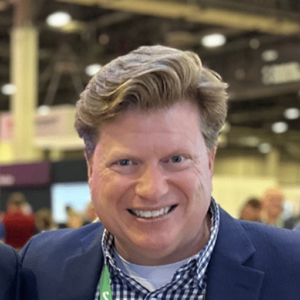
By Mike Petrusky
As Director of Podcasts at Eptura, Mike Petrusky hosts both the Workplace Innovator Podcast and the Asset Champion Podcast, sharing thought leadership with CRE, FM, and IT leaders in the digital and hybrid workplace. Mike has produced more than 500 podcast episodes listened to in over 111 countries. As an in-demand public speaker, Mike engages audiences at numerous industry events each year, including International Facility Management Association and CoreNet conferences, focusing on the human element of workplace and facility management.