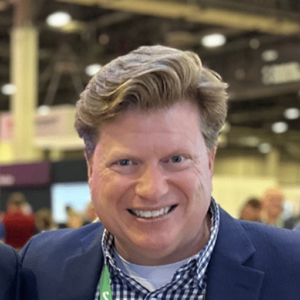





In episode 164 of the Asset Champion podcast, host Mike Petrusky speaks with Billy Holder, CFM, the founder and CEO at Project Aidra. They talk about his career and what led to the founding of Project Aidra, a company dedicated to building a future where more intelligent, automated, and precise property inspection is possible. They then explore the importance of taking a holistic view of the built environment, including the people occupying the facilities. Billy says the challenges facing the FM industry include staffing shortages and the need to leverage technology, but he stresses the need to keep technology human centered, ensuring it augments rather than replaces human intuition and knowledge. Mike and Billy agree there’s a lot of potential for technologies like AI, reality capture, and IoT sensors to improve asset management and facility condition assessments.
Agenda
- AI and other technologies reshaping facility and asset management
- Key challenges in the industry, including staffing shortages and fragmented systems
- Advice for leveraging innovation while keeping people at the center
What you need to know: Facility and maintenance takeaways
Takeaway 1: Your network is your net worth—join professional organizations early
Billy explains that career growth often depends on visibility within your professional community, not just technical knowledge. “Your network is your net worth, and it doesn’t matter as much what you know or who you know, but at least in my experience, what has mattered the most—who knows what you know,” he says.
So, joining organizations like IFMA helps professionals build relationships, share knowledge, and create opportunities for advancement.
“Those opportunities will come from the people who know what you know, and you’ll be able to grow your career and learn more along that path of growth.”
Takeaway 2: FMs need to keep technology human centered
While AI and automation are transforming facility management, Billy warns against losing sight of the human element. He emphasizes that technology should support and not replace human expertise.
“Through your adoption of new technologies, keep it human. Remember that these are tools out there that are there to augment, supplement, and assist. They’re not there to replace the human intuition and human knowledge base that we have grown in our industry.”
Billy’s advice: Keep people at the center of every decision.
“We’re here for the people, and at the end of the day, that’s what matters most,” he explains.
Takeaway 3: Staffing shortages demand tech-driven solutions
The industry faces a growing labor gap as experienced professionals retire, and fewer young workers enter the trades.
“It’s no secret that our industry as a population is getting older and there aren’t as many in the younger generations coming out of the trades as there were.”
Technology can help bridge this gap by automating routine tasks and transferring knowledge to new hires. “Until we find a solution for that, we’re going to have to lean into these other areas of technology to help us supplement, augment that staffing shortage.”
Takeaway 4: Innovation starts with curiosity, iteration, and holistic thinking
Billy encourages facility leaders to embrace experimentation in the digital era and embrace the idea that the risks are well worth the rewards.
“What’s the worst thing that can happen?” he asks. “We have to erase it and start again.”
It’s all part of the process. Nothing in technology is permanent, he says, and iteration is key to progress. “We can always change it, iterate it, make it better, faster, stronger.”
Billy also urges leaders to look beyond equipment and consider the entire ecosystem of the built environment. “We have to take a bigger view for a minute and kind of zoom out, not just look at assets as our equipment or as the building, but as the entire ecosystem of our environment.”
Maintenance management insights
- Staffing remains the biggest challenge, pushing organizations to adopt technology for efficiency and knowledge transfer.
- AI is only a part of the picture. Advancements like reality capture, IoT sensors, and integrated platforms are equally critical.
- Fragmented systems slow progress, while robust, standards-based platforms are key to consolidating data and improving decision-making.
- Professional networks accelerate growth and innovation by connecting leaders and sharing best practices.
- Keeping people at the center ensures technology adoption aligns with organizational values and occupant experience.
Do a deep dive into more asset management insights by exploring all Asset Champion Podcast episodes.