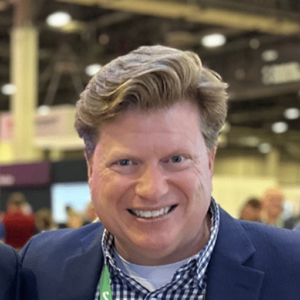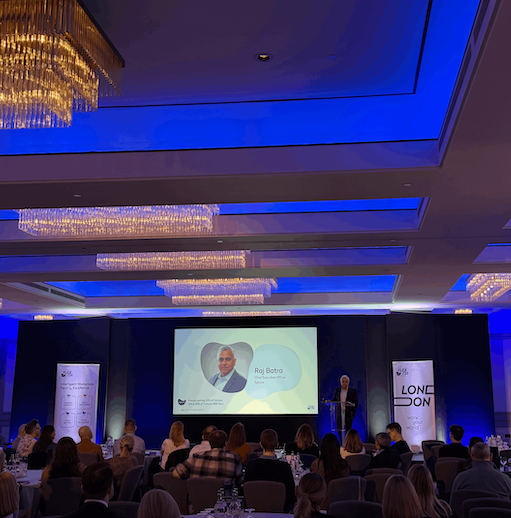





In episode 169 of the Asset Champion podcast, host Mike Petrusky welcomes Maureen Roskoski, Vice President at FEA, who shared her expertise in sustainability, resilience, and facilities management. Mike and Maureen discuss the latest opportunities for asset management leaders to more effectively communicate their stories in this special crossover episode with the “My Facility Podcast.” They explore the importance of resilience in facility management and the need for FM leaders to effectively communicate the value of their maintenance strategies to decision-makers. Maureen believes that if we are to be in the best position to care for our built environment long-term, professionals must improve their skills for storytelling while staying ahead of the many changes in technology impacting the FM industry.
Agenda
- Teaching property resilience to communities impacted by natural disasters
- Using storytelling and data visualization to communicate maintenance needs to the C-suite
- Leveraging Facility Condition Index (FCI) to support capital planning decisions
- Creating conscious decision-making partnerships between FM leaders and budget decision-makers
What you need to know: Facility and maintenance takeaways
Takeaway 1: Resilience is the new sustainability
“Sustainability is kind of morphing into resilience where you not only want to have an efficient and productive environment for your workplace for whatever your organization does, but you got to think about the long term and what climate change and impacts are going to affect your property,” Maureen explains.
She emphasizes the changing threat landscape: “In 10 years, what’s going to be different for us? And for some areas, it’s we’re going to have, you know, the 100-year flood is now happening every 20 years and wildfires are now much more prevalent and so your threats are changing, so you got to think about how you might change your property and infrastructure.”
Takeaway 2: Effective storytelling is now a critical FM competency
“One of the things we’ve sort of seen over the past couple of years and maybe even more than that but becoming more important in terms of skills is the ability to be able to tell your story,” Maureen notes.
“With budgets being cut and even with changes that need to be made around your property for resilience or new threats, it’s all about explaining it to the people that make decisions.”
She then highlights a common frustration: “People will say, I’ve been telling them for 10 years we’re going to have major replacements due, and we have to double our budget in 10 years, and we have to change all these systems out. And nobody’s been listening.”
Takeaway 3: Use FCI to create conscious decision-making partnerships
Rather than simply requesting budgets and hoping for approval, FM leaders should use data to help executives make informed decisions about risk and investment.
“If you can get the people who make the decision, right, the people who give you your budgets, get on the same page where you’re both making a conscious decision,” Maureen advises.
“So, you look at the facility condition index, which is just, you know, how much deferred maintenance do you have compared to your replacement value and use that to help tell that story.”
She then describes the approach: “Be able to say, look, if you give me this amount of money for the next 20 years, here’s what I can keep our buildings at. I can keep it pretty steady. If you give me less than that, we’re going to meet our critical FCI in 5 years instead of 20.”
Takeaway 4: Long-term capital planning requires resilience assessment
Capital planning is evolving beyond simple replacement schedules to incorporate changing environmental threats and infrastructure needs.
Maureen describes FEA’s approach: “My company, we do a lot of capital planning for people where you say, all right, you need to replace your chiller in year 10 and your boiler in year 12. And so, the resilience aspect is doing a little bit more where you say, OK, well, in 10 years, what’s going to be different for us?”
She also talks about the key questions to ask, including: What do you? How do you assess risks? What do you do with different threats, especially when doing long-term planning?
Maintenance management insights
- Resilience is replacing sustainability as the primary framework for long-term facility planning, requiring FM professionals to assess and prepare for changing environmental threats like increased flooding and wildfires over 20-year planning horizons.
- Storytelling and communication skills are now critical competencies for FM leaders, as the ability to effectively explain maintenance needs and capital planning to C-suite executives directly impacts budget approvals and organizational support.
- The Facility Condition Index (FCI) serves as a powerful tool for creating transparency between FM leaders and decision-makers, enabling both parties to make conscious, data-driven decisions about infrastructure investment and acceptable risk levels.
- Budget constraints are an industry reality, but effective communication transforms the dynamic from FM leaders repeatedly requesting funds to collaborative decision-making where executives understand trade-offs between funding levels and facility performance outcomes.
- Capital planning must evolve beyond traditional replacement schedules to incorporate resilience assessments that account for changing climate impacts and infrastructure threats over multi-decade timeframes.
- Workforce development and upskilling remain essential challenges in FM, requiring professionals to continuously learn new technologies while developing soft skills in communication, storytelling, and stakeholder engagement.
- Industry events like IFMA’s Facility Fusion and NFMT provide critical opportunities for FM professionals to network, learn, and develop the communication skills needed to advance their careers and be asset champions in their organizations.
Do a deep dive into more asset management insights by exploring all Asset Champion Podcast episodes.
Watch the full video here: https://www.youtube.com/watch?v=1tT9grpv8Gw&list=PLSkmmkVFvM4H3pwnlU2AuqynuRDpvnh4J&index=3