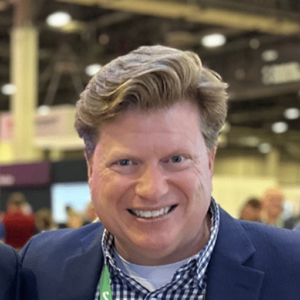





In episode 367, host Mike Petrusky speaks with David Yeager, PhD, who is a professor of psychology at the University of Texas at Austin and the co-founder of the Texas Behavioral Science and Policy Institute. Mike asks David about his closing keynote address during IFMA’s Facility Fusion 2025 where he inspired facility management leaders to have a growth mindset as they care for the people in the built environment. They explore how the best managers of high-performing teams are those who maintain high standards while also being supportive as they create a mentor mindset. David shares the research behind his new book, “10 to 25: The Science of Motivating Young People: A Groundbreaking Approach to Leading the Next Generation—And Making Your Own Life Easier” and offers practical advice for workplace leaders of all kinds. Mike and David discuss leadership, communication and fostering better relationships with team members as they offer insight and inspiration you need to be a Workplace Innovator today.
Agenda
- While cultivating resilience and curiosity is essential for thriving in today’s workplace
- How The right guidance can accelerate learning, motivation, and long-term career growth
- Exclusive insights from Jaeger’s new book, “10 to 25, The Science of Motivating Young People” and its lessons for leaders and organizations
What you need to know: Workplace takeaways
Takeaway 1: Mentors play a crucial role in fostering a growth mindset and supporting long term professional development
David emphasizes the importance of finding a mentor who can help individuals navigate the challenges of professional growth. “Although as a psychologist, I do think it’s important to adopt a growth mindset. I think it’s almost as important to go find a mentor. Who’s the kind of person who’s going to invest in you?” he states, highlighting that mentors provide the necessary support and perspective to maintain motivation during the often-difficult process of learning and improvement.
He further explains, “They almost always do it with a coach or a mentor. And that stuck with me, and I think the reason why is because it feels so bad to be in the middle of this nonlinear process of learning. And so, you need someone to pump you up, like the guy on the rink in Rocky Balboa movies, Mick, who’s there cheering you on.”
David also points out that mentors do more than just cheerlead; they offer guidance on what aspects of a skill are truly important and which can be overlooked. “You also need someone to say, look, of all the things you can learn about this skill, these are the ones that actually matter, and these don’t.
Someone who actually has the expertise to help you prioritize and put things in perspective,” he adds. This mentorship is particularly critical in the knowledge economy, where continuous learning and adaptation are essential for success.
Takeaway 2: Effective leaders balance high standards with supportive communication to foster a positive and productive work environment
David discusses the challenges of managing and retaining employees, especially in the context of facility management, where a diverse range of roles and responsibilities exist. “The best way to retain people is to expect nothing of them and make their lives easy. Pay them a lot to do no work, that means you could retain 100% of your employees if you did that, right? And so, it’s often like the standards you’re maintaining are in opposition to your retention,” he observes.
However, he notes that the most successful managers are those who maintain high standards while being supportive and respectful. “Interestingly, they’re not people who lose 0% of people because the people who are both tough and supportive, they have what I call a mentor mindset, and this is just the idea that I have very high standards, but I’m also very supportive,” David explains.
He further elaborates on the importance of communication in this balance, stating, “When we critique them, try to transfer our expertise to them, then it’s in the context of this uncertainty that they might feel around their rank and status. So an offhand comment about how someone needs to dress differently at work, all of a sudden takes on bigger meaning, and it comes across as, oh wait, this person’s looking down on me or they think I’m no good, or they are not investing in me, or they think I shouldn’t be here, right?”
David’s research suggests that leaders who clarify their intentions and support their team members’ growth can avoid these negative perceptions and create a more engaged and loyal workforce.
Takeaway 3: The concept of a “do-over” can help leaders correct mistakes and build trust with their team
Davis introduces the idea of a “do-over” as a powerful tool for leaders to correct their mistakes and maintain positive relationships with their team members. “The number one piece of advice that people have found helpful is the concept of the do-over. When you’re leading, it really feels like if you say something wrong, you’re going to screw it up and the person’s going to resent you the rest of their lives, right? But the reality is, you can go to people later and say, hey, we have a set of values that I’ve been trying to uphold here, and I didn’t uphold them in that conversation,” he says.
David emphasizes that leaders should not fear making mistakes but should instead be transparent about their errors and show a commitment to improvement.
He provides an example of how to approach a do-over: “I still need you to do the thing that you’re supposed to do, but I should have been more interested in what was going on with you. So, I’d like a do-over. Could you explain to me your perspective, and then let’s try to work together?”
This approach not only helps to repair any misunderstandings but also demonstrates the leader’s own growth mindset. “People will remember the do-over way more than the first screw up. And so, I’m not saying you have to perfect all of these mindsets tomorrow. It’s not like a diet where you just have to give up every food you like for all time, and if you screw up once, you’re off the wagon,” David concludes, encouraging leaders to embrace their own learning process and be authentic in their interactions.
Workplace management insights
- A growth mindset is essential for leaders and the next generation, but it requires struggle and difficulty to achieve lasting internalized behavior change.
- Retaining employees is challenging because the best way to retain them is to expect nothing, which is not practical for maintaining high standards and productivity.
- Managers who are both tough and supportive, having a mentor mindset, are the most effective in retaining and developing employees.
- The concept of the “do-over” is crucial in leadership; admitting mistakes and showing a willingness to improve can help repair relationships and build trust.
- Lifelong learning is necessary, but it should be guided by mentors who can help prioritize and contextualize the skills and knowledge needed for growth.
Check out David’s Masterclass on the “Power of Mindset” and then do a deep dive into more workplace insights by exploring all Workplace Innovator podcast episodes.