Facility and building managers rarely get to choose between planned and urgent work. The air-handling unit still needs inspection when a plumbing failure closes part of the floor. Safety work can’t wait because the team is short-staffed, and neither can an occupant service request. Without a clear plan, the loudest problem tends to win while preventive work, documentation, and long-term priorities quietly fall behind.
A facility maintenance plan creates a way through those demands. It gives the team a shared basis for deciding what needs attention now, what can wait, and what should change when the same problem keeps returning.
The plan isn’t something teams finish and file. It becomes more useful as equipment ages and maintenance history reveals new patterns. The right technology and AI can help teams see those patterns sooner, but the process still begins with operational decisions.
Key takeaways
- Start with objectives and a reliable baseline: Clear goals, accurate asset records, maintenance histories, and operational context help teams decide where limited resources will have the greatest effect
- Connect priorities to available resources: A realistic plan matches each task with the right strategy, owner, technician, parts, access, budget, and time instead of building a schedule the team can’t deliver
- Use completed work to improve the next plan: Consistent work orders, documentation, KPIs, and regular reviews help teams identify recurring problems and adjust tasks, schedules, resources, and maintenance strategies
A facility maintenance plan becomes useful when all these decisions work together. Instead of serving as a static schedule, it creates a repeatable cycle for prioritizing work, completing it consistently, and improving future decisions.
Set clear maintenance objectives
Every facility has more potential work than time and money. Objectives help the team make tradeoffs without treating every request as equally important.
A facility with repeated HVAC failures might focus on uptime and emergency-work reduction. An aging portfolio may care more about condition, deferred maintenance, and repair-versus-replace decisions. Others may prioritize safety, compliance, energy use, or asset life. The mix depends on what maintenance must protect.
Broad goals become useful when they describe a visible change. Reducing emergency HVAC calls or increasing uptime for critical systems gives managers something they can connect to work and measure later.
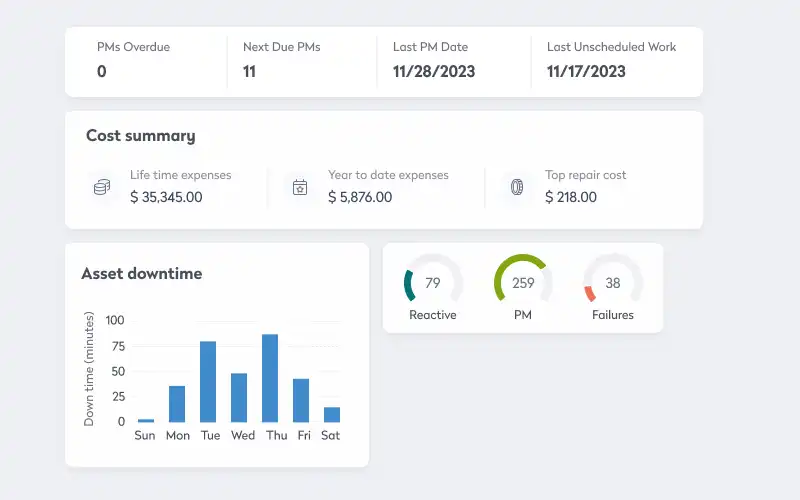
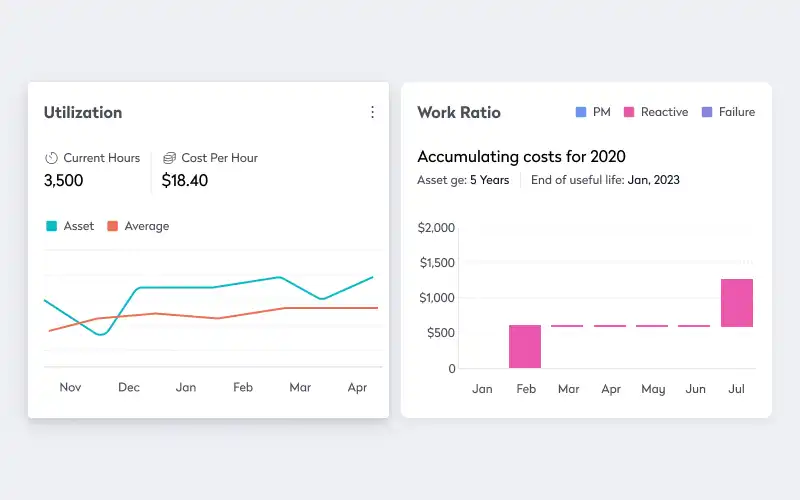
Historical data can sharpen that choice. AI-backed analytics can compare work order history, downtime, asset condition, and maintenance costs to show where recurring problems create the greatest operational impact. The analysis doesn’t set the objective for the manager, but it can reveal that a small group of assets is taking up more than their share of the team’s time or disrupting service more often than the rest. Effective maintenance management starts when those patterns become priorities rather than background noise.
Build a reliable asset and facility baseline
Once the team knows what it wants to improve, it needs an honest picture of the starting point. That can be harder than it sounds. Asset records may sit across spreadsheets, work orders, warranty files, and individual technicians’ experience. A boiler might appear healthy in the registry even though its repair history tells a different story.
A useful baseline combines the asset record with decision-making context:
- Asset name, category, identifier, and location
- Manufacturer, model, age, condition, and warranty status
- Maintenance, repair, failure, and downtime history
- Parts requirements and availability
- Replacement cost and expected useful life
- Operational, safety, and compliance criticality
The inventory shouldn’t stop with equipment. Operating hours, occupancy, seasonal demand, vendor agreements, and maintenance capacity all affect what “good condition” means in practice.
Consider two identical air-conditioning units. One supports a lightly used break room, while the other cools a server room. Their age and model may match, but the consequences of failure don’t. That context changes the priority, maintenance strategy, contingency plan, and investment decision.
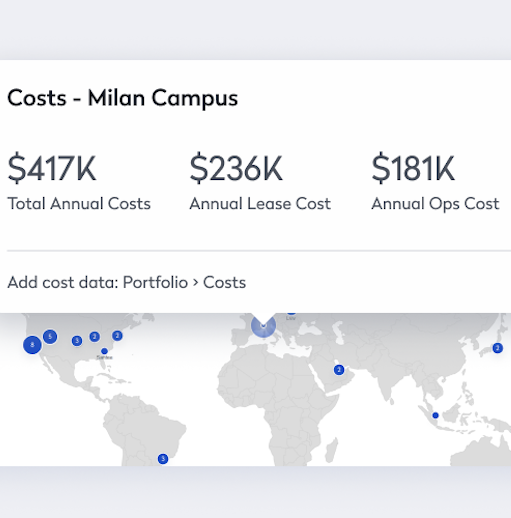
Missing warranties, incomplete histories, recurring failures, and critical assets without contingency plans are findings, not administrative inconveniences. AI can flag gaps or elevated risk patterns, while asset lifecycle management connects the baseline to repair, replacement, and capital planning.
Decide what work to perform and when
A complete inventory can produce an overwhelming list. The next challenge is making it manageable without losing sight of risk. Grouping work by its purpose, urgency, and potential consequences gives teams a practical way to compare competing needs. It also helps them direct limited time and resources toward the tasks that matter most.
Categorize and prioritize maintenance work
Work categories create a common language. Emergency work protects people or critical operations. Corrective work restores something defective. Preventive work follows an interval, while condition-based and predictive work respond to evidence that an asset needs attention. Compliance and capital work bring their own deadlines.
Categories alone don’t settle the queue. A failed light and a damaged machine guard may both be corrective work, but they don’t carry the same consequence. A practical priority framework weighs safety, compliance, criticality, operational impact, failure risk, service disruption, cost, and the consequences of delay.
That’s also where AI-backed analytics can help managers work through a large backlog. By comparing asset condition, service trends, criticality, and maintenance history, the system can highlight emerging risks and unusual patterns. Managers still approve the priority, but they don’t have to rely only on whoever called most recently or complained most loudly. Consistent work order prioritization keeps attention tied to operational value.
Match the maintenance strategy to the asset
Not every asset needs preventive maintenance, and more maintenance isn’t automatically better maintenance. A low-cost, noncritical item that’s easy to replace may be a sensible run-to-failure candidate. A critical pump with a predictable wear pattern may need preventive tasks. An asset with measurable warning signs may benefit from condition-based or predictive maintenance.
The best strategy reflects criticality, failure history, cost, condition, and context. Manufacturer guidance provides a starting point, but work order history shows how the asset behaves in the actual facility. If a belt repeatedly slips early, the schedule should reflect that experience.
Sensor readings, telematics, service history, and performance trends can also reveal early signs of failure. Machine learning can help teams find those patterns across large asset portfolios, but an alert only matters if someone knows what it means and what happens next. Teams should start with a limited group of critical assets, test whether the alerts lead to useful action, and expand from evidence. The preventive maintenance guide explores how recurring tasks and frequencies fit into that approach.
Create an executable resource plan
A well-prioritized list can still fail. Work stalls when ownership is unclear, the right technician isn’t available, parts are elsewhere, or operations can’t release the equipment. An executable plan brings these dependencies together so teams can confirm that every job has the people, materials, access, and time it needs before work begins.
Accountability is often the difference between a plan that exists on paper and one that consistently delivers results. In the “’Get Comfortable Being Uncomfortable’ – Accountability, Culture, and the Future of Asset Management,” Chance Sullivan, Founder & CEO of The Corbett Magnolia Group, LLC, explains that a maintenance plan should make ownership clear at every stage, so work continues moving from approval through completion instead of stalling between handoffs.
“Your workflows, your processes, they mean nothing without accountability.”
Connect responsibility to the work
The plan should make the handoffs visible from approval and job planning through assignment, completion, and record updates. Facility managers may approve priorities, planners define the scope, schedulers coordinate timing, technicians complete the work, and vendors provide specialized support. Even when a contractor performs the task, someone inside the organization needs to confirm the result and documentation.
Clear ownership helps when the plan slips. A scheduling problem needs a different response than a certification shortage or approval bottleneck. Conversational assistants can help supervisors query work orders, histories, and schedules to see where work stopped moving.
Build a schedule the team can actually deliver
The schedule brings together manufacturer guidance, regulatory deadlines, warranty requirements, seasonal demand, failure history, asset condition, and service agreements. It also has to leave enough capacity for work that can’t be predicted.
An example from a campus shows the tradeoff. Grouping air-handler inspections by building can reduce travel and setup time, but scheduling every unit during the busiest occupancy period may create more disruption than it saves. The most efficient route on paper isn’t always the best operating decision.
Before work is committed, the team needs the necessary skills, time, parts, tools, permits, access, vendor support, and budget. An overloaded schedule doesn’t make the program ambitious. It creates late tasks, rushed execution, and unreliable records. When capacity falls short, lower-risk work should be deferred deliberately, with the risk and impact made visible to leadership.
The same logic applies to money and materials. Consumption and lead times shape inventory, while condition and cost history inform repair-versus-replace decisions. Funding gaps should appear as documented deferred work, not disappear inside an impossible schedule.
Standardize execution and measure performance
Planning creates value only when technicians can turn it into consistent work, and managers can learn from the result. Standard processes connect the two by giving technicians clear direction and capturing reliable information that managers can use to improve plans.
Give technicians the context they need
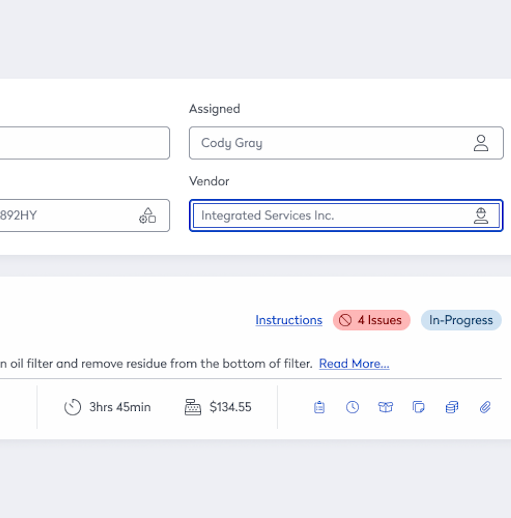
A work order should tell the technician which asset needs attention, why the task matters, what safe completion looks like, and what information must come back. Manuals, drawings, checklists, asset history, parts details, and inspection requirements reduce the time spent searching and help different technicians complete the same task consistently.
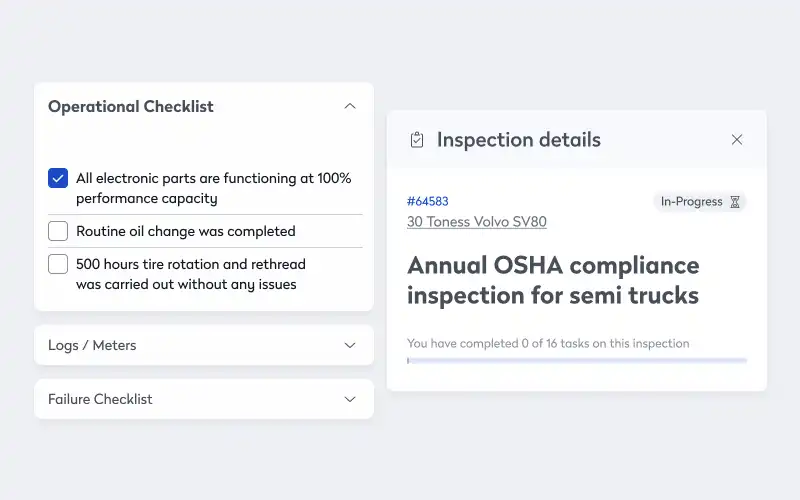
Mobile maintenance apps bring that context to the field. Technicians can review work orders, asset records, inspection forms, and parts availability without returning to a desk, including in locations with limited connectivity. Voice-enabled assistants can make the return trip easier too, allowing technicians to record completion notes and condition updates through speech instead of reconstructing the work at the end of the shift.
Better documentation preserves the details that improve the next task or decision: labor, parts, findings, meter readings, and follow-up needs.
Measure what the plan is changing
The objectives at the beginning of the plan should determine the measures at the end. Depending on the program, that may include uptime, preventive maintenance compliance, schedule compliance, reactive-work percentage, backlog age, response time, mean time to repair, repeat failures, cost, inventory accuracy, or deferred-maintenance risk.
A KPI still needs interpretation. A growing backlog could mean the team lacks capacity, but it could also mean technicians are finally recording work that was previously invisible. AI-backed analytics can compare changes across activity, condition, cost, and service trends, helping managers investigate likely causes instead of reacting to a single number.
Technology is most useful when it connects the work rather than adding another isolated system. A facility and asset management platform can bring together records, schedules, work orders, inspections, inventory, costs, and reporting.
Review results and improve the plan
Even a strong plan will drift if no one revisits it. Asset condition changes, backlogs grow or shrink, suppliers miss lead times, and tasks that once prevented failures may stop producing the same result.
Monthly reviews can focus on overdue and emergency work, response times, stockouts, and missing data. Quarterly reviews create room to compare performance with targets and reconsider staffing, vendors, inventory, and preventive schedules. The annual review returns to the larger questions: Which assets have become riskier? Where has the team reduced disruption? Which repairs should move into capital planning?
AI-backed analysis can support those conversations by comparing alerts with actual outcomes and identifying recurring patterns. If the same predictive alert repeatedly produces no useful finding, the threshold may need adjustment. If one asset class keeps generating emergency work despite high preventive compliance, the strategy itself may be wrong.
Common mistakes tend to appear when teams stop making these connections. They build schedules before agreeing on priorities, apply the same strategy to every asset, add predictive tools without response workflows, or track more KPIs than anyone can use. A review should end with a decision about tasks, schedules, resources, risks, or strategy. Otherwise, it’s only another report.
Turn the maintenance plan into a repeatable management cycle
The difference between a maintenance document and an executable plan is the relationship between its decisions. Objectives shape priorities. Asset condition and criticality influence strategy. Strategy drives work, schedules, responsibilities, and resource requirements. Completed work creates the evidence for the next round of decisions.
Teams need a shared operational record to keep that cycle working across assets, locations, and planning periods.
To connect asset history, maintenance activity, schedules, inventory, costs, and performance information, learn more about Eptura Asset.
Frequently asked questions

By Jonathan Davis
As a content creator at Eptura, Jonathan Davis covers asset management, maintenance software, and SaaS solutions, delivering thought leadership with actionable insights across industries such as fleet, manufacturing, healthcare, and hospitality. Jonathan’s writing focuses on topics to help enterprises optimize their operations, including building lifecycle management, digital twins, BIM for facility management, and preventive and predictive maintenance strategies. With a master's degree in journalism and a diverse background that includes writing textbooks, editing video game dialogue, and teaching English as a foreign language, Jonathan brings a versatile perspective to his content creation.