


In financial services, visitor management is not about printing badges. It’s about protecting regulated data, maintaining compliance, preserving brand trust, and ensuring operational continuity.
Banks, insurers, investment firms, and fintech organizations operate in environments where highly sensitive data moves constantly—financial records, transaction data, proprietary algorithms, and M&A activity.
In 2025, global financial institutions remain the most targeted industry for cybercrime, accounting for nearly 23% of reported data breaches, while regulatory fines for data protection violations continue to reach into the hundreds of millions annually. Every visitor interaction is therefore both a business opportunity and a potential risk.
“Good” in regulated financial environments means measurable compliance outcomes, seamless experiences, and audit-ready processes that withstand scrutiny—without slowing down operations.
Key takeaways
- Visitor and access management is a compliance control, not a front-desk task. Real-time visibility and audit-ready documentation are essential in a high-risk, highly regulated environment
- Unified, cloud-based platforms that integrate access control, identity governance, and occupancy data reduce compliance gaps and improve security posture
- Cross-functional collaboration across security, IT, legal, HR, and facilities strengthens governance and ensures consistent enforcement of access policies
- Automation improves both protection and performance, often reducing check-in times by 30–50% while minimizing human error and administrative burden
The regulatory landscape in financial services
Financial institutions operate under intense oversight. Visitor and access workflows intersect directly with frameworks such as GDPR, SOX, and PCI DSS, all of which require strict control over who can access physical spaces and sensitive information.
Regulators expect documented access controls, traceable audit logs, and secure handling of personal data. In 2025, average global data breach costs have climbed above $4.8 million per incident, with financial services among the highest-cost sectors. Beyond fines, reputational damage can erode client confidence in a matter of days.
In this context, visitor workflows are not administrative conveniences. They are compliance mechanisms.
What good looks like: Core principles
Unified digital visitor management
“Good” begins with eliminating manual dependency. Paper sign-in sheets and disconnected badge printers create compliance blind spots and incomplete audit trails. Fragmentation equals vulnerability.
Leading financial institutions deploy centralized, cloud-based visitor platforms that provide real-time visibility across locations. Security can see who is onsite instantly. Compliance teams can retrieve full access histories without manual compilation.
Facilities can align occupancy with safety thresholds—particularly important as hybrid attendance patterns stabilize in 2025, with midweek occupancy peaks commonly exceeding 60–70% of capacity in financial hubs.
Modern systems integrate access control, automated event logging, identity governance, and emergency protocols. Visitor data feeds broader workplace intelligence instead of living in isolation.
In regulated environments, visibility is protection.
Cross-functional collaboration
Visitor workflows touch security, IT, legal, HR, facilities, and workplace operations. When those teams operate independently, friction and risk increase.
Enterprise leaders frequently emphasize that compliance improves when governance is shared. IT manages authentication and SSO. Security defines access levels. Legal oversees documentation. Facilities ensure secure meeting zones. Workplace teams coordinate the experience.
High-performing institutions align these functions around shared dashboards, approval hierarchies, and compliance KPIs. Instead of reactive coordination during regulator visits, workflows are harmonized by design.
Seamless experience for visitors and employees
Financial institutions host clients, regulators, auditors, contractors, executives, and board members—each with different risk profiles and expectations.
Treating all visitors identically either adds friction or introduces exposure. Strong workflows differentiate intelligently. Pre-registered check-ins, digital NDAs, automated host alerts, and pre-issued credentials reduce lobby congestion and shorten check-in times—often by 30–50% compared to manual processes.
Experience matters. A streamlined, disciplined welcome signals operational maturity. In regulated spaces, security and experience must reinforce one another, not compete.
Best practices for regulated spaces
Pre-arrival screening and credentialing
Risk management starts before arrival. Advance registration, identity validation, watchlist screening, and digital document completion move compliance upstream.
By shifting documentation ahead of time, institutions reduce access overrides—one of the most common sources of audit exceptions. The reception desk becomes a verification checkpoint rather than a documentation bottleneck.
Automated access control
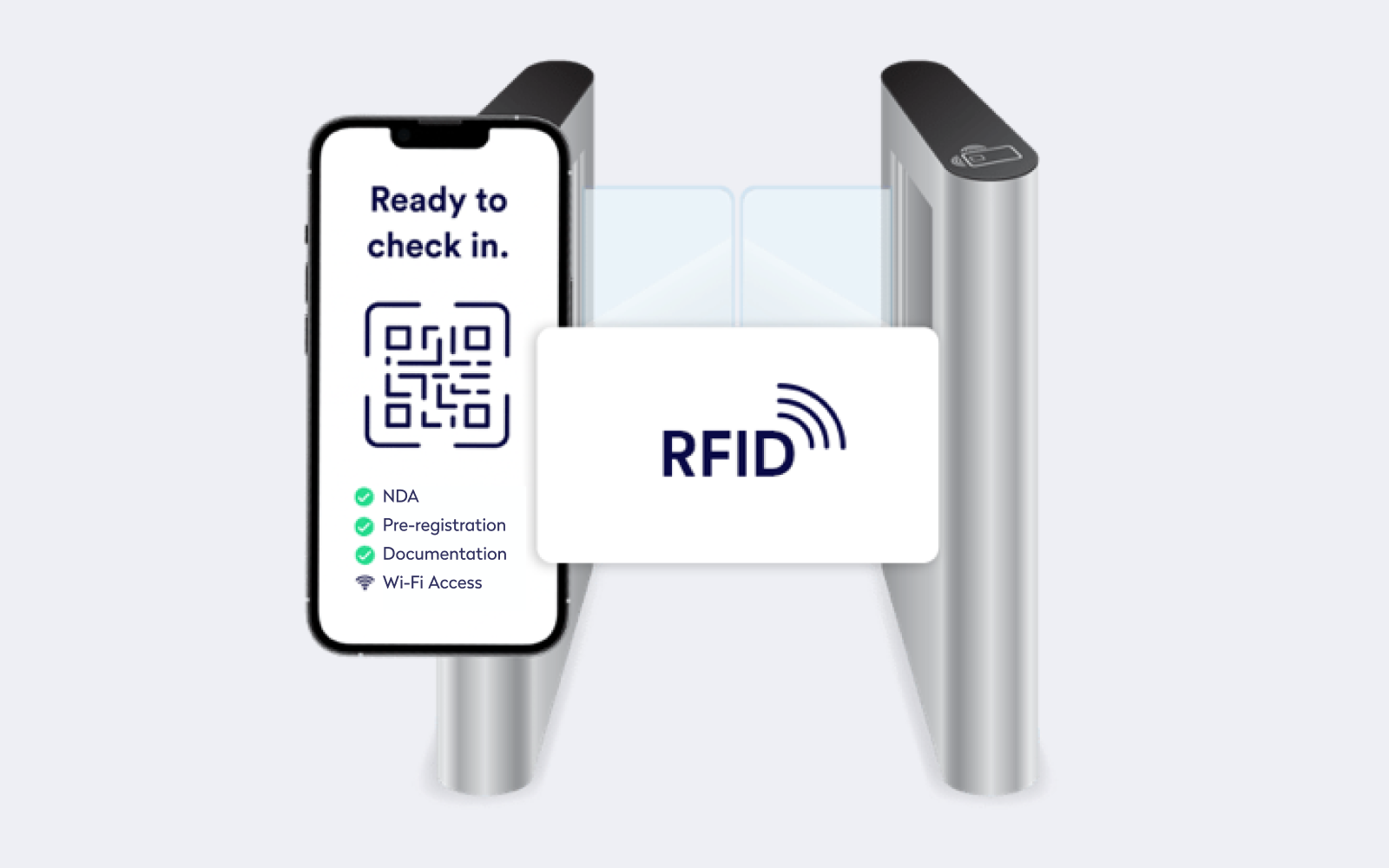
Modern visitor platforms integrate directly with physical security systems. Temporary QR codes, mobile passes, or RFID badges are issued with predefined zones and automatic expiration.
Access aligns precisely with purpose. Real-time logging captures entry and exit events. During emergencies, integrated occupancy data supports instant roll-call reporting—critical as regulators increasingly scrutinize workplace safety governance alongside data protection.
Automation reduces lingering credentials, administrative resets, and compliance gaps simultaneously.
Audit-ready reporting
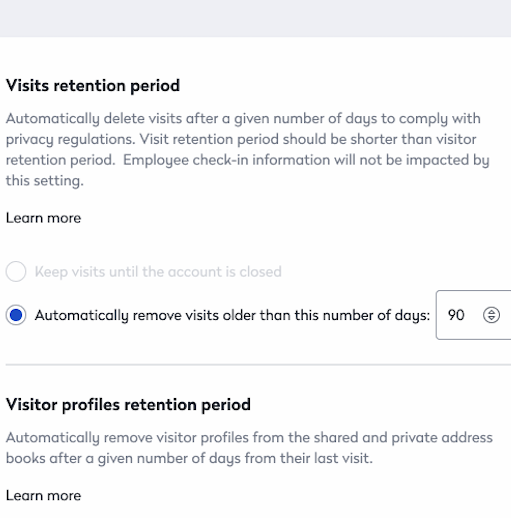
In financial services, audits are continuous. Systems must generate tamper-resistant records including timestamped entry data, signed documentation, and credential histories tied to identity records.
Manual compilation creates risk. Digital platforms allow reports to be generated instantly by visitor type, location, or timeframe. Documentation completeness improves, and compliance becomes demonstrable rather than assumed.

Technology solutions what to look for
Scalable secure platforms
Financial institutions operate across multiple regions. Systems must scale securely.
Enterprise-grade platforms should support encrypted cloud deployment, SSO, MFA, role-based permissions, and detailed event logging. Integration with HR and identity governance systems ensures access aligns with employment status and risk classification.
Security that operates in isolation creates blind spots. Integration closes them.
Customizable workflows
Regulations evolve. Workflows must adapt.
Platforms should allow tiered approvals, visitor-type-specific documentation, regulator credentialing, executive protocols, and automated lockdown capabilities. In crisis scenarios, instant visibility into visitor presence becomes mission-critical.
Flexibility protects long-term compliance without requiring disruptive system replacements.
Analytics and insights
Forward-looking institutions use visitor data strategically. Analytics reveal peak traffic periods, contractor frequency, regulator visit cycles, and approval turnaround times.
In 2025, as organizations refine hybrid portfolio strategies, these insights influence staffing models, real estate consolidation decisions, and security investments.
Visitor workflows become part of enterprise intelligence—not just front-desk administration.
Measurable outcomes defining success
Compliance metrics
Leading institutions track reduction in non-compliance incidents, audit pass rates, documentation completeness, and access violation trends.
Automation reduces human error—still one of the primary drivers of compliance failures. Embedding documentation into workflows lowers exception rates naturally.
Operational efficiency
Digital visitor systems reduce check-in times, lower administrative overhead, and improve emergency coordination. Across automated service environments, workflow digitization has shown performance improvements of up to 40% in resolution speed, reinforcing the operational value of integration.
Efficiency allows security and workplace teams to focus on risk mitigation and strategy instead of transactional processing.
Brand and trust
In financial services, governance and perception are inseparable.
A structured, secure visitor experience communicates discipline. Clear identity verification signals privacy commitment. Organized reception supported by digital systems suggests strong internal controls.
Clients and regulators draw conclusions quickly. Confidence begins at the front door.
Future-proofing access in financial services
In regulated financial environments, good visitor and access management is secure, compliant, efficient, measurable, and integrated.
It reduces risk while improving experience. It supports audits without disrupting operations. It strengthens cross-functional governance instead of creating silos.
As regulatory scrutiny intensifies and hybrid workplace complexity continues in 2025, the question is no longer whether to modernize visitor workflows. It is whether existing systems can withstand the next audit, breach attempt, or regulatory shift.
In financial services, access is trust. And trust must be engineered.
Frequently asked questions

By Amanda Meade
Amanda Meade is a content creator at Eptura, specializing in workplace experience, meeting productivity, and emerging trends in workspace planning and visitor management. With a background in content marketing and SEO, she crafts clear, actionable content that helps teams work smarter through in-office collaboration. Throughout her career, Amanda has worked across industries, including home services, healthcare, real estate, and SaaS, developing a unique ability to distill complex topics into practical insights.