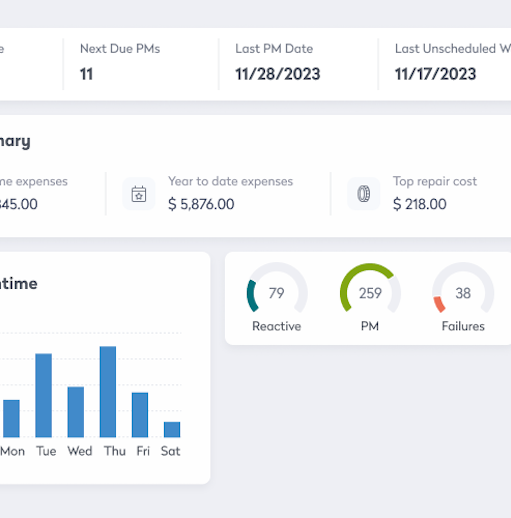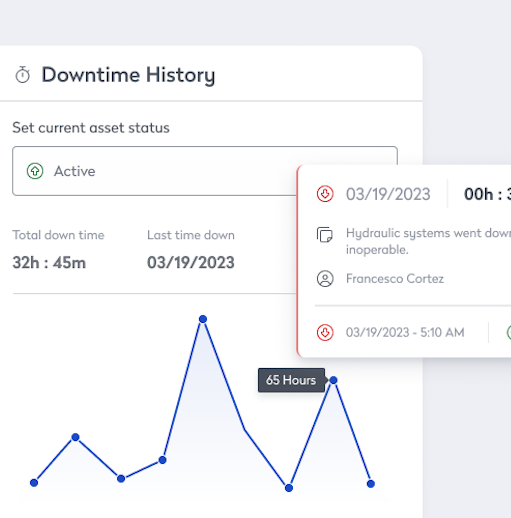



Across industries, unplanned downtime already costs large organizations an estimated $1.4 trillion annually, while ineffective maintenance strategies reduce productive capacity by 5% to 20%. Seasonal peak demand compounds these challenges, building over time as assets run longer, workloads increase, and small inefficiencies start to add up. By the time peak demand arrives, systems are already operating under strain, with less margin for error and fewer opportunities to adjust.
The solution is to shift key decisions so teams can make them earlier. By aligning preventive maintenance, vendors, and inventory planning with projected increases in demand, operations remain stable when pressure builds. Together, these decisions form your surge planning approach, how you prepare your operation to absorb increased demand without losing control.
Key takeaways
- Peak demand exposes preparation gaps, not new problems: Failures during peak periods usually trace back to decisions made earlier. Recognizing early signals like rising reactive work or slipping maintenance gives you time to act before pressure builds
- Surge planning is about aligning decisions earlier, not reacting faster: Coordinating maintenance, labor, contractors, and inventory ahead of demand keeps operations stable. When that alignment is missing, teams spend peak periods catching up instead of keeping pace
- Consistency across sites turns peak demand into a repeatable process: The most effective teams standardize what works across locations. With shared visibility and aligned execution, peak demand becomes predictable instead of disruptive
Peak demand can also reveal where preparation has already paid off and where earlier action can still make the difference between disruption and steady performance.
How can you objectively evaluate how well your current system supports peak demand?
Peak demand varies by industry, but the operational pattern is the same. In manufacturing, extended run times push equipment beyond normal limits, turning small inefficiencies into costly downtime.
That pressure quickly impacts production. In asset-intensive industries, maintenance-related outages can reduce annual production volume by 5% to 10%, even when planned. When failures hit during peak demand, lost uptime becomes missed output.
Utilities face the same constraint under different conditions. Heatwaves and storms push infrastructure to peak load, exposing preparation gaps when systems have little margin for recovery.
In transportation and logistics, continuous volume means even short disruptions travel across routes, labor, and delivery timelines. In healthcare, the margin for error is smaller. During demand surges, critical systems must perform without interruption, yet equipment downtime can reach nearly 9%, with maintenance gaps as a leading cause.
Across education, government, and corporate real estate, demand cycles are predictable, but performance still depends on how well systems handle increased load. Facilities that feel stable under normal conditions can quickly become points of friction as usage intensifies.
Before you start adjusting schedules or reallocating resources, it’s worth asking if your current setup supports coordinated execution at scale.
A modern, comprehensive systems includes:
If any of these are missing, the gaps tend to appear under pressure, when demand increases and there’s less room to compensate.
How do you coordinate preventive maintenance schedules, labor, contractors, and inventory across sites before seasonal demand peaks?
Preparation at the asset level only goes so far without coordination across people and resources. In multi-site operations, readiness depends on how well preventive maintenance, contractor support, and inventory are aligned before demand builds.
Align preventive maintenance schedules with expected demand, not static timelines
Most preventive maintenance plans are built around fixed intervals — monthly, quarterly, or based on basic usage thresholds. That works under normal conditions, but it breaks down as demand starts to shift.
Peak demand changes how assets are used. Equipment runs longer, cycles increase, and the conditions that lead to failure show up earlier. If your maintenance schedule doesn’t adjust to those changes, work either happens too late or competes directly with peak operations.
Teams across industries are already working to close that gap. As Norelle Done, director of marketing at Viking Pure Solutions, explained on the Asset Champion podcast, “Prevention is Your Best Asset Strategy,” “the challenges facing the FM industry include… shifting from reactive to preventive approaches in facilities maintenance.”
Start by reviewing asset history alongside demand patterns. Look for where failures tend to increase ahead of peak periods and which systems show early signs of strain. These patterns give you a clear signal for when maintenance work should actually happen.
The difference comes down to how usable that information is in the moment. When technicians can access asset history, past work orders, and standard procedures directly at the point of work, decisions happen faster and execution becomes more consistent. Instead of relying on memory or site-specific habits, teams work from the same playbook everywhere.
With centralized preventive maintenance scheduling and asset performance tracking across sites, you can adjust timing based on real conditions instead of static calendars. That might mean pulling work forward, grouping tasks more efficiently, or prioritizing assets that are most exposed to increased demand.
When schedules align with how assets are truly used, preventive maintenance stops competing with operations and starts supporting them. Instead of reacting to failures during peak demand, teams enter high-pressure periods with assets already prepared — and fewer surprises to manage.
Secure contractor support where internal capacity won’t scale
Start by identifying where internal teams consistently fall short during high-demand periods. Work order history and seasonal patterns will show where contractor support is not optional but expected.
The risk isn’t access to contractors. It’s how you manage them. When vendor coordination depends on email, spreadsheets, or disconnected tools, delays and gaps build quickly. That administrative friction often becomes the limiting factor during peak demand.
A more effective approach is to bring contractors into structured workflows using centralized vendor management and work order tracking tools, so you can assign work, monitor status, and require consistent documentation across every job.
This becomes critical as volume increases. Without automation, every additional work order adds administrative overhead. With it, work moves through the same defined path every time, reducing delays, improving accountability, and ensuring vendors operate with the same consistency as internal teams.
Instead of chasing updates or reconciling disconnected records, teams can see progress in real time and hold vendors accountable to clear expectations, reducing overhead and improving service quality.
Adjust labor coverage based on projected demand by site
Labor planning breaks down when it’s disconnected from real demand. Static schedules rarely reflect how work builds across sites. When that visibility is shared across sites instead of siloed locally, teams can rebalance labor with confidence, knowing decisions reflect the full operational picture rather than isolated snapshots.
Review work order volume and technician utilization across locations to identify where demand increases ahead of peak periods. Some sites consistently carry more load, and those differences should guide how labor is assigned.
With real-time visibility into work orders and technician schedules, you can see where workloads are shifting before backlogs form. You can adjust coverage, shift technicians between sites, or plan surge scenarios based on actual conditions instead of assumptions.
When labor is aligned ahead of demand, teams maintain control. When it isn’t, peak periods become reactive cleanup instead of steady execution.
Stage critical spare parts near high-risk or high-volume locations
Delays during peak demand often come down to a simple issue: the right part isn’t in the right place.
Start by identifying which assets are most likely to fail and which components are required to fix them. Maintenance history provides a clear view of these patterns.
From there, focus on positioning. Many organizations already have the right inventory, but it’s stored in the wrong locations or lacks visibility across sites.
With real-time stock visibility, teams can track availability across locations and move parts before shortages occur. Technicians can confirm what’s available instantly, and some teams go further by assembling kits for common repairs to speed up response.
When parts are positioned in advance, work moves without delay. That keeps small failures from escalating into larger disruptions.
Align inventory with actual failure patterns, not outdated assumptions
With maintenance analytics and reporting tools, it becomes possible to connect asset performance directly to parts usage across sites and over time. This creates a more accurate picture of demand, making it easier to adjust stock levels with confidence.
As that data matures, it can also support broader operational planning, giving teams a clearer understanding of how maintenance, inventory, and asset performance interact across the entire portfolio. Instead of reacting to shortages, teams anticipate them and adjust earlier in the cycle.

A more effective approach is to align inventory with real failure patterns. Maintenance history gives you a clear starting point, showing which assets generate repeat issues, which components are replaced most often, and how those trends change under higher demand. Instead of relying on static assumptions, you can base decisions on how equipment actually behaves in your environment.
With maintenance analytics and reporting tools, it becomes possible to connect asset performance directly to parts usage across sites. This creates a more accurate picture of demand, making it easier to adjust stock levels with confidence. Teams can reduce excess inventory where usage is low while increasing availability for components tied to high-risk assets, supported by automated alerts that flag when critical items are running low.
How can teams turn peak demand performance into repeatable processes?
In multi-site operations, performance differences usually come down to preparation, not execution. One location may have adjusted maintenance timing earlier and reduced reactive work, while another staged inventory more effectively and avoided delays. Those decisions become patterns you can standardize.
With centralized asset, work order, and performance data, teams can compare outcomes across locations and identify what actually drove stability. Instead of relying on anecdotal feedback, you’re working from consistent, shared data across every site.
Once demand stabilizes, take a focused look at how your operation performed under pressure. You don’t need a full audit. Focus instead on gaining clarity into what to repeat and what to fix.
A targeted review should focus on:
- Which assets generated the most reactive work, using asset performance and failure tracking to identify patterns
- Where preventive maintenance reduced failure rates, supported by audit-ready maintenance practices
- Which sites maintained stable backlog levels, using insights from multi-site backlog analysis
- How labor and inventory decisions affected response times, aligned with data-driven inventory planning strategies
These insights give you a clear starting point for the next cycle. Instead of rebuilding your plan from scratch, you’re refining it by standardizing what works, correcting what doesn’t, and preparing earlier with more precision.
Over time, this approach connects assets, teams, and processes into a single operational rhythm. What worked at one site or one season becomes repeatable everywhere, reducing variability, improving reliability, and helping teams stay in control as demand increases.
What would your next peak season look like with stronger alignment across every site?
Peak demand doesn’t test how fast your team reacts — it reflects how well you prepared in advance. When preventive maintenance, labor, contractors, and inventory are aligned early, operations stay controlled even as pressure builds.
The difference is consistency. Instead of firefighting across sites, teams execute against a shared plan, supported by clear visibility into assets, work, and performance. That’s what turns peak demand from a disruption into a repeatable operating rhythm.
Learn how to prepare earlier, respond faster, and get more predictable results across every site.
Frequently Asked Questions

By Jonathan Davis
As a content creator at Eptura, Jonathan Davis covers asset management, maintenance software, and SaaS solutions, delivering thought leadership with actionable insights across industries such as fleet, manufacturing, healthcare, and hospitality. Jonathan’s writing focuses on topics to help enterprises optimize their operations, including building lifecycle management, digital twins, BIM for facility management, and preventive and predictive maintenance strategies. With a master's degree in journalism and a diverse background that includes writing textbooks, editing video game dialogue, and teaching English as a foreign language, Jonathan brings a versatile perspective to his content creation.