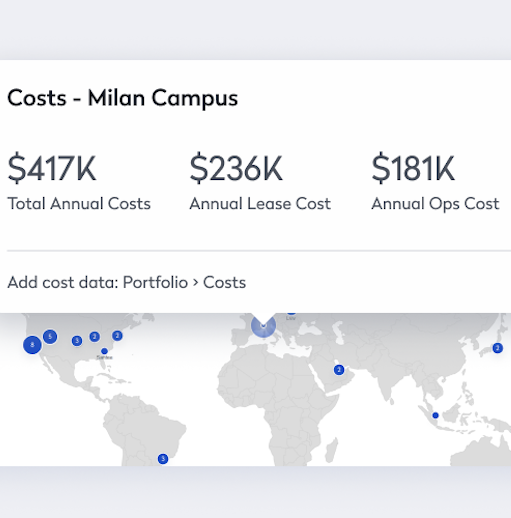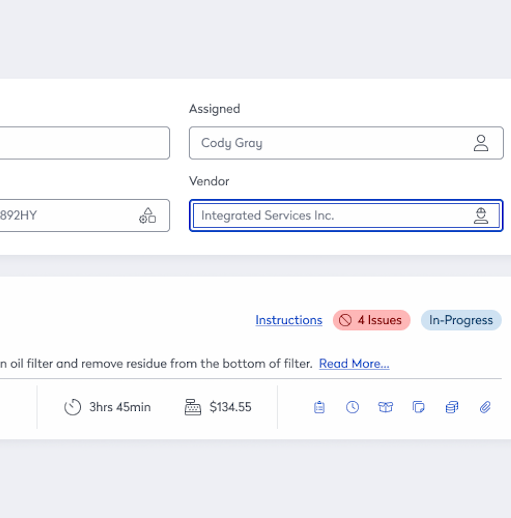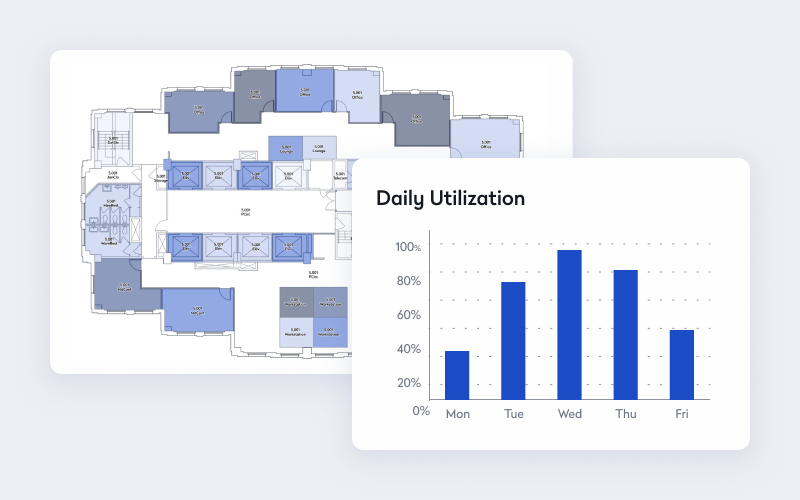
Facility and workplace decisions rarely depend on one source of information. Deciding whether to repair or replace an asset, for example, can involve its maintenance history, current condition, effect on operations, available capital, and the needs of the people using the building.
Having the records available does not settle the decision, though. Teams must interpret the evidence, account for operational context, involve the people who understand the situation, and agree on a response.
Throughout the discussions we saw this month, workplace, facility, and asset management leaders have returned to those practical questions. They are looking at how organizations can keep plans current, use AI without giving up professional judgment, and make operational changes that work for the people affected by them.
Key takeaways
- Connected data still needs operational context: Work orders, asset histories, utilization information, and capital plans become more useful when teams interpret them together and understand how one condition affects another
- Continuous planning helps facilities teams adapt: Regular reviews give teams opportunities to validate assumptions, respond to changing priorities, and keep facilities strategy connected to organizational needs
- AI should support professional judgment, not replace it: AI can summarize information and identify patterns, but people must set the goals, evaluate recommendations, establish guardrails, and remain accountable for decisions
Connected operational intelligence depends on more than integrating systems. Organizations also need reliable data, shared definitions, clear decision-making processes, and people who understand the operational environment.
How FM moved from records to connected operational intelligence
Facility management has always depended on information, but the role of that information has changed. For decades, many teams managed operations through paper records, spreadsheets, institutional knowledge, and periodic assessments stored by building, department, system, or individual.
Computerized maintenance management systems, workplace platforms, building controls, and specialized point solutions digitized more of that work. The trade-off was a new type of fragmentation: Organizations had more data, but it lived across more systems.
For some, integration followed. Platforms and application programming interfaces moved information between systems, while dashboards gave leaders a broader view of workplace and operational performance.
Our new Workplace Index report shows how far the industry has progressed, with 67.1% of managers reporting a mostly or completely unified view of space, occupancy, services, assets, and visitors. Yet 41.5% say workplace decisions often or very often rely on assumptions instead of live data, while 34.1% say inconsistent information often or very often slows decision-making.
Connected information still needs consistent definitions, operational context, and a process for deciding what happens next.
AI adds another stage. Technology can summarize records, identify patterns, compare scenarios, and surface risks faster than manual analysis. The question now is whether organizations can turn that intelligence into timely, defensible, and coordinated responses.
Connect the evidence before asking technology to interpret it
For asset and facilities teams, a reliable operating picture begins with knowing which assets they manage, where those assets are located, what condition they are in, and how their maintenance histories affect current and future priorities.
Accurate asset data provides the foundation. In “‘Bring All These Data Together’ – Facility Condition Assessments & Breaking Down Data Silos in Facilities Management ” Monisa Manju Nagarajan Gomathi, senior project manager for Facility Services at Terracon, talks about how organizations cannot build strong maintenance programs, replacement forecasts, or investment plans without an accurate asset inventory.
Facility condition assessment data can also support preventive maintenance, inventory management, and computerized maintenance management system implementation. Work orders, asset records, capital plans, service requests, and utilization information each add context to the decisions facilities teams make.
AI can accelerate that analysis, but it cannot compensate for an unreliable foundation.
Drew DePriest, MCR.w, director of Workplace Services Vendor Management at Salesforce and a member of the IFMA Global Board of Directors, describes AI as a practical colleague in “‘Let’s Keep On Moving’ – AI, Curiosity, and the Future of FM.” It can identify patterns, gather context, and help leaders find a better place from which to make a decision.
“AI thrives on high quality of information,” Drew says.
Asset histories, warranty records, vendor details, space definitions, and maintenance information require consistent stewardship. AI can identify gaps, but facilities professionals still need to validate outputs against operational reality.
Data governance, shared definitions, and operational context determine whether teams can use connected information with confidence.
Make planning a continuous operational rhythm
Operational evidence stays useful when leaders revisit it regularly. A static plan can quickly lose relevance as organizational priorities, employee expectations, budgets, assets, and technologies change.
Strategic facility planning consultant Alana Dunoff, ProFM, FMP, IFMA Fellow, offers a useful model in “‘Preventative Planning’ – Continuous Facility Management Strategy, Agility and the Future of the Built Environment.” She recommends treating strategic planning more like preventive maintenance.
Instead of returning to a major plan years later, teams can establish a monthly or quarterly rhythm for reassessing priorities and staying connected to the business.
“The plan is a snapshot in time,” Alana says.
The planning process prepares teams to adapt. It requires them to collect evidence, speak with stakeholders, consider scenarios, and understand how facilities support organizational objectives.
Cross-functional teams can use a regular cadence to compare evidence, test assumptions, and adapt before changing conditions become urgent. Each review can focus on what changes, which assumptions require validation, and which operational signals require action.
Give people context and authority to make change work
Organizations often describe transformation as a technology challenge. Employees experience changes to their responsibilities, workflows, relationships, and sense of control.
Planhat CEO and co-founder Kaveh Rostampor argues that organizations should automate repetitive and low-value activities so people can focus on strategy, decisions, customer relationships, and problem-solving. In “‘Leaning In’ – Embracing Change, Leading with Courage, and Enabling Workplace Innovation,” he also emphasizes that leaders need to connect individual work to broader organizational goals.
“The leader’s job is to help create context for their employees to understand why they are there in the first place,” Kaveh says.
Automation can change who reviews information, when teams make decisions, and where accountability sits. People participate more constructively when they understand the intended benefit, the system’s boundaries, and which decisions remain theirs.

Drew’s concept of the “human at the helm” provides a useful model. AI may analyze information, summarize records, or propose a next step. Leaders still define the goal, establish guardrails, validate the result, and remain responsible for the outcome.
Our Workplace Index report shows why visible human control matters. While 58.2% of managers report strong confidence in AI-generated workplace insights, only 19.5% of employees trust AI-powered recommendations or automated actions completely or most of the time. Employees say override capability, evidence of sustained accuracy, human intervention, and review before action would increase their trust.
Responsible implementation requires transparency, clear approval points, feedback channels, and employee involvement alongside technical accuracy.
Coordinate technology around a purposeful human experience
Operational coordination should improve how work happens, not simply process tasks faster. Systems that clarify space, service, and asset performance should ultimately support environments where people can focus, collaborate, build relationships, and accomplish the work they came to do.
In “‘You Have a Role to Play’ – Leading the Culture Journey to Create Extraordinary Workplaces,” co-founder and chief visionary officer Natalie Johnson argues that workplace culture develops through everyday relationships, conversations, reactions, and choices.
“Innovation does not always equate to efficiency,” Natalie says. “It takes more time. It takes an intentional connection and seeking to understand other people.”
Removing repetitive work should create more time for judgment, collaboration, and relationship-building.
Workplace strategy offers another view of the issue. In “‘Don’t Commute to Compute’ – Real Estate Strategy, Workplace Experience, and the Future of Facility Management,” the EMEA CEO and global head of Portfolio Services, Work Dynamics at JLL, argues that real estate has become a strategic business function that influences employee experience, agility, culture, talent, and performance.
A commute-worthy workplace gives employees access to purposeful environments, collaboration, informal interaction, inclusive settings, and experiences that are difficult to reproduce elsewhere, while connected operational intelligence gives leaders a clearer view of where the environment supports performance and where recurring friction works against it.
Stay on top of the trends in intelligent worktech and facility management
Workplace and facility management are constantly evolving with new technologies, regulations, and best practices. Industry professionals always have something new to learn.
For more videos, podcasts, and webinars to keep you updated on the latest trends, visit Eptura’s resource page.
Frequently asked questions
By Mike Petrusky
As Director of Podcasts at Eptura, Mike Petrusky hosts both the Workplace Innovator Podcast and the Asset Champion Podcast, sharing thought leadership with CRE, FM, and IT leaders in the digital and hybrid workplace. Mike has produced more than 500 podcast episodes listened to in over 111 countries. As an in-demand public speaker, Mike engages audiences at numerous industry events each year, including International Facility Management Association and CoreNet conferences, focusing on the human element of workplace and facility management.