


The term “workplace experience” is everywhere. Some companies include it as part of their hiring process, with questions like “What do you want out of a workplace experience?” It’s even a formal job title—the Workplace Experience Manager (different from a Chief Experience Officer, which is customer-facing). The question is, what is workplace experience and why does it warrant so much attention?
What is workplace experience?
Workplace experience is the sum of interactions an employee has with their workplace. It encompasses how comfortable and welcome they feel, how productive they’re able to be, and how fulfilled they feel as an individual. Workplace experience is the metric that bridges the gap between an employee and their workplace. But the workplace isn’t strictly physical. Workplace experience also encompasses an employee’s digital interactions.
To create a ubiquitous, positive workplace experience, companies need to meet the expectations of employees from both sides: digital and physical.
The physical workplace experience
Physical workplace experience starts the moment your employees walk in the door. Every physical interaction they have with the building and the workplace affects their experience. This can shape everything from their attitude about work to their feelings toward the company. Here’s a couple hypotheticals that show the impact of positive and negative experiences:
Negative
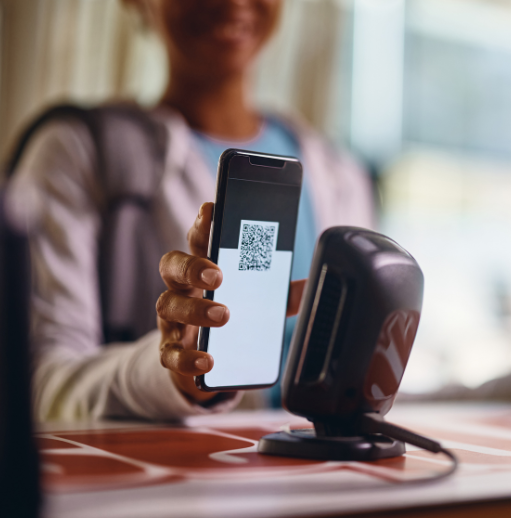
Jim’s ID badge never seems to work on the first swipe. The elevator to his third-floor workplace is constantly out of commission. When he finally gets upstairs, there’s never enough hot desks, and he always ends up sitting in a small conference room until he’s forced to move. Around 3 p.m. every day, the glare from the west-facing windows is so bad he can’t see his computer screen. Throughout the day, Jim faces small inconveniences that add up to a loss of motivation, productivity, and morale. He’s constantly behind on work and never feels comfortable.
Positive
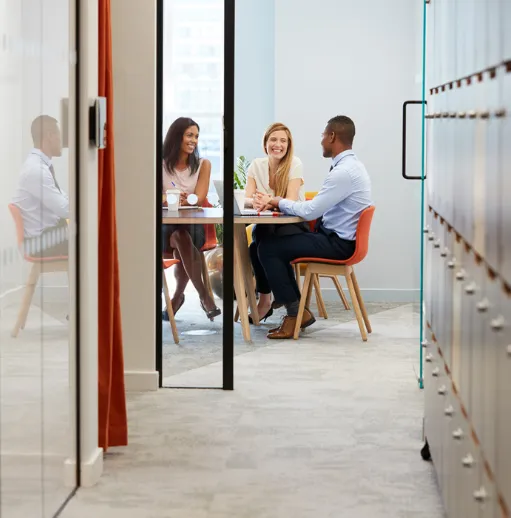
Lynn never has any trouble finding a workspace, and she’s always comfortable thanks to her company’s investment in quality furniture. She’s got free roam of the first and second floors, which her department (Marketing) shares with Product Engineering and Sales—the two groups she collaborates with most often. There’s also a café and micro market on the first floor next to a breakout area, where she and her colleagues often brainstorm over lunch. Her workplace is generally upbeat, with positive energy and personality. As a result, she’s always motivated and able to focus, never far from the people or resources she needs.
These are extremes, but they show how the physical workplace experience affects employees. If it’s hard for people to settle in or their interaction with the workplace is fraught with inconvenience, you can’t expect them to have a good experience. Conversely, a good experience comes from frictionless interaction and broad accommodation. In either case, there’s a direct correlation to factors like mood, productivity, and efficiency.
The digital workplace experience
The digital workplace experience encompasses every interaction employees have with the technologies involved in their work. This includes Wi-Fi, the cloud, and individual apps. Like physical workplace experience, the goal for the digital workplace is frictionless interaction.
Can employees connect to the Wi-Fi and is the network reliable? Do their applications work as intended? Is the software they’re using up-to-date with the newest features? Do they have proper credentials and licenses for proprietary software? There are dozens of questions companies need to ask themselves about employee interaction with technologies—each as important as the last.
Ultimately, technology needs to make work simpler and seamless for employees. If they’re battling tech, it becomes a negative experience that detracts from their work. This can be a struggle for companies, since tech is constantly evolving and new solutions enter the workplace. Like the rise of the Workplace Experience Manager, the prevalence of Chief Technology Officers (CTOs) at growing companies has also increased for this reason.
Digital workplace experience comes down to two simple questions. Do you provide the technologies people need to do their jobs well? Do those technologies work as expected?
Can you measure workplace experience?
To understand how employees feel about their workplace, companies need to adopt workplace experience software. While it’s hard to quantify workplace experience, software can shed light on important metrics and trends that affect it, such as:
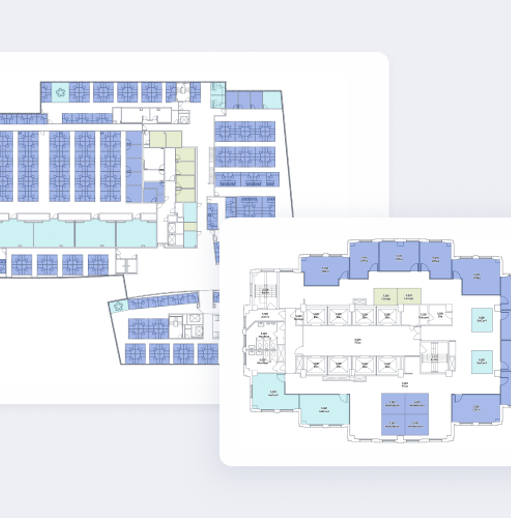
- Space usage rates that provide insight into the workspaces employees need
- Scheduling data that shows how often employees use certain workspace types
- Wayfinding data that helps people find each other and navigate the building with ease
- Support and maintenance ticketing rates, to understand problems employees face
The more data you collect about how employees interact with the workplace, the clearer their experience becomes. Less interaction can signal difficulties and shortcomings with the workplace; high utilization and diverse interaction points to a positive experience. Best of all, there are metrics for both physical and digital aspects of the workplace, to help gauge all-around experience.
How do you shape workplace experience?
Think of what it means to have a positive experience—be it with a place, a product, or even another person. You want to walk away feeling positive and fulfilled, like your time was well-spent. It’s the same for workplace experience.
The challenge is to expand this feeling beyond any one single person, to encompass every employee. Regardless of how they interact with it, every person needs to get what they need from your workplace. It’s a tall order. Thankfully, a good workplace experience isn’t difficult to achieve when you break down the two major components: the digital and the physical.
Keep reading: Relying on your senses to increase workplace productivity

By Jonathan Davis
As a content creator at Eptura, Jonathan Davis covers asset management, maintenance software, and SaaS solutions, delivering thought leadership with actionable insights across industries such as fleet, manufacturing, healthcare, and hospitality. Jonathan’s writing focuses on topics to help enterprises optimize their operations, including building lifecycle management, digital twins, BIM for facility management, and preventive and predictive maintenance strategies. With a master's degree in journalism and a diverse background that includes writing textbooks, editing video game dialogue, and teaching English as a foreign language, Jonathan brings a versatile perspective to his content creation.