



Facility managers at government agencies will need to navigate converging pressures in 2026. Security baselines are tightening, procurement is changing, and return-to-office (RTO) policies are complicated by space constraints and deferred maintenance backlogs. By starting to plan now, you can build a practical roadmap to deliver the right facilities footprint, at the right cost, with the right controls.
Key takeaways
- Budget-driven decisions unlock measurable savings: Reduce costs by divesting underutilized buildings and implementing proactive maintenance programs. Tie consolidation and efficiency gains to budget lines to build compelling ROI cases for funding approvals
- Federal space utilization mandates require real-time occupancy data: Implement Integrated systems that capture badge swipes, booking data, and sensors that prove compliance with federal requirements and support headcount-to-seat modeling for evolving RTO policies
- Streamlined procurement starts with prioritizing workplace outcomes over features: Use security frameworks to pre-screen vendors, then evaluate platforms on occupancy tracking, intelligent booking, asset management, and automated compliance reporting rather than features alone
Federal office space averaged just 71% utilization in fiscal year 2024, well below the General Services Administration ‘s 80% target, while a Government Accountability Office report found that 17 of 24 agencies used 25% or less of their headquarters buildings’ capacity. American taxpayers spend roughly $5 billion annually leasing federal buildings and another $2 billion operating them, even as these facilities sit largely empty. GSA estimates that divesting underutilized properties could save more than $430 million in annual operating costs.
Behind the utilization crisis lies a likely even larger problem: There’s an exploding maintenance backlog. GAO’s 2025 High Risk List flagged building condition as a critical issue because total repair backlogs for Department of Defense and civilian federal facilities have more than doubled, rising from roughly $171 billion to $370 billion. GSA alone reports a deferred maintenance backlog exceeding $17 billion in 2025, up from $6.1 billion in FY 2024 and just $1.39 billion in 2017.
Meanwhile, in Canada the three-day RTO directive has slowed plans to offload surplus office space, forcing facility managers to recalibrate space models.
How to turn pressure into progress: A practical roadmap for 2026
These converging challenges, tight budgets, rising backlogs, utilization mandates, and RTO compliance, aren’t going away. Facility managers who act now, though, can turn regulatory pressure into strategic advantage.

The key is drawing a roadmap that connects three priorities: funding modernization through measurable ROI, matching space to headcount with data, and streamlining procurement with compliance-ready vendors.
Budget and ROI: Build business cases around outcomes, not features
The fiscal environment remains tight. In the United States, the administration is scrutinizing underused space and asking agencies to dispose, consolidate, or sell properties to cut maintenance and lease costs. For example, the Defense Department is targeting a 30% lease cost reduction by shifting personnel into existing installations. In Canada, municipalities and transit agencies are freezing taxes or fares while confronting large backlogs of repairs projects.
To win funding in this climate, you should frame your business case around workplace outcomes that directly reduce costs.
Consolidation savings
Better space utilization creates immediate opportunities to reduce your real estate footprint. When you can prove that occupancy data supports consolidation, you unlock the ability to terminate leases, close underutilized floors, or negotiate better terms on renewals.
These moves then translate directly into reduced rent payments and lower utility costs. The key is tying your space-reduction plan to specific budget line items to show decision-makers exactly which costs disappear when you consolidate. It also means quantifying secondary savings like reduced cleaning contracts, fewer building management staff, and lower energy consumption across a smaller footprint.
Maintenance efficiency
Preventive maintenance and modern audit systems don’t just keep buildings running. In fact, they fundamentally change your cost structure. By shifting from reactive repairs to planned maintenance, you reduce emergency service calls that drain budgets and disrupt operations.
Audit-ready logs and automated workflows then cut the time your team spends preparing for compliance reviews, which means less overtime and fewer consultant fees. Over time, this approach also reduces long-term liabilities by catching problems early, extending asset life cycles, and avoiding costly capital replacements.
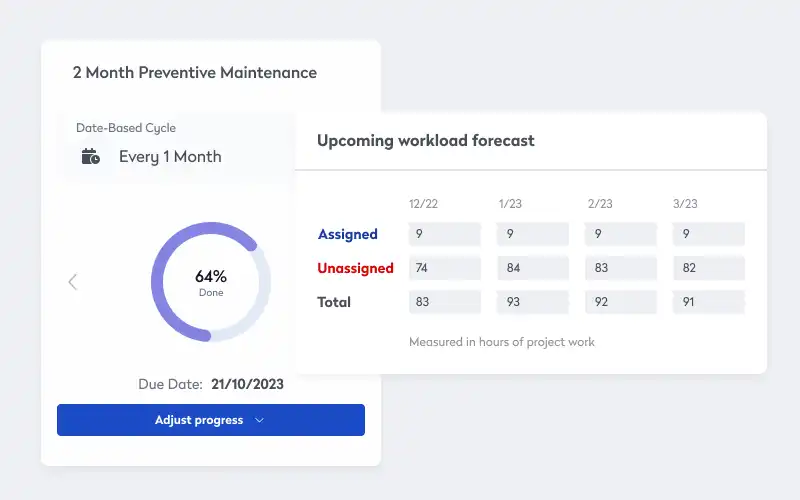
When you present preventive maintenance plans to budget reviewers, frame it as risk reduction with a strong financial upside.
Service delivery
At the same time, you shouldn’t be looking to consolidate all your space. Mission-critical facilities like public-facing counters, inspection sites, and emergency operations centers must remain operational even as your overall footprint shrinks.
The challenge here is proving that you can maintain or improve service levels within a smaller space. You need to demonstrate how smarter scheduling, better resource allocation, and technology-enabled workflows let you serve the same number of people with less square footage.
When you show that service quality improves while costs decline, you build a compelling case that resonates with both operational leaders and budget authorities.
Try to connect every outcome to measurable annual savings in rent, maintenance, and utilities, and align them with policy mandates so funding reviewers can clearly see how your plan delivers compliance and cost reduction simultaneously.
Workplace and RTO: Match space to headcount and prove it with data
Many governments are struggling to reconcile RTO mandates with underutilized space. In some cases, there’s not enough space in the right places. In the United States, for example, the GSA is pushing occupancy measurement, consolidation, and deeper portfolio reviews to move agencies into fewer, fuller buildings. At the same time, rapid lease terminations have triggered some re-planning because some closures affected public-facing locations.
Canada’s federal RTO directive requires three days a week in office, which lowered earlier plans to dispose of half the office portfolio, and departments now target roughly one-third reduction while updating headcount and space models. Provinces face their own constraints: Ontario unions report there’s not enough office space to meet increased in-office requirements, forcing ad-hoc seating and short-term leases.
For facility managers, the takeaway is clear: workplace planning is now mission critical.
Build an accurate headcount-to-seat model
Start with data, not assumptions. Create a headcount-to-seat model that accounts for location, floor, and team, and then update it as RTO policies evolve.
You’ll need to know:
- Who needs to be in the office
- When they need to be there
- How much space they require
The model should be granular enough to reveal mismatches between capacity and demand, whether that’s excess space in one building or overcrowding in another. When your model is accurate, you can make confident decisions about consolidation, swing space, or distributed hub-and-spoke layouts without guessing.
Create occupancy baselines with real data
Manual headcounts and spreadsheets can’t keep up with dynamic RTO policies. So, use badge swipes, booking systems, and sensor data to establish accurate occupancy baselines. It’s the data that lets you see utilization trends over time, identify peak and off-peak periods, and spot buildings or floors that consistently underperform.
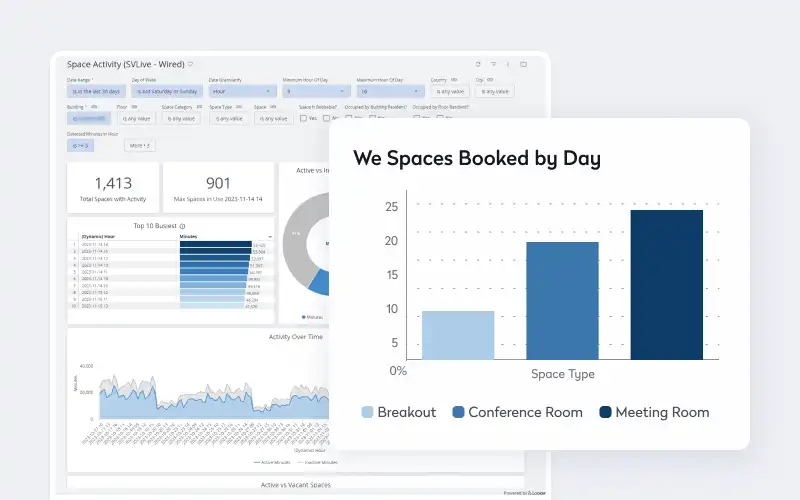
More importantly, it gives you defensible evidence when budget reviewers or leadership question your space decisions. For example, the Office of Management and Budget specifically calls for daily occupancy tracking and common utilization metrics, which means you need systems that integrate building access, IT logins, and reservations to produce compliance-ready reports.
Plan scenarios for multiple futures
RTO policies are shifting, and your space plan needs to be flexible. Develop scenarios for consolidation, expansion, and hybrid models, so you’re not caught flat-footed when mandates change.
Make sure you’re modeling what happens if occupancy increases, decreases, or stays flat. Each scenario should include cost implications, timeline estimates, and operational impacts. When you can quickly answer what-if questions with data-backed scenarios, you position yourself as a strategic partner rather than a reactive operator.
Compliance and selection: Streamline procurement to meet standards and improve workplace outcomes
Often the fastest way to accelerate vendor selection is to anchor your RFP to the outcomes that matter most for facilities, including occupancy accuracy, flexible desking, scheduling, inspections, and asset lifecycle management, and not just software features.
Next, use recognized security frameworks to pre-screen vendors and reduce procurement cycles.
United States: Leverage the Federal Risk and Authorization Management Program (FedRAMP) to shortlist faster
FedRAMP creates a standardized approach for security assessment, authorization, and continuous monitoring of cloud services used by federal agencies. The program is evolving to remove bottlenecks and expand marketplace listings, which means agencies can reuse existing authorizations instead of re-auditing security controls from scratch.
For facility managers at U.S. government agencies, this creates a practical, dependable shortcut. You can shortlist FedRAMP-authorized platforms, then spend your evaluation time on workplace capabilities like occupancy tracking, reservation systems, and inspection workflows rather than re-proving cybersecurity baselines.
Canada: Use Cloud Guardrails as a baseline
Canadian departments must implement GC Cloud Guardrails within the first 30 business days of activating a cloud account, with Shared Services Canada validating compliance. Recent updates reaffirm the guardrails as a mandatory standard, which means you can use them as table stakes when evaluating vendors.
Focus your selection process on how well vendors help facility managers measure occupancy, assign seats, schedule inspections, and maintain audit readiness. The guardrails ensure baseline security is covered, so your RFP can prioritize workplace outcomes that directly support space optimization and operational efficiency.
European Union: Align with Network and Information Systems Directive 2 (NIS2) requirements
With NIS2 now driving uniform risk management and incident reporting requirements, many public bodies are prioritizing solutions that demonstrate NIS2-aligned controls and clear incident workflows.
Agencies are leaning on NIS2 and national requirements while broader certification frameworks evolve. For procurement, this means vendors should be able to show how their platforms support compliance with NIS2 obligations, particularly around incident detection, reporting, and business continuity, while delivering the workplace functionality you need for space management and occupancy tracking.
Regardless of jurisdiction, your selection criteria should require vendors to prove they can capture occupancy data from multiple sources like badge swipes, network activity, and sensor feeds and translate that data into actionable insights.
Look for platforms that support headcount-to-seat modeling, desk and room booking, preventive maintenance automation, and integration, for example with access control, with your existing building systems. Then map those capabilities directly to your RTO targets, consolidation plans, and utilization mandates.
How a modern unified platform connects planning, operations, and compliance
The right platform delivers the tools you need to plan smarter, operate leaner, and prove results. Modern facility management solutions integrate data from across your operations, including space utilization, reservations, maintenance, compliance, and portfolio analytics, into a unified system that supports both day-to-day decisions and long-term planning.
Core capabilities that can help you meet government mandates include:
- Real-time occupancy analytics and strategic space planning: Real-time dashboards and scenario planning tools visualize utilization trends, integrate sensor data, and let you model consolidation options before committing resources. Advanced analytics reveal usage patterns and mismatches, turning occupancy data into actionable decisions
- Intelligent reservation and flexible scheduling: Desk and room booking systems with policy-based rules and mobile access reduce friction, enforce priority access for critical teams, and provide real-time availability data that prevents conflicts while feeding insights back into space planning
- Proactive asset and maintenance life cycle management: Preventive maintenance scheduling and centralized work order management automate recurring tasks, speed response times, and support life cycle tracking for capital planning. Detailed histories and automated reminders keep teams ahead of problems and reduce total cost of ownership
- Automated compliance and audit readiness: Automated audit logs, configurable workflows aligned with FedRAMP, GC Cloud Guardrails, or NIS2, and built-in reporting templates make compliance faster and less disruptive, with role-based controls providing evidence for auditors
- Data-driven portfolio and capital planning: Portfolio analysis tools visualize occupancy and cost trends, while capital planning modules prioritize projects based on risk and ROI. Integration with financial systems and scenario modeling support smarter investment and divestment decisions
When you combine these capabilities in a unified platform, you gain the visibility and control needed to meet utilization mandates, reduce costs, and prove compliance, all while delivering better service with the same or less space.
Turn pressures into progress at government facilities in 2026
Government facility managers face converging challenges: utilization mandates, growing maintenance backlogs, and RTO policies that require precise space planning. When you anchor budget decisions to measurable ROI, match space to headcount with real occupancy data, and streamline procurement around compliance-ready platforms, you can meet these requirements effectively.
Frequently asked questions

By Jonathan Davis
As a content creator at Eptura, Jonathan Davis covers asset management, maintenance software, and SaaS solutions, delivering thought leadership with actionable insights across industries such as fleet, manufacturing, healthcare, and hospitality. Jonathan’s writing focuses on topics to help enterprises optimize their operations, including building lifecycle management, digital twins, BIM for facility management, and preventive and predictive maintenance strategies. With a master's degree in journalism and a diverse background that includes writing textbooks, editing video game dialogue, and teaching English as a foreign language, Jonathan brings a versatile perspective to his content creation.