


European manufacturers are operating in a much different regulatory environment than they were just a few years ago. The Corporate Sustainability Reporting Directive (CSRD) expanded sustainability reporting requirements from roughly 11,700 organizations to approximately 50,000, while the revised Industrial Emissions Directive introduced stricter environmental monitoring and reporting requirements for industrial installations across Europe. Meanwhile, the Carbon Border Adjustment Mechanism (CBAM) is increasing scrutiny around emissions-related reporting throughout manufacturing supply chains.
While these regulations originate in Europe, many manufacturers operate across EMEA supply chains and facility portfolios, meaning sustainability reporting, emissions tracking, and compliance requirements often influence operational processes well beyond the EU.
The result is a growing demand for accurate, auditable operational data. Research from the European Central Bank found that 60% of euro-area firms view stricter climate regulations and related transition risks as important business concerns over the next five years.
For manufacturing leaders, the challenge lies in demonstrating compliance across multiple facilities, systems, and teams.
Key takeaways
- Centralized operational data helps manufacturers support ESG reporting, audits, and compliance reviews using the same records generated through everyday operations
- Consistent inspections, maintenance processes, and documentation standards across facilities create more reliable and defensible compliance records
- Connecting asset data, maintenance histories, and corrective actions gives teams the visibility they need to meet growing regulatory requirements across Europe
As ESG and asset compliance requirements become more demanding, centralized operational data is becoming essential for creating the consistent, audit-ready records that regulators, customers, and stakeholders increasingly expect.
How to build ESG reporting on top of operational processes
Many manufacturers already have strong maintenance programs, inspection processes, environmental controls, and compliance workflows. The issue, though, is that ESG reporting often develops alongside those activities rather than being built on top of them.
When reporting deadlines arrive, sustainability teams begin requesting information from multiple departments. Maintenance teams pull work histories. Facility managers gather inspection reports. Compliance teams look for evidence supporting corrective actions. Operations leaders review performance metrics. Everyone has a piece of the story, but assembling the full picture can become a project of its own.
Consider a facility that reports improvements in environmental performance over the course of a year. Behind those results are hundreds, sometimes thousands, of operational activities. Technicians completed preventive maintenance. Teams inspected environmental controls. Deficiencies were identified and corrected. Equipment performance was tracked over time. Those activities generated the records needed to support future reporting long before anyone started drafting ESG disclosures.
When teams wait until reporting season to connect inspection records, maintenance histories, and compliance documentation, reporting becomes far more time-consuming than it needs to be. The more practical approach is to make operational records work harder.
Inspection histories, maintenance documentation, corrective actions, asset records, and facility information should already support operational decision-making. When those records remain connected throughout the year, they can also support ESG reporting, environmental compliance requirements, customer audits, and internal reviews without requiring separate documentation exercises for each initiative.
Reporting expectations continue to rise. PwC’s study of early CSRD reporting found that more than 70% of investors believe organizations should integrate sustainability directly into business strategy. As scrutiny increases, manufacturers need reporting processes grounded in operational evidence instead of annual data-collection exercises.
How to create consistent compliance records across multiple facilities
Consider this common situation: A manufacturer with facilities across Europe and the broader EMEA region begins preparing ESG disclosures under CSRD. The sustainability team needs maintenance histories for critical assets, inspection records tied to environmental controls, and documentation showing corrective actions were completed.
Every facility has the information. The challenge is creating a consistent record that leadership, auditors, and sustainability teams can trust across all of them.
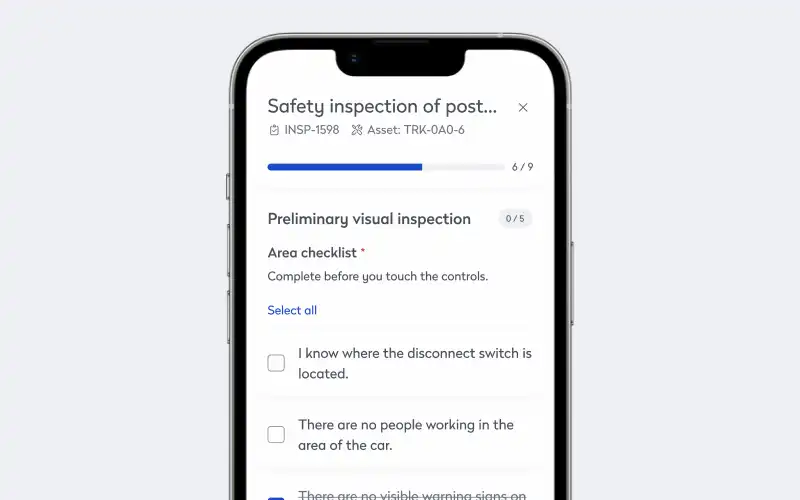
One site documents inspections in a dedicated system. Another relies on spreadsheets. A recently acquired facility uses different asset naming conventions. Maintenance activities are recorded using different terminology depending on the location. Every team is doing the work. Every team is creating records. Yet leadership still struggles to create a consistent view across the organization.
These challenges are especially common in manufacturing because organizations often grow through regional expansion, acquisitions, and the addition of new facilities over time. Sooner than later, that inconsistency appears during compliance reviews, ESG reporting initiatives, and audits.
Leadership wants to understand compliance status across the portfolio. Sustainability teams need comparable information across locations. Internal auditors need confidence that processes are being followed consistently from one facility to the next. Records that make perfect sense locally can become difficult to compare at an organizational level.
Before investing in new reporting layers, manufacturers should evaluate how information is generated across facilities by asking themselves:
- Are inspections documented the same way at every site?
- Do facilities follow the same corrective-action process?
- Can maintenance records be compared across locations?
- Are asset naming conventions consistent?
- Can compliance records be reviewed without extensive manual reconciliation?
Standardization may not sound as exciting as analytics or reporting technology, but it often delivers more value. Consistent processes create consistent records. Consistent records create information that leadership can trust when making decisions about risk, compliance, and operational performance.
How to use centralized data to support audits and inspections
Audit preparation remains one of the clearest examples of why centralized operational information matters. Imagine a compliance review involving a critical emissions-control asset. Auditors want to understand whether inspections were completed on time, whether deficiencies were documented, what actions were taken to address issues, and whether the asset remained compliant over time.
The records often exist. The problem is that they may exist in five different places.
Inspection histories might live in one system. Work orders may live elsewhere. Asset information may sit in a separate database. Supporting documentation may be attached to emails or stored in shared directories. By the time someone assembles everything, considerable effort has gone into gathering information rather than reviewing it.
The revised Industrial Emissions Directive framework places greater emphasis on monitoring, reporting, documentation, and transparency, making this challenge even more important for industrial organizations operating in Europe.
Centralized operational information makes it easier to move from gathering records to understanding what those records are telling you.
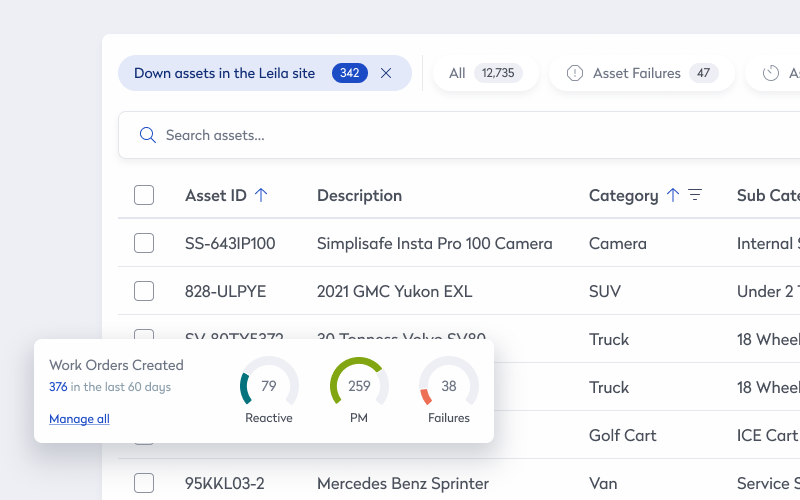
Instead of treating inspections, work orders, asset histories, corrective actions, and compliance records as separate pieces of information, manufacturers can create a shared operational record that provides context around the work performed. Teams can see what happened, when it happened, why it happened, and how issues were resolved without reconstructing the history manually.
Audit preparation becomes easier, but the benefits extend much further. Operations leaders gain visibility into recurring problems. Facility managers can identify trends across multiple locations. Compliance teams spend less time gathering evidence. Sustainability teams have easier access to information supporting reported outcomes.
The value here comes from understanding relationships between records rather than reviewing them in isolation.
How to make inspections, maintenance, and corrective actions easier to track
One of the most common causes of compliance friction is losing visibility as work moves between teams. So, an inspection identifies a problem. A corrective action is assigned. Maintenance work is scheduled and completed. Documentation is created along the way. Months later, someone needs to understand how the issue was resolved.
At that point, the organization isn’t solving the original problem. It’s trying to reconstruct a history of events.
Manufacturers can reduce that effort by ensuring inspections, maintenance activities, corrective actions, and supporting documentation remain connected throughout the lifecycle of the work.
Take an environmental inspection that identifies an issue with an emissions-control asset. The finding should remain connected to the asset involved. Any corrective action should remain linked to the inspection. Maintenance work should remain linked to both. As documentation is added, it should become part of the same operational record.
The result is a clear chain of information showing:
- What was found
- When it was identified
- What action was assigned
- When the work was completed
- Which assets were affected
- What evidence supports the outcome
Maintenance teams gain stronger asset histories and a better understanding of recurring issues. Compliance teams gain faster access to supporting evidence. Facility leaders gain improved visibility into asset performance. Sustainability teams can reference operational records that already contain the documentation needed to support disclosures.
Creating a stronger compliance foundation across EMEA operations
For manufacturers operating across Europe, the challenge is rarely a single regulation. Facilities often need to satisfy a combination of ESG reporting requirements, environmental regulations, customer audits, internal governance standards, and country-specific compliance obligations. As operations expand across countries, facilities, and business units, maintaining consistent records becomes just as important as generating them.
A centralized operational record helps create that consistency. By connecting asset information, maintenance histories, inspections, corrective actions, and compliance documentation, manufacturers can improve visibility across facilities while reducing the effort required to support reporting, audits, and regulatory reviews.
See how a semiconductor manufacturer improved visibility into assets, maintenance activities, and operational processes across its facilities.
Frequently Asked Questions

By Jonathan Davis
As a content creator at Eptura, Jonathan Davis covers asset management, maintenance software, and SaaS solutions, delivering thought leadership with actionable insights across industries such as fleet, manufacturing, healthcare, and hospitality. Jonathan’s writing focuses on topics to help enterprises optimize their operations, including building lifecycle management, digital twins, BIM for facility management, and preventive and predictive maintenance strategies. With a master's degree in journalism and a diverse background that includes writing textbooks, editing video game dialogue, and teaching English as a foreign language, Jonathan brings a versatile perspective to his content creation.