


Facility and maintenance managers at large enterprises faced familiar barriers this past year. Legacy systems scattered data across disconnected dashboards, tight budgets limited technology investments, and training programs couldn’t keep pace with AI innovations. As organizations expanded return-to-office, the mid-week mountain strained space utilization, cleaning operations, visitor management, and maintenance workflows, according to Eptura’s latest Workplace Index report.
The report’s key insight, though, is that the right combination of integrated programs, streamlined processes, and a unified, AI-backed solution can transform operational constraints into competitive advantages.
Key takeaways
- Data fragmentation blocks progress across facility and workplace management: 58% of organizations identify multiple data dashboards as their biggest analytical challenge, forcing 37% to dedicate 11 or more FTE solely to manual data collation and reporting.
- ROI models succeed when they speak to every department’s priorities: By tailoring your model to address these specific goals, you transform workplace technology from a facilities expense into a strategic enterprise investment
- Adoption depends on intuitive platforms and role-specific training: Selecting vendors with strong documentation and user-friendly design accelerates implementation, while role-specific training ensures each user group gains skills that apply directly to their responsibilities
For facility managers and workplace leaders, one of the most important findings from the report was that 34% of businesses plan to increase the number of days employees spend in the office, creating new pressure on already-stretched operations. At the same time, over 50% of organizations report that insufficient employee skill sets and inadequate cross-platform integration block their ability to deploy AI where they could deliver the most value.
The data challenges run even deeper. 58% of organizations identify multiple data dashboards as their biggest obstacle when analyzing operational data, forcing them to reconcile information manually across systems. Fragmentation creates real staffing consequences: 37% of businesses require 11 or more full-time employees (FTE) just to collate, analyze, and report on worktech data.
The gap between what organizations want to accomplish and what they can actually execute continues to widen, but integrated analytics, structured ROI models, and targeted training programs offer a clear path forward.
Recognize the roadblocks in your current environment
Even strong teams get stuck when workflows and data live in separate tools. Your first step is documenting where fragmentation costs you time, money, and stakeholder trust, then converting those findings into evidence you’ll use later when building your ROI model.
Take a hard look at reporting times and resources
If it takes days to reconcile numbers across multiple dashboards, you’re paying in labor costs and delaying critical decisions. Unified analytics reduce manual collation and give leadership cross-functional KPIs including occupancy rates, energy consumption, and maintenance costs so you can frame value beyond a single department.
Check for friction in maintenance management
When maintenance teams need to toggle between work-order apps, inspection tools, and asset lists, they fall back on inconsistent, unreliable tribal knowledge and end-of-day spreadsheet updates.
A structured audit can help you understand and quantify exactly where inefficiencies happen. Look at login frequency across multiple platforms, feature usage patterns, and completion rates for work orders. Low engagement often signals poor system adoption or configuration issues rather than resistance to technology.
Find where facility services don’t match demand trends
With in-office peaks run Tuesday through Thursday, it’s time to coordinate bookings, cleaning, visitor management, and energy programs. The mid-week mountain puts pressure on every operational function, and the data suggests the situation is set to worsen. In fact, the proprietary data in our report shows desk bookings per building increased 33% globally from 2023 to 2024.
Success starts with aligning stakeholders early, defining achievable goals look like for each department, and implementing resource planning that follows real demand patterns rather than fixed schedules.
Quick wins: Recognition phase
Start building your evidence base with straightforward actions that require minimal resources. Each one converts abstract inefficiencies into concrete numbers that strengthen your ROI narrative.
- Quantify reporting labor: Count the hours and number of contributors required for each monthly report, then translate that labor into costs. Use numbers to frame consolidation’s financial payback for leadership. When you show that five people spending two days each month reconciling data equals $50,000 annually in lost productivity, the business case becomes concrete
- Pull usage and performance data: Look at login frequency, feature utilization rates, and overdue ticket volumes to show where current workflows are failing. If technicians logged into the work order system only twice a week, but you’re generating daily tickets, that gap reveals the real problem
- Map demand patterns and service delivery: Track booking peaks, cleaning requests, visitor arrivals, and HVAC usage across the week. When you can show that 65% of desk bookings happen Tuesday through Thursday but teams are evenly distributing cleaning and energy schedules, for example, you’ve identified a clear opportunity to move from fixed operations to demand-based resource allocation
Between these steps and your baseline metrics, you create a fact-rich picture of where time and money are leaking. You’re setting up the foundation for your budget narrative.
Make the ROI case and secure budget
Winning budget approval starts with connecting labor savings, reduced downtime, and energy efficiency to a credible payback period while aligning outcomes to enterprise goals across departments.
Make your case with evidence you already own
Building a compelling business case can start with establishing baselines by auditing your tech stack, tracking user behavior, and identifying workarounds that signal system limitations. Data tends to have the loudest voice in the room. When you can demonstrate tangible evidence of inefficiencies, stakeholder resistance diminishes.

Document where current tools fall short, calculating the true cost of manual processes, and projecting savings from integrated workplace management solutions. Armed with real data from your own environment, you move from abstract ROI discussions to concrete decisions about where and when to invest.
Target your ROI model for maximum impact
Tailor your model to each stakeholder, so your CFO sees cost savings and payback timelines, your CHRO understands employee experience improvements, your CIO recognizes integration benefits, and your COO focuses on operational efficiency gains.
“Before you can align with others, you need to know where they’re heading and what’s pushing them there,” explains Erik Zink, vice president of corporate development and strategy, and Sarah Kilmartin, director of customer insight at Eptura, in “Eptura Insights: Adopting a value integrator mindset for CRE success,” where they cover connecting corporate real estate to larger organizational goals.
“Our advice for value integrators: Partner with the business leaders who manage the profit and loss statements that are paying for CRE. Look at who’s going to be most affected, negatively or positively, by the space and then identify the relevant senior leaders. In one successful use case, we’ve seen a CRE team create a role specifically to liaise with the business. They embedded that person inside the company to collect and share information about what was working and what needed improvement.”
Quick wins: ROI phase
With baseline metrics in hand, your next step is proving that integration delivers measurable returns. These three actions convert operational friction into financial impact that makes budget approval straightforward.
- Run a single-site payback model: Calculate license costs, implementation expenses, and training investments against quantified labor savings from preventive maintenance and reduced reporting time. Remember, a 14-month payback period with demonstrated ROI is far more compelling than vague promises of improved efficiency
- Share cross-functional KPIs: Define metrics that give each department clear ownership: occupancy utilization rates for workplace teams, energy reduction percentages for facilities, preventive maintenance completion rates for maintenance managers, asset uptime for operations, and total cost of ownership for finance
- Document the “cost of doing nothing” with hard numbers: Use baseline data to show hours per report, number of contributors involved, reactive-to-preventive maintenance ratios, and overdue work order percentages. By documenting current limitations, you create a compelling case that demonstrates measurable business costs that integration can eliminate
Your goal is to transform perceived complexity into a straightforward investment decision with clear outcomes, credible timelines, and quantified returns.
Train for transformation: Equip people to deliver success
58% of organizations cite insufficient employee AI skills set as a barrier to deploying new technology, according to our report. Technology only delivers return on investment when your people can actually use it in their daily workflows, so training needs to be role-specific and directly applicable to the work at hand.
Equip technicians with mobile-first capabilities
Give your field teams offline access to assigned work orders, barcode scanning for instant asset histories, and quick methods to update parts and materials as they complete tasks.
Mobile maintenance capabilities Increase productive wrench time and improve upstream data quality by eliminating end-of-day manual data entry. Modern mobile-first solutions empower technicians to capture accurate information at the point of service, reducing errors and enabling real-time visibility of maintenance operations.
Train managers on actionable dashboards
Focus on KPIs that matter most: on-time preventive maintenance completion, asset uptime percentages, and maintenance cost trends by location or asset type.
Your managers need to quickly identify patterns, spot problems early, and make resource allocation decisions based on real-time dashboard insights rather than week-old spreadsheets.
Support workplace teams with booking analytics
Connect desk and room reservation patterns to cleaning schedules and energy management rules. When your workplace coordinators can see that Tuesday through Thursday account for 65% of weekly bookings, for example, they can adjust service delivery accordingly rather than maintaining the same staffing levels all week long.
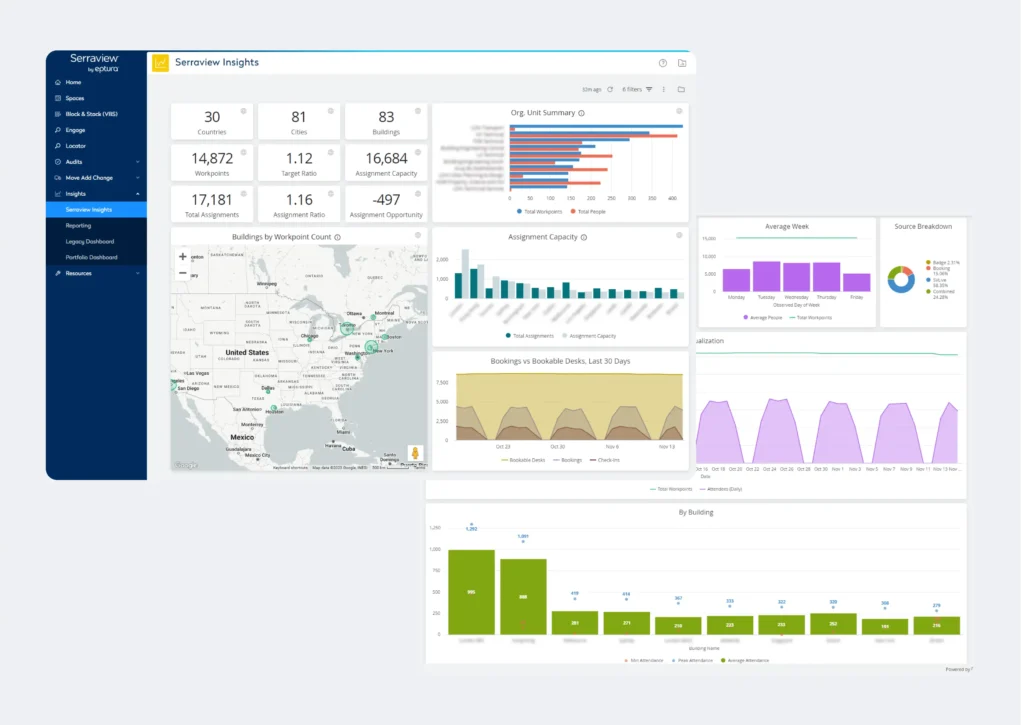
If adoption stalls, analyze login frequency, feature usage patterns, and support ticket volumes to pinpoint whether the issue is usability, configuration, or workflow fit. Address each with targeted changes rather than generic retraining sessions that don’t solve the actual problem.
Quick wins: Training phase
Success at this stage is closely connected to selecting the right platform and ensuring your teams can use it effectively from day one. These strategies set you up for smooth adoption and long-term performance.
- Choose a vendor with strong training resources: Select a platform backed by comprehensive documentation, dedicated training staff, and proven implementation support. A vendor with established training programs and resources helps you avoid building everything from scratch, accelerates onboarding, and ensures your teams have access to ongoing learning materials as needs evolve
- Prioritize intuitive, user-friendly software during selection: Make user-friendly design a core evaluation criterion, not an afterthought. When interfaces are intuitive and workflows feel natural, adoption happens faster and training requirements decrease. Test the platform with actual end users during the selection process to confirm it meets usability standards before you commit
- Ensure all training is role-specific: Tailor training to each user group’s daily responsibilities and workflows. Technicians need mobile work order training, managers need dashboard analytics, and workplace coordinators need booking and space management guidance. Role-specific training reduces time away from work, increases relevance, and improves retention by connecting new capabilities directly to tasks people perform every day
When you combine the right platform with targeted training, your teams gain confidence quickly and begin delivering results that justify your investment. Choosing a vendor with strong support and intuitive design creates the foundation for sustained adoption and continuous improvement.
A practical implementation roadmap for 2026
Every industry and facility type has its own definition of a good time to implement. Healthcare organizations have to coordinate capital equipment replacement schedules, while higher education institutions plan major changes during summer maintenance windows when students are off campus. Meanwhile, corporate facilities align technology rollouts with fiscal year budgets and lease renewal negotiations.
Understanding your organization’s constraints helps you sequence these steps for maximum impact.
Diagnose and establish baselines
Audit your current systems and extract baseline metrics: hours and contributors per report, user login and feature usage patterns, overdue work order percentages, and reactive-to-preventive maintenance ratios. Define cross-functional KPIs that each department will own and select a representative pilot site where you can test changes without disrupting your entire operation.
Lock in these metrics early. Defensible numbers drawn directly from your environment help you speed up funding decisions and reduce second-guessing from stakeholders who want proof before committing resources. Your pilot needs clear baselines and measurable targets from the start.
Pilot and validate
Train frontline roles first since they’re the daily users who will make or break adoption. Configure leadership dashboards that show the metrics executives care about most. Publish clear before-and-after results on labor hours saved, preventive maintenance work order completion rate improvements, and reporting time reductions for the pilot facility.
Show executives improvements through specific percentages. For example, labor hours decreased 32%, reporting cycle time dropped from 4 days to 6 hours, preventive maintenance completion increased from 67% to 94%, and asset uptime improved by 18%.
When leadership sees genuine momentum in the form of concrete numbers, they’ve much more likely to support scaling up the program.
Scale and consolidate
Standardize your asset registry structure, migrate historical records, and expand mobile work order capabilities to additional sites. Connect booking analytics to cleaning and energy management rules so you can handle mid-week occupancy peaks without relying on overtime hours or overstaffing during slower periods.
In some cases, it makes the most sense to start with high-visibility workflows like desk bookings, cleaning coordination, and visitor management to demonstrate quick improvements and earn stakeholder buy-in for deeper asset and facility consolidation.
Early wins create momentum and prove the value of integration before you tackle more complex systems.
From fragmented systems to unified solutions in 2026
The path forward centers on unified platforms that break down silos. When organizations consolidate workflows, standardize data, and connect previously isolated systems, they unlock the ability to demonstrate clear ROI, deploy targeted training, and automate processes that currently drain time and resources.
The barriers that define today’s operational landscape don’t have to persist. With the right approach, they become steppingstones to measurable progress.
Frequently asked questions

By Jonathan Davis
As a content creator at Eptura, Jonathan Davis covers asset management, maintenance software, and SaaS solutions, delivering thought leadership with actionable insights across industries such as fleet, manufacturing, healthcare, and hospitality. Jonathan’s writing focuses on topics to help enterprises optimize their operations, including building lifecycle management, digital twins, BIM for facility management, and preventive and predictive maintenance strategies. With a master's degree in journalism and a diverse background that includes writing textbooks, editing video game dialogue, and teaching English as a foreign language, Jonathan brings a versatile perspective to his content creation.