


Hybrid work has moved beyond experimentation and become a durable operating model that reshapes how insurance organizations collaborate, use office space, and manage critical functions such as claims processing and compliance. By late 2024, two‑thirds of U.S. companies had adopted flexible or hybrid work policies, and office attendance had stabilized at roughly 50% of pre‑pandemic levels, signaling a long‑term shift in workplace expectations .
At the same time, insurers face rising customer expectations, heightened regulatory scrutiny, and increasing operational complexity. These pressures make it essential to connect workplace strategy with the systems that support secure, efficient, and compliant operations.
Insurance organizations that succeed in this environment recognize that hybrid work requires more than flexible schedules. It demands a coordinated, data‑driven approach that aligns space planning, security, and operational workflows around shared insights and measurable outcomes.
Key takeaways
Insurance agencies navigating hybrid work are:
- Using real occupancy and operational data to align office space with how work actually happens
- Strengthening security and compliance through automated access, visibility, and audit trails
- Improving claims efficiency by replacing fragmented, manual processes with integrated workflows
The hybrid office challenge in insurance
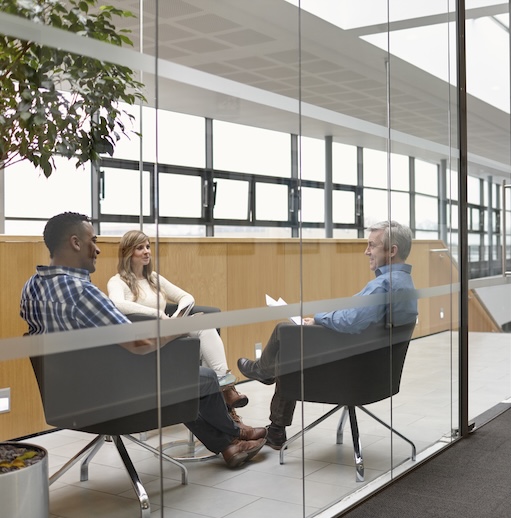
Hybrid work has introduced new layers of complexity across nearly every insurance function. Claims teams may work remotely, while adjusters, IT, and compliance leaders split time between offices. Facilities teams must manage space that fluctuates in use from week to week. Security leaders are responsible for access patterns that shift daily, without compromising oversight or regulatory compliance.
These responsibilities often remain siloed. Space decisions are made without insight into operational workflows. Security systems capture access data that never informs workplace planning. Claims processes rely on manual coordination across disconnected tools. The result is underutilized space, inconsistent employee and visitor experiences, and slower response times.
Industry research reinforces this challenge. Deloitte’s 2025 Global Insurance Outlook notes that insurers are under pressure to redesign operating models around agility, digital innovation, and customer‑centricity as hybrid work and rising expectations reshape the industry . Without shared data and integrated systems, teams operate from different assumptions, making it harder to manage risk, control costs, or improve customer outcomes.
Optimizing space for hybrid work
Insurance agencies that are adapting successfully to hybrid work are rethinking office space as a dynamic resource. Instead of relying on headcount or legacy seating models, they use occupancy analytics to understand when and how offices are actually used. This supports smarter decisions around desk sharing, collaboration spaces, and long-term real estate planning.
For example, a leading UK financial services organization implemented Eptura’s integrated workplace management software to support hybrid work, optimize space, and streamline visitor management. Real-time utilization insights enabled the facilities management team to reallocate or reduce underutilized spaces, saving millions on leases and supporting flexible work patterns. Weekly space utilization reports ensured decisions remained aligned with operational goals.
Similarly, Dun & Bradstreet leveraged Eptura solutions for global workspace management, including desk booking, visitor management, and data analytics. Their facilities teams used data-driven reporting to optimize layouts and respond to changing work dynamics, enhancing productivity and space utilization for hybrid teams.
Enhancing security and compliance
Security and compliance are inseparable from workplace strategy in the insurance industry. Hybrid work expands the number of access points into offices and systems, making visibility and consistency more important than ever. A 2025 hybrid work security analysis found that while hybrid models are now firmly established, many organizations still lack mature secure‑access strategies, even as they attempt to balance user experience with stronger controls for distributed workers .
Regulators are also sharpening their focus. The U.S. Federal Insurance Office’s 2025 Annual Report highlights cyber risk, AI governance, and operational resilience as key supervisory priorities, underscoring the need for reliable audit trails and consistent access oversight across locations.
Insurance agencies are responding by moving away from manual visitor logs and disconnected access tools in favor of integrated, automated solutions. Digital check‑in, credentialing, and real‑time visibility help security and IT leaders understand who is in the building, why they are there, and whether access aligns with policy. When this data connects to broader workplace systems, agencies gain a clearer picture of risk while supporting flexible work patterns.
Eptura Visitor enables this level of consistency without adding friction for employees or guests. Automated audit trails support compliance reporting, while integrated access data strengthens security posture across hybrid operations.
Streamlining claims operations
Claims operations often feel the downstream effects of fragmented hybrid environments first. Delays occur when documentation is spread across systems, approvals require manual follow-ups, or teams lack visibility into claim status.
Industry research shows why modernization is urgent. A 2025 analysis of automation in insurance describes 2024 as a year of “pressure from all angles”—rising claims volumes, mounting cost pressures, and evolving customer expectations—pushing insurers to rethink traditional, manual processes in favor of AI‑driven, end‑to‑end workflows . PwC’s Insurance 2025 and Beyond similarly emphasizes the need for adaptive, data‑centric operating models to handle volatility in claims and profitability .
Capabilities like those in Eptura Asset help support this operational stability by tracking maintenance and performance of the systems and facilities that claims teams depend on. Organizations that modernize workflows in this way often see significant improvements in resolution times, with some reporting up to 40%faster processing as a result of reduced manual effort and better coordination.
CALL OUT BOX: A global biotech company centralized worktech to manage expanding facilities and workspaces, using Eptura for space planning, visitor management, and asset tracking. Data-driven insights led to smarter decisions, improved efficiency, and better employee experiences. Integration of Eptura Workplace and Asset provided a unified view for facilities, security, and operations teams, streamlining ticket resolution and improving overall operational stability.
Best practices for insurance agencies
Successful hybrid insurance organizations take a coordinated approach to workplace and operational strategy. Rather than treating space, security, and claims as separate initiatives, they centralize data across these functions to create a shared source of truth.
Real-time analytics guide decisions about office capacity, access controls, staffing patterns, and claims throughput. This reduces reliance on assumptions and allows leaders to respond quickly as work patterns change. Just as important, these organizations encourage collaboration across traditionally siloed teams, ensuring facilities, IT, security, and operations are aligned around common goals.
Insurance agencies that modernize effectively also prioritize platforms that integrate with existing IT and compliance frameworks. This avoids introducing unnecessary complexity while supporting regulatory requirements and long-term scalability.
Preparing insurance operations for the next phase of hybrid work
Hybrid work is reshaping insurance operations in lasting ways. Agencies that rely on disconnected systems and manual processes face growing inefficiencies and compliance risk. Those that adopt a coordinated, data-driven approach are better positioned to optimize space, strengthen security, and deliver faster, more reliable claims experiences.
Eptura’s unified platform supports insurance agencies navigating this shift by connecting workplace data, operational workflows, and security insights into a single, actionable view of work.
Ready to accelerate your hybrid work strategy? Request a demo and discover the impact of a unified approach.
Frequently asked questions

By Amanda Meade
Amanda Meade is a content creator at Eptura, specializing in workplace experience, meeting productivity, and emerging trends in workspace planning and visitor management. With a background in content marketing and SEO, she crafts clear, actionable content that helps teams work smarter through in-office collaboration. Throughout her career, Amanda has worked across industries, including home services, healthcare, real estate, and SaaS, developing a unique ability to distill complex topics into practical insights.